If you’re shopping for an EV in 2025, you’re not just asking **how far it goes**, you’re asking **how fast it charges**. The fastest charging electric cars in 2025 can add hundreds of miles of range in the time it takes to grab a coffee, but spec sheets don’t always tell the full story. This guide walks you through the quickest-charging EVs on sale, how they actually behave on a DC fast charger, and how to pick the right fast-charging car, new or used, for your real-world driving.
Fast fact
Why fast charging matters in 2025
Range still matters, but in 2025 **charging speed is just as important** for many drivers. With Tesla’s Supercharger network opening to more brands and 350 kW public stations spreading along major U.S. corridors, the limiting factor on a road trip isn’t always the charger, it’s your car. A car that can go from 10–80% in 18–25 minutes lets you cover long distances with short, predictable stops. That’s the closest EV analog to pulling off for fuel on a gas road trip.
Fast charging in 2025 at a glance
How to judge fast charging (beyond peak kW)
Automakers love to quote a big **peak kW number**, “up to 350 kW!”, but that alone doesn’t tell you how quickly you’ll get back on the road. What matters more is the **average power over the whole session** and how long the car holds that power before ramping down (the "charge curve").
- 10–80% time: The most honest single metric. It captures both the peak and how well the car sustains power.
- Average kW: A car that averages 200 kW from 10–80% can beat one that briefly hits 320 kW but tapers quickly.
- Battery size: Filling 60 kWh in 20 minutes is easier than filling 100 kWh in the same time. Larger packs need more power to feel "fast."
- Voltage architecture: 800 V systems (Porsche Taycan, Hyundai Ioniq 5, Kia EV6, many Genesis EVs) are designed for high, sustained DC fast‑charge rates.
- Thermal management: Good cooling and battery preconditioning help the car stay in the sweet spot longer, especially in hot or cold weather.
Spec sheet shortcut
Top 10 fastest charging electric cars in 2025
Below is a high-level look at some of the **fastest charging electric cars available in 2025**, focused on how quickly they can move from roughly 10–80% on a suitable DC fast charger in ideal conditions. Exact results vary with temperature, charger capability, software versions, and state of charge, but this will put you in the right ballpark.
Fastest charging electric cars 2025 (approximate DC fast‑charge performance)
Approximate 10–80% or similar fast‑charge performance under ideal conditions, based on independent and manufacturer data where available.
| Rank | Model (2025) | Battery (approx.) | Peak DC kW | Typical 10–80% Time* |
|---|---|---|---|---|
| 1 | Porsche Taycan Turbo GT | ~97 kWh | ~317 kW peak, ~213 kW avg | ~24 min (10–90%) |
| 2 | Hyundai Ioniq 5 (including 2025 NACS models) | ~77 kWh | ~235–258 kW peak | ~18–20 min |
| 3 | Kia EV6 (incl. GT) | ~77 kWh | ~230+ kW peak | ~18–20 min |
| 4 | Genesis GV60 / Electrified GV70 | ~77–82 kWh | ~230–240 kW peak | ~18–22 min |
| 5 | Lucid Air (various trims) | ~92–118 kWh | ~300+ kW peak | ~24–30 min |
| 6 | Porsche Taycan (other trims) | ~79–97 kWh | ~270–300+ kW peak | ~22–27 min |
| 7 | Tesla Model 3 / Model Y (latest NACS) | ~60–80 kWh | ~250 kW peak | ~25–30 min |
| 8 | Hyundai Ioniq 6 | ~77 kWh | ~235 kW peak | ~18–22 min |
| 9 | BMW i4 / i5 / iX (latest software) | ~80–111 kWh | ~200–205 kW peak | ~25–32 min |
| 10 | Chevrolet Silverado EV / GMC Hummer EV | ~200+ kWh | ~350 kW peak | ~30–40 min (huge battery) |
Always treat these numbers as best‑case: real‑world times can be slower depending on temperature, charger, and battery state of charge.
Important disclaimer
Fastest-charging EVs: detailed breakdown
Porsche Taycan Turbo GT and Taycan family
Porsche has been near the top of any **fastest charging electric cars** list since the original Taycan, and the 2025 Taycan Turbo GT pushes things even further. In third‑party testing, the Turbo GT’s 97 kWh battery peaked at just over 300 kW and averaged around 213 kW during a 10–90% session, hitting 90% in about 24 minutes. That’s impressive not just because of the raw power, but because the car **holds high rates for a long stretch** instead of spiking and tapering immediately.
- 800 V architecture designed for high‑power DC fast charging.
- Sophisticated thermal management and battery preconditioning tied into navigation.
- Real‑world 10–80% times on a strong charger typically in the low‑20‑minute range for most Taycan trims.
Performance vs. efficiency
Hyundai Ioniq 5, Ioniq 6, Kia EV6, Genesis cousins
Hyundai Motor Group’s E‑GMP platform, used by the **Hyundai Ioniq 5**, **Ioniq 6**, **Kia EV6**, and Genesis GV60/Electrified GV70, is the sweet spot for many shoppers who want **top‑tier fast charging without Porsche‑level pricing**. On a 350 kW DC fast charger, Hyundai quotes roughly 10–80% in about 18 minutes for the Ioniq 5, and independent tests broadly back that up when the charger and conditions cooperate.
- 800 V battery system supports very high peak power and, more importantly, a strong plateau.
- In testing, long‑range Ioniq 5 and EV6 variants have reached mid‑200‑kW peaks and maintained high averages from 10–60% before tapering.
- Newer 2025 Ioniq 5 models add a native NACS port for direct Tesla Supercharger access; tests show much improved charge speeds at Superchargers versus earlier adapter setups, though still a bit slower than the very best 800 V CCS sessions.
Road‑trip sweet spot
Lucid Air
Lucid built its reputation on **range and efficiency**, but it’s also one of the **fastest charging electric cars** you can buy. Thanks to a high‑voltage architecture and sophisticated thermal and charging controls, various Air trims can pull well over 300 kW on a compatible DC fast charger and hold high power over a broad state‑of‑charge window.
Because the Air’s battery packs are large, some exceed 110 kWh, you’ll often see **10–80% times in the mid‑20s to around 30 minutes**. That might sound slower than a smaller‑battery car, but in miles added per minute, the Lucid can be right at the top of the pack.
Tesla Model 3 and Model Y (latest NACS cars)
Tesla’s **Model 3** and **Model Y** don’t always win on peak power anymore, but they still deliver very competitive **10–80% times**, especially when you layer in the convenience and density of the Supercharger network. On V3 Superchargers, they can accept up to around 250 kW and, with a warm battery, usually move from low state of charge to 80% in the mid‑20‑minute range.
NACS is the new normal
Big‑battery trucks and SUVs
Vehicles like the **Chevrolet Silverado EV**, **GMC Hummer EV**, and other large electric trucks technically support very high peak DC fast‑charge rates, some quote up to around 350 kW. But with battery capacities well over 200 kWh in some trims, even a quick 10–80% session can take 30–40 minutes. In absolute miles added per stop they can be impressive; in clock time, they’re slower than the sleek sedans and crossovers earlier in this list.
Used EVs that still charge quickly
If you’re shopping the **used EV** market, you don’t have to give up fast charging. Several models that are now a few years old were early standouts and remain strong choices in 2025 when properly evaluated.
Notable used EVs with strong fast‑charging performance
Quick‑charging capability plus the value of buying pre‑owned.
Hyundai Ioniq 5 / Kia EV6
Early‑build Ioniq 5 and EV6 models still offer 800 V hardware and excellent DC fast‑charging speed.
- 10–80% often under 25 minutes when conditions and charger are good.
- On older cars, verify software updates and check DC‑fast‑charge history where possible.
Porsche Taycan (2020–2023)
Earlier Taycan trims pioneered high‑power 800 V charging and remain among the quickest‑charging used EVs.
- Look for cars with documented service history.
- Battery and charging diagnostics are especially important on performance models.
Tesla Model 3 / Model Y
Even older Model 3 and Model Y variants can charge very quickly on V3 Superchargers.
- Supercharger access and rates are typically straightforward.
- Pay attention to prior fast‑charging usage and overall battery health.
Where Recharged fits in
Real-world fast-charging tips for road trips
You don’t need the single fastest charging electric car on the market to have a good road‑trip experience. What you need is a car that charges **quickly enough** and a smart strategy. Here are practical ways to make the most of whatever EV you choose.
Road‑trip charging checklist
Arrive low, leave early
Plan to hit DC fast chargers between about 10–20% state of charge, then unplug around 70–80%. That’s where most EVs deliver the highest average power and best miles‑per‑minute.
Precondition the battery
If your car supports it, set the charger as your navigation destination. This warms or cools the battery so you arrive in the ideal temperature window for fast charging.
Know your networks
Superchargers, Electrify America, EVgo, and regional networks all have strengths and weak spots. Check recent user check‑ins in apps to avoid broken or throttled stations.
Budget an extra stop over gas
For a 600–800‑mile day, think in terms of 3–4 shorter stops instead of 2 long ones. You’ll keep average speeds high and reduce time spent waiting at the top of the battery.
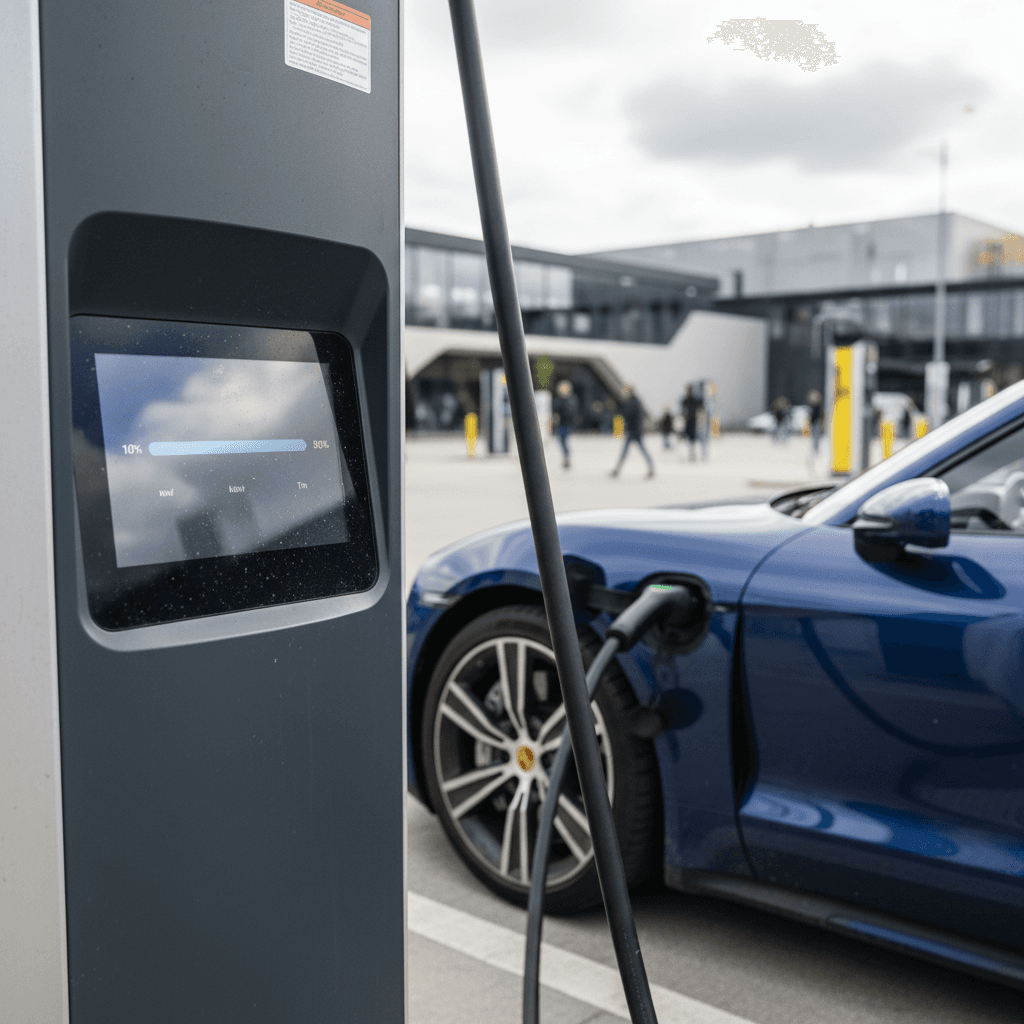
Watch the charge curve on screen
If you see kW plummet once you pass 70–80%, you’re in the slowdown zone. That’s your cue to unplug and get back on the highway.
Have a Plan B station
Especially in winter or less‑dense corridors, always have a backup charger pinned in your navigation in case your first choice is busy or offline.
Fast charging and battery health
Battery health is the elephant in the fast‑charging room. Modern packs are engineered to handle DC fast charging, but **frequent high‑power sessions still add stress** compared with gentle Level 2 home charging. The good news: manufacturers use software to protect the pack, and most owners never get anywhere near the true longevity limits.
What actually wears batteries
- High temperatures: Heat is the enemy. Fast charging heats the pack; so does sitting at high state of charge in hot weather.
- Time at 100%: Leaving your car at or near 100% for days is harder on the pack than briefly hitting 100% before a trip.
- Full deep cycles: Regularly going from near‑empty to full and back again is more stressful than shallower cycles.
How modern EVs protect themselves
- Active thermal management keeps battery temperatures in a safe band.
- Charge curves taper aggressively as you near 80–90% to reduce stress.
- Software may reserve a small buffer at the top and bottom of the pack you can’t touch, extending life.
Used EV shopping tip
How to shop for a fast-charging EV
When you’re comparing the fastest charging electric cars of 2025, it’s tempting to chase the single highest spec. Instead, think about **your actual use case**, how often you road‑trip, where you live, and whether you’ll mostly charge at home.
Key questions to ask before you buy
Match the car’s fast‑charging strengths to how you really drive.
How often will I DC fast charge?
If you mostly charge at home and only road‑trip a few times a year, you don’t need the absolute fastest charger on the market. A solid mid‑pack car with a good network might be all you need.
What networks do I rely on?
In parts of the U.S., CCS infrastructure can still be patchy, while Superchargers are everywhere. In 2025, more non‑Tesla EVs are adding NACS ports or adapters, improving your options.
What’s my total budget?
Top‑tier fast chargers like Taycan Turbo GT and Lucid Air sit at the high end of the price spectrum. E‑GMP cars (Ioniq 5/6, EV6, Genesis) and used Teslas often deliver excellent fast charging for much less.
New vs. used EV
Used EVs can provide outstanding value, especially if you get a verified battery‑health report. On Recharged, every used EV includes a Recharged Score with objective battery diagnostics, pricing analysis, and expert guidance.
Fast‑charging features to look for on the spec sheet
10–80% DC fast‑charge time published
If an automaker is proud of its fast charging, it usually publishes a 10–80% estimate. Use that as a baseline, but remember real‑world times may be longer.
High peak and strong average kW
A car advertising 250–300+ kW peak is great, but see if independent tests confirm a strong average over the full session.
Battery preconditioning
Especially in colder climates, preconditioning can make the difference between a slow and a very fast DC session.
NACS and CCS compatibility
For North American buyers, a native NACS port plus access to CCS via adapter (or vice versa) maximizes your charging options for years to come.
State‑of‑charge limits in software
Being able to cap daily charging at 70–80% helps you balance convenience, fast‑charge readiness, and long‑term battery health.
Independent battery health report (used EVs)
On a pre‑owned car, ask for verified battery diagnostics. Platforms like Recharged bake this into every listing so you don’t have to guess.
FAQ: fastest charging electric cars 2025
Frequently asked questions
Key takeaways
The fastest charging electric cars of 2025, led by models like the Porsche Taycan Turbo GT, Hyundai Ioniq 5/6, Kia EV6, Lucid Air, and their peers, prove that long‑distance EV travel is no longer an experiment. The real trick is matching the **right level of fast‑charging performance** to how you actually drive, then using smart road‑trip habits to keep your average speeds high.
As you evaluate your options, focus on **10–80% times, average kW, and network access**, not just headline peaks. And if you’re leaning toward a used EV, don’t guess about battery health, lean on tools like the Recharged Score Report, flexible financing, and trade‑in options to get into a quick‑charging EV with confidence. The less time you spend at the charger, the more you can enjoy the drive, and that’s the point of owning the right EV in the first place.