When people talk about EVs motors, they’re usually trying to answer one of two questions: “How does this thing actually move the car?” and “Does the motor type matter when I’m buying or owning an electric vehicle?” The good news is that EV motors are simpler and more durable than gas engines, and once you understand a few basics, you can make much smarter choices, especially if you’re considering a used EV.
Quick takeaway
How EV motors differ from gas engines
Electric motor basics
An EV motor converts electrical energy from the battery directly into rotation. There’s no combustion, no pistons, and no multi‑gear automatic transmission. Instead, you get:
- Instant torque from 0 rpm
- A very simple gear reduction (often just one fixed gear)
- Regenerative braking, where the motor becomes a generator to feed energy back into the battery
Gas engine complexity
A gasoline engine converts energy by burning fuel in cylinders, then sending power through a multi‑speed transmission. The process involves hundreds of moving parts, high temperatures, and constant vibration. It’s why engines need frequent oil changes, timing belts or chains, and complex emissions systems, all things EVs motors don’t require.
- EV motors typically have only a handful of moving parts and are sealed units.
- Torque is available immediately, so acceleration feels strong even in modestly powered EVs.
- Because there’s less heat and friction, motors tend to outlast the rest of the vehicle if the cooling system is maintained.
The main types of EV motors used today
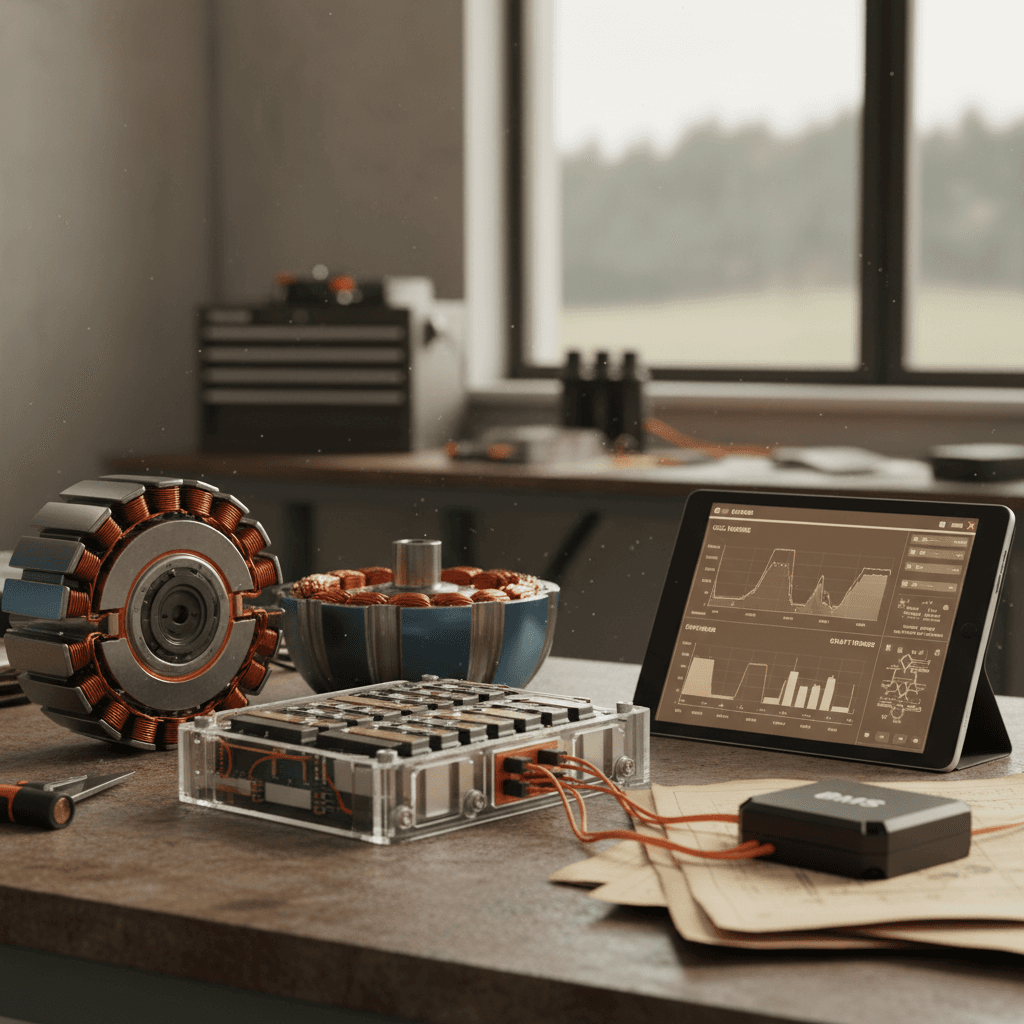
You’ll see a lot of terminology thrown around, PMSM, IPM, induction, synchronous, asynchronous. Most modern EVs on the road in 2025 use one of these three motor families:
Core EV motor families
95%+ of today’s electric cars use one or a combination of these designs
Permanent Magnet Synchronous (PMSM/IPMSM)
Uses strong permanent magnets in the rotor. Delivers very high efficiency, excellent low‑speed torque, and compact size. Common in many Teslas, Hyundais, Kias, BMWs, and others.
Induction (Asynchronous) Motor
Uses an induced magnetic field instead of permanent magnets. Historically used by Tesla in the Model S and Model X. Very rugged and rare‑earth‑free, but usually a bit less efficient at low speeds.
Externally Excited Synchronous (EESM)
Similar to PMSM but uses electromagnets instead of permanent magnets. Helps cut or eliminate rare earth metals. Increasingly used by European brands in next‑gen EVs.
Don’t overthink the jargon
PMSM and IPMSM: The efficiency champions
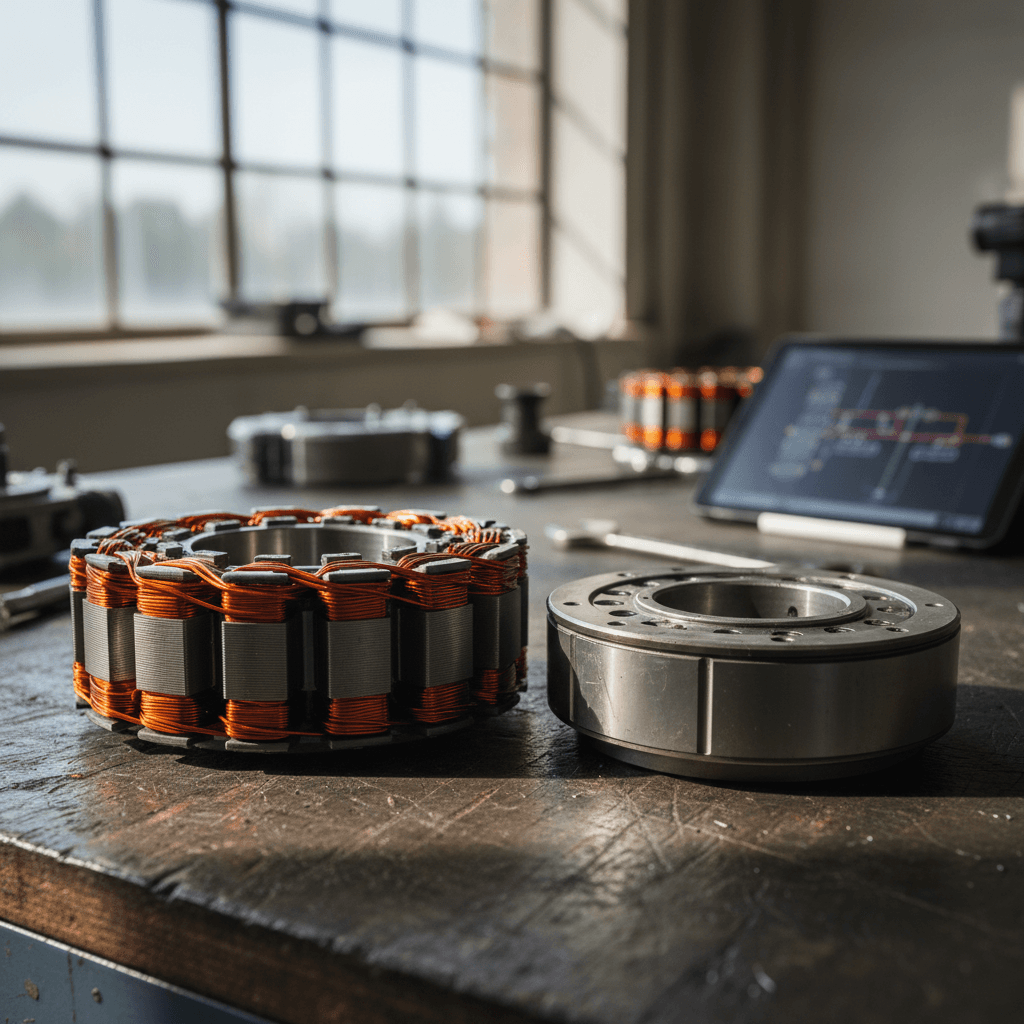
A permanent magnet synchronous motor (PMSM) uses powerful magnets embedded in or attached to the rotor. In many EVs you’ll see the phrase IPM or IPMSM, short for interior permanent magnet synchronous motor, where magnets are buried inside the rotor for better performance and efficiency.
Why automakers love PMSM motors
- Excellent low‑speed and mid‑speed efficiency, great for city and suburban driving.
- Very strong torque from a small, light motor package.
- Common in many popular models, including compact crossovers and sedans.
The catch: rare earth materials
Induction motors: Strengths and tradeoffs
An induction motor (sometimes called an asynchronous motor) creates its magnetic field in the rotor by induction, no permanent magnets required. This design made headlines because early Teslas used it extensively, and it’s still a solid choice in certain applications.
Why automakers use induction motors
- No rare earth magnets, which reduces exposure to price swings and supply risk.
- Rugged and simple rotor construction, essentially a stack of laminations and conductive bars.
- Well understood, mature technology with decades of industrial use behind it.
Where they’re less ideal
- Efficiency is typically lower than PMSM at low speeds and partial loads, where daily driving happens.
- They waste some energy generating their own magnetic field instead of using permanent magnets.
- That can translate into slightly shorter driving range for the same battery size compared with a PMSM‑based setup.
Real‑world translation
Emerging rare-earth-free EV motors
As EV sales grow, automakers and suppliers are working hard to reduce or eliminate rare earths from EVs motors. That’s driven by cost, supply‑chain risk, and environmental concerns around mining and refining.
How brands are cutting rare earths from motors
You’ll see more of these technologies in EVs launched from 2026 onward
Externally Excited Synchronous Motors (EESM)
Companies like BMW, Renault, and several suppliers are betting on EESM designs. These use electromagnets in the rotor instead of permanent magnets, delivering high efficiency without rare earths.
Reduced‑rare‑earth PMSM
Some makers are redesigning magnets to cut heavy rare earth content dramatically while keeping compact, efficient motors.
Next‑gen magnet materials
Startups and suppliers are developing new magnet chemistries that avoid traditional rare earths altogether while still delivering strong performance.
What this means for buyers
How EV motors impact range, performance and noise
From the driver’s seat, you never see the motor, but its design shapes how the car feels and how far it goes on a charge. Here’s how the main factors line up.
How motor design shows up in daily driving
Compare how PMSM and induction motors typically influence your experience behind the wheel.
| Factor | PMSM / IPMSM | Induction Motor |
|---|---|---|
| Range per kWh | Usually a bit higher, especially in city driving | Slightly lower at low speeds; closer at highway speeds |
| 0–60 mph acceleration | Strong, instant torque; great for performance EVs | Also strong, especially in dual‑motor setups |
| High‑speed efficiency | Very good when tuned properly | Can lose some efficiency at very high rpm |
| Noise & vibration | Typically very quiet and smooth | Also quiet; some designs can have more audible whine |
| Material content | Often uses rare earth magnets | Rare‑earth‑free rotor |
Remember: battery size, aerodynamics, tires and software tuning are just as important as motor choice.
Test‑drive translation
EV motors and battery health in used EVs
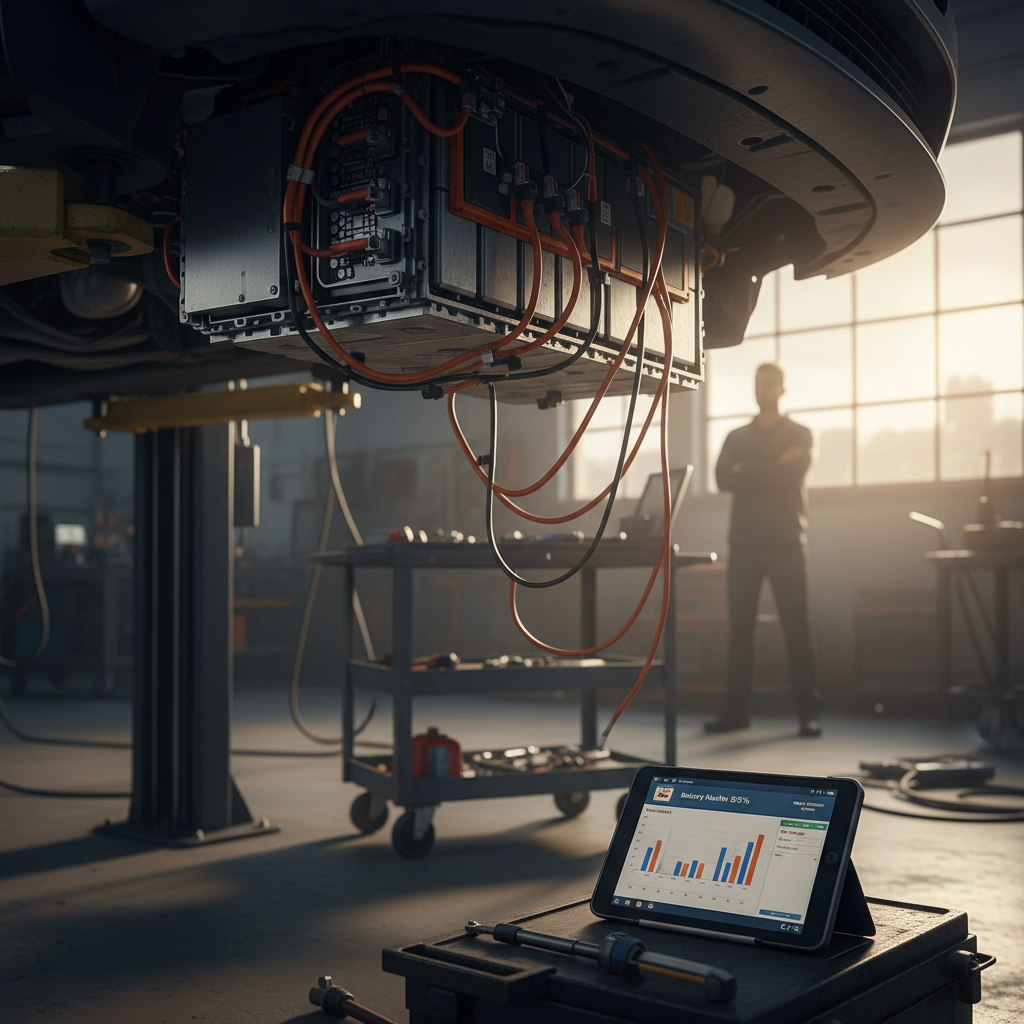
When you’re looking at used EVs, the battery is far more important than the motor. Motors in EVs typically see very little wear if the cooling system is healthy. Batteries, on the other hand, gradually lose capacity over years and miles, which directly affects range.
- A healthy motor helps the battery by running efficiently, wasting less energy as heat.
- Aggressive driving mainly stresses the battery, not the motor, thanks to sophisticated power electronics and thermal management.
- Motor failures in modern EVs are rare compared with issues like battery degradation, DC fast‑charging abuse, or neglected coolant service.
Where Recharged fits in
Ready to find your next EV?
Browse VehiclesWhat to look for when shopping used EVs
A practical checklist for evaluating EVs motors (and more)
1. Focus on battery state of health
Ask for a battery health report or scan. At Recharged, the <strong>Recharged Score</strong> summarizes this for you so you can compare vehicles with confidence.
2. Verify motor & inverter warranty coverage
Many EVs carry <strong>long powertrain warranties</strong> that cover the motor and associated electronics for 8 years or more. This can significantly reduce your risk on a used purchase.
3. Listen for unusual motor noises
On a test drive, accelerate gently and firmly, and coast at different speeds. Motors are usually almost silent; whining, grinding, or shuddering deserve investigation.
4. Check for coolant leaks and service history
Both the motor and the battery rely on effective cooling. Look for any signs of leaks and confirm that coolant changes were done on schedule where the manufacturer recommends them.
5. Match performance to your needs
Be honest about how much power you actually want. A dual‑motor performance EV is fun, but a single‑motor car can be more than adequate for daily use and may be cheaper to insure and buy.
6. Consider how you’ll use the car
Frequent highway trips, heavy loads, or mountain driving can favor certain EV setups. A Recharged EV specialist can help you align motor configuration, battery size, and charging plan with your real‑world use.
Don’t chase specs in a vacuum
FAQ: Common questions about EV motors
Frequently asked questions about EVs motors
Bottom line: What really matters about EV motors
When you cut through the alphabet soup of motor types, EVs motors are one of the least scary parts of owning an electric car. Modern designs, whether permanent magnet, induction, or emerging rare‑earth‑free synchronous motors, are efficient, durable, and surprisingly low‑maintenance compared with gas engines.
If you’re shopping new, motor type can help explain differences in range and performance between models. If you’re shopping used, focus first on battery health, warranty, and how the car fits your life, then use motor specs as a tie‑breaker rather than the headline.
And if you’d like a guide through all of that complexity, Recharged is built exactly for that job. From verified battery diagnostics to expert support and nationwide delivery, the goal is simple: make choosing your next EV, motor and all, as straightforward as possible.