In a gas car, dark window tint is mostly a style choice. In an electric vehicle, the right tint is closer to a **comfort and efficiency upgrade**. High‑quality film can slash cabin heat, ease the load on your HVAC system, protect your battery and interior from UV, and make the car feel more refined, all without blackout gangster glass or run‑ins with the local traffic unit.
Quick take
Why window tint matters more on EVs
Every car bakes in the sun, but EVs are uniquely sensitive to heat. Your **air‑conditioning pulls power from the same battery that moves the car**, and high cabin temperatures can increase thermal stress on the pack and electronics. That’s why a lot of new EVs ship with heavily tinted glass from the B‑pillar back, panoramic roofs with coatings, and sometimes sunshades built in: the engineers are fighting solar gain before it ever reaches the cabin.
- **More of your energy goes to comfort.** In an EV, every extra watt the HVAC uses is range you can’t drive.
- **Big glass areas are common.** Crossovers and hatchbacks with panoramic roofs are greenhouse chic, and greenhouse hot.
- **Batteries prefer cool, stable temperatures.** Less heat soak means less work for the thermal management system.
- **Quiet cabins expose new annoyances.** With motor noise largely gone, things like glare and sun beating on your skin become more obvious and fatiguing.
Think of tint as passive cooling
Types of window tint and which are best for EVs
Tint isn’t one monolithic product. The tech matters more than the shade. For EV owners, **heat and UV rejection** are the main story; darkness is just the cosmetics department.
Common tint types (and how they play with EVs)
Not all dark glass is doing the same job.
Dyed film
What it is: Basic, affordable tint that darkens glass by absorbing visible light.
- Usually low heat rejection
- Can fade or turn purple over time
- Does little for infrared (heat) energy
Best for looks on a budget, not ideal for EV efficiency.
Metallized / hybrid
What it is: Film with metalized layers that reflect heat.
- Better heat rejection than dyed
- May interfere with key fobs, GPS, cellular, toll tags
- Can look shiny or mirrored
EVs are rolling antennas; the interference risk is real.
Ceramic / nano‑ceramic
What it is: Advanced ceramic particles that block infrared and UV with minimal impact on signals.
- Often 95%+ infrared rejection on quality films
- Blocks up to ~70% of total solar heat at some VLT levels
- Durable color, minimal signal interference
This is the go‑to choice for modern EVs.
Be skeptical of buzzwords
Heat control: staying cool and easing HVAC load
If you’ve ever opened an EV after it sat in July sun, you know the sauna effect. Heat pours in via the glass. According to window‑film industry data, **over half of the sun’s energy is in the infrared spectrum**, which you can’t see but absolutely feel as heat. Good ceramic tint is designed specifically to knock that down hard.
What modern ceramic tint can do for cabin heat
For you, that translates into **faster cool‑downs and lower fan speeds**. Instead of the AC blasting at full tilt for ten minutes, you may get comfortable in three or four. Over thousands of miles in a hot climate, that’s meaningful energy saved and a lot less time driving in a mobile toaster.
Why this feels bigger in an EV
Can window tint really improve EV range?
Short answer: **yes, but it’s not magic**. Window tint doesn’t add miles the way a bigger battery would. It simply means you’re **wasting less energy on cabin cooling**, which can claw back some range you’d otherwise give up to the HVAC.
- Independent tests and OEM data suggest aggressive AC use can trim **10–17% of range** in hot weather, depending on speed and vehicle.
- By cutting the heat that ever enters the cabin, IR‑rejecting tint reduces how hard and how long the AC has to run.
- In extreme‑sun markets, Arizona, Texas, the Southeast, owners commonly report **noticeably smaller range drops** with the cabin kept cooler via tint and sunshades.
Realistic expectations
Where tint makes a big difference
- Hot, high‑sun regions (Sun Belt, Southwest)
- Dark interiors and panoramic‑roof EVs
- Cars parked outside most of the day
- Stop‑and‑go or city driving where AC draw is proportionally higher
Where the impact is smaller
- Mild or cloudy climates
- Cars parked in covered garages at home and work
- Highway‑heavy driving at moderate speeds
- Short trips where the cabin never fully heat‑soaks
UV protection for you, your interior, and your battery
Nearly all reputable modern tint, especially ceramic, blocks **around 99% of UV**. On an EV, that’s doing three quiet jobs all day long: protecting your skin, preserving your interior, and helping your thermal system out at the margins.
Three quiet UV‑blocking wins for EV owners
You don’t notice this day to day, until you do.
Skin health
Even with glass that has some factory UV filtering, longer commutes add up. Quality film acts like permanent SPF for your arms, neck, and face.
Interior preservation
UV is what cracks dashboards, fades seats, and cooks stitching. That’s especially painful on light‑colored vegan leathers popular in EVs.
Battery & electronics
Your pack is usually insulated from direct sunlight, but lower overall cabin temps mean less frequent, less aggressive cooling cycles for batteries and electronics.
Used EV bonus
Glare reduction, privacy, and security
If you daily an EV, you know the strange intimacy of it: glassy cabin, big screen, minimal noise. Tint calms that down. It’s less about cosplay getaway car and more about **making the car feel like your space instead of a display case**.
- **Glare control.** Properly chosen VLT (visible light transmission) on side windows and the top strip of the windshield makes long drives less fatiguing and night driving safer.
- **Privacy.** Keeping laptop bags, child seats, or charging cables out of full view is cheap anti‑theft insurance, especially in cities where EV break‑ins target visible gear.
- **Shatter protection.** Most films add a degree of **shard containment** if glass breaks, which can help in a crash or smash‑and‑grab attempt. It’s not bulletproofing, but it’s better than naked glass.
Don’t over‑tint for privacy
Safety, visibility, and staying legal
Tint lives at the intersection of personal comfort, public safety policy, and the officer’s flashlight at your window at 11:30 p.m. **U.S. tint laws are state‑specific**, and several states have updated their rules in just the last few years, some getting stricter on windshields, some allowing slightly darker fronts.
Typical U.S. tint rules (high‑level snapshot)
Always check your state DMV or an up‑to‑date tint law chart, this is a rough pattern, not legal advice.
| Glass area | Common legal pattern | What it means for your EV |
|---|---|---|
| Windshield | Clear, or very light film above AS‑1 line / top 4–6 in. | Use nearly clear ceramic (70%+ VLT) for heat & UV without a visible tint line. |
| Front side windows | Often 30–40% minimum VLT allowed | You can usually run a tasteful 35–40% ceramic that still looks OEM‑ish. |
| Rear doors / cargo | Frequently 20–35% or no limit on SUVs | This is where you can go darker for privacy and heat control. |
| Back glass | Similar to rear doors; sometimes different for sedans vs. SUVs | Great candidate for darker ceramic to protect interior and passengers. |
Most states allow darker film behind the driver than in front, and treat windshields most strictly.
Laws are moving targets
Safety is the other half of this coin. Overly dark fronts and windshields make it harder to see pedestrians, cyclists, and wildlife at night or in storms. They also make officer interactions more tense. The art is in hitting that line where you get **meaningful heat and glare reduction** without compromising nighttime visibility.
Will window tint interfere with EV electronics?
Older “mirror” tints used metal layers that could absolutely step on radio, GPS, tire‑pressure sensors, or mobile data, exactly the stuff modern EVs live on. With today’s cars more connected than ever, this matters.
- **Dyed and ceramic films** are generally safe for antennas, Bluetooth, keyless entry, and cellular data.
- **Metallized or reflective films** can cause signal issues and are best avoided on EVs.
- If your EV hides antennas in the glass (roofs, rear glass, shark‑fin housings), that’s another reason to stick with **non‑metallic ceramic**.
Ask one question at the tint shop
How to choose the right tint setup for your EV
The right tint recipe depends on where you live, how you use the car, and how conservative you want to be with law enforcement. For EVs, the priority stack usually goes: **heat rejection, legality, night visibility, then looks**, in that order.
Daily commuter in a hot state
- Windshield: 70% clear ceramic or a legal top strip
- Front doors: 30–35% ceramic (within state law)
- Rear doors & hatch: 15–25% ceramic for strong heat and privacy
- Optional: roof film if you have a glass top and it’s not already coated
Mixed‑climate suburban driver
- Windshield: clear UV/IR ceramic only if you’re sensitive to heat
- Front doors: 35–40% ceramic
- Rear area: 30–35% for a balanced, OEM‑plus look
Cool‑climate or mostly garage‑kept EV
- Focus on UV protection more than darkness
- Windshield & front doors: 70% ceramic
- Rear: factory privacy glass may be enough
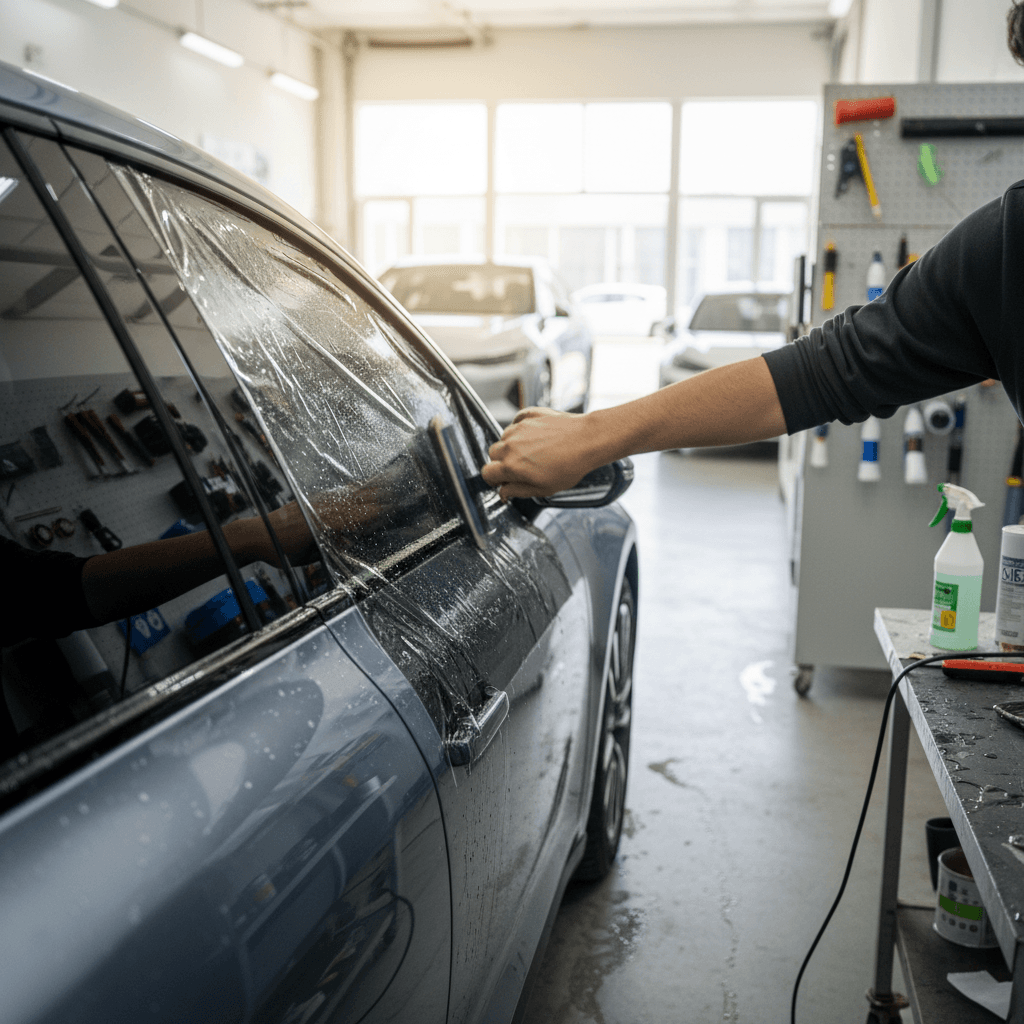
How to vet a tint shop for your EV
1. Ask specifically for ceramic (and the brand)
Get the exact product line in writing, reputable shops are proud to name‑drop their film partner and show spec sheets.
2. Confirm they understand EV electronics
Ask whether they avoid metallized films and how they handle antennas, ADAS cameras, and rain/light sensors near the windshield.
3. Discuss state laws and VLT options
A good installer will meter your existing glass, explain what’s legal where you live, and recommend a setup that keeps you out of trouble.
4. Check warranty terms
Top‑tier films often carry lifetime warranties against bubbling, peeling, color change, and adhesive failure. Cheap film usually doesn’t.
5. Look at their work in daylight
Ask to see EVs they’ve tinted outside the bay, look for clean edges, no light gaps, and no contamination or bubbles in the film.
6. Plan around cameras and sensors
On EVs with driver‑assist cameras behind the windshield, make sure the installer knows which areas must remain clear or receive a specific film.
Costs, warranties, and impact on used EV resale
Quality tint on an EV is one of those rare upgrades that makes the car **nicer to live with now and more appealing to the next owner**. Expect to pay more for true ceramic, but also expect it to age better and work harder in the background.
Typical tint investment vs. long‑term payoff
Ballpark numbers for a compact–mid‑size EV in the U.S.; luxury or large SUVs will run higher.
| Item | Typical range | What you get |
|---|---|---|
| Full ceramic (sides + rear) | $500–$900 | High IR/UV rejection, lifetime warranty at better shops |
| Add clear ceramic windshield | $200–$400 | Significant heat and glare cut with a nearly invisible look |
| Cheap dyed film | $250–$400 | Darker look, modest performance, more risk of fading/peeling |
| Expected lifespan (quality ceramic) | 10+ years | Often outlasts your ownership of the car |
| Resale impact | Soft but real | Cooler, quieter, better‑kept cabin that shows well to buyers |
Actual pricing varies by shop, film brand, and how much glass you cover.
If you eventually list your EV on a marketplace like Recharged, a **cool, unfaded, well‑tinted interior** is one of those subtle cues that the previous owner cared. Combined with a strong Recharged Score battery health report, that can separate your car from a sea of comparable listings.
EV window tinting checklist
Before you tint your EV, run through this list
Confirm your state’s tint laws
Look up current VLT limits for windshield, front, and rear glass where the car is registered, and consider future moves.
Prioritize ceramic over darkness
Choose a high‑IR‑rejection ceramic film at a <strong>legal, livable shade</strong> instead of bargain‑bin limo tint.
Decide how sensitive you are to night visibility
If you drive a lot at night or in bad weather, stay lighter on the front windows (35%+ VLT) and focus darker shades on the rear.
Think about your climate and parking
Hotter, sunnier, more outdoor parking = more benefit from tint on all sides and possibly the windshield.
Talk through cameras and sensors
Make sure your installer knows where your ADAS cameras, lidar, rain sensors, and antenna elements live.
Keep documentation for future buyers
Hold onto receipts and product info so you can show that the car has quality, warrantied film when you sell or trade it.
EV window tinting FAQ
Frequently asked questions about EV window tinting benefits
Bottom line: when EV window tinting is worth it
For an electric vehicle, window tint is no longer just a vanity mirror for the neighbors. **High‑quality ceramic film quietly reshapes the way your EV feels to live with**: cooler starts, calmer cabins, less glare, better‑preserved materials, and a small but real assist to range and battery comfort in brutal weather.
If you live in a sunny or hot climate, park outside, or spend long stretches in traffic, EV window tinting moves from "nice‑to‑have" into the **short list of smart upgrades**, right alongside a Level 2 home charger. And when it’s time to move on from your current EV, those thoughtful choices, documented service, a healthy battery, and a well‑tinted, well‑kept cabin, help your car score better, show better, and sell better on a platform like Recharged.