If you live in West Virginia and you’re wondering whether an electric vehicle will really save you money in 2026, you’re asking the right question. EV vs. gas savings in West Virginia look a little different than they do on the coasts, but when you run the numbers with current electricity and gas prices, the advantage for many drivers is still on the electric side, especially if you buy used.
Quick 2026 snapshot for West Virginia
Why EV vs. gas savings look different in West Virginia
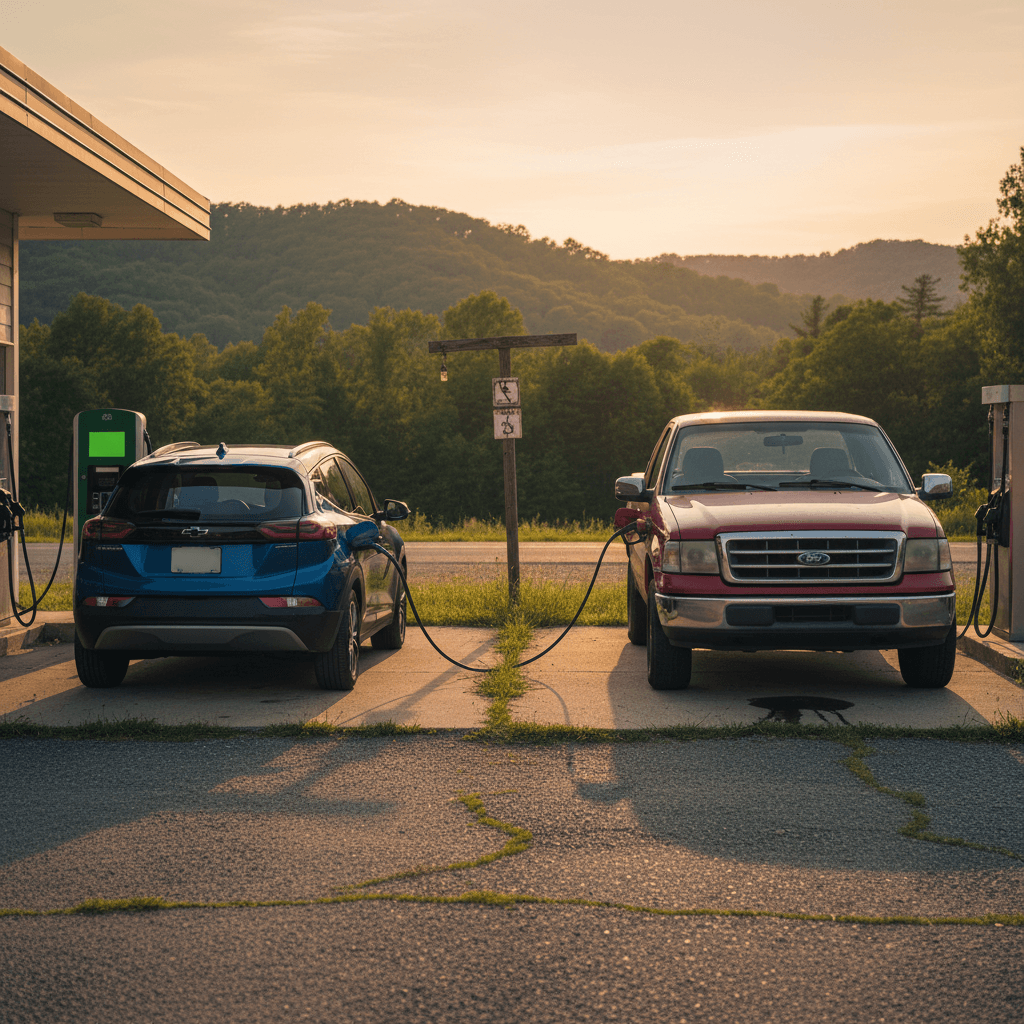
National headlines talk about $1,500+ in yearly fuel savings, but West Virginia plays by its own rules. The state’s **electricity is cheaper than the U.S. average**, yet **gas has historically been a bit cheaper here too**. That narrows the gap between EV and gas running costs, but doesn’t erase it. And because so many drivers rack up highway miles across the Mountain State, those savings can add up quickly once you pass a certain annual mileage.
- Electricity: relatively affordable, especially compared with East Coast neighbors.
- Gasoline: cheaper than national average in normal years, but pushing toward **$3.60–$3.90 per gallon** in early 2026 as national prices hit $4.
- Driving patterns: lots of long commutes and rural miles. The more you drive, the more an efficient EV pays you back.
- Weather: winters are cold but not brutal everywhere, so range loss is real but manageable with planning.
Think in cents per mile, not miles per gallon
2026 energy prices in West Virginia: the basics
We’ll base our 2026 examples on recent West Virginia electricity and gasoline data, nudged slightly to reflect early‑2026 conditions. You can always plug in your exact rates later.
Working numbers for West Virginia in 2026
Your numbers may be a bit different
How to calculate EV vs. gas savings (step-by-step)
Let’s walk through a simple method you can reuse whenever prices change. You only need three things: annual miles, your gas car’s real MPG, and your EV’s efficiency in kWh per 100 miles.
- **Estimate your annual miles.** If you commute 40 miles a day, five days a week, for 50 weeks a year, that’s about 10,000 miles. Add weekend and trip miles; we’ll use **13,000 miles/year** as a reference.
- **Figure out your gas car’s real MPG.** Highway‑heavy West Virginia driving can help, but hills and winter warm‑ups hurt. We’ll use **27 mpg** for a typical compact/midsize gas sedan.
- **Pick a realistic EV efficiency.** Many popular EVs land around **28–32 kWh per 100 miles** in mixed driving. We’ll use **30 kWh/100 mi** as our baseline.
- **Calculate gas cost per mile.** Divide the price per gallon by your MPG. With $3.75/gal and 27 mpg: 3.75 ÷ 27 ≈ **$0.14 per mile** (14 cents).
- **Calculate EV cost per mile.** Multiply your kWh per 100 miles by your electricity rate, then divide by 100. With 30 kWh/100 mi at $0.15/kWh: 30 × 0.15 ÷ 100 = **$0.045 per mile** (about 4.5 cents).
- **Compare annual fuel/energy cost.** Multiply cost per mile by annual miles: - Gas: 14¢ × 13,000 ≈ **$1,820/year** - EV: 4.5¢ × 13,000 ≈ **$585/year** That’s roughly **$1,200 a year in energy savings** in this scenario.
Rule of thumb for WV drivers
Example: 40‑mile West Virginia commute in 2026
Now let’s get specific. Imagine you live near Beckley and commute 20 miles each way, five days a week, plus normal errands. We’ll call it **12,000 miles per year**. You’re cross‑shopping a used compact gas sedan against a used compact EV like a Chevy Bolt or Nissan LEAF with similar interior space.
Annual fuel vs. electricity cost: 40‑mile commute
2026 example using typical West Virginia prices and realistic efficiencies.
| Vehicle type | Assumptions | Cost per mile | Annual fuel/energy cost (12,000 mi) |
|---|---|---|---|
| Gas compact sedan | 27 mpg, $3.75/gal | $0.139 | ≈ $1,670 |
| Efficient used EV | 30 kWh/100 mi, $0.15/kWh | $0.045 | ≈ $540 |
| Less efficient EV SUV | 36 kWh/100 mi, $0.15/kWh | $0.054 | ≈ $650 |
Numbers are estimates; plug in your own MPG, kWh/100 mi and local prices for a personalized view.
Takeaway from the commute math
Beyond fuel: maintenance and longevity savings
Fuel savings tell only half the story. Where EVs quietly pull ahead is in **maintenance and long‑term ownership costs.** West Virginia’s mix of rough roads, hills, and winter slush is hard on gas cars, especially exhaust systems, brakes, and transmissions. EVs simply have fewer moving parts to complain.
Where EVs usually cost less to keep on the road
You still have wear‑and‑tear items, but fewer surprises.
No oil changes
EV: **Zero oil changes**, ever. That’s money and time you never spend at a quick‑lube bay.
Fewer drivetrain parts
EVs skip most of that; you’re largely watching tires, wipers, and cabin filters.
Brake wear and mountain driving
Rough annual maintenance estimates
Tax credits and incentives through 2026
As of early 2026, the incentive landscape is shifting. A recent federal law phases out many clean‑energy tax credits, including EV purchase credits, by late 2025 and mid‑2026. That makes timing important if you plan to buy new, or even slightly used.
- **Federal new EV credit winding down.** For most new EVs, the up‑to‑$7,500 federal credit ends for vehicles purchased after **September 30, 2025**. You can still take delivery in 2026 if the purchase qualified before that date.
- **Used EV federal credit running into 2026.** The smaller used‑EV credit (up to $4,000 on qualifying vehicles under $25,000) can still apply to purchases made into **mid‑2026** for eligible cars and buyers.
- **Home charging equipment credit through June 30, 2026.** If you install a qualified Level 2 home charger and have it in service by **June 30, 2026**, you may still qualify for a federal tax credit on part of the hardware and installation costs.
- **West Virginia state incentives.** As of early 2026, West Virginia doesn’t offer a broad, EV‑specific purchase rebate or credit. Drivers do benefit from a **general motor‑vehicle property tax adjustment credit**, but that applies whether you’re driving gas or electric.
Talk to a tax professional before you buy
When an EV doesn’t save you money, yet
There are absolutely West Virginia scenarios where a gas car still makes more financial sense in 2026. The goal is to recognize them ahead of time instead of after you’ve signed the paperwork.
1. Very low annual mileage
If you only drive **5,000–6,000 miles a year**, your fuel or electricity bill is modest either way. Saving half on energy might only be **$250–$350 a year**, which can take a long time to justify paying extra for an EV.
In that case, your choice may come down more to **driving feel, emissions, and maintenance risk** than pure dollars.
2. Expensive fast charging, no home outlet
If you can’t charge at home or work and you rely on **public DC fast chargers**, your electricity can cost **as much per mile as gasoline**, especially at peak‑rate stations.
West Virginia’s public charging network is improving, but if you live far from reliable Level 2 options, a high‑MPG gas car or hybrid may still be the cheaper play for 2026.
3. Buying the wrong EV for your routes
A small‑battery EV that struggles to make your **regular trip from Charleston to Morgantown in winter** can turn every visit into a stressful, slow stop‑and‑charge exercise. If the car doesn’t fit your routes, its savings won’t feel worth it.
4. Paying new‑car money when a used gas car will do
A brand‑new EV that costs **$10,000–$15,000 more** than a solid used gas sedan can take a long time to pay back, especially if you’re on that low‑mileage end. That’s where a **well‑priced used EV** can change the math dramatically.
Be realistic about your charging situation
How used EVs shift the math in your favor
New EVs get the headlines, but **used EVs are where many West Virginia drivers can unlock the best EV vs. gas savings in 2026.** That’s partly because early depreciation has already happened, and partly because you can still get a federal used‑EV credit on the right car if you buy before mid‑2026.
Why a used EV can be a West Virginia bargain
You’re letting the first owner eat the biggest drop in value.
Lower upfront price
Battery health transparency
Used EV tax credit
How Recharged helps with the used‑EV puzzle
Checklist: running your own West Virginia savings numbers
Do‑it‑yourself EV vs. gas cost comparison
1. Gather your real driving data
Look at 6–12 months of odometer readings, trip logs, or even fuel receipts. Aim for a realistic annual mileage, not just your commute, but weekend errands and trips across the state.
2. Confirm your local electricity rate
Grab your latest utility bill and find the **¢/kWh** line for residential power. If there are separate tiers or time‑of‑day rates, use the one that matches when you’d mostly charge.
3. Write down your current MPG and fuel price
Check your car’s real‑world MPG (trip computer or fuel receipts) and the **price you actually pay at the pump** near home, not a national average.
4. Pick one or two specific EVs
Don’t use a generic EV. Choose **real models** you could see yourself driving (for example, a Chevy Bolt, Hyundai Kona Electric, or Tesla Model 3) and note their kWh/100‑mi ratings from the window sticker or EPA info.
5. Run cents‑per‑mile math for each vehicle
For each car, divide annual fuel or energy cost by annual miles. Laying **all candidates side by side** makes it easy to see where the money goes over five to eight years.
6. Add maintenance and financing
Estimate yearly maintenance for each vehicle type and plug in your **loan terms or cash price**. A slightly higher monthly payment can still be a win if your fuel and service bills drop sharply.
7. Decide your time horizon
If you tend to keep cars **eight to ten years**, long‑term fuel and maintenance savings matter a lot. If you swap rides every three years, resale value and early‑years incentives may weigh more heavily.
FAQ: EV vs. gas savings in West Virginia (2026)
Frequently asked questions
Bottom line: should a West Virginia driver go electric in 2026?
When you boil the numbers down to cents per mile, an EV in West Virginia in 2026 often costs **about half as much to power** as a comparable gas car, and it usually costs less to maintain. For a typical commuter driving 12,000–13,000 miles a year, that can easily turn into **$1,000–$1,500 in annual savings** once you combine fuel and maintenance. Over a five‑ to eight‑year ownership window, that’s the kind of money that pays for your next set of tires, or your next car’s down payment.
That said, EVs aren’t magic. If you drive very little, can’t charge at home, or would have to stretch your budget painfully to reach an EV you like, a gas car or hybrid can still be the right answer for 2026. The win comes from **matching the right vehicle to the way you drive** and being honest about your charging options.
If you’re leaning toward electric, a well‑priced **used EV with a verified‑healthy battery** is often the sweet spot for West Virginia. That’s exactly the niche Recharged is built for, combining transparent battery diagnostics, fair pricing, financing, and even trade‑ins and nationwide delivery. Run your own numbers, then explore used EVs that fit your life. You might find that, in the long run, the quiet car in your driveway is also the one quietly saving you the most money.