If you live in South Carolina and you’re weighing an EV vs gas car in 2026, the real question isn’t “Are EVs cheaper?” It’s “How much cheaper are they here, with our electricity and gas prices, and how long until the switch actually pays off for me?” This guide walks through South Carolina–specific numbers so you can plug in your own commute and make a confident decision.
Quick takeaway for busy readers
Why EV vs gas savings look better in South Carolina in 2026
South Carolina sits in an interesting sweet spot for EV economics in 2026. Average retail electricity prices remain noticeably below the national average, while gasoline prices have climbed with the rest of the country. That spread between cheap electrons and expensive gasoline is exactly what makes EV vs gas savings compelling for South Carolina drivers.
- Average retail electricity price in South Carolina is around 11–12¢ per kWh in 2024–2025 data, with many residential customers landing in the low-teens once fees are included.
- Recent reports show U.S. gas prices hovering around $4.00+ per gallon in early 2026, with South Carolina typically a bit lower, but still far above the sub-$2.50 era.
- Modern EVs commonly deliver around 3–4 miles per kWh in real-world driving, while new gasoline vehicles average roughly 28–30 mpg in 2024 data.
Rule of thumb for 2026
2026 energy prices in South Carolina: what you’re actually paying
To compare EV vs gas savings in South Carolina for 2026, we need realistic assumptions for both electricity and gasoline, not outdated national averages.
Key 2026 price assumptions for South Carolina
These are ballpark averages you can adjust for your own bill or local station.
Home electricity
~$0.12 per kWh all-in is a reasonable 2026 assumption for many South Carolina homeowners once fees and riders are included.
Check your actual cents/kWh on your Dominion, Duke, Santee Cooper or co-op bill.
Gasoline
South Carolina almost always runs cheaper than the national average, but with national prices around $4.00/gal in March 2026, it’s realistic to use $3.60–$3.80/gal as a working number.
Vehicle efficiency
- EV: ~3.3 mi/kWh (about 30 kWh/100 miles)
- Gas: ~30 mpg combined for a typical 2020s crossover
Prices move, your math should too
Cost per mile: EV vs gas in South Carolina
Once you have energy prices, the math for EV vs gas savings in South Carolina is just cost per mile. Here’s how it plays out using the 2026 assumptions above.
Typical 2026 cost per mile in South Carolina
To see how those stats are derived, here’s the simple math you can reuse:
How to calculate your own cost per mile
Swap in your own kWh rate, EV efficiency, or gas price to customize these numbers.
| Vehicle type | Formula | Example inputs (SC 2026) | Result |
|---|---|---|---|
| Electric vehicle | (kWh price ÷ miles per kWh) | $0.12 ÷ 3.3 mi/kWh | ≈ $0.036 per mile |
| Gasoline vehicle | (Gas price ÷ mpg) | $3.70 ÷ 30 mpg | ≈ $0.123 per mile |
EVs win on energy cost in South Carolina because electricity is relatively cheap and modern EVs are efficient.
What that means in plain English
Annual fuel bill comparison: light vs heavy drivers
Cost per mile is useful, but what most households care about is the yearly hit to their bank account. Here’s how EV vs gas savings in South Carolina stack up by annual mileage.
Annual fuel cost: EV vs gas at 2026 South Carolina prices
Using $0.036/mile for EV and $0.123/mile for gas.
Light driver – 8,000 mi/yr
- EV: ~$290/yr
- Gas: ~$980/yr
- Savings: ≈ $690/yr
Average driver – 12,000 mi/yr
- EV: ~$430/yr
- Gas: ~$1,480/yr
- Savings: ≈ $1,050/yr
Heavy driver – 20,000 mi/yr
- EV: ~$720/yr
- Gas: ~$2,460/yr
- Savings: ≈ $1,740/yr
Commuters and rural drivers benefit most
Upfront costs and payback: how long until an EV saves you money?
Today’s EVs often still carry a higher sticker price than comparable gas cars, especially if you’re looking at new vehicles. The key question is whether the fuel and maintenance savings in South Carolina will pay back that premium, and on what timeline.
New vehicle scenario (simplified)
- Gas SUV: $35,000
- New EV SUV: $40,000 before incentives
- Price gap: $5,000
- Annual fuel savings: ~$1,050 (at 12,000 mi/yr)
Ignoring tax credits and other costs, you’d reach simple fuel "payback" in roughly 5 years. After that, the EV starts to pull ahead financially.
Used vehicle scenario (more realistic)
On the used market, that price gap often shrinks, or even flips, as some used EVs have fallen faster in price than comparable gas models.
If you can find a used EV within $2,000–$3,000 of a comparable gas car, those same fuel savings can mean payback in 2–3 years, especially if you drive more than 12,000 miles a year.
Don’t forget tax credits and financing
Home charging vs public charging in South Carolina
All of these EV vs gas savings assumptions in South Carolina assume that most of your charging happens at home at residential rates. If you rely heavily on DC fast charging, the picture changes.
How your charging mix changes your savings
Home charging keeps your effective "fuel" cost low; public fast charging narrows the gap.
Mostly home charging (70–90%)
This is the ideal scenario. With overnight home charging at ~12¢/kWh, you retain almost the full cost-per-mile advantage over gas. Occasional fast charging on road trips barely dents the overall math.
Mostly DC fast charging
Public fast chargers can cost 3–4× home electricity rates on a per-kWh basis. At those prices, your EV fuel cost per mile may creep closer to a hybrid’s, rather than undercutting a gas car by a factor of three.
Apartment living caveat

Beyond fuel: maintenance and resale value
Fuel is just one line in the total cost-of-ownership spreadsheet. EVs and gas cars diverge in other cost categories that matter over a 5–10 year ownership period.
Typical maintenance: EV vs gas over 5 years
Actual numbers vary by model and mileage, but the cost structure is fundamentally different.
| Cost category | Gas vehicle | EV |
|---|---|---|
| Oil changes | 3–4 per year, $50–$100 each | None |
| Engine-related repairs | Belts, gaskets, cooling system issues possible | No engine, far fewer moving parts |
| Brakes | More frequent pad/rotor replacements | Regenerative braking reduces wear |
| Fluids | Transmission, coolant, etc. | Coolant and brake fluid at longer intervals |
| Tires | Similar, EVs can wear tires faster if driven aggressively | Similar, budget for quality tires |
EVs eliminate many wear items and fluids that drive up long-term costs for gasoline vehicles.
Rough rule of thumb on maintenance
Resale value is more nuanced. Some used EVs have depreciated faster than gas equivalents, in part because new EV prices and incentives have moved quickly. That’s a headache for first owners, but an opportunity if you’re shopping used in 2026, because you’re buying after that initial drop.
How used EVs shift the math in your favor
For South Carolina drivers, the most compelling EV vs gas savings story in 2026 is often in the used market. You’re not just getting cheap “fuel”; you’re buying a lot of technology and remaining battery life at a discount.
Why a used EV can beat a used gas car on total cost
1. Smaller price gap (or none at all)
Thanks to faster depreciation on some EV models, you can often find a used EV priced very close to, or even below, a similar used gas crossover or sedan.
2. Fuel savings start immediately
Because the upfront premium is smaller, your ~$800–$1,700 a year in fuel savings turns into net savings much earlier, sometimes in year one.
3. Lower maintenance risk
With no engine or transmission and fewer wear items, a well-documented used EV can help you avoid some of the big-ticket surprises that plague higher-mileage gas cars.
4. Battery health transparency
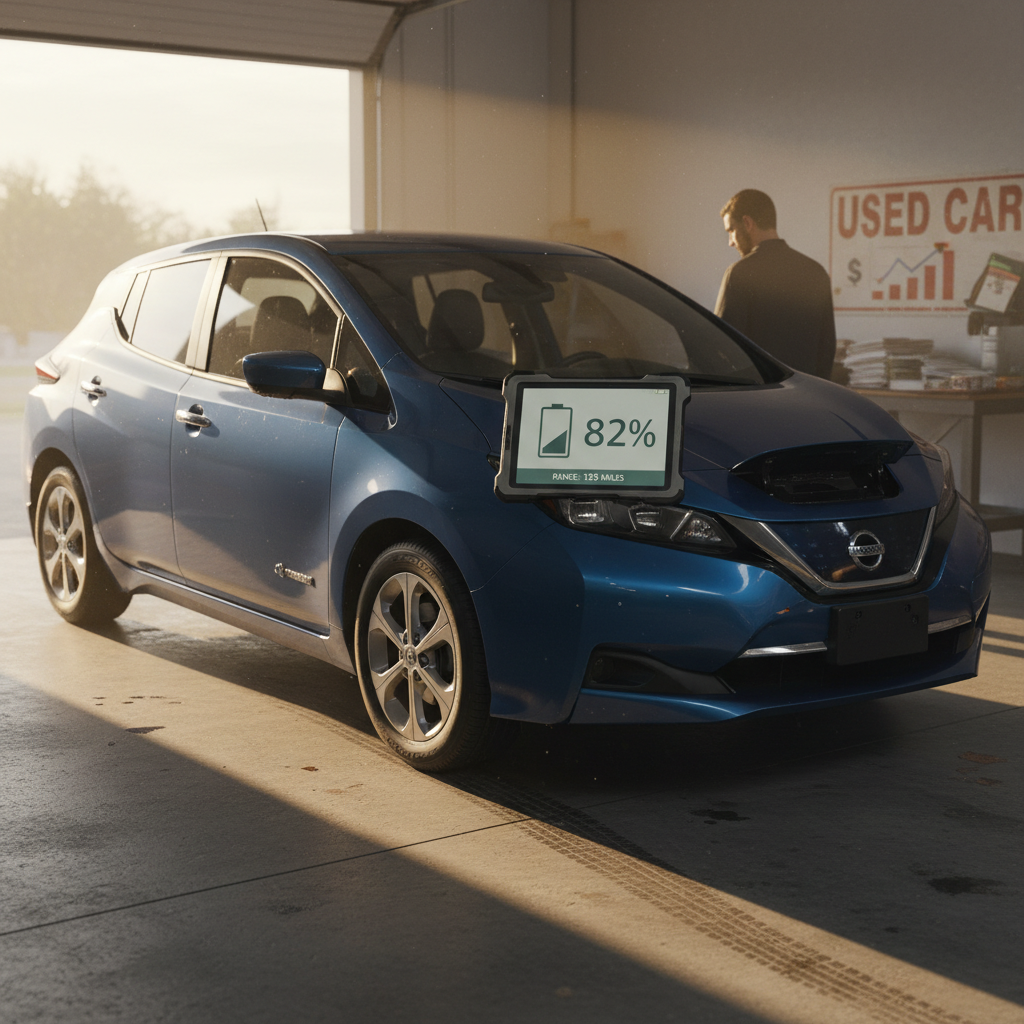
This is the key variable for used EVs. A high-mileage car with a tired pack isn’t a bargain. That’s why Recharged provides a <strong>Recharged Score battery health report</strong> on every EV we sell, so you can see real pack condition before you buy in.
Battery health is make-or-break
Step-by-step: how to estimate your own EV vs gas savings
The averages above are helpful, but your life doesn’t look like an average. Here’s a simple process to calculate your specific EV vs gas savings in South Carolina for 2026.
DIY EV vs gas savings calculator (no spreadsheet required)
Step 1: Gather your numbers
Pull your last <strong>electric bill</strong> and note the all-in cents per kWh (including fees).
Check a few local gas stations or apps for the current <strong>price per gallon</strong>.
Estimate your <strong>annual miles</strong> from maintenance records, insurance, or odometer history.
Step 2: Choose realistic efficiencies
For an EV, use <strong>3.0–3.5 mi/kWh</strong> unless you know your exact model’s rating.
For a gas car, use your current real-world mpg; if you’re unsure, <strong>28–30 mpg</strong> is a fair default for a modern compact SUV.
If you’re comparing specific vehicles, look up their EPA combined economy numbers.
Step 3: Run the fuel math
EV cost per mile = (kWh price ÷ miles per kWh).
Gas cost per mile = (Gas price ÷ mpg).
Multiply each by your annual miles to get yearly fuel spend.
Subtract to find your <strong>annual savings</strong> with the EV.
Step 4: Layer on price and maintenance
Compare <strong>out-the-door prices</strong> (or monthly payments) of the EV and gas car you’re considering.
Add in rough maintenance: assume the EV will be <strong>hundreds per year lower</strong> once out of warranty, especially with higher mileage.
Divide the upfront price difference by your estimated annual savings to get a rough <strong>payback period</strong> in years.
Want help running the numbers?
Frequently asked questions: EV vs gas savings in South Carolina
EV vs gas savings in South Carolina: FAQs
Bottom line: is an EV worth it in South Carolina in 2026?
For most South Carolina drivers who can charge at home, the 2026 picture is clear: EVs are meaningfully cheaper to run than gas cars. With fuel savings on the order of $800–$1,700 a year and lower long-term maintenance, the main question is no longer whether you’ll save, but how quickly those savings outweigh any upfront price difference.
If you’re shopping on a budget, the used EV market tilts the math even further in your favor, provided you buy with real insight into battery health. That’s exactly what Recharged was built for: transparent pricing, Recharged Score battery reports, EV-specialist support, and flexible financing and trade-in options you can handle entirely online or at our Richmond, VA Experience Center.
The smartest next step is to run the numbers on your own situation: your miles, your utility rate, your local gas prices. Once you have that, browse used EVs on Recharged, pre-qualify with no impact to your credit, and see, in dollars and cents, what switching from gas to electric in South Carolina in 2026 would really do for your household budget.