If you drive about 30 miles a day, you’re in the sweet spot where an electric car can quietly undercut a gas car on your monthly commute bill. But how big is the gap, really? Let’s break down the **EV vs gas cost for a 30‑mile commute** using realistic 2025‑era prices and simple math you can adapt to your own life.
What we’ll cover
Why a 30‑Mile Commute Is the Sweet Spot for EV Savings
A 30‑mile round‑trip commute (about 15 miles each way) is long enough that fuel costs really add up, but short enough that **any modern EV** can handle it easily, even in winter, without mid‑day charging. That combination is what makes the economics so interesting: you’re using enough energy each day that the EV’s efficiency advantage shows up clearly in your budget.
- 30 miles per weekday is roughly 7,800 miles per year just from commuting (30 miles × 5 days × 52 weeks).
- Most compact gas cars average around 30–35 mpg in mixed commuting.
- Many everyday EVs use roughly 0.25–0.30 kWh per mile in real driving.
- That means you’re buying hundreds of gallons of gas or thousands of kWh of electricity every year just to get to work and back.
Tip for quick comparisons
Quick answer: EV vs gas cost for a 30‑mile commute
Typical daily commute cost: EV vs gas (30 miles)
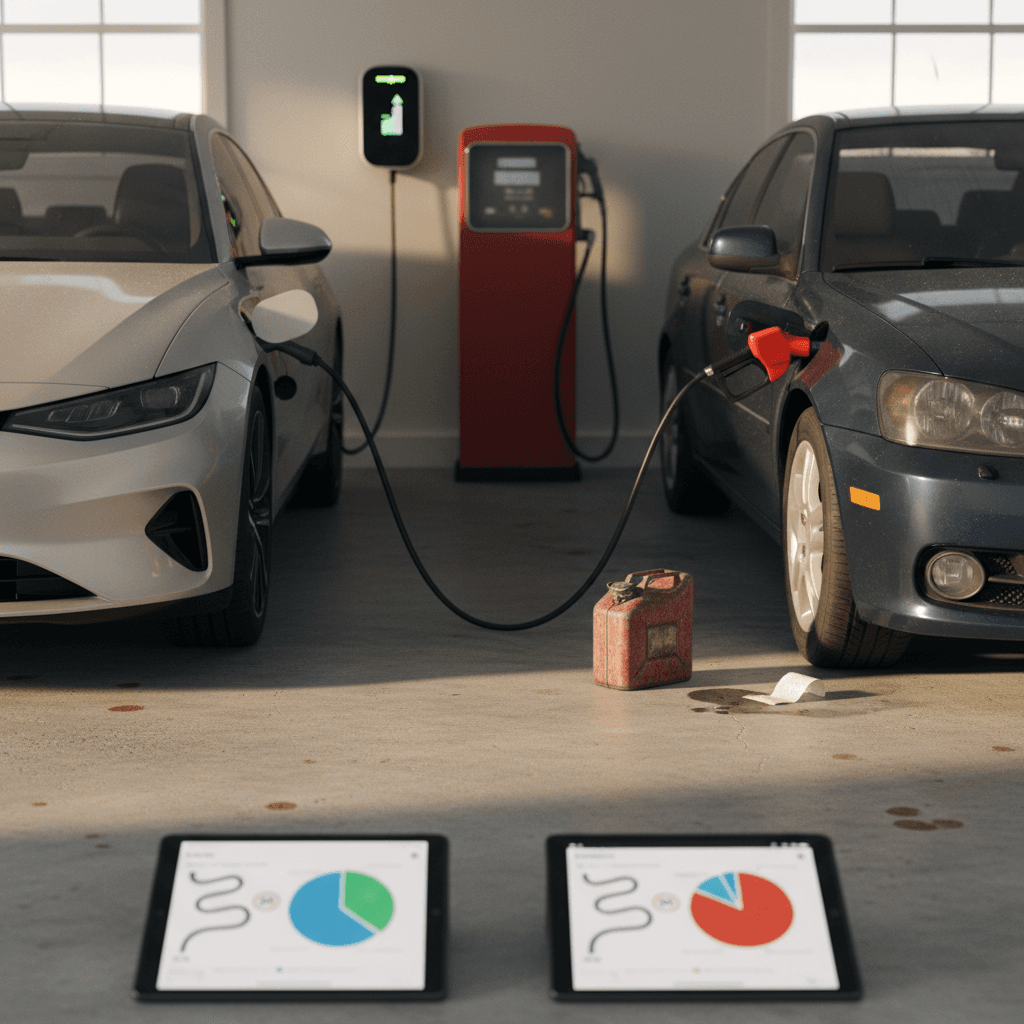
On a plain‑vanilla 30‑mile commute, an EV charged mostly at home is often **half the daily fuel cost** of a similar gas car. If your local electricity is cheap or your gas prices are high, the gap gets even wider. If you rely heavily on pricey DC fast charging, the advantage shrinks and can even reverse, so where you charge matters as much as what you drive.
Your numbers will differ
Step‑by‑step: how to calculate your own 30‑mile commute cost
You don’t need a spreadsheet to compare **EV vs gas cost for a 30‑mile commute**. You just need three numbers for each vehicle: how efficient it is, what energy costs in your area, and how many days you’re commuting.
1. Gas commute cost formula
Daily gas cost = (Commute miles ÷ MPG) × Gas price per gallon
Example: 30 miles, 30 mpg, $3.25/gal
- 30 ÷ 30 = 1 gallon
- 1 × $3.25 = $3.25 per day
2. EV commute cost formula
Daily EV cost = Commute miles × kWh per mile × Electricity price per kWh
Example: 30 miles, 0.28 kWh/mi, $0.13/kWh
- 30 × 0.28 = 8.4 kWh
- 8.4 × $0.13 ≈ $1.09 per day
- Find your gas car’s real‑world mpg from your dash display or fuel log (not the window sticker).
- Look up your local gas price and average electricity rate on your latest utility bill.
- Check an EV’s efficiency in kWh/mi or MPGe on EPA labels or owner forums for your climate.
- Plug your numbers into the formulas above to get daily cost, then multiply by how many days you actually commute per year (for many people, 220–260).

Real‑world examples: compact EV vs compact gas
To make this concrete, let’s compare a typical compact gas car to a similar‑size EV you might find on the used market today. We’ll keep the numbers realistic but rounded so you can adjust them easily.
Example: 30‑mile commute, compact EV vs compact gas
Assuming 260 commuting days per year and moderate U.S.‑average prices.
| Vehicle type | Efficiency | Energy price assumption | Daily commute cost (30 mi) | Yearly commute cost (260 days) |
|---|---|---|---|---|
| Compact gas car | 30 mpg | $3.25/gal | ≈ $3.25 | ≈ $845 |
| Efficient hybrid | 50 mpg | $3.25/gal | ≈ $1.95 | ≈ $510 |
| Compact EV at home | 0.28 kWh/mi | $0.13/kWh | ≈ $1.09 | ≈ $284 |
| Compact EV, public L2 | 0.28 kWh/mi | $0.22/kWh | ≈ $1.85 | ≈ $481 |
| Compact EV, frequent DC fast charge | 0.28 kWh/mi | $0.38/kWh | ≈ $3.19 | ≈ $829 |
These examples use common real‑world efficiency numbers; your exact results will vary with speed, weather, and driving style.
What this table tells you
Home vs public charging: how location changes the math
An EV’s cost advantage lives and dies on **where it drinks its electrons**. Home charging is usually where the magic happens; public DC fast charging is where some of that magic disappears.
How charging location affects your 30‑mile commute cost
Same EV, different electricity prices, very different fuel bills.
Mostly home (best case)
Scenario: You have a Level 2 charger or even a simple 120V outlet at home and can charge overnight.
- Off‑peak rates as low as $0.08–$0.12/kWh in some regions.
- Daily 30‑mile commute can cost $0.60–$1.00.
- Yearly commuting fuel bill: roughly $150–$260.
Mix of home + public L2
Scenario: You charge at home some nights, fill in with workplace or mall Level 2.
- Blended rate more like $0.16–$0.22/kWh.
- Daily cost often in the $1.30–$1.80 range.
- That’s still competitive with, or better than, a gas car at $3–$3.50/gal.
Mostly DC fast charging
Scenario: Apartment living, little or no home charging, frequent use of highway fast chargers.
- Energy can run $0.30–$0.45/kWh.
- Daily 30‑mile commute cost can climb to $2.50–$3.60.
- At the high end, you’re close to, or above, gas‑car fuel cost.
Apartment dwellers, read this
Beyond fuel: maintenance and other ownership costs
Fuel is only part of the story. When you’re comparing an **EV vs gas car for a 30‑mile commute**, you also need to think about how much it costs to keep each vehicle running over years of stop‑and‑go traffic, cold starts, and highway merges.
Why EVs usually win on maintenance
- No oil changes, spark plugs, or exhaust repairs.
- Regenerative braking means brake pads often last far longer.
- Fewer moving parts in the drivetrain overall.
- Many EVs need little more than tires, cabin filters, and the occasional coolant service for years.
For a 30‑mile daily commute, that can translate to hundreds of dollars a year saved versus a gas car that needs regular fluid changes and more frequent brake work.
Where EV costs can creep up
- Tires: Instant torque and heavier weight can wear tires faster if you drive aggressively.
- Out‑of‑warranty repairs on older EVs can be pricey if you pick the wrong car or don’t understand its battery health.
- Home charging installation can cost anywhere from a few hundred dollars to a couple of thousand, depending on your electrical panel and wiring.
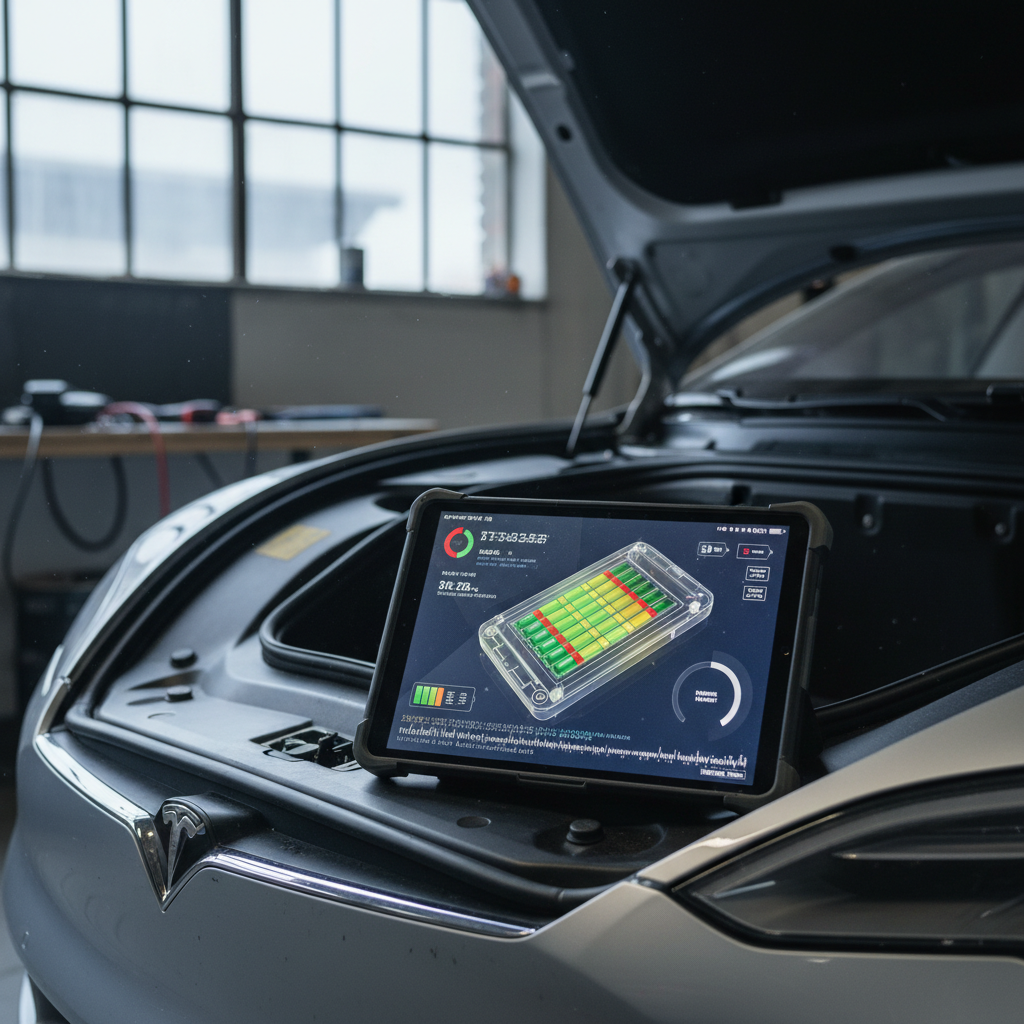
This is where buying from a specialist matters. Every vehicle on Recharged comes with a Recharged Score battery health report, so you’re not guessing about the most expensive component on the car.
When a gas car might still make sense for a 30‑mile commute
An EV isn’t automatically the winner for every 30‑mile commuter. There are a few clear cases where a gas or hybrid still deserves a hard look.
Scenarios where a gas or hybrid can compete
Be honest about your situation before you switch.
No reliable home or workplace charging
If your only realistic option is public DC fast charging at high per‑kWh prices, a thrifty hybrid might be cheaper to run than an EV, especially if gas in your area is moderate.
A 50‑mpg hybrid at $3.25/gal costs under $2/day for a 30‑mile commute, tough to beat with expensive fast charging.
Extreme climate, older EV
In very cold regions, an older, less‑efficient EV may lose a big chunk of range in winter. For a 30‑mile commute it’s usually still fine, but if you also do frequent long trips with few chargers, a gas car can be less stressful.
Ultra‑tight upfront budget
If you’re shopping at the absolute bottom of the used‑car market, it may still be easier to find a very cheap, high‑mileage gas car than a healthy EV. Just remember to budget for higher fuel and maintenance over time.
Unpredictable long‑distance days
If your work routinely sends you hundreds of miles away with little notice, and your region’s charging network is thin, a gas car’s refueling speed remains hard to beat. For many people, though, an EV plus occasional rental car for the rare epic trip is still cheaper overall.
How a used EV can supercharge your commute savings
For commuting, you rarely need the latest, greatest, longest‑range EV. What you do need is **predictable range, low running costs, and a fair purchase price**. That’s exactly where a well‑chosen used EV shines.
Why used EVs are commuter sweethearts
- You’re spreading that lower purchase price over thousands of low‑cost commute miles.
- The slightly shorter range of an older EV matters little when you only need 30–60 miles a day.
- You still enjoy lower fuel and maintenance costs compared with a similar‑age gas car.
- Buying from a specialist like Recharged means you get a verified Recharged Score battery health report, transparent pricing, and EV‑savvy support instead of guesswork on a dealer lot.
How Recharged can help
Ready to find your next EV?
Browse VehiclesChecklist: run your own EV vs gas commute numbers
5‑step checklist to compare your EV vs gas commute
1. Nail down your true commute miles
Count your full round‑trip distance, then add a small buffer for errands. If you work from home some days, estimate how many days you actually commute in a typical year.
2. Gather real efficiency numbers
For your current or prospective gas car, use real‑world mpg from your dash or fuel logs. For an EV you’re considering, look at EPA ratings but also owner reports in a similar climate to estimate kWh per mile.
3. Pull your current energy prices
Grab your latest utility bill for your actual electricity rate (including taxes and fees), and check nearby gas station prices. If you’ll use public charging, look up rates for the networks you’re likely to use.
4. Calculate daily and yearly fuel cost
Use the simple formulas in this article to get daily cost for both vehicles, then multiply by your commuting days. Write the results side by side, gas vs EV, for an apples‑to‑apples view.
5. Add maintenance and ownership realities
Consider oil changes, brakes, tires, and any expected large repairs for each vehicle over the next few years. If you’re considering a used EV, make sure you understand its battery health, Recharged’s Score report is designed to make that crystal‑clear.
FAQ: EV vs gas cost for a 30‑mile commute
Frequently asked questions
Bottom line: is an EV worth it for 30 miles a day?
If you drive about 30 miles a day and have somewhere reasonably priced to plug in, an EV doesn’t just work, it quietly rewrites your commute math. Your daily fuel cost drops, your maintenance chores shrink, and the miles you grind out between home and work stop burning through as much of your paycheck.
Run your own numbers using the simple formulas here. If the savings look compelling, and for many commuters they do, your next step is choosing the right car. That’s where a focused used‑EV marketplace like Recharged comes in, with verified battery health, fair pricing, financing, trade‑in options, and EV‑specialist support to help you turn those paper savings into a smoother, cheaper everyday drive.