If you’re trying to figure out your EV trade in value in West Virginia, you’re not alone. Between fast‑moving used‑EV prices, shifting federal incentives, and West Virginia’s own tax rules, it can be hard to tell whether the number a dealer offers you is actually fair.
A quick 2026 reality check
Why EV trade‑in value feels confusing in West Virginia
With gas vehicles, West Virginia owners are used to a fairly predictable trade‑in dance: check a book value, subtract some for condition, and you’re in the ballpark. With EVs, three extra variables make things murkier: battery health, fast‑changing demand, and policy changes like the phase‑out of federal EV tax credits that wraps up on September 30, 2025 for most purchases and leases.
- Battery packs age differently in the hills, heat, and highway miles of West Virginia, so two identical models can have very different real‑world range.
- Used EV prices have swung more than comparable gas vehicles in recent years, so online price histories can be misleading.
- Federal tax credits for both new and used EVs are scheduled to end for vehicles placed in service after late 2025, changing what future buyers are willing to pay.
Don’t anchor on your original sticker price
How dealers actually calculate EV trade‑in value
Whether you’re at a small store in Beckley or a bigger franchise dealer near Charleston, the math behind your EV trade‑in offer follows the same basic playbook. Understanding that playbook is the first step toward negotiating a better number.
The 4 levers behind your EV trade‑in value
Every offer is just these inputs plus a profit margin
1. Book value & auction data
2. Battery health & real range
3. Local demand in West Virginia
4. Reconditioning & risk
Use multiple offer types
How EVs have been depreciating in recent years
Market trends: used EV prices in 2025–2026
To understand your EV trade‑in value in West Virginia in 2026, you have to zoom out to the national picture. In 2024, used EV prices fell hard as a flood of off‑lease Teslas and first‑generation models hit the market. By late 2025, though, auction data showed used EVs finally stabilizing and even outperforming the broader used‑vehicle index as buyers discovered how much value they offered compared with expensive new EVs.
National used‑EV dynamics
- Rapid depreciation on early models created bargains in 2024.
- By 2025–2026, more mainstream shoppers started looking at used EVs instead of new, improving resale values.
- Price corrections have been steeper for luxury models than for affordable commuter EVs.
How that plays out in West Virginia
- EVs are still a small share of the fleet, so demand is thinner than in, say, Maryland or Virginia.
- Rural buyers worry about charging access, which can suppress offers for short‑range early EVs.
- On the flip side, buyers who commute on I‑64 or I‑79 are waking up to how cheap used EVs are to run, giving well‑specced models a real resale edge.
Why this matters for your offer
West Virginia taxes, credits, and fees that affect your bottom line
Your EV’s trade‑in value is only half the story. The other half is what West Virginia taxes and fees do to the deal when you swap into another car, or when you sell outright and buy later.
How West Virginia taxes impact EV trade‑ins and purchases
Key money flows to pay attention to when you sell or trade in an EV in West Virginia.
| Item | How it works | Why it matters for you |
|---|---|---|
| Motor vehicle sales/title tax | West Virginia generally charges around 5–6% on the vehicle’s price or book value when you title it in the state. | If you trade in and buy at the same time, the taxable amount is based on the new vehicle price minus your trade‑in value, so a higher trade‑in can lower your tax bill. |
| County personal property tax | Most WV counties tax vehicles annually based on assessed value. EVs are generally treated like any other passenger vehicle. | Switching into a newer, more expensive EV can increase your yearly property tax; moving into a cheaper used EV can bring it down. |
| End of federal EV tax credits (2025) | Federal credits for qualifying new and used EVs, including the ability to claim them at the point of sale, are slated to end for vehicles placed in service after September 30, 2025. | If you’re trading into a *new* EV before that date, factor the credit into your total deal math; after that, you’re relying purely on price and operating‑cost savings. |
| No current state EV purchase credit | West Virginia previously offered a generous state‑level EV income‑tax credit, but that program ended years ago and has not been renewed as of 2026. | Don’t expect an extra state rebate to make up for a low trade‑in offer, what you negotiate is what you get. |
Always confirm details with the West Virginia DMV or your tax professional before you sign.
Watch the tax timing
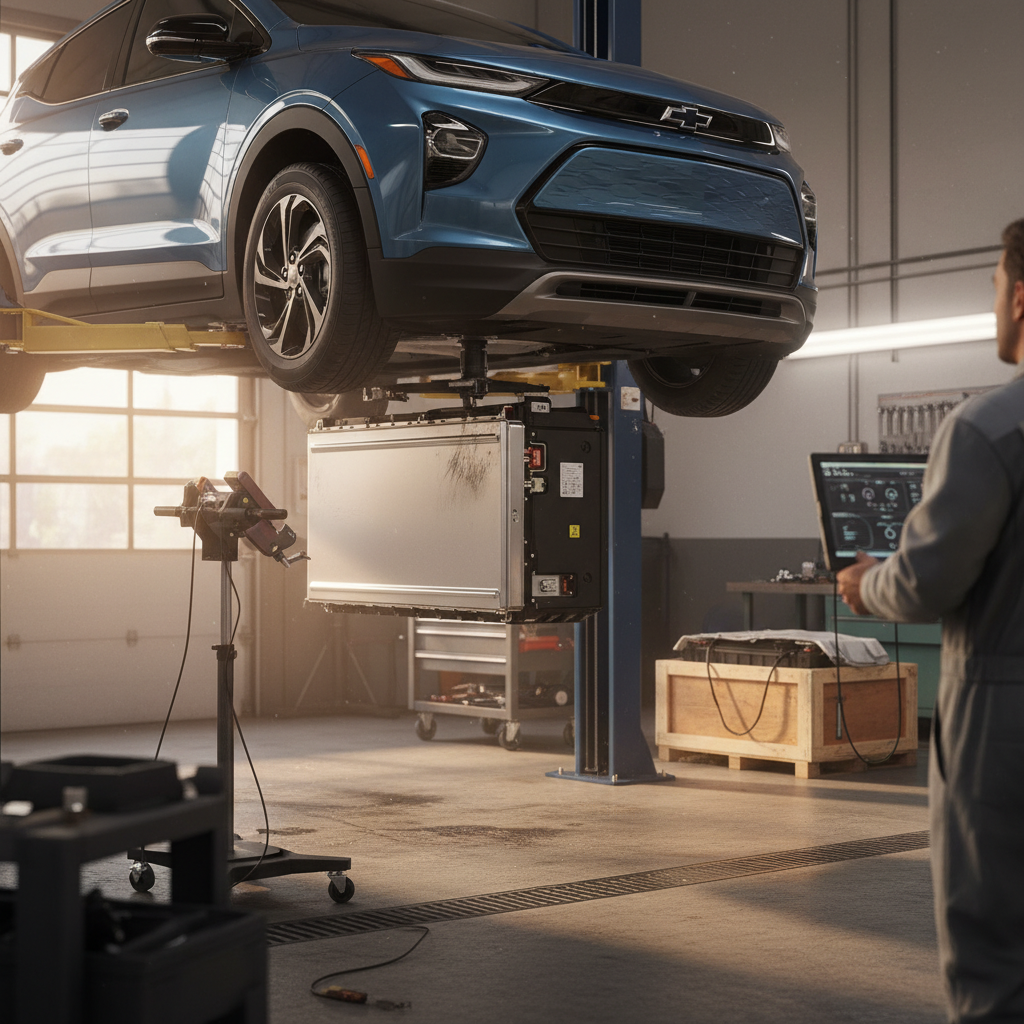
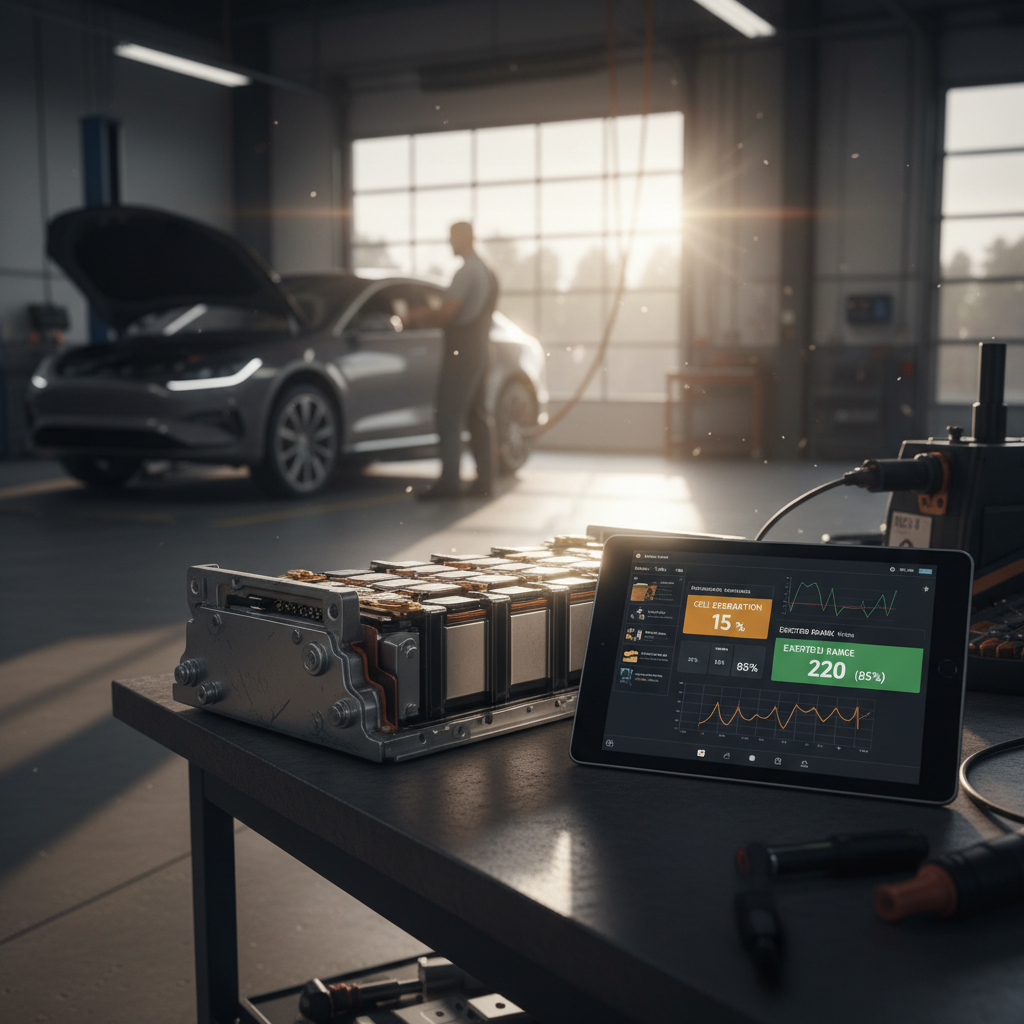
Battery health: the single biggest driver of EV trade‑in value
On paper, two 2019 EVs with 60,000 miles might look identical. In reality, the one that still gets close to its original EPA range is worth dramatically more than the one that’s lost a third of its usable capacity. That’s why EV‑savvy buyers and marketplaces don’t just look at odometer miles, they look at verified battery health.
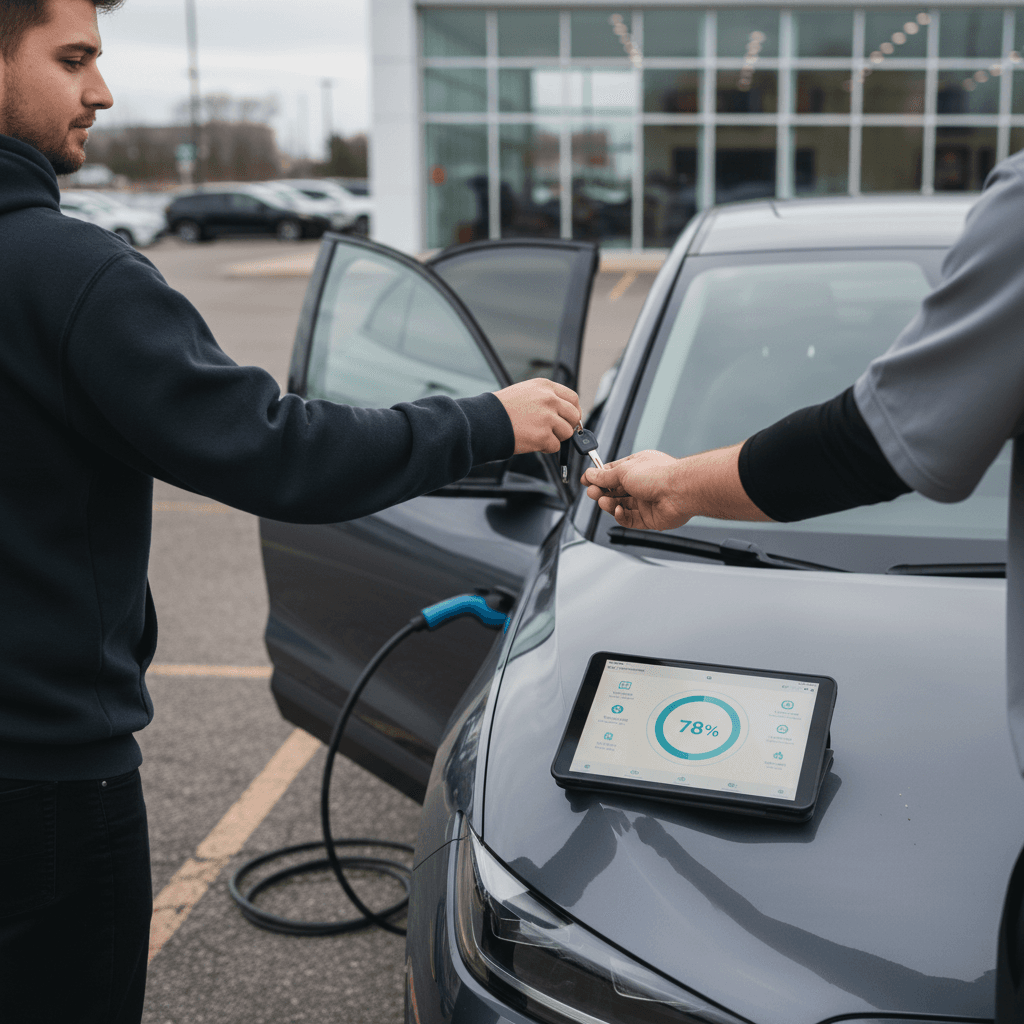
- Fast charging from 0–100% all the time, especially in summer heat, can age a pack faster than gentle daily charging.
- Regularly parking at 100% or running the battery to 0% shortens lifespan over years.
- Cold Appalachian winters temporarily reduce range, but they don’t permanently damage the pack if the car’s thermal management is working correctly.
Bring proof of battery health
Steps to maximize your EV trade‑in offer in West Virginia
You can’t control macro‑level EV prices or federal policy, but you can absolutely control how your individual car looks on paper and in person. Here’s a focused checklist tailored to West Virginia owners.
7‑step checklist for a stronger EV trade‑in offer
1. Get a realistic market range first
Look up comparable listings for your exact year, trim, and mileage on multiple sites. Focus on actual selling prices and days on lot, not just ambitious listing prices.
2. Document your battery and charging habits
Gather screenshots of typical range, service records, and any DC fast‑charging history if you have it. This helps distinguish your EV from high‑degradation examples in the data.
3. Fix small, obvious issues
Curb rash on aero covers, cracked windshield chips, missing charge‑port doors, and worn wiper blades are cheap to fix yourself but expensive line items on a dealer reconditioning sheet.
4. Detail the interior and clean the frunk/trunk
EV shoppers are picky about odors and wear. A clean, odor‑free cabin and organized cargo area can easily move your car up one condition tier in an appraiser’s mind.
5. Gather both keys, charger, and adapters
Missing key fobs and home charging cords quietly cost you money. Replacements are pricey, so having everything in one place supports a higher offer.
6. Get multiple offers within a short window
Request online instant offers, visit at least one local dealer, and consider an EV‑specialist marketplace. Do it all within a week so you’re comparing apples to apples in a fast‑moving market.
7. Time your trade around incentives and seasons
If you’re trading into a new EV before the September 30, 2025 federal credit cutoff, get a written out‑the‑door quote that clearly shows how the credit is applied. In general, spring and early summer see stronger retail demand than the dead of winter.
Trade‑in vs selling privately vs online marketplaces
The right way to extract value from your used EV in West Virginia depends on how much time and risk you’re willing to take on yourself. Trade‑ins are convenient, but they’re not the only option.
Ways to sell your EV in West Virginia
How different selling channels usually stack up on price, effort, and risk for a WV owner.
| Channel | Typical price vs trade‑in | Your effort level | Key pros | Key cons |
|---|---|---|---|---|
| Traditional dealership trade‑in | Baseline | Low | One‑stop transaction, tax advantage when buying same day. | Often the lowest raw price; many dealers are still learning EVs, so they may undervalue good batteries. |
| Private sale (WV or nearby states) | +5–15% | High | Highest potential price; you pick the buyer and timing. | You handle advertising, test drives, paperwork, and you take on safety and payment‑fraud risk. |
| Generic national online instant‑offer sites | +0–5% | Low–medium | Quick quotes; they resell through large networks. | Most don’t deeply evaluate battery health, so quotes may be conservative for well‑cared‑for EVs. |
| EV‑specialist marketplaces like Recharged | +5–12% | Medium | Battery‑health diagnostics, nationwide EV‑focused audience, transparent pricing tools, and help with logistics. | Takes a bit more time than a same‑day dealer trade‑in, though still far easier than a DIY private sale. |
These are general patterns; your exact numbers will depend on your vehicle and timing.
Remember border shoppers
How Recharged handles EV trade‑ins for West Virginia drivers
Because Recharged focuses only on electric vehicles, our entire trade‑in process is built around answering the questions that matter for EV buyers, and rewarding sellers who’ve taken good care of their cars.
What makes an EV‑specialist trade‑in different
Designed for transparency in a fast‑changing market
Recharged Score battery report
Fair market pricing tools
Flexible selling options
If you’re in West Virginia, you don’t have to drive to the Recharged Experience Center in Richmond, VA to get started. You can submit details on your EV online, upload photos, and schedule a quick virtual or in‑person evaluation. From there, you’ll see a clear offer range and can decide whether a direct sale, trade‑in, or consignment best fits your situation.
FAQ: EV trade‑in value in West Virginia
Frequently asked questions about EV trade‑ins in West Virginia
Key takeaways for EV owners in West Virginia
If you own an EV in West Virginia, your trade‑in value in 2026 is shaped by a unique mix of battery health, fast‑evolving national used‑EV prices, and the state’s tax structure. You’ll get the best outcome if you separate fact from guesswork: understand how dealers are valuing cars right now, document your EV’s true condition, and compare offers across local dealers, national instant‑offer sites, and EV‑specialist marketplaces.
Above all, treat your EV like the long‑lived, software‑defined machine it is. Keep the battery healthy, stay current on software and maintenance, and give future buyers confidence with clear documentation. Whether you trade in at a West Virginia dealer or work with a digital‑first retailer like Recharged that builds EV battery diagnostics into every deal, an informed seller is the one who captures the most value.