If you’ve tried to get an EV trade‑in value in Maryland lately, you’ve probably seen numbers all over the map. One dealer lowballs you, another throws out a higher number, but only if you buy today. Add in fast‑moving used EV prices, battery questions, and Maryland’s tax rules, and it can feel impossible to know what your electric car is really worth.
The short version
Why EV trade‑in value feels so weird right now
Used EV prices have been on a rollercoaster. After pandemic shortages pushed values up, 2024 and 2025 brought a sharp correction: in many segments, used EVs dropped more than 15% year‑over‑year, while gas and hybrid prices barely moved. That’s great if you’re buying, but jarring when you’re trading in a car you bought just a couple of years ago.
What’s happening to used EV values?
Dealers know this, and they’re nervous. EV values can move more in six months than many gas cars move in two years. So when they price a trade‑in, they’re thinking not just about what your car is worth today, but whether they can still make money on it 60–90 days from now.
Why the number can change overnight
How Maryland taxes affect your EV trade‑in
Before we dive into batteries and depreciation, you need to understand how Maryland’s vehicle tax rules interact with trade‑ins. This is where a trade‑in can save you real money, separate from the price of the car itself.
Maryland tax basics for EV trade‑ins
How Maryland typically treats sales/excise tax when you trade in or sell your car privately.
| Scenario | What you pay tax on | Why it matters |
|---|---|---|
| Trade‑in at a dealer | Usually the price of the new vehicle minus your trade‑in allowance | Lower taxable amount can save you hundreds or thousands in tax. |
| Sell your EV privately, then buy later | Full price of the next vehicle (no trade‑in credit) | You might get more for the car, but you lose the tax break. |
| Out‑of‑state purchase, register in MD | Maryland excise tax when you title the vehicle in state | Rules can be different if you’re moving or registering a car bought elsewhere. |
| EV incentives and tax credits | Federal credit is handled on your income tax return; Maryland has used excise‑tax‑based programs and is exploring point‑of‑sale rebates | These programs usually use the vehicle’s price before trade‑in when determining eligibility. |
Always confirm the latest rules with the MVA or a tax professional, Maryland has made several changes to both EV incentives and vehicle tax rules over the last few years.
Trade‑in credit vs. EV incentives
There’s one more wrinkle: Maryland has periodically adjusted both its EV excise tax credit program and how generous it is with trade‑in allowances. Depending on the model year and purchase date, you may see references to credits that are funded, paused, or being redesigned as rebates. When you’re shopping in 2026 and beyond, treat any tax break as a bonus, not something to count on until you’ve confirmed the current rules with the Maryland MVA or your tax preparer.
What really drives EV trade‑in value
4 big levers that set your EV’s trade‑in value
Mileage still matters, but not as much as you think.
1. Battery health (State of Health)
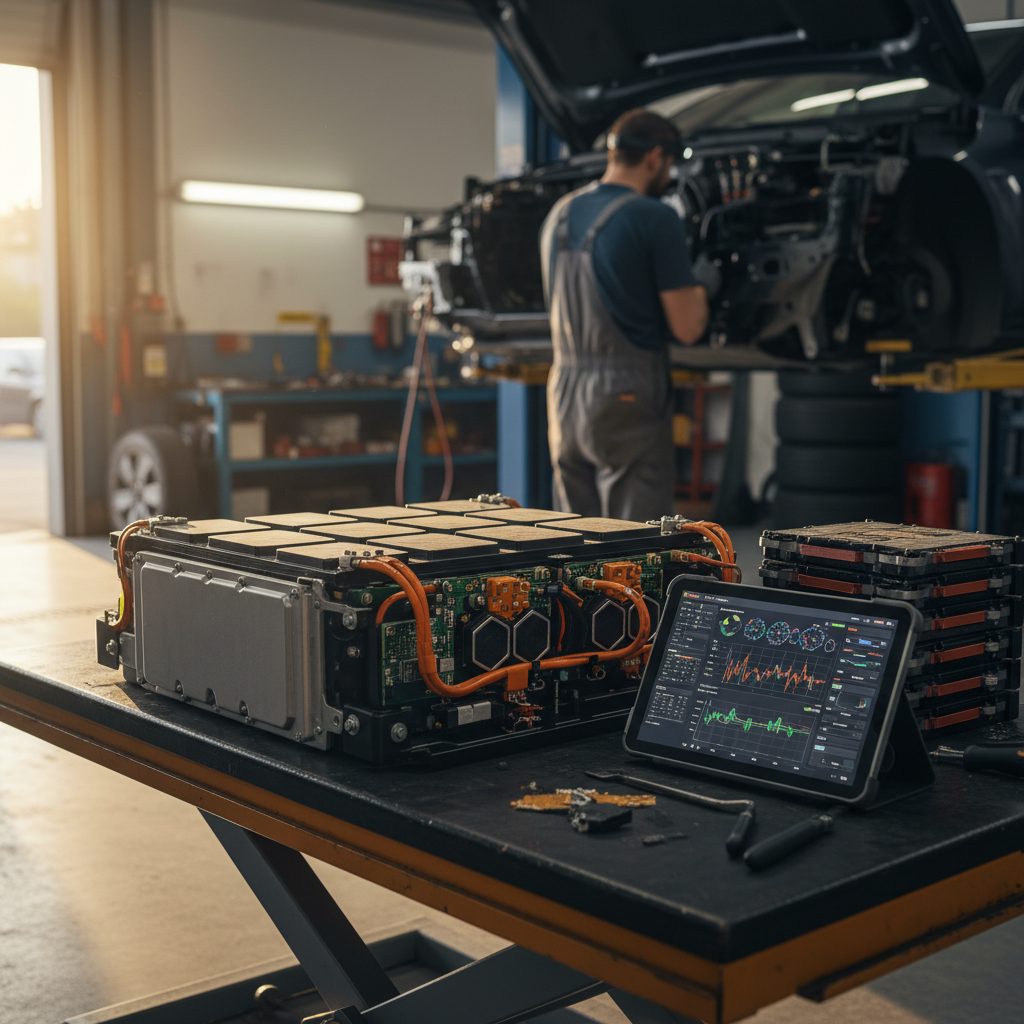
For EVs, the battery pack is the engine, fuel tank, and transmission rolled into one. Dealers and buyers care a lot about its state of health (SOH), usually expressed as a percentage of the original capacity.
As a rule of thumb, a pack around 85–90% SOH on a 3–5‑year‑old EV is considered excellent, and anything below about 75% starts to hit value hard.
2. Model reputation & demand
A popular Tesla Model 3 or Model Y will hold value differently from an early Nissan Leaf with no active battery cooling. Some models have strong demand and proven reliability; others are known for rapid degradation or limited fast‑charging performance.
Maryland buyers also tend to favor all‑weather‑friendly crossovers and SUVs over tiny city cars, which feeds directly into trade‑in bids.
3. Mileage & use pattern
Mileage still counts, but it’s more about how the car was used. A high‑mileage highway commuter car with careful charging habits can be healthier than a low‑mileage car that lived on DC fast chargers.
Dealers look at odometer, service history, and charging behavior when they can see it.
4. Condition, options & timing
Cosmetic damage, worn tires, missing cables, or a cracked windshield all chip away at value. So do missing options that buyers expect, like DC fast‑charging capability.
Timing matters too: trading in a rear‑wheel‑drive sedan right before a snowy Maryland winter, for example, isn’t ideal.
Think like a buyer, not just a seller
How to estimate your EV’s trade‑in value in Maryland
You don’t need a crystal ball, or to accept the first number a dealer throws at you. With a bit of prep, you can walk in with a realistic range in mind for your EV’s trade‑in value in Maryland.
5 steps to get a realistic trade‑in range
1. Start with online valuation tools
Check trusted pricing sites for both <strong>trade‑in</strong> and <strong>private‑party</strong> values using your actual mileage, options, and condition. For EVs, treat these as a starting point, not gospel, many generic tools still lag behind real‑world EV pricing swings.
2. Scan local used EV listings
Look at dealer and marketplace listings in Maryland and nearby states for your model year and mileage. This tells you what similar cars are being advertised for. Your trade‑in will usually land <strong>well below that retail price</strong> to cover reconditioning and profit.
3. Factor in battery health
If you have access to a battery health report from the automaker or a third‑party tool, note the percentage. A car at 90% SOH might track close to pricing guides; at 78%, you should expect a bigger haircut. If you don’t have a report, assume a conservative number until proven otherwise.
4. Adjust for missing items or damage
Subtract the cost of obvious issues a dealer will need to fix: bald tires, curb‑rashed wheels, worn brakes, cracked glass, deep scratches, or missing charging equipment. It’s not unusual for dealers to budget <strong>$1,000–$2,000</strong> for basic reconditioning on a used EV.
5. Get multiple real‑world offers
Nothing beats actual numbers. Get trade‑in or instant‑cash offers from at least two sources, local dealers, online buyers, or a marketplace that buys used EVs. If one is much lower or higher than the others, ask why. Their answer will teach you how they see your car.

Ways to sell your EV in Maryland: trade‑in vs. cash offer vs. consignment
Traditional trade‑in at a dealer
This is the classic move: you bring your EV to the Maryland dealer where you’re buying your next car, they appraise it, and roll the value into your deal.
- Pros: Fast, simple, often reduces your taxable amount on the new car.
- Cons: The convenience premium usually means a lower number than you could get selling outright.
Instant cash or online offer
More buyers now specialize in purchasing used EVs directly. Some franchise dealers and national sites will give you an online bid you can cash out without buying from them.
- Pros: Easy way to set a floor price; you can still use that number to negotiate with a dealer.
- Cons: Offers may be conservative if the buyer can’t see verified battery data.
Consignment or EV‑focused marketplace
Instead of selling your EV to a dealer, you can list it through a platform that markets and sells the car on your behalf.
- Pros: Potentially higher net payout than a trade‑in, without doing all the legwork yourself.
- Cons: Takes more time than a same‑day trade‑in, and there may be fees or a revenue share.
Where Recharged fits in
Steps to boost your EV trade‑in value before you visit a dealer
This is where you can turn a shrug of an offer into something you’re genuinely happy to accept. A few hours of prep can mean hundreds or even thousands of dollars more for your electric car.
Pre‑trade‑in checklist for Maryland EV owners
1. Get proof of battery health
If possible, pull an official battery report from your automaker app, dealer service department, or a trusted third‑party tool. If you sell through <strong>Recharged</strong>, a professional diagnostic is already baked into the Recharged Score Report so there’s no guessing.
2. Gather service and charging records
Keep receipts for tire rotations, brake service, cabin filters, and any warranty work. If you’ve mostly charged at home on Level 2 instead of hammering DC fast chargers, mention that, it reassures buyers about long‑term battery health.
3. Make the car look “retail ready”
Have the interior detailed, remove personal items, and touch up minor scuffs where reasonable. Replace burned‑out bulbs, top off washer fluid, and empty the frunk and trunk so appraisers can inspect quickly.
4. Include all charging equipment
Bring the OEM mobile charger, adapters, and any wall‑connector documentation you’re including with the sale. Missing cables are an easy excuse for a dealer to lower their offer; full kits, neatly coiled, give them one less thing to complain about.
5. Fix inexpensive issues first
If your tires are badly worn or there’s obvious, cheap‑to‑fix damage, get quotes. Sometimes a $400 set of decent tires or a $250 windshield repair will move your car up a condition tier and pay you back more than dollar‑for‑dollar in trade‑in value.
6. Walk in with numbers, not vibes
Bring a simple one‑page summary: recent photos, mileage, battery report, service records, and printed estimates from online valuation tools. When you show you’ve done your homework, the conversation tends to stay closer to fair‑market numbers.
How Recharged approaches EV trade‑in value
Traditional gas‑car appraisal playbooks don’t translate cleanly to EVs. That’s why Recharged was built from the ground up as a used‑EV‑only marketplace and retailer, with trade‑in and instant‑offer options designed around the realities of battery‑powered cars.
What’s different when you trade or sell with Recharged
Less guesswork, more transparency.
Independent Recharged Score Report
Every EV on Recharged gets a Recharged Score Report based on real diagnostic data. It covers battery health, projected range, charging performance, and overall condition, so pricing isn’t a mystery.
Offers built on EV‑specific data
Because Recharged specializes in electric vehicles, trade‑in and instant offers are grounded in current EV market data, not generic gas‑car depreciation curves or outdated assumptions.
Flexible ways to sell or swap
You can trade in, take an instant cash offer, or consign your car through Recharged. Nationwide delivery and a digital‑first process mean you’re not limited to what a single Maryland lot happens to want that week.
Financing & seamless next steps
If you’re moving into another EV, Recharged offers financing, trade‑in support, and paperwork help so you can go from appraisal to driveway without bouncing between multiple dealers.
Ready to find your next EV?
Browse VehiclesYou’re not limited to Maryland lots
Common pitfalls for Maryland EV owners
- Assuming a gas‑car pricing curve. EVs often depreciate faster in the first few years, then stabilize. Don’t anchor on what your old crossover did.
- Relying on a single dealer’s number. Especially in Maryland suburbs with limited EV inventory, one store’s appetite (or lack of it) can skew your expectations.
- Ignoring tax savings. A slightly lower trade‑in that saves you hundreds in Maryland excise or sales tax might still be the better net deal versus a private sale.
- Skipping battery documentation. A dealer who has to guess will assume the worst, and price accordingly.
- Waiting too long to act. In a falling EV market, sitting on a car for another year can cost more than the payments you’re trying to avoid.
Red flags during the appraisal process
FAQ: EV trade‑in value in Maryland
Frequently asked questions about EV trade‑ins in Maryland
EV trade‑in value in Maryland doesn’t have to be a mystery. Once you understand how battery health, model demand, and state tax rules interact, you can separate a fair number from a flimsy one. Whether you decide to trade in at a local dealer, take a cash offer, or work with an EV‑focused marketplace like Recharged, the key is simple: arm yourself with data, compare real offers, and choose the path that leaves you with the strongest combination of price, tax savings, and peace of mind.