If you’ve tried to get an EV trade‑in value by model in 2026, you already know it doesn’t behave like the gas market. One dealer lowballs your Tesla, another won’t touch your Chevy Bolt, and your neighbor just got a shockingly strong offer for a Kia Niro EV. This guide pulls together what we know from 2024–2025 pricing data and today’s 2026 used‑EV market so you can understand where your model lands, and what you can do about it before you trade or sell.
What this guide covers (and what it doesn’t)
Why EV trade‑in values look “weird” in 2026
From 2021–2023, new EV prices were high, incentives were generous, and supply was tight. By late 2024 and through 2025, the script flipped: more models hit the market, some federal tax credits changed or disappeared, and several brands cut new‑EV prices. Used EVs took the brunt of that adjustment, with many models losing well over half their value in five years while comparable gas SUVs held up much better.
- Rapid tech improvement makes a 5‑year‑old EV feel older than a 5‑year‑old gas car.
- Past tax credits pushed effective new prices down, dragging used values with them.
- Some legacy EVs (early Leaf, I‑PACE, etc.) had weak range or slow charging by today’s standards, which hurts demand now.
- The market still strongly prefers crossovers and SUVs over small hatchbacks.
Don’t compare your EV to your old gas SUV
How dealers calculate EV trade‑in value
Whether you pull into a franchise dealer, a big online retailer, or a specialty EV buyer, the math behind your EV trade‑in value is similar. The real difference is how they treat battery health and how much risk they’re willing to own.
What matters most in your EV trade‑in appraisal
Same ingredients everywhere, different recipes by buyer type
Battery health (SOH)
The single biggest driver of EV value is state of health (SOH) of the high‑voltage battery. A car at 94% SOH is a very different asset than the same car at 78%.
Miles, age & use
Model year, odometer, and how the car was used (short city hops vs. long‑distance driving) shape depreciation. Frequent DC fast charging can accelerate wear.
Model demand & desirability
Range, charging speed, body style, and brand reputation all affect how quickly your EV will sell on the lot, and how confident a buyer feels paying more for it.
How traditional dealers see your EV
Most franchise and independent dealers are still ICE‑first. They lean heavily on auction data and conservative book values. If an EV model has been a headache at auction or sits too long on their lots, they’ll discount your trade‑in hard, or simply pass.
How EV specialists like Recharged see it
Specialist buyers layer in verified battery diagnostics, real‑time EV demand, and national pricing data. That lets them pay up for strong‑battery cars in desirable trims, even when generic guides paint all examples of that model with the same brush.
EV trade‑in value by model in 2026: big-picture overview
You’ll see different lists of “best” and “worst” EV resale depending on who you ask, but the same names keep surfacing. Compact hatchbacks with modest range are where depreciation goes to stretch its legs; newer crossovers with 250+ miles of range and fast‑charging hardware are where value hangs on the longest.
Used EV value snapshot heading into 2026
How common EVs tend to fare by 2026 trade‑in
These buckets reflect typical patterns seen in 2024–2025 data carried into today’s 2026 used‑EV market. Your specific car can sit higher or lower depending on battery health, miles, and condition.
| Model group (examples) | Typical 5‑yr value retention | Trade‑in demand in 2026 | What helps most |
|---|---|---|---|
| Newer compact & midsize crossovers (Tesla Model Y, Hyundai Ioniq 5, Kia EV6, VW ID.4, Cadillac Lyriq) | Good to strong | High | Longer range, road‑trip‑ready fast charging, popular body style |
| Mainstream compact EVs (Chevy Bolt EV/EUV, Kia Niro EV, Hyundai Kona Electric) | Moderate | Steady | Affordable prices and decent range offset older tech and smaller cabins |
| Early short‑range hatchbacks (Nissan Leaf, BMW i3, first‑gen Soul EV) | Weak | Patchy | Excellent battery health and low miles, plus strong local demand |
| Luxury performance EVs (Tesla Model S/X, Jaguar I‑PACE, Mercedes EQE/EQS) | Highly variable | Niche | Well‑optioned cars with good range and clean histories; newer batteries help |
| Premium sedans & newer entrants (Polestar 2, BMW i4/i5, Genesis GV60, Mustang Mach‑E) | Moderate to good | Growing | Brand cachet, updated tech, and solid DC charging performance |
Use this table to get a directional sense of where your EV model usually lands, then refine using real quotes and a battery health report.
Don’t obsess over book values alone
High‑demand EVs with strong trade‑in values
If you own one of the following types of EVs, you’re generally playing in the upper half of the trade‑in pool, especially if your battery is healthy and mileage is reasonable. Exact positions move month to month, but the pecking order has been stable through late 2025 and into 2026.
Model groups that tend to hold value best
Think range, charging speed, and brand confidence
Tesla Model 3 & Model Y
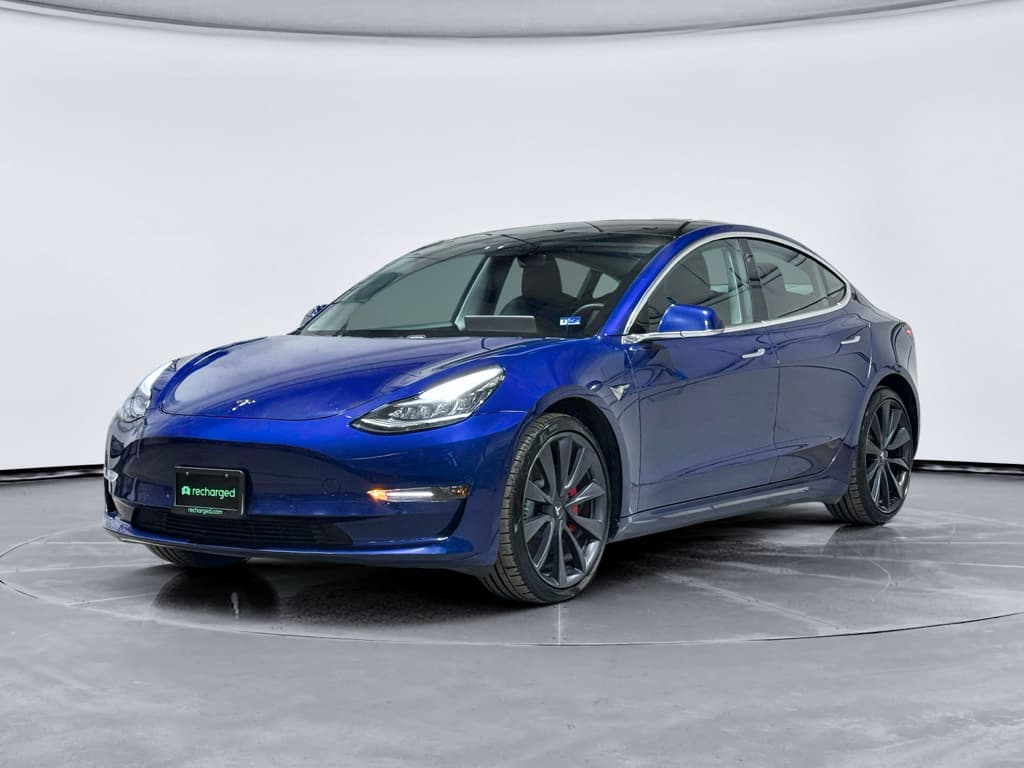
Still the volume leaders of the used EV world. Even with recent new‑price cuts and more competition, clean 3s and Ys with healthy batteries draw strong retail demand and respectable trade‑in offers.
Hyundai Ioniq 5 & Kia EV6
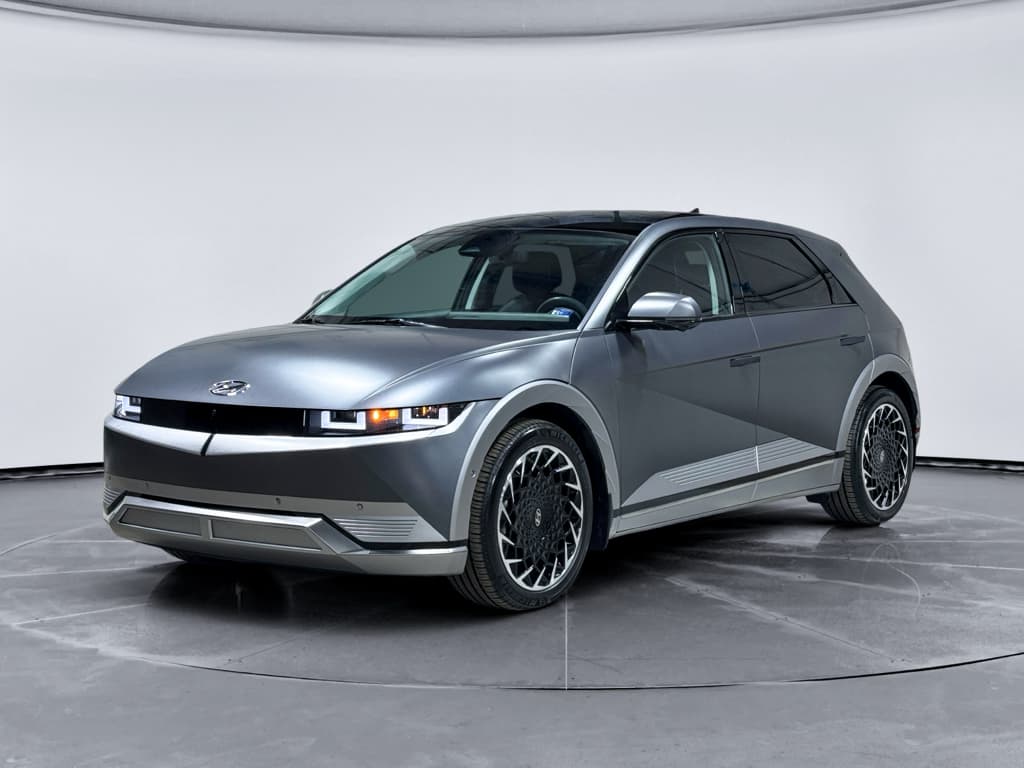
Ultrafast charging, road‑trip‑worthy range, and distinctive styling keep these in demand. Well‑equipped trims with battery health in the 90s can punch above generic guide values.
Mainstream crossovers (ID.4, Niro EV, Kona Electric, Lyriq, Mach‑E)
Crossovers rule American driveways. EV versions that crack 230–260 miles of real‑world range tend to sell quickly, supporting better trade‑in values than smaller hatchbacks.
Signs your EV is a “trade‑in winner”
Soft spots: EVs with weaker trade‑in values
On the other side of the chart are models that look tempting on used‑car sites precisely because someone else already ate the depreciation. If you’re driving one of these and thinking about a trade‑in, expect offers to feel conservative, and know which levers still move the needle.
- Early Nissan Leaf (especially 24–30 kWh packs) in hot climates, where passive‑cooled batteries aged faster.
- Older luxury EVs like Jaguar I‑PACE or early Tesla Model S/X with big miles and outdated tech compared with newer rivals.
- Low‑range city cars (older Mini Electric, Fiat 500e, compliance‑car EVs) that force frequent charging outside of urban use.
- Any EV with a battery or charging history that scares buyers: multiple DC fast‑charge sessions daily, repeated fast‑charging in extreme heat, or battery replacement mysteries.
When it may not pay to trade at all
Battery health: the hidden number that makes or breaks your offer
Two identical EVs, same model year, trim, and mileage, can be thousands of dollars apart in trade‑in value if one battery is healthy and the other is tired. The catch is that many owners have never seen a proper health reading, and many generalist dealers don’t know how to interpret one.
Quick battery‑health reality check before you trade
1. Compare real‑world range to original EPA rating
Charge to 100%, reset your trip meter, and drive your normal mix of roads. If your usable range is still close to the original EPA number, that’s a good sign.
2. Pull a proper SOH report
Some EVs expose battery health directly in the infotainment or via OEM apps. Others require a scan tool or specialist diagnostic like the <strong>Recharged Score battery report</strong> that’s included with every car on <a href="/articles/electric-car-depreciation-rate-by-model">Recharged</a>.
3. Look at DC fast‑charging history
Heavy reliance on DC fast charging, especially in hot climates, tends to accelerate degradation. Expect sharper trade‑in discounts if your car has lived at the fast‑charger.
4. Gather service & recall records
Battery‑related recalls or software updates matter to buyers. Having documentation ready makes your EV feel less risky and can support a better offer.
Use battery health as a negotiating tool
How to boost your EV trade‑in value in 30–60 days
You can’t rewrite your EV’s entire depreciation story in a month, but you can absolutely move your individual car to the top of its model’s value range. Think of it as staging a home before listing it, only with high‑voltage wiring involved.
Practical ways to climb to the top of your model’s value band
Most of these pay back more than they cost
Detail and de‑odorize
A 6‑year‑old EV that looks and smells like a 2‑year‑old car feels more valuable. Professional detailing, paint touch‑ups, and fixing curb‑rashed wheels make a disproportionate difference at appraisal time.
Assemble documentation
Maintenance receipts, recall letters, charging equipment, both keys, original window sticker, these all help prove that your EV was loved and lowers the buyer’s perceived risk.
Address obvious issues
Warning lights, cracked glass, bald tires, and worn brakes all invite worst‑case assumptions. Fixing the most obvious items first can return several times what you spend in higher offers.
Your 30‑day EV value‑boost plan
Get 2–3 baseline offers
Use instant‑offer tools, including specialty EV buyers, to see where your model and mileage stack up today. This sets a realistic floor.
Order a battery health report
If you’re planning to sell through a marketplace like Recharged, the diagnostic will often be part of the intake process. Otherwise, look for EV specialists who can scan your car and explain the reading.
Handle affordable cosmetic fixes
Focus on things that photograph well: a deep clean, paint correction, headlight restoration, wheel repair, and a modest interior refresh.
Schedule any overdue maintenance
Software updates, inspections, and small warranty repairs give future buyers confidence, and give you better footing when comparing trade‑in versus consignment offers.
Trade‑in vs. sell to a marketplace vs. consign
When you’re sitting in the F&I office, a trade‑in can feel like the only game in town. In 2026’s EV market, that’s rarely true. The right path depends on how fast you need to move, how unique your EV is, and how much effort you’re willing to invest.
1. Traditional trade‑in
- Best for: Negative equity, tight timelines, or very common models.
- Upside: One‑stop convenience; easy to roll into new financing.
- Downside: Often the lowest dollar amount, especially for niche or misunderstood EVs.
2. Direct sale to online buyer
- Best for: Clean‑title EVs with average or better batteries.
- Upside: Simple process, transparent offers, often beats dealer trade‑ins.
- Downside: They still need margin to resell your car quickly.
3. Consignment with EV specialist
- Best for: High‑value or unusual EVs, or when you’re not in a rush.
- Upside: You tap into a curated buyer audience and expert marketing.
- Downside: Takes longer; your final payout depends on how the car performs on the marketplace.
Where Recharged fits in
How Recharged approaches EV trade‑ins and offers
Most valuation systems were built in a world where a fuel tank is either full or empty. EVs are different. At Recharged, every used EV is evaluated as an electric car first and a piece of inventory second.
What’s different when you trade or sell an EV through Recharged
Electric‑first thinking, from battery scan to delivery
Recharged Score battery health diagnostics
Every vehicle gets a Recharged Score Report with verified battery health, range insights, and charging performance. That lets strong‑battery cars stand out and fetch stronger prices.
Fair market pricing & transparent comps
Instead of one generic number for all Bolts or Leafs, pricing is built from real‑time market data, battery condition, mileage, and options, explained in plain language by EV specialists.
Flexible selling paths
You can trade in, take an instant cash offer, or consign your EV and let Recharged market it nationwide, with delivery and EV‑specialist support baked into the process.
Digital experience with a real place to visit
Prefer to see someone in person? Recharged operates an Experience Center in Richmond, VA, where you can talk through your options before deciding how to sell or trade.
Ready to find your next EV?
Browse VehiclesEV trade‑in value FAQ for 2026
Frequently asked questions about EV trade‑in value by model in 2026
Key takeaways for EV owners in 2026
EV trade‑in value by model in 2026 is less about a single magic number and more about understanding where your car sits on three axes: its model’s reputation in the used market, your individual battery health, and how carefully you prepare and choose where to sell. A lightly used crossover with a strong pack and clean history can command confident offers; an older, short‑range hatchback with a tired battery will need a smarter selling strategy to shine.
If you’re ready to explore options, start by getting a clear picture of your EV’s battery state of health and a few baseline offers. Then decide whether a quick trade‑in, an instant offer, or a consignment sale through an EV specialist like Recharged gives you the best blend of convenience and cash. In a market that still misunderstands many electric cars, choosing an electric‑first partner can be the difference between feeling lowballed, and feeling like you made the most of the EV you’ve lived with every day.