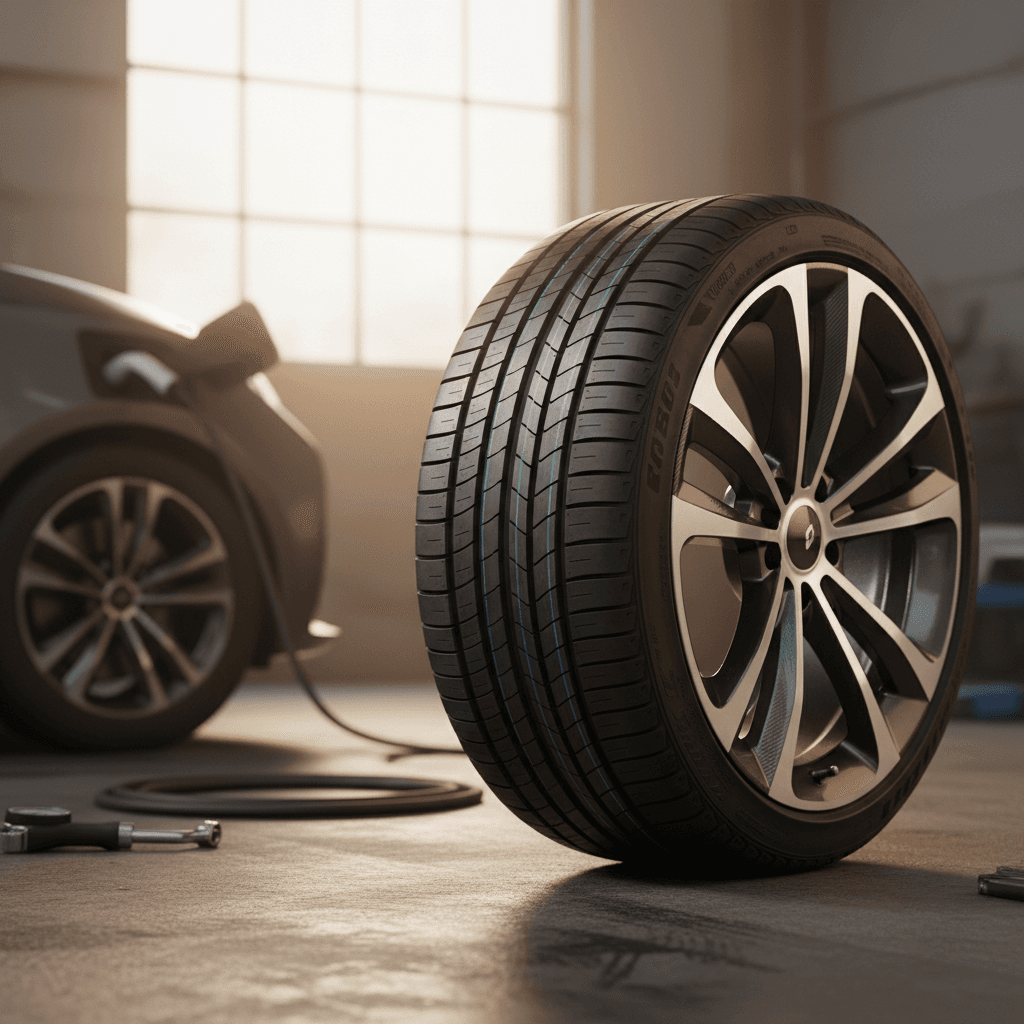
If you’ve just moved into an electric car, or you’re shopping for a used EV, sooner or later you hit the question: EV tires vs regular tires. Are EV-specific tires real engineering, or just marketing? And do you actually need them, or will good all-season “regular” tires do the job?
Short answer
Why EV tires are different from regular tires
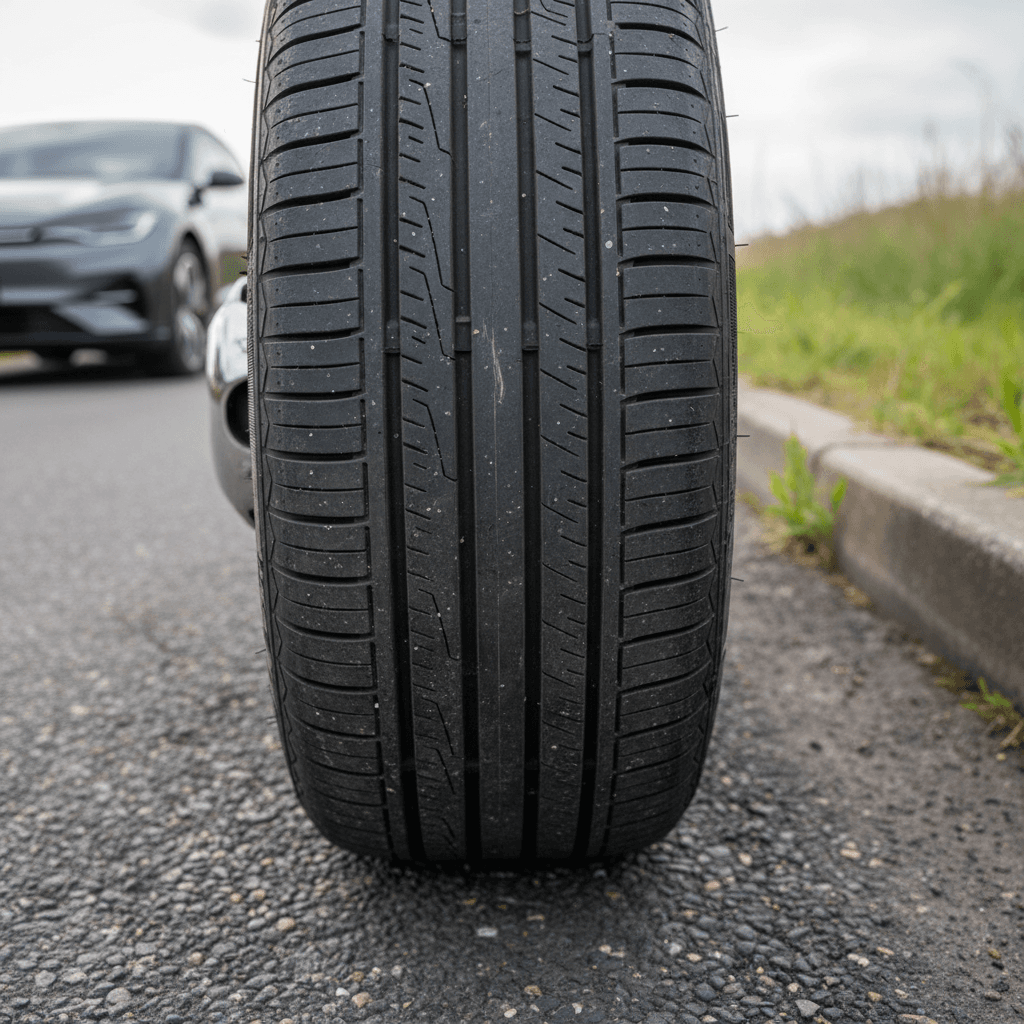
Compared with equivalent gas cars, many EVs weigh hundreds of pounds more, deliver full torque instantly, and cruise in near silence. That combo is murder on ordinary tires. To cope, EV tires use different construction, compounds, and tread designs than the regular all‑season tires you’d bolt onto a Corolla.
- Heavier vehicle weight from the battery pack demands higher load ratings and stiffer sidewalls.
- Instant torque and strong regenerative braking hammer the tread during acceleration and deceleration.
- Efficient electric drivetrains make rolling resistance a bigger slice of your total energy use, so the tire’s drag matters more.
- With no engine noise, tire roar becomes the loudest thing in the cabin, so noise-tuned tread and internal foam become important.
Think of tires as part of the powertrain
EV tires vs regular tires at a glance
EV tires vs regular tires in numbers (typical ranges)
EV tires vs regular tires: side‑by‑side
Typical differences for a mainstream compact or midsize EV compared with a similar gas car on regular tires.
| Feature | EV-specific tire | Regular all-season tire on gas car |
|---|---|---|
| Load rating | XL / HL (extra or high load) to handle battery weight | Standard or XL for larger vehicles |
| Sidewall stiffness | Stiffer for crisp handling on a heavy car | Softer on many comfort-focused models |
| Rolling resistance | Engineered low to protect EV range | Moderate; focused on fuel economy but less critical |
| Typical lifespan | ~30,000–40,000 miles on an EV | ~50,000–70,000 miles on a gas car |
| Noise tuning | Often foam-lined and tread-tuned for quiet cabins | Some noise tuning, but engine masks a lot |
| Typical price range | About $150–300 per tire | About $80–200 per tire for similar size |
Real-world numbers vary by model and brand, but these ranges reflect what many owners experience in 2024–2025.
Construction, load rating, and sidewalls
The first big difference between EV tires vs regular tires is how they’re built. Under the tread, EV-focused tires use reinforced casings, different belt angles, and stiffer sidewalls to carry more weight without squirming or overheating.
Heavier cars, higher load ratings
A typical electric crossover can weigh 400–800 pounds more than a similar gas version. To cope, many EVs ship with XL (extra-load) or HL (high-load) tires. These tires have stronger internal construction and are rated to carry more weight at a given pressure.
If you downsize to a regular tire with a lower load index just to save money, you’re asking that tire to do a job it wasn’t certified to do. That can mean heat build‑up, vague handling, and in the worst case, structural failure.
Sidewall stiffness and feel
Stiffer sidewalls help heavy EVs feel planted in corners and during quick lane changes. On a gas car, a soft, comfort‑oriented tire might feel fine. On a 5,000‑pound EV with instant torque, the same tire can feel mushy, imprecise, and wear its shoulders quickly.
This is why many EV-specific tires feel a bit firmer over sharp bumps: you’re trading a little cush for better control and durability under load.
Never go below the factory load index
Rolling resistance, range, and efficiency
Rolling resistance is the energy your car wastes just flexing its tires as they roll. On a gas car, the engine is so inefficient that this drag is a smaller slice of the pie. On an EV, where the motor and inverter are very efficient, tire drag suddenly matters a lot more.
- EV-specific tires use special tread compounds and internal construction to reduce how much the tire deforms with each rotation.
- Lower rolling resistance means less heat, less wasted energy, and more real-world range per kWh.
- The trade‑off is that ultra‑low‑resistance tires can give up some ultimate grip and wet‑road performance if pushed too far.
- Aggressive off‑road or performance tires can easily cost you 5–10% of your usable range compared to efficient EV tires.
Match the tire to how you actually drive
Tire wear: why EV tires seem to disappear faster
If you feel like EV tires wear out faster than regular tires on your old gas car, you’re not imagining it. Many owners see 20–30% shorter tread life on their EVs, especially on the original equipment tires.
What really eats EV tires
It’s not just the car, it’s the way the car invites you to drive it.
Instant torque
Electric motors deliver peak torque the moment you prod the accelerator. That snap off the line is fun, but every launch scrubs a little more rubber off the tread, especially the fronts.
Extra weight
The battery pack adds serious mass. More weight means more force every time you accelerate, brake, or corner. That loads the tread and shoulders harder than on a lighter gas car.
Regenerative braking
Regen can smooth out brake wear, but it also means the front tires are doing a lot of work slowing the car whenever you lift off, not just when you hit the pedal.
Driving style is a huge variable. A smooth driver who doesn’t floor it at every light and keeps their tires properly inflated can see 30,000–40,000 miles out of a good EV tire. Treat every on‑ramp like a drag strip and you can cord a set in half that mileage, no matter how clever the rubber compound is.
The first-set-of-tires surprise
Noise and comfort in a silent cabin
Pull the engine out of the equation and what’s left in the cabin? Wind and tires. That’s why many EV tires have noise-reducing features that would be wasted on a noisy gas car.
Foam-lined casings
Some EV-oriented tires include a ring of polyurethane foam glued inside the tread area. It acts like a tiny acoustic panel, absorbing resonance that would otherwise boom through the suspension into the cabin.
To you, that translates to less droning on coarse pavement and fewer surprises when you roll from fresh asphalt onto older concrete.
Noise-tuned tread patterns
Even without foam, tread block shapes and spacing can be designed to spread noise across a wider range of frequencies so no single “whine” dominates. From the driver’s seat, that sounds more like a gentle hiss than a howl.
Swap to aggressive off‑road or performance tires and you may be shocked at how loud your otherwise whisper‑quiet EV becomes.
Shop with your ears, not just your eyes
Cost: EV tires vs regular tires over time
Here’s where the conversation usually gets tense. Yes, EV tires are typically more expensive than regular tires, often by 20–30% for similar sizes. But you also have to factor in how long they last and what they do to your energy use.
Cost comparison: EV tires vs regular tires per 100,000 miles
Assumes a mainstream EV on EV-specific tires vs a similar gas car on regular all-season tires, using typical 2024–2025 price and wear ranges.
| Item | EV on EV-specific tires | Gas car on regular tires |
|---|---|---|
| Typical tire price (each) | $150–300 | $80–170 |
| Sets of tires in 100,000 miles | 2–3 (at ~30k–40k per set) | 2 (at ~50k–70k per set) |
| Total tire spend (typical range) | ≈ $1,200–$3,600 | ≈ $800–$1,360 |
| Energy cost impact | Lower rolling resistance can save noticeable kWh over time | Tire choice has smaller fuel impact |
Real costs vary by size, brand, and driving style, but this illustrates why EV tire bills can feel higher over the life of the car.
Don’t just chase the cheapest tire
Can you use regular tires on an EV?
Mechanically, in many cases, yes. If a regular tire matches your EV’s size, speed rating, and load index, a shop can bolt it on and the car will roll. The better question is: should you?
When it can be acceptable
- If the tire meets or exceeds the factory load index and speed rating.
- For lower‑power, lighter EVs that don’t punish their tires as much.
- When the regular tire happens to be designed with low rolling resistance and good noise control.
In these cases, a high-quality “regular” touring tire from a reputable brand can work reasonably well, and sometimes cost less than the latest EV-branded rubber.
When it’s a bad idea
- If the tire’s load index is lower than the factory spec.
- On heavy, high‑torque models where soft sidewalls and weaker construction will get chewed up quickly.
- If the tire is a cheap, noisy design that will tank your range and your cabin refinement.
Cutting corners here is a bit like putting bargain drum brakes on a sports car. They’ll fit, but they won’t keep up.
Check your manual, and your warranty
How to choose the right tires for a used EV
If you’re buying a used EV, whether from a private party or a marketplace like Recharged, the tires you see on the car may not be the ones you want to live with. Here’s a structured way to think about your choice.
Checklist: choosing tires for your EV
1. Start with the door‑jamb sticker
Open the driver’s door and look for the tire placard. It lists the correct size, load index, and pressure. Treat these as non‑negotiable starting points.
2. Decide your top priority: range, comfort, or grip
If you do long highway drives, efficient EV tires are worth it. If you’re mostly in the city, you might trade a little range for better ride and traction.
3. Look for EV-ready or XL/HL labels
Many manufacturers label tires as “EV”, “EV ready”, “Elect” or similar. Whatever you choose, make sure it’s at least an XL extra‑load tire for heavier EVs.
4. Read reviews from drivers of similar EVs
The same tire can behave very differently on a gas sedan vs a heavy electric crossover. Filter owner reviews by vehicle type when you can.
5. Avoid mismatched sets on opposite axles
Mixing different brands or patterns front-to-rear on an EV can create odd handling and uneven wear, especially with strong regen on one axle.
6. Budget realistically
For many EVs, a quality set of four tires installed is going to land somewhere between $800 and $1,500. Factor that into the total cost of buying a used EV.
How Recharged helps here
Ready to find your next EV?
Browse VehiclesMaintenance tips to make EV tires last longer
EVs might skip oil changes, but they absolutely do not skip tire maintenance. The good news: a few simple habits go a long way toward stretching tread life and protecting your range.
- Check tire pressure at least once a month, when the tires are cold. EVs are sensitive to low pressure: underinflation increases wear and kills range.
- Rotate tires on schedule, often every 5,000–7,500 miles. Heavy battery packs punish whichever axle does the most work; rotations even out the abuse.
- Get alignment checked if you notice uneven wear or a pull in the steering. A small misalignment can destroy the inside edge of an EV tire in a few thousand miles.
- Dial back the full‑throttle launches. Enjoy the torque, but not at every light. Your tires, and passengers, will thank you.
- Use the right drive mode in winter. “Eco” or reduced‑power modes can soften torque delivery and help your tires maintain traction on cold, slick surfaces.
Watch your energy graph
FAQ: EV tires vs regular tires
Frequently asked questions about EV vs regular tires
The bottom line for EV shoppers
In the EV tires vs regular tires debate, the physics are simple: heavier vehicles with instant torque and quiet cabins ask more of their rubber. EV-oriented tires answer with stronger construction, lower rolling resistance, and better noise control, at the cost of higher prices and, sometimes, shorter tread life.
That doesn’t mean every EV needs a tire with “EV” molded into the sidewall, but it does mean you should treat size, load rating, and rolling-resistance characteristics as non‑negotiable. From there, you can choose tires that match how you actually drive, max range, maximum grip, or something in between.
If you’re shopping for a used electric car, factor tires into the total ownership story. Platforms like Recharged make that easier by pairing every vehicle with a battery health report, fair-market pricing, and clear information about tire condition, so you know exactly what you’re getting into before your first mile, and before your first new set of tires.