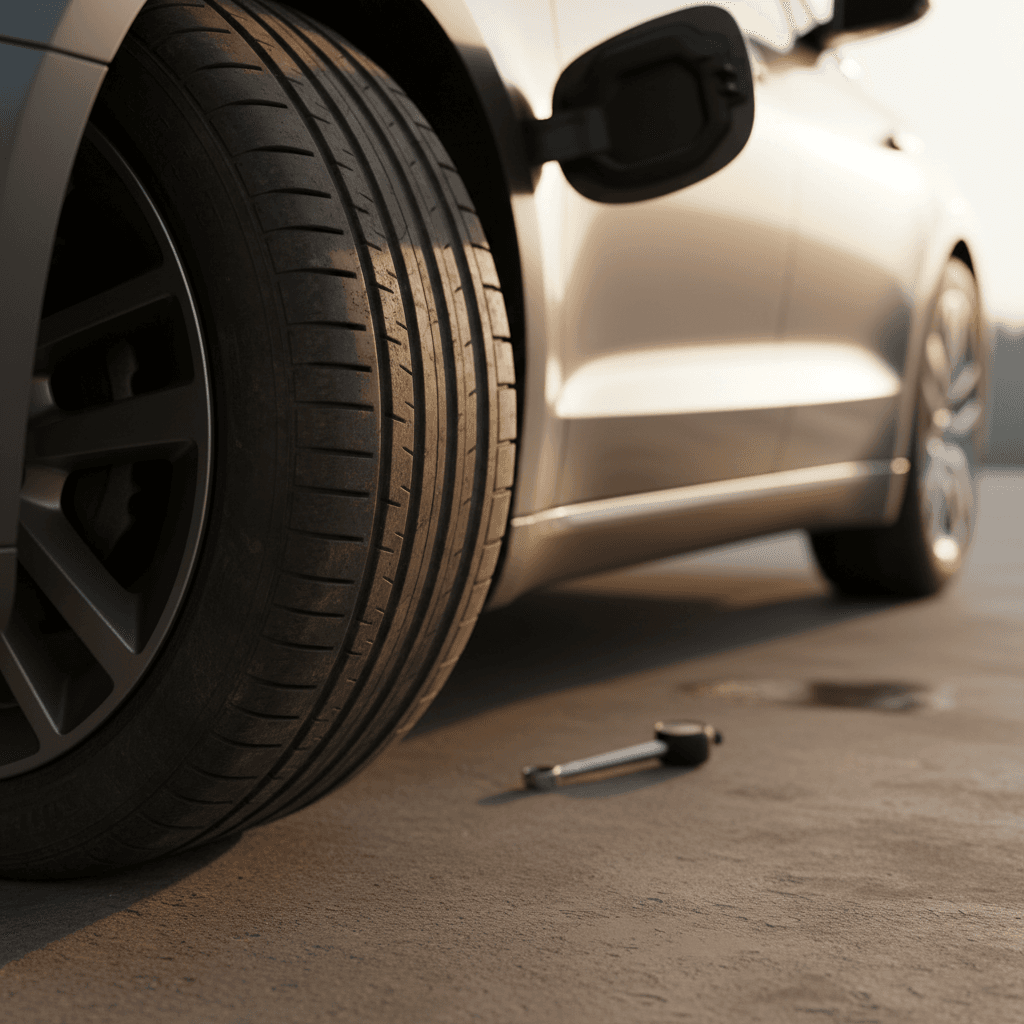
If you’ve heard that EV tire wear is worse than on gas cars, you’re not imagining things. Electric vehicles are typically heavier, deliver instant torque, and often use softer, grippier tires. The result: many owners see their first set of tires disappear sooner than expected, sometimes much sooner. The good news is that with the right tires and a few simple habits, you can dramatically extend tire life and keep ownership costs in check.
Big picture
What makes EV tire wear different from gas cars?
Compared with similar gas cars, most modern EVs are 10–25% heavier because of their battery packs. That extra mass presses down on the tires every mile you drive. On top of that, electric motors deliver instant torque from a stop, so it’s easy to scrub rubber off the tread with every brisk launch. Finally, many EVs ship with special low-rolling-resistance tires that focus on efficiency and grip; that combination can trade away some tread life.
EV tire realities
- Vehicle weight is higher thanks to the battery pack.
- Instant torque can spin or scrub the tires under acceleration.
- Regenerative braking shifts more braking force to certain wheels, often the front.
- Quieter cabins make tire noise more noticeable, so tires are tuned differently.
Gas car tire realities
- Generally lighter vehicles with less constant load on each tire.
- Torque builds gradually, so launches are usually gentler on rubber.
- Conventional braking shares more of the work with the friction brakes.
- Tire noise is masked by engine sound, so compounds can be different.
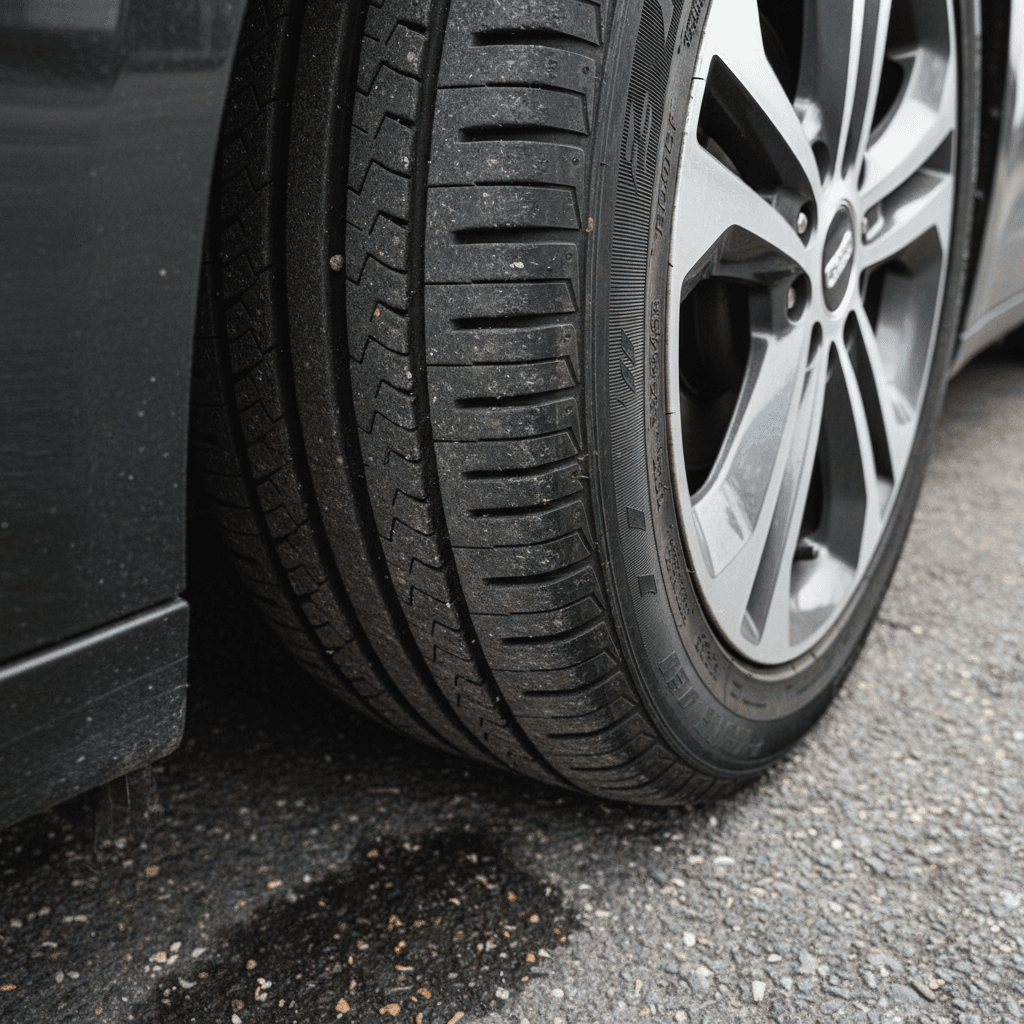
How much faster do EV tires wear?
What the data says about EV tire wear
In practical terms, that 15–20% faster wear might mean a tire that lasts 40,000 miles on a gas car makes it only 32,000–34,000 miles on an EV. For performance-oriented EVs on soft, sticky rubber, and driven enthusiastically, the first set of tires may be done closer to 20,000–25,000 miles. On the flip side, owners who drive smoothly, maintain proper pressure, and rotate regularly often report tread life that looks much closer to a comparable gas car.
Don’t panic at early replacements
Four main reasons EVs wear out tires faster
The big four: why EV tire wear is different
Weight, torque, tires, and driver behavior all play a part.
1. Extra vehicle weight
EV battery packs add hundreds of pounds compared with a similar gas car. That extra weight:
- Raises the load on each tire contact patch.
- Increases heat buildup in the tread.
- Multiplies forces during cornering and braking.
All of this accelerates tread wear if you don’t counteract it with proper inflation and rotation.
2. Instant motor torque
Electric motors deliver maximum torque almost instantly. That’s part of the fun, but also hard on tires.
- Hard launches can scrub rubber off in a hurry.
- Front-wheel-drive EVs can spin the front tires easily on cold or wet pavement.
- All-wheel-drive models can push more force through all four corners.
3. Specialized EV tire compounds
EV-specific tires often use soft, grippy rubber plus low rolling resistance designs to maximize range and comfort. Trade-offs can include:
- Shorter treadwear vs. a harder all-season tire.
- Higher replacement cost.
- More sensitivity to improper inflation.
4. Driving style and one-pedal habits
Many EVs encourage brisk acceleration and strong regenerative braking. Driven hard, that means:
- More weight transfer front-to-back.
- Higher localized wear on the driven axle.
- Uneven front/rear tire life if you skip rotations.
Drive smoothly and you can extend tire life dramatically.
Regenerative braking changes wear patterns
EV tire wear, range, noise, and safety
Tires do more than keep your EV moving. As they wear, you’re also affecting range, cabin comfort, and safety. Worn tires typically have less tread depth to evacuate water, which can increase stopping distances and hydroplaning risk. Aggressive, sticky compounds can improve grip but may trim a few percent off your efficiency and range. Low-rolling-resistance tires tilt in the other direction: better range, but potentially less ultimate grip, especially in snow or heavy rain.
- Shallow tread depth = less wet-weather grip and longer stopping distances.
- Incorrect tire choice (e.g., summer tire in snow) can negate your EV’s traction and stability systems.
- Mismatched or unevenly worn tires can introduce vibration and reduce steering precision.
- Underinflated tires can increase rolling resistance by 10–20%, cutting range and speeding up wear.
When to stop driving on worn tires
Nine ways to make your EV tires last longer
Practical habits that extend EV tire life
1. Check tire pressure at least monthly
EVs are weight-sensitive, and underinflation is the fastest way to chew through tread. Use the pressure on the door jamb, not the sidewall, and check when the tires are cold. A simple digital gauge and a 5-minute routine can add thousands of miles to a set of tires.
2. Rotate tires on a fixed schedule
Because EVs can wear front and rear tires differently, a 5,000–7,500-mile rotation interval works well for most models. If your owner’s manual calls for a specific pattern or interval, follow it, and set reminders in your calendar or app.
3. Ease into the torque
Enjoy the instant acceleration, but don’t make every green light a drag race. Smooth launches dramatically reduce scrubbing at the contact patch, especially on powerful dual-motor or performance models.
4. Dial back aggressive regen in poor traction
In heavy rain or snow, very strong regeneration on the front axle can upset traction and increase localized wear. Using a medium or low regen setting and braking more progressively can be easier on the tires and more confidence-inspiring.
5. Get periodic alignments
If your EV has kissed a few potholes or curbs, schedule an alignment check. Misalignment can ruin a tire set in just a few thousand miles, and heavy EVs are unforgiving of incorrect toe or camber settings.
6. Match tires to your climate
All-season, summer, and winter tires behave differently. If you live where it snows regularly, true winter tires in season are a safety upgrade and can actually protect your all-seasons from being torn up in cold conditions.
7. Don’t cheap out on non-EV tires
Putting a generic, non-EV-rated tire on a heavy electric vehicle can mean more noise, less range, and sometimes <strong>faster</strong> wear. EV-specific options are tuned for higher loads, instant torque, and quieter cabins.
8. Monitor tread depth, not just mileage
Use a tread-depth gauge or the classic quarter test. Irregular wear patterns, feathering, cupping, or one shoulder wearing faster, are early warnings that alignment or suspension components need attention.
9. Consider a dedicated wheel-and-tire set
If you road-trip in summer and commute through harsh winters, a second set of wheels with seasonal tires can improve safety and allow each set to last longer. You pay more up front, but often save money per mile.
The payoff
Tire rotation and alignment schedules for EVs
Every EV has its own recommendations, but as a rule of thumb, a 5,000–7,500-mile rotation interval works for many models. Some luxury EVs stretch to 10,000–12,500 miles, but that assumes gentle driving and smooth roads. If you drive aggressively, tow, or face rough pavement, treat the short end of the range as your default.
Typical EV tire rotation guidance
Always confirm specifics in your owner’s manual, but this chart gives you a starting point.
| Driving profile | Suggested interval | Why it works |
|---|---|---|
| Mostly city, lots of stop-and-go | Every 5,000 miles | Frequent acceleration and braking can chew up the driven axle; rotating keeps wear even. |
| Mixed city/highway, normal driving | Every 6,000–7,500 miles | Balances convenience with good wear characteristics for most EVs. |
| Heavy highway commuting, smooth style | Every 7,500–10,000 miles | Gentle inputs and stable speeds are easier on tires, but regular rotation still matters. |
| Aggressive driving or rough roads | Every 4,000–5,000 miles | High loads, potholes, and spirited launches demand more frequent attention. |
Shorter intervals are cheap insurance on a heavy, high-torque EV.
Use your service visits wisely
Choosing the right tires for your EV
When it’s time for new tires, you’re juggling three main priorities: range, grip, and tread life. EV-specific tires try to hit all three, but there are real trade-offs, especially if you own a sporty model or live where winter gets serious.
EV tire options: how they differ
There’s no single “best” tire, only what’s best for your EV and driving style.
Low rolling resistance (LRR) tires
- Maximize efficiency and range, sometimes by 5–10% versus a grippier tire.
- Often quieter, which pairs well with silent EV cabins.
- May sacrifice some ultimate grip on wet or snowy roads.
Ideal if you prioritize range and mostly drive in mild climates.
Performance EV tires
- Softer compounds for strong dry and wet traction.
- Great for powerful dual-motor or performance trims.
- Typically wear faster and may reduce range slightly.
Best for drivers who value handling feel and confidence at speed.
All-weather & winter options
- All-weather tires split the difference between all-season and winter.
- Dedicated winter tires dramatically improve cold and snow traction.
- May reduce efficiency, but they keep you safe when it counts.
Right choice if you regularly see temperatures below 45°F or drive in snow.
EV load ratings matter
What EV tire wear means when you’re buying used
Tire condition on a used EV is like a snapshot of the previous owner’s habits. Uneven or excessive tire wear can hint at hard driving, skipped rotations, or alignment issues. At Recharged, every vehicle gets a detailed inspection alongside our Recharged Score, so you’re not guessing about tire life, battery health, or overall condition.
What healthy tires suggest
- Even tread depth across all four corners.
- Tread depth that matches the vehicle’s mileage.
- No cupping, feathering, or scalloping patterns.
- Load and speed ratings appropriate for the EV.
Tires like this usually indicate a car that’s been serviced on schedule and driven with some mechanical sympathy.
Red flags to watch for
- Front tires worn much more than rears with no documentation of rotations.
- Outer or inner shoulders worn smooth, often a sign of misalignment.
- Mismatched brands or non-EV-rated tires on a heavy vehicle.
- Cracks, bulges, or very old date codes (older than ~6–8 years).
These conditions don’t have to be deal-breakers, but they should be priced into the car and prompt a closer inspection.
How Recharged can help
EV tire wear: Frequently asked questions
Common questions about EV tire wear
Key takeaways: EV tire wear in plain English
- Most EVs do wear tires faster than comparable gas cars, often by about 15–20%, because of extra weight and instant torque.
- EV-specific tires exist for a reason: they’re tuned for weight, torque, noise, and efficiency, and are usually worth the investment.
- Simple habits, checking pressure, rotating on time, driving smoothly, and keeping alignment in spec, can add thousands of miles to each tire set.
- Tire condition on a used EV tells you a lot about how it was driven and maintained; factor upcoming tire costs into any purchase decision.
- Even with somewhat higher tire costs, a well-chosen EV typically wins on total cost of ownership thanks to lower fuel and maintenance expenses.
Electric vehicles place unique demands on their tires, but that doesn’t mean you’re doomed to burn through rubber every year. Understand the forces at work, choose the right tire for your needs, and stay on top of basic maintenance, and EV tire wear becomes just another line item you manage, not a budget-breaking surprise. And if you’re stepping into the used EV world, a transparent report like the Recharged Score can give you clarity on both tire condition and battery health before you commit.