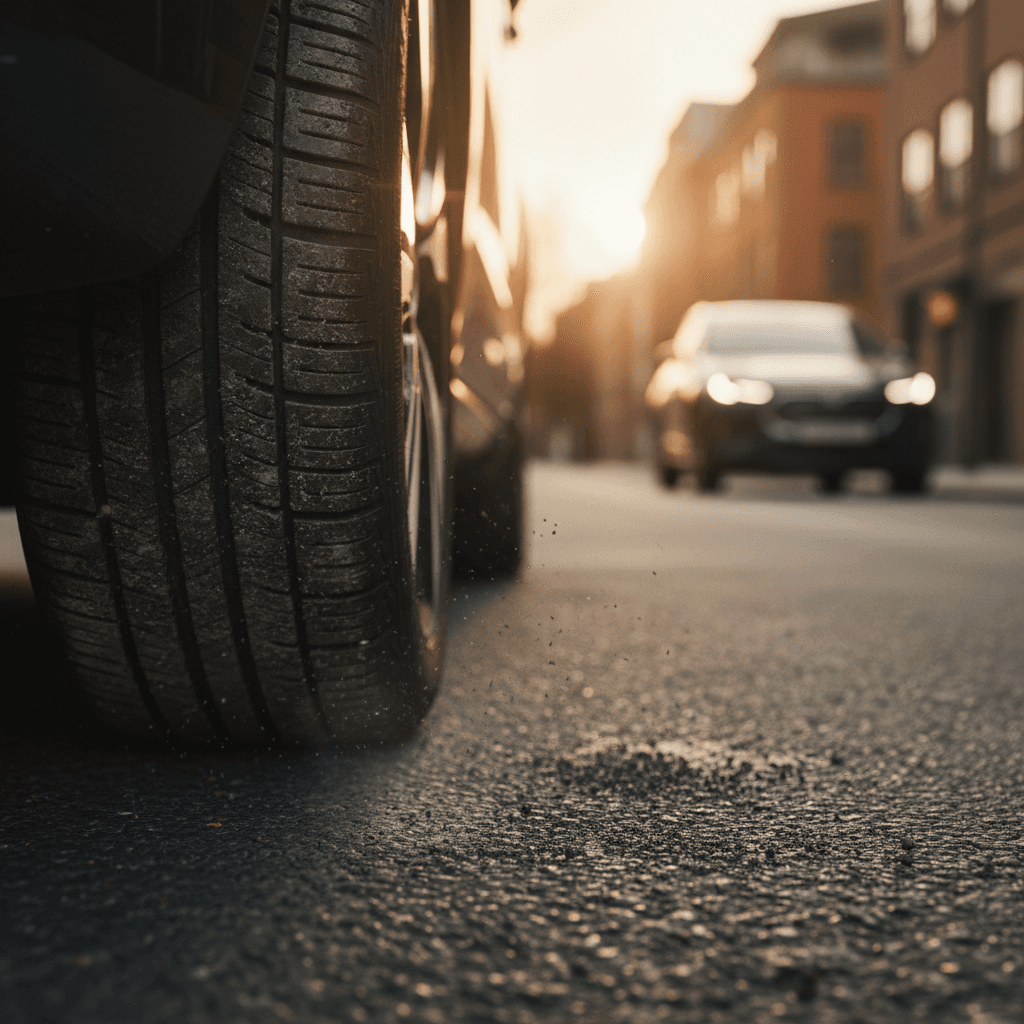
Electric vehicles get praised for zero tailpipe emissions, but there’s a growing conversation around EV tire pollution. Heavier batteries, instant torque and fast acceleration have some people wondering if tire and brake wear from EVs might quietly erase their environmental benefits. Let’s unpack what the science actually says and what you can do as a driver.
Non-exhaust emissions: the new frontier
What is EV tire pollution?
When we talk about EV tire pollution, we’re really talking about the tiny particles released as tires roll, flex and wear against the road surface. Every car, gas, hybrid, or electric, sheds bits of synthetic rubber, fillers, and embedded road dust. These bits can become airborne, wash into storm drains, or accumulate along roadsides as a form of microplastic pollution.
- Most modern tires are made with synthetic rubber derived from petroleum, plus carbon black, silica, resins and metal additives.
- As tread wears down, it generates tire and road wear particles (TRWP), a mix of tire material and road dust.
- These particles range from coarse dust you can see to microscopic fragments small enough to be inhaled or carried long distances in water.
Researchers now treat tire wear particles as a major microplastic source globally, with estimates that tyre and road wear contribute a meaningful slice of microplastics found in rivers and oceans. The question for EV shoppers is how much electric vehicles change that picture, for better or worse.
EV tire pollution by the numbers
How tire wear actually creates pollution
To understand EV tire pollution, it helps to look at the mechanics of tire wear. At the contact patch, your tire is constantly deforming, gripping, and sliding against the road. That friction is what gives you traction, but it’s also what shaves off tiny bits of material.
Key drivers of tire wear
- Vehicle weight: Heavier vehicles press the tire harder into the road, increasing abrasion.
- Torque and acceleration: Hard launches and rapid acceleration scrub rubber off more quickly.
- Speed and cornering: High-speed driving and aggressive cornering increase sliding and heat.
- Tire compound and design: Softer, grippier compounds and high-performance treads often wear faster.
What happens to the particles?
- Airborne dust: Finer particles become part of local air pollution and can be inhaled.
- Runoff to water: Rain washes particles into gutters, rivers, and coastal areas as microplastics.
- Roadside buildup: Coarser fragments accumulate in soil near busy roads.
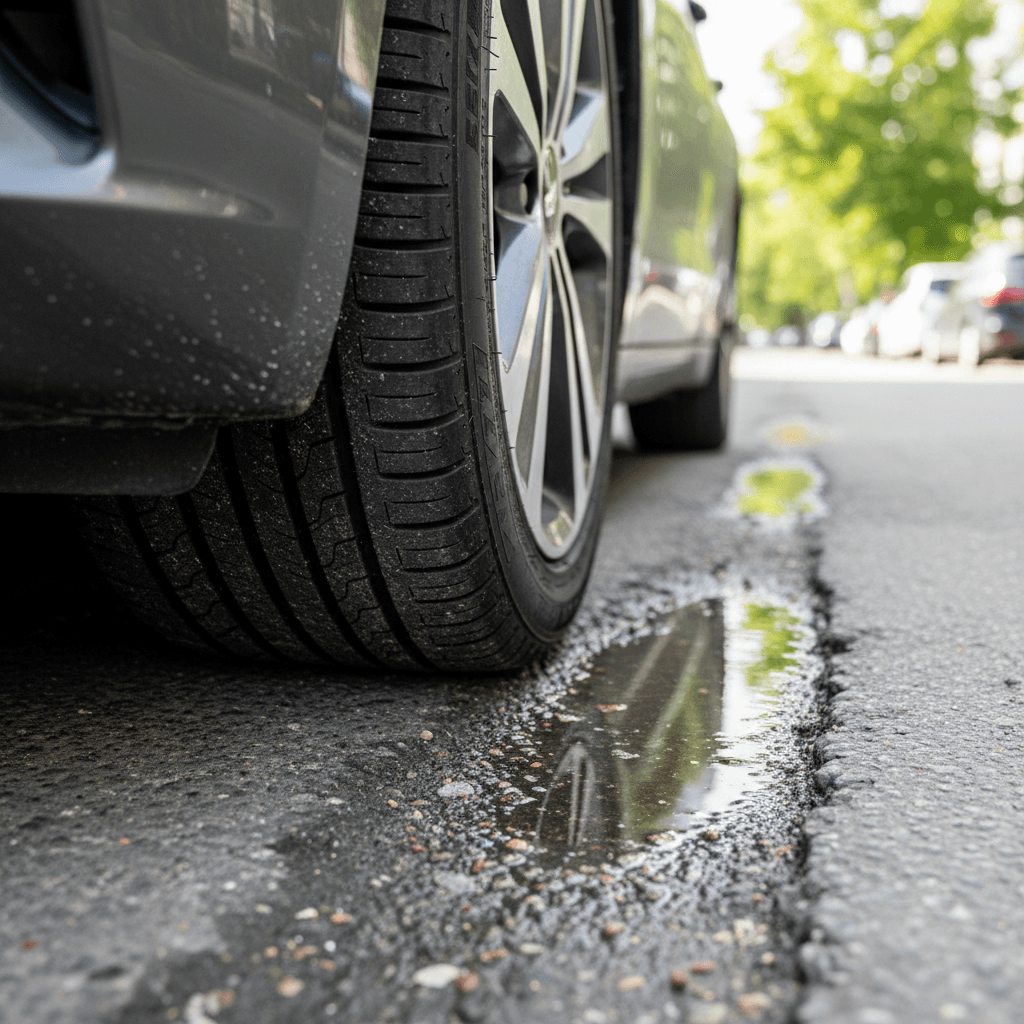
- Chemical leaching: Additives like zinc and antioxidants can leach into water and affect aquatic life.
It’s not just rubber
Do EVs cause more tire pollution than gas cars?
You’ll see stark headlines claiming that EV tires produce far more particulate pollution than exhaust, or that EV tire pollution is dramatically worse than for gasoline cars. The reality is nuanced: vehicle weight and driving style matter as much as the powertrain, and newer studies suggest EVs can hold their own, or even do better, on non-exhaust emissions in typical driving.
EV tire pollution vs gas cars: three key factors
Why blanket claims rarely tell the whole story
Vehicle weight
Acceleration behavior
Regenerative braking
A 2025 study from the Virginia Tech Transportation Institute compared non-exhaust emissions from electric, hybrid, and gasoline cars in mixed real-world driving. It found that, once you factor in regenerative braking and typical urban speeds, EVs often produced less combined brake and tire particulate matter than comparable internal combustion vehicles, despite being heavier.
So where do EVs land overall?
Beyond tires: brake dust and other non-exhaust emissions
Tire wear isn’t the only source of EV pollution without a tailpipe. Brake dust, road surface wear and re-suspended road dust are all part of the non-exhaust picture.
Brake dust and EVs
- Conventional brakes create microscopic metal and carbon particles every time pads touch the rotor.
- Recent lab work has suggested some brake pad dust can be as toxic, or more toxic, than diesel exhaust on lung cells.
- Because EVs use regenerative braking for much of their deceleration, their friction brakes are engaged less often, which can significantly cut brake dust emissions.
Road dust and re-suspension
- Traffic doesn’t just create new particles; it also stirs up existing dust on the road surface.
- Heavier vehicles and high-speed traffic tend to kick more of this material into the air.
- Again, smoother driving and reasonable speeds help reduce how much material gets lofted into the breathing zone along busy streets.
Zero tailpipe ≠ zero emissions
Health and environmental impacts of tire particles
Tire wear particles aren’t just an aesthetic problem. They’re increasingly recognized as an environmental and potential public-health concern, especially near busy roads and in waterways that collect runoff.
- Air quality: Finer particles can remain suspended in the air and be inhaled, contributing to overall particulate matter exposure in cities.
- Water quality and aquatic life: Tire-associated chemicals have been linked to harmful effects in fish and other aquatic organisms, as particles and dissolved compounds reach rivers and coastal waters.
- Soil and roadside ecosystems: Coarser fragments accumulate in roadside soils, where they may slowly break down or leach additives over time.
- Microplastic burden: Tyre and road wear particles are now consistently flagged as one of the top global sources of microplastics.
"Tyre and road wear particles are among the dominant sources of microplastics globally, yet they’re still poorly regulated compared with tailpipe emissions."
Think local as well as global
How EV technology helps cut non-exhaust emissions
Even though EVs don’t eliminate tire pollution, several features work in your favor compared with traditional gasoline cars, especially in stop‑and‑go driving where people live and work.
Why EVs can have lower real-world wear emissions
It’s not just about the battery
Regenerative braking
Smoother speed control
EV-optimized tires
Rapid tech progress
Bottom line for EV shoppers
Practical ways EV drivers can reduce tire pollution
You can’t avoid tire wear entirely, nor should you try, because grip and safety come first. But you can make meaningful reductions in EV tire pollution with a few ownership habits that also save you money on tires.
7 practical steps to cut EV tire and brake pollution
1. Drive smoothly and use eco modes
Avoid full‑throttle launches and hard braking except in emergencies. Many EVs offer Eco or Comfort modes that soften throttle response and limit peak power, which extends tire life.
2. Maximize regenerative braking
Set regen to a higher setting where it’s comfortable and safe, and learn to lift early for one‑pedal driving. You’ll reduce friction brake use and minimize brake dust, especially in urban traffic.
3. Keep tires properly inflated
Underinflated tires flex more and heat up, accelerating wear. Check pressures monthly (and before long trips), following the door‑jamb placard, not just the sidewall maximum.
4. Choose quality, low-wear tires
When it’s time to replace your tires, consider reputable brands that publish wear ratings and emphasize low abrasion for EVs. Avoid ultra-cheap tires that may wear rapidly and shed more particles.
5. Rotate and align regularly
Rotating tires and correcting misalignment prevent uneven wear, which can create excess particle emissions and shorten tire life. Follow your EV’s maintenance schedule or your tire maker’s guidance.
6. Right-size your wheels and tires
Oversized wheels with ultra‑low‑profile tires may look sharp, but they often wear faster and ride harsher. Sticking close to OEM sizes and load ratings usually reduces wear and improves efficiency.
7. Respect load limits
Don’t overload your vehicle. Extra cargo weight increases tire loading and wear. If you regularly tow or carry heavy loads, consider tires with appropriate load ratings and stronger construction.
City vs highway driving
Choosing lower-pollution tires for your EV
The tire industry has started responding to concerns about tire wear particles with new compounds, tread patterns and sustainability claims. When you’re selecting replacement tires for your EV, you can factor in both longevity and environmental performance without sacrificing safety.
Tire features that influence pollution and ownership costs
How common tire characteristics affect wear, efficiency, and non-exhaust emissions.
| Feature | What to look for | Impact on tire pollution | Notes for EV owners |
|---|---|---|---|
| Wear rating (UTQG treadwear) | Moderate to high rating from a reputable brand | Higher ratings often indicate longer life and fewer particles over time | Extremely high ratings may trade off wet grip, balance safety and longevity. |
| EV-specific labeling | Tires marketed for EVs or "EV compatible" | Typically optimized for low rolling resistance and controlled wear | Check owner forums and independent tests, not just marketing claims. |
| Rolling resistance | Low or "eco" rolling resistance class | Can reduce energy use and sometimes wear | Helps maximize range; ideal for commuters and highway drivers. |
| Load index and speed rating | At least equal to OEM specs | Ensures tire can safely handle EV weight without overstressing the structure | Overloading increases wear and heat, raising particle emissions. |
| Compound and construction | Modern silica-rich compounds, reinforced sidewalls | Better balance of grip, efficiency, and durability | Premium tires may cost more up front but often wear more slowly. |
| Price vs lifespan | Total cost per mile over full tread life | Longer-lasting tires spread manufacturing and disposal impacts over more miles | Ask your shop for projected mileage, not just purchase price. |
Use this as a conversation starter with your tire shop or service advisor when choosing EV tires.
What about “green” or recycled-content tires?
EV tire pollution and used EV buying decisions
If you’re shopping for a used EV, you’re probably focused on battery health and range, and you should be. But it’s also worth considering how the car’s weight, tire fitment and prior use could affect both future tire pollution and your running costs.
Questions to ask about a used EV
- What tires are currently installed? Brand, model and age tell you a lot about expected wear and upcoming replacement costs.
- How evenly have the tires worn? Uneven wear can hint at aggressive driving, alignment issues or heavy loads.
- Is the wheel/tire setup stock? Oversized wheels may look good but can shorten tire life and increase non-exhaust emissions.
How Recharged helps
- Every EV sold through Recharged includes a Recharged Score Report that verifies battery health and helps you understand how the car was used.
- Our EV specialists can walk you through expected tire and brake wear for a given model and driving pattern.
- You can complete the entire process online, from shopping used EVs to arranging trade‑in, financing and delivery.
Looking for a lower-impact EV?
EV tire pollution FAQ
Frequently asked questions about EV tire pollution
Key takeaways on EV tire pollution
- All vehicles produce tire wear particles; EVs are not exempt, but they’re also not uniquely dirty when driven reasonably.
- Non-exhaust emissions, tire, brake, and road wear, now dominate traffic-related particulate pollution in many regions as exhaust standards have tightened.
- EVs bring tools like regenerative braking, smoother power delivery and increasingly efficient platforms that can reduce overall wear emissions, especially in cities.
- Your choices as a driver, vehicle size, tire selection, driving style, and maintenance, have a direct impact on both pollution and your long-term tire costs.
- Buying a used EV from a transparent marketplace like Recharged lets you pair lower lifecycle emissions with clear insight into battery health, expected maintenance, and tire replacement planning.
If you care about clean air and the health of the places you drive, it makes sense to think beyond the tailpipe. The good news is that you don’t have to choose between driving electric and minimizing EV tire pollution. A well-chosen EV, matched with durable tires and driven with a light touch, delivers the environmental benefits you’re looking for, without ignoring the very real impact of what happens where the rubber meets the road.