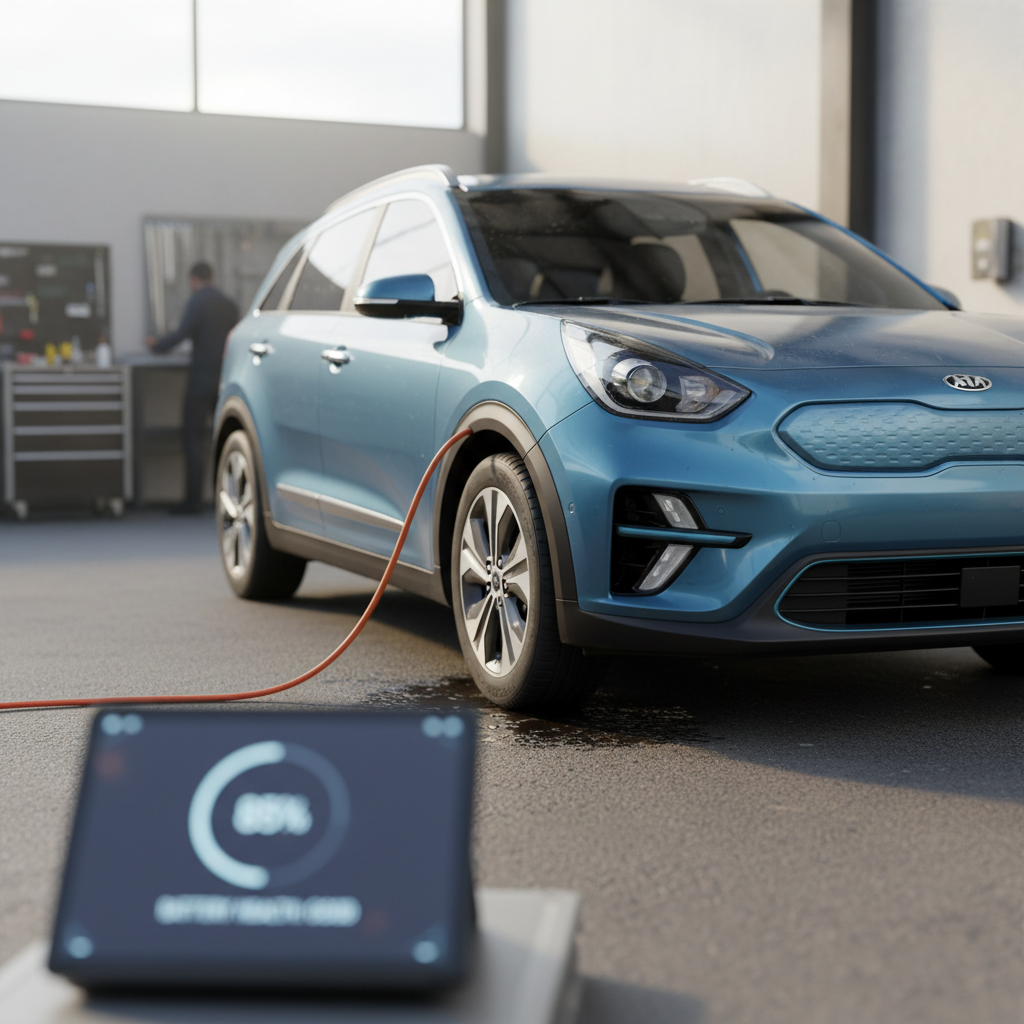
If you’re new to electric vehicles, EV tire lifespan can be a rude surprise. Many owners discover their first set of tires is worn out at 25,000–30,000 miles instead of the 50,000–70,000 miles they were used to on a gas car. The good news: with the right tires, driving habits, and maintenance, you can bring EV tire life much closer to what you expect, and keep your total cost of ownership under control.
EVs and tires: the short version
What EV tire lifespan really looks like
Typical EV tire lifespan in the real world
When you boil down all the noise, most EV owners should expect roughly 20,000–40,000 miles from a set of tires. Light, efficiency-focused models driven gently can land at the upper end of that range. Heavier performance EVs, especially on soft, grippy rubber, may live closer to the bottom end. Outlier horror stories, tires gone at 7,000–10,000 miles, almost always involve extreme weight, performance tires, aggressive driving, or bad alignment, not an inevitable EV curse.
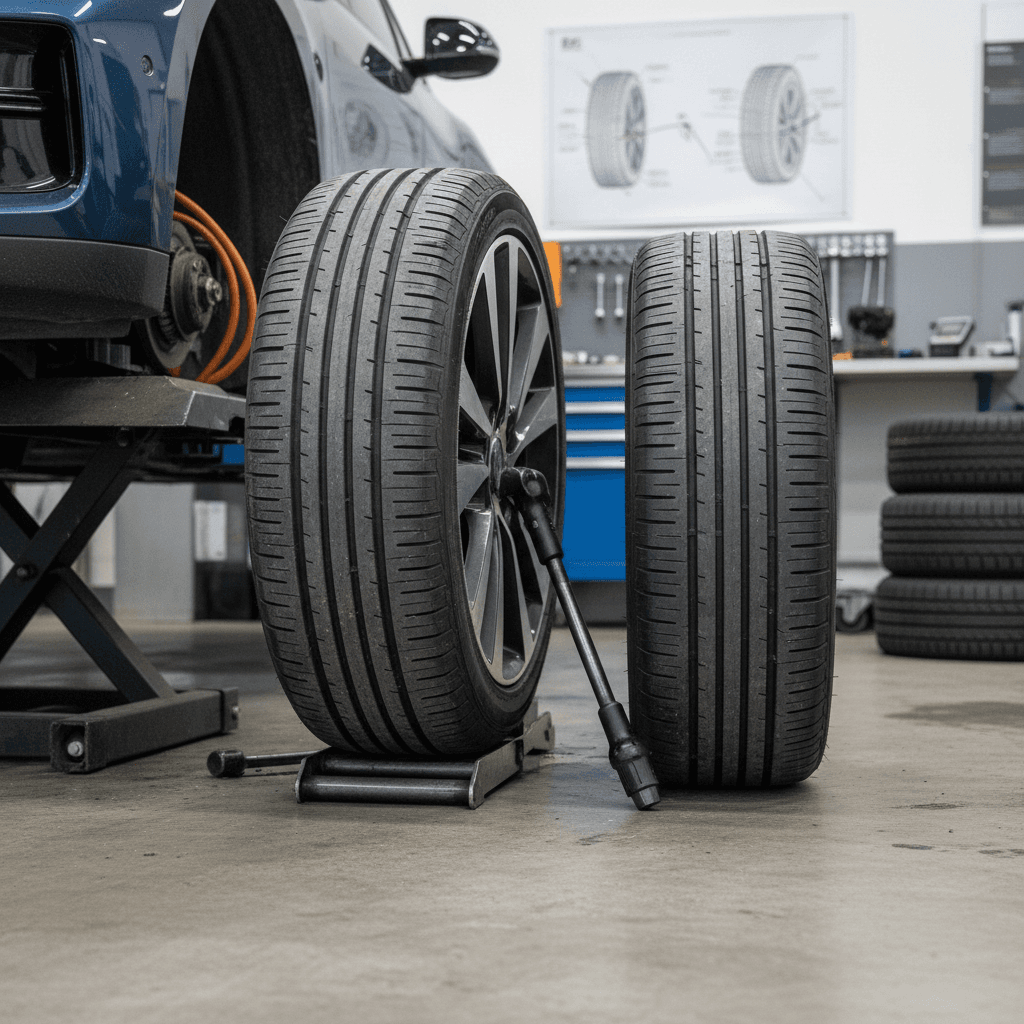
Why EV tires often wear faster than gas-car tires
Four big reasons EV tires have a tougher life
It’s not just the battery weight, though that’s a big one.
1. Extra weight from the battery
2. Instant torque and strong acceleration
3. Regenerative braking changes wear patterns
4. Quiet cabins expose road noise
Don’t panic about the worst cases
How long EV tires should last by use case
EV tire lifespan by driving pattern
These are ballpark ranges for a typical modern EV on quality all-season tires, properly maintained.
| Driver type / usage | Typical EV example | Expected tire life (miles) | Notes |
|---|---|---|---|
| City commuter | Compact hatch or sedan | 30,000–40,000 | Lots of stop‑and‑go; regen braking is high, but speeds are lower and pothole damage is the big risk. |
| Suburban family driver | Small SUV / crossover | 25,000–35,000 | Higher curb weight plus mixed speeds. Rotations every 5k–6k miles are critical. |
| High‑mileage highway driver | Crossover or sedan | 30,000–45,000 | Smooth highway miles with gentle inputs are easiest on tires and can stretch lifespan, especially on efficient rubber. |
| Performance EV enthusiast | Sport sedan or performance trim | 15,000–25,000 | Wide, sticky tires plus heavy curb weight and hard launches mean faster wear is inevitable. |
| Poorly maintained EV | Any type | Under 20,000 | Under‑inflated tires, no rotations, and bad alignment can cut life in half, regardless of vehicle. |
Your actual results will depend on driving style, climate, and how faithfully you service the car.
A quick rule of thumb
Maintenance habits that dramatically extend EV tire life
Simple maintenance habits that add thousands of miles
1. Check tire pressure at least monthly
EVs are more sensitive to tire pressure than many gas cars. Running 3–5 psi low builds heat, hurts efficiency, and can <strong>cut tread life by 20–25%</strong>. Use the pressure on the door jamb, not the sidewall.
2. Rotate every 5,000–6,000 miles
Because EVs often wear the front or driven axle faster, <strong>frequent rotations</strong> even out the workload. Many shops now treat 5,000–6,000 miles as the standard EV interval, often at the same time as a cabin filter or inspection.
3. Get alignment checked every 10,000–15,000 miles
Heavy EVs magnify small alignment issues. If the steering wheel is off‑center, the car drifts, or you see feathering on the tread, have alignment checked. A single bad alignment can burn through thousands of miles of tire life.
4. Inspect tread and sidewalls regularly
Look for inside-edge wear (common on EVs), cupping, or bulges. Catching a wear pattern early gives you a chance to correct alignment or pressure before you throw away a set of tires prematurely.
5. Choose the right tire for how you drive
If you mostly commute and value range, a <strong>low‑rolling‑resistance EV tire</strong> can last longer than the sticky performance rubber that comes on some trims. Don’t be afraid to step down from a max‑performance option if you don’t use its limits.
6. Keep software and TPMS alerts enabled
Many EVs can alert you to low tire pressure or uneven wheel speeds that hint at a developing issue. Don’t ignore those warnings, they’re early clues that can save you a set of tires and improve safety.
Driving habits that quietly chew through EV tires
Habits that shorten EV tire lifespan
- Full‑throttle launches from every stoplight.
- Late, hard braking instead of smooth deceleration and regen.
- Taking corners faster than traffic flow on off‑ramps.
- Clipping potholes and curbs instead of steering around them.
- Ignoring slight pulls or vibrations in the steering wheel.
Habits that extend EV tire lifespan
- Progressive acceleration, use the torque, but not every time.
- Looking ahead and lifting early to let regen slow the car smoothly.
- Rolling through corners at steady, moderate speeds.
- Choosing smoother lanes and avoiding road hazards.
- Responding quickly when the car feels "off" and scheduling an inspection.
You don’t have to baby your EV
Recommended EV tire rotation and alignment schedule
EV tire care schedule most owners can follow
Use this as a starting point and adjust based on your vehicle’s owner’s manual and how you drive.
| Service | Recommended interval | Why it matters for EV tires |
|---|---|---|
| Tire pressure check | Monthly (or at each fast charge) | Keeps rolling resistance low, preserves range, and prevents shoulder wear from under‑inflation. |
| Tire rotation | Every 5,000–6,000 miles | Balances wear between driven and non‑driven axles; especially important with front‑heavy, front‑drive EVs. |
| Alignment check | Every 10,000–15,000 miles, or at first sign of pull/vibration | Corrects toe and camber changes from curb hits and potholes; protects inside edges from premature wear. |
| Full inspection | At least once a year | Lets a technician spot cupping, sidewall damage, or suspension issues that can kill tires early. |
When in doubt, more frequent rotations are cheap insurance on expensive EV tires.
The most expensive mistake
EV‑specific tires vs regular tires: does it change lifespan?
EV‑specific tires vs conventional tires
How tire choice affects lifespan, noise, and range.
EV‑specific tires
- Reinforced sidewalls and internal construction to handle extra weight.
- Compounds tuned for low rolling resistance and strong traction.
- Often include foam liners to cut road noise in quiet cabins.
- May cost more up front, but can wear more evenly and predictably.
Conventional all-season tires
- Usually cheaper and more widely available.
- Not always optimized for EV weight or torque.
- Can wear faster or more unevenly on heavier battery‑electric vehicles.
- May reduce range slightly due to higher rolling resistance.
You don’t absolutely have to buy EV‑branded tires, but there’s a reason they exist. Their construction and tread patterns are designed around the higher weight, torque, and quiet cabins of modern electric cars. In practice, that means they often deliver a better balance of range, grip, noise, and lifespan than a random set of conventional all‑season tires. If you do choose non‑EV tires, work with a tire shop that understands EVs and can recommend models proven to hold up on electric vehicles.
Tire costs and budgeting for EV ownership
For most mainstream EVs in the U.S., you should expect to pay around $150–$300 per tire for quality all‑season replacements, with larger performance models and trucks landing higher. Over 100,000 miles of driving, that usually means two to three full sets of tires, a meaningful but manageable line item in your total cost of ownership.
- Plan on one full set of tires roughly every 30,000–35,000 miles unless you drive unusually gently or aggressively.
- Budget a little more for performance trims with wide, low‑profile tires, those can cost significantly more per corner.
- Factor in rotation and alignment costs; they’re small compared with the price of an early tire replacement.
- Remember that EVs often save you money on oil changes, brake pads, and other maintenance, which helps offset slightly higher tire spend.
How Recharged helps you see the whole cost picture
Used EV shopping: what tire wear tells you about the car
When you’re buying a used EV, the tires are a window into how the car was driven and maintained. Uneven, cupped, or badly worn tires can hint at hard use, lack of rotations, or underlying suspension issues. On the flip side, a car with even tire wear and documented rotations probably had an owner who cared about maintenance, and that often goes hand‑in‑hand with good battery care.
Quick tire inspection checklist for used EVs
1. Compare tread depth at all four corners
Uneven tread between front and rear (or left and right) can signal skipped rotations or alignment issues. A simple tread-depth gauge is inexpensive and very telling.
2. Look closely at inside and outside edges
EVs that are out of alignment often chew up the <strong>inside shoulders</strong> of the tires first, where it’s easy to miss. Run your hand along the inside edge if you can safely do so.
3. Check tire brand and type
Name-brand EV‑appropriate tires suggest the previous owner invested in the car. Cheap, mismatched tires might have been a quick way to pass inspection.
4. Ask when the tires were last replaced
If the seller claims the tires are "new," ask for the invoice or date. You can cross‑check the tire’s DOT date code to see when they were manufactured.
5. Watch for dash warnings on a test drive
Tire pressure monitoring warnings or stability‑control lights during your drive can hint at tire or wheel issues that need attention.
6. Use expert eyes when possible
If you’re buying through a marketplace like Recharged, lean on the <strong>EV‑specialist support</strong> team and inspection reports, they look at tire wear alongside battery health and charging performance.
EV tire lifespan FAQ
Frequently asked questions about EV tire lifespan
Key takeaways: getting the most life from EV tires
- Plan on 20,000–40,000 miles of life from most EV tires, with heavy performance models at the low end and efficient commuters at the high end.
- Your habits matter: smooth acceleration, smart use of regen, and avoiding road hazards can add thousands of miles to your EV tire lifespan.
- Follow an EV‑friendly service rhythm: pressure checks monthly, rotations every 5,000–6,000 miles, and alignment checks every 10,000–15,000 miles.
- Consider EV‑specific tires when it’s time to replace; they’re engineered for your car’s weight, torque, and range needs.
- When you’re shopping used EVs, read the tires like a report card on how the car was treated, and pair that with transparent tools like the Recharged Score Report to see the full picture of battery health and ownership costs.
EVs may ask a bit more of their tires, but that doesn’t mean you’re doomed to constant replacements. With the right expectations and a few simple habits, you can treat tires as a predictable, budgetable part of EV ownership, not a recurring surprise. And when you’re ready to move into a different electric vehicle, Recharged is built to make that transition easy, with verified battery health, clear pricing, and experts who understand what long‑term EV ownership really looks like, from the pack to the tread.