If you live in North Carolina and are eyeing an electric vehicle in 2026, the phrase to remember is **“deadlines and details.”** The rules around the federal EV tax credit, the new One Big Beautiful Bill (OBBB), and utility rebates mean that what you can still claim in 2026 is very different from what buyers enjoyed in 2023–2024. This guide walks you through how the **EV tax credit in North Carolina for 2026** really works, what’s expiring, and how to plan your purchase so you don’t leave money on the table.
Key date changes to know
Overview: EV tax credits in North Carolina for 2026
Let’s start with the big picture. As of early 2026:
- There is **no state-level EV purchase tax credit** in North Carolina for individual buyers.
- You may still see **federal tax benefits show up in 2026**, but mostly for vehicles you bought or leased **before** the fall of 2025.
- The main federal incentive that still clearly applies to new spending in 2026 is the **Alternative Fuel Vehicle Refueling Property Credit** for home charging equipment, available for qualifying installs placed in service by **June 30, 2026**.
- North Carolina drivers can also tap **utility incentives**, especially from Duke Energy, to reduce the cost of installing a Level 2 home charger.
So if you’re shopping for an EV in 2026, your strategy in North Carolina is less about finding a big state rebate and more about **maximizing what’s left of federal rules**, plus **stacking utility charger incentives** with smart financing on the vehicle itself.
EV incentives affecting North Carolina buyers
Federal EV tax credit timeline: what changes before 2026
Congress originally extended the **Clean Vehicle Credit** and charger credit out to 2032 under the Inflation Reduction Act. The OBBB, however, pulled those deadlines forward. For North Carolina buyers, here’s the practical translation:
Federal EV incentive cutoff dates that affect 2026
Key federal deadlines that influence what a North Carolina driver can still claim in 2026.
| Incentive | What it covered | Last eligible acquisition or install | What this means in 2026 |
|---|---|---|---|
| Clean Vehicle Credit (new EVs) | Up to $7,500 for qualifying new EVs and fuel-cell vehicles subject to price, income, and assembly rules. | Vehicle must be acquired and placed in service on or before Sept. 30, 2025. | No credit for **new purchases** made after Sept. 30, 2025, even if you file 2026 taxes. |
| Previously-Owned Clean Vehicle Credit | Up to $4,000 for qualifying used EVs bought from a dealer, with price and income limits. | Same Sept. 30, 2025 acquisition and in‑service deadline. | No used EV purchase credit for vehicles acquired after Sept. 30, 2025. |
| Commercial Clean Vehicle Credit | Credit for vehicles used in business fleets, often used to support the so‑called leasing “loophole.” | Also ends for vehicles acquired after Sept. 30, 2025. | Reduces the ability of lessors to pass federal savings into lease deals after fall 2025. |
| Alternative Fuel Refueling Property Credit (home chargers) | 30% of cost (hardware + install) for home EV charging, up to $1,000 for residential property. | Qualifying property must be placed in service by June 30, 2026. | Still available for North Carolina homeowners installing a charger anytime through June 30, 2026. |
All dates are based on current federal law as of April 10, 2026. Congress could change these again in the future.
Don’t confuse tax year with purchase date
Which EV tax credits are still available in 2026?
In 2026, the menu of incentives for a typical North Carolina resident looks like this:
Main EV savings paths for North Carolina in 2026
Think in terms of **what you’re buying** and **when you bought it**.
1. Credits from a 2025 purchase
If you bought or leased an eligible new or used EV on or before Sept. 30, 2025, you may be claiming the federal credit on your 2025 return (filed in 2026). What you can claim depends on:
- Vehicle price and battery requirements
- Your income thresholds
- Whether the dealer correctly registered and reported the sale to the IRS
2. Federal home charger credit
Install a qualifying Level 2 charger at your North Carolina home by June 30, 2026 and you can claim:
- 30% of equipment + installation costs
- Up to $1,000 maximum credit on your federal return
3. Utility & rate incentives
Utilities like Duke Energy offer:
- Credits to offset electrical upgrades (“Charger Prep”)
- Charger rental or turnkey installation programs
- Special EV time-of-use rates for cheaper overnight charging
Notice what’s **not** on that list: a North Carolina–specific purchase tax credit. For most households in 2026, the realistic play is **a good deal on the car itself** plus a **stack of charger- and utility-related incentives.**
Does North Carolina offer its own EV tax credit?
North Carolina has taken a relatively cautious approach to direct EV incentives. As of 2026:
- The state **does not offer a personal EV income tax credit or rebate** for buying a new or used electric vehicle.
- You will still pay standard **state sales tax** on a vehicle purchase, plus a **special annual EV registration fee** (to help replace lost gas-tax revenue).
- For many plug-in vehicles, you are **exempt from state emissions inspections**, though safety inspections still apply depending on your county.
That doesn’t mean you’re on your own, but it does mean that most of the monetary help comes from **Washington, D.C.** (for chargers) and from **North Carolina utilities** (for charger prep, equipment, and rate plans) rather than from the state Department of Revenue.
Where state policy still helps
Duke Energy & other utility EV charger credits in NC
Where North Carolina shines is in **utility-backed programs** that make it cheaper and easier to charge at home. Details vary by utility and by time, so always check the current rules, but here’s the general landscape.
Duke Energy’s Charger Prep Credit
For many Duke Energy customers in North Carolina, the flagship incentive has been the EV Charger Prep Credit. This program typically helps pay for the electrical work needed to support a Level 2 charger, such as:
- Running a new 240‑volt circuit to your garage or driveway
- Upgrading your electrical panel or breakers
- Permitting and inspection fees related to charger prep
Historically, Duke has often covered around $1,000 or more of these costs for eligible residential customers, with larger caps for multifamily or commercial projects.
Other Duke Energy EV programs
Beyond the prep credit, Duke has piloted or rolled out:
- Charger Solution programs where you can rent a Level 2 charger for a monthly fee rather than paying upfront.
- EV‑specific rate plans that offer cheaper overnight electricity if you charge during off‑peak hours.
- Occasional managed charging or virtual power plant pilots that may offer bill credits in exchange for letting Duke control when your car charges.
Program names and details evolve, but the pattern is clear: utilities see EVs coming and are willing to share part of the cost to get chargers into North Carolina driveways.
Stack Duke with the federal charger credit
How the federal home EV charger tax credit works
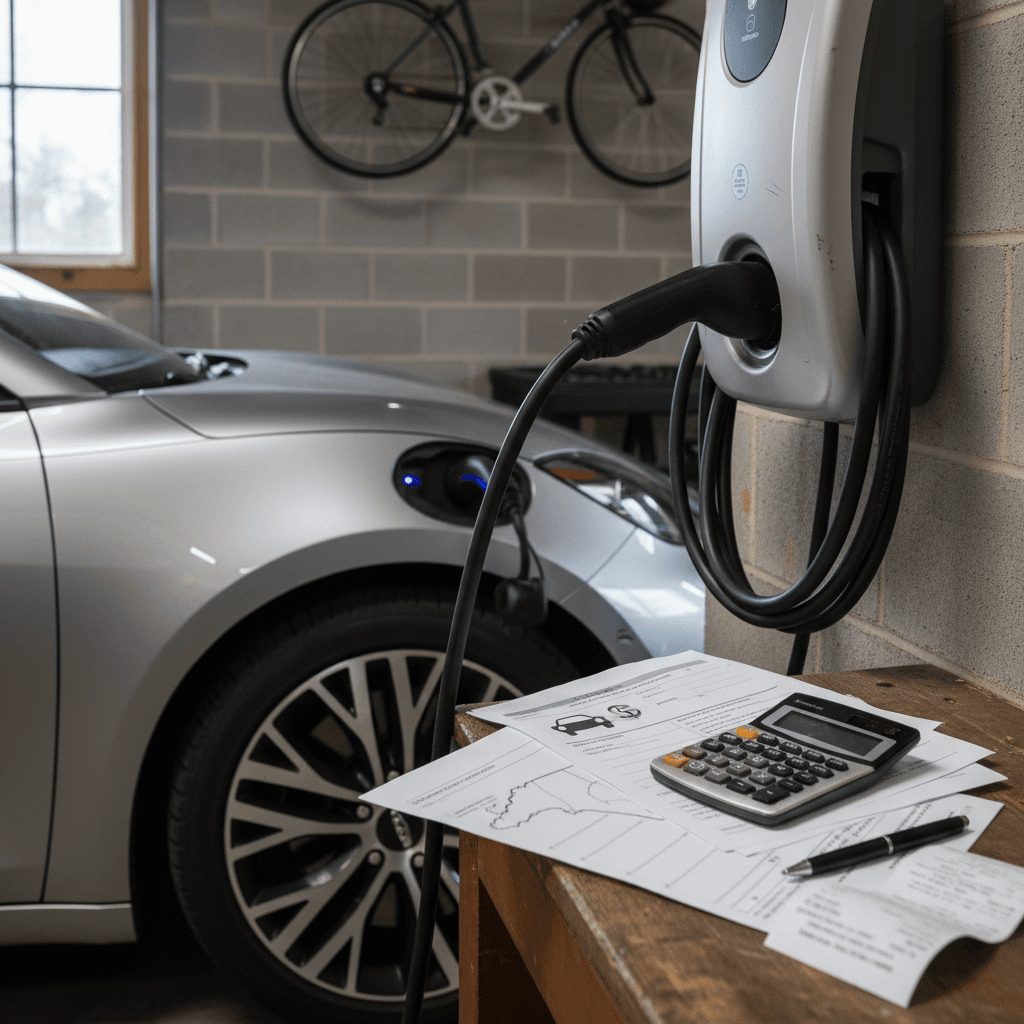
For many North Carolina households, the **Alternative Fuel Vehicle Refueling Property Credit** (often called the “30C” credit) is the most straightforward EV-related federal tax benefit still open for new spending in 2026.
Steps to maximize the EV home charger tax credit for 2026
1. Confirm you qualify as residential
For most homeowners in North Carolina, the residential rules apply if you’re installing a Level 2 charger at your primary home. If your situation is part‑business, talk to a tax professional about whether the commercial rules fit better.
2. Choose qualifying equipment
Pick a Level 2 charger that meets current federal requirements. Many mainstream home chargers qualify, but always confirm with the manufacturer and keep the documentation.
3. Track both hardware and installation costs
The 30% credit is based on the total of the charger plus the professional installation, wiring, panel work, permits, and labor. Keep itemized invoices and proof of payment.
4. Watch the June 30, 2026 deadline
The charger must be <strong>placed in service</strong>, installed and ready for use, by **June 30, 2026** to qualify under the current OBBB rules. Don’t schedule installation at the last minute.
5. Claim the credit on your federal return
You’ll typically file IRS Form 8911 or the successor form your tax preparer uses for refueling property. If utility rebates helped pay your bill, you usually claim the credit on your <em>net</em> costs, not the full pre‑rebate amount.
Credit vs. deduction: know the difference
Leasing vs. buying in NC: how tax credits differ
When the IRA rules first rolled out, one of the most talked‑about wrinkles was the so‑called **“lease loophole.”** Lessors, often the finance arms of automakers, could claim a commercial clean vehicle credit on leased EVs even when the car didn’t qualify under the consumer rules, then pass some of that value back to you as lower monthly payments or upfront lease cash.
The OBBB pulls the plug on that strategy for new acquisitions after **September 30, 2025**, when the commercial credit goes away along with the retail purchase credits. That has two key implications for a North Carolina driver shopping around the 2025–2026 window:
- If you lease an EV **before Sept. 30, 2025**, there is a good chance the lessor can still structure a deal that effectively bakes in federal credit value, often advertised as “lease cash” or an “EV bonus.”
- If you sign a new EV lease **after that date**, you’re relying much more on **market pricing** and automaker discounts, not on federal tax architecture, because your lessor can no longer claim the commercial clean vehicle credit on new acquisitions.
Ask the dealer the right question
Timing your EV purchase around the 2025–2026 deadlines
For North Carolina shoppers, the next 18 months are all about **timing and priorities**. Here are a few common scenarios and how the changing EV tax credit landscape affects them.
Decision paths for North Carolina EV shoppers
You want maximum federal help on the car itself
Aim to buy or lease a qualifying new or used EV by **September 30, 2025** so you can use the Clean Vehicle Credit one last time.
Confirm with the dealer that your specific VIN qualifies and that they will properly register and report the sale to the IRS.
Plan for the credit to appear on your **2025** federal return, filed in early 2026, or as a point‑of‑sale credit if that’s still supported at your dealer.
You’re flexible on timing but focused on total cost of ownership
Don’t chase a tax credit at the expense of paying too much for the vehicle. A well‑priced EV in 2026 with no purchase credit can still be smarter than an overpriced 2025 deal with a tax break.
Look closely at **electricity costs**. A good time‑of‑use rate and a subsidized home charger can take a big bite out of your ongoing fuel costs.
Consider a <strong>used EV with verified battery health</strong>; depreciation can easily outweigh any lost federal credit.
You’re building or renovating a home
Work with your builder and electrician to have a **240‑volt circuit and panel capacity** ready for EV charging.
Time the charger installation to be **completed and operational by June 30, 2026** to capture the federal 30% credit.
If you’re in Duke territory, ask your builder about the **Homebuilder Charger Prep Credit** or similar programs that may benefit developers and indirectly lower your costs.
You’re on the fence about going electric at all
Understand that the **most generous federal purchase incentives are winding down**. Don’t count on future programs being richer, they may or may not be.
At the same time, EV pricing and competition have increased. Manufacturer discounts and 0% or low‑APR financing can rival old tax credits in real‑world value.
Run the numbers on your current gas spend versus likely electricity costs using your utility’s rate calculator. The monthly operating savings are what you’ll live with long after a tax credit is gone.
Can you get credits on a used EV in North Carolina?
Under earlier IRA rules, the **Previously-Owned Clean Vehicle Credit** offered up to **$4,000** for qualifying used EVs purchased from a dealer, subject to strict price and income limits. The OBBB, however, sets the same **September 30, 2025** acquisition deadline for used EV credits as for new EV credits.
In practice, that means:
- If you bought a qualifying used EV in **2024 or in 2025 before Sept. 30**, you may still be claiming that credit on your federal return, talk to your tax preparer and keep your purchase documents handy.
- If you’re shopping for a used EV in **2026**, there is currently **no federal purchase credit** attached to that car, regardless of its spec sheet or price.
That might sound like a deal‑breaker, but used EVs carry another form of “incentive” that doesn’t depend on Congress: **depreciation**. Many three‑ or four‑year‑old EVs sell for a fraction of their original MSRP. If you can verify **battery health and prior use**, the effective “discount” can rival or exceed what the old tax credits offered.
Why used EVs can still be a smart 2026 play
How Recharged helps North Carolina EV buyers
When incentives are shifting this quickly, having clean, trusted information about the car itself becomes even more important. That’s where Recharged fits into a North Carolina shopper’s plan.
What Recharged brings to the table
Less guesswork, more confidence, especially as tax credits wind down.
Verified battery health
Every used EV on Recharged comes with a Recharged Score Report, including professional battery health diagnostics. That’s your best defense against buying a car that has already lost too much range for your needs.
Fair market pricing
We benchmark each vehicle’s price against the market so you can see where the deal stands even without a big federal credit. Transparent pricing helps you compare a no‑credit 2026 purchase to what you might have paid in earlier model years.
End‑to‑end support
Recharged offers financing, trade‑in, instant offer or consignment, and nationwide delivery. Our EV specialists can talk through how incentives, or the lack of them, affect your specific budget and help you choose between models.
Ready to find your next EV?
Browse VehiclesIf you’re in North Carolina and planning to buy in 2026, that combination of **objective vehicle data** and **expert guidance** becomes especially valuable. You may not be able to count on the IRS to boost your deal, but you can still buy smart.
FAQ: EV tax credit in North Carolina for 2026
Frequently asked questions
Key takeaways for North Carolina drivers
For North Carolina drivers, **2026 is not the year of the giant EV purchase rebate**. The big federal credits for buying new and used EVs effectively shut off for vehicles acquired after **September 30, 2025**, and the state doesn’t layer its own purchase credit on top. But that doesn’t mean EV ownership suddenly stopped making financial sense, it just means the focus shifts.
- If you want a federal purchase credit, your buying window is effectively **before fall 2025**, not sometime in 2026.
- The cleanest 2026 federal benefit is the **home charger credit** on installs placed in service by **June 30, 2026**, especially when stacked with **Duke Energy** or other utility incentives.
- In a post‑credit world, **vehicle price, battery health, and operating costs** matter more than ever. A well‑priced used EV with a strong battery and affordable charging can beat a new EV that used to come with a bigger tax break.
- Working with a platform like Recharged, where every car comes with a Recharged Score battery report, fair pricing, financing options, and expert guidance, can help you navigate this new landscape with confidence.
Treat the EV tax credit in North Carolina for 2026 as **one ingredient in the recipe**, not the whole meal. Pay attention to deadlines, squeeze what value you can from charger and utility incentives, and then let the fundamentals, price, condition, battery health, and your driving pattern, drive your decision.