
If you’re new to electric vehicles, it’s easy to assume you’ll live at the EV service center the way many drivers live at their oil-change shop. The reality is almost the opposite: EVs usually need fewer service visits, but when they do go in, the work is more specialized, and choosing the right shop matters a lot, especially if you’re buying or driving a used EV.
EVs still need service, just less of it
Why EV service centers matter in 2025
EV sales growth has cooled in 2024–2025, but the number of used EVs on the road is surging as early leases expire and first owners trade up. That’s good news for buyers, prices are down, and options are up, but it also means more owners are asking a simple question: Where do I actually get this thing serviced?
EV maintenance in context
The catch: not every service department is ready for EVs. Some dealers have only a handful of EV-trained techs; independent shops may not yet have high-voltage training or lift equipment rated for heavy battery packs. That gap is exactly where a well-equipped EV service center earns its keep.
How EV maintenance differs from gas cars
What EVs eliminate
- No engine oil changes or oil filters
- No spark plugs, timing belts, or fuel injectors
- No exhaust system repairs or emissions tests
- Far fewer moving parts in the drivetrain
What EVs still need
- Tires (heavier vehicles and instant torque can wear them faster)
- Brake fluid and occasional brake service
- Cabin filters, wipers, and suspension components
- Cooling systems for the battery and power electronics
Day to day, that means fewer line items on your bill and longer gaps between visits. But EVs introduce new checks, especially around the high-voltage battery, charging system, and software, that require specialized tools and training. The right EV service center is set up to deal with both worlds: familiar car components and EV-only hardware.
Don’t skip the owner’s manual
What an EV service center actually does
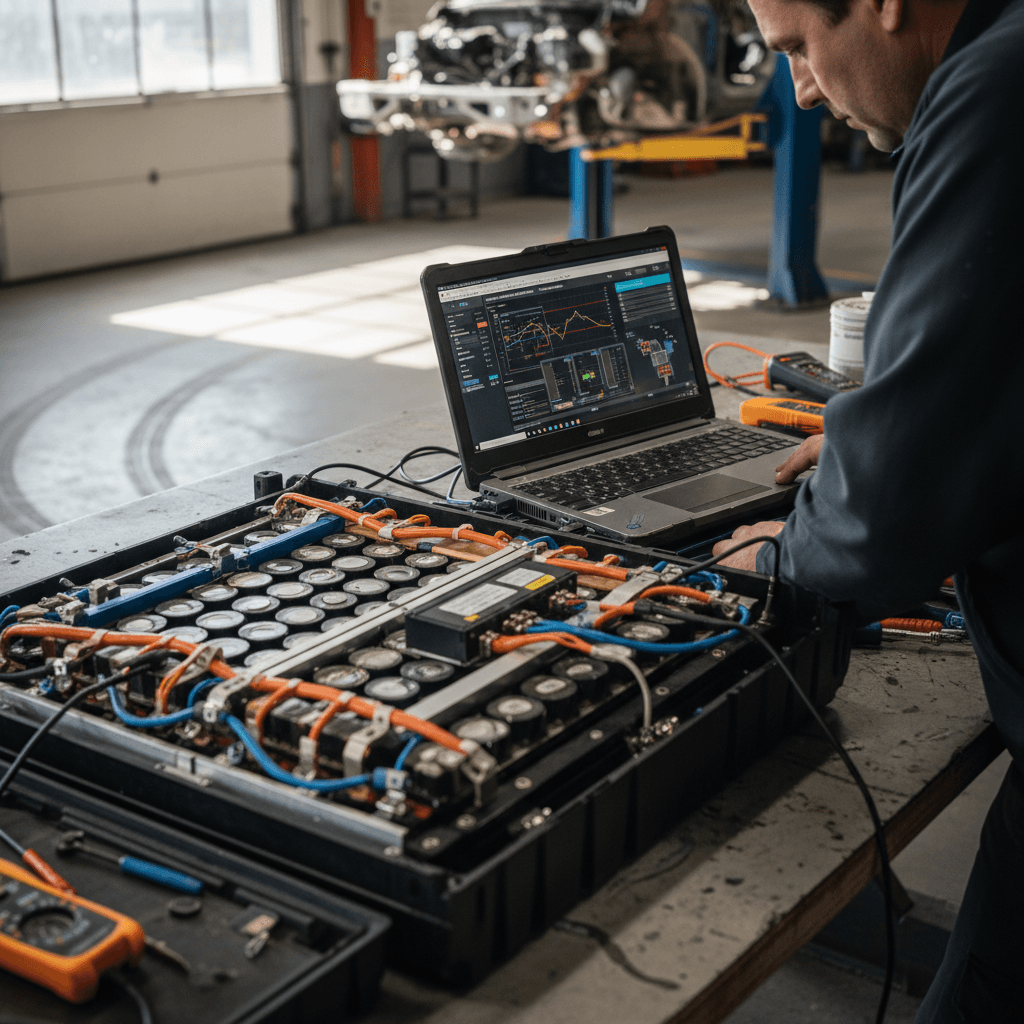
A modern EV service center blends traditional shop equipment, lifts, alignment racks, tire machines, with high-voltage safety procedures, dedicated diagnostic laptops, and, in some cases, OEM remote support. You may not see all that from the waiting room, but it’s what lets a tech safely drop a battery pack or validate that a range drop is software-related and not a failing module.
Typical EV maintenance schedule and costs
Every automaker publishes its own schedule, but if you’re looking for a realistic baseline, most EVs in the U.S. today follow annual or 10,000-mile service intervals for basic checks. Beyond that, certain fluids and wear items are replaced on a multi-year cadence.
Typical EV maintenance intervals and ballpark pricing
Actual intervals and pricing will vary by brand, model, and region. Always confirm with your service center.
| Service task | Typical interval | Approximate cost (USD) | Notes |
|---|---|---|---|
| Tire rotation | 6,000–10,000 miles | $50–$80 | Many EVs benefit from more frequent rotations due to weight and torque. |
| Brake inspection | Every service visit | Often included | Pads generally last longer thanks to regenerative braking. |
| Cabin air filter | 15,000–30,000 miles | $80–$120 | More often if you drive in dusty or urban environments. |
| Brake fluid flush | Every 2–3 years | $100–$200 | Moisture in brake fluid can reduce braking performance. |
| Battery coolant service | 5–7 years or per OEM | $150–$300 | Some brands call for lifetime coolant; others specify mileage limits. |
| 12V accessory battery | ~6 years or when needed | $150–$300 | Often replaced preventatively on older EVs. |
| Alignment check | As needed / after impacts | $120–$200 | Potholes and curb hits can eat tires fast on heavy EVs. |
Use this as a conversation starter with any EV service center you’re considering.
Ask for an itemized estimate
Types of EV service centers: pros and cons
1. Franchise dealer EV service
- Pros: Factory tools, OEM training, warranty repairs, recall work.
- Cons: Often higher hourly rates; may prioritize newer vehicles over older used EVs.
- Best for: Cars under factory warranty, complex software issues, brand-specific bulletins.
2. Dedicated EV or hybrid specialist
- Pros: Staff lives and breathes EVs; often more flexible, transparent on pricing.
- Cons: Fewer locations; may not be authorized for warranty repairs.
- Best for: Out-of-warranty EVs, battery diagnostics, everyday maintenance.
3. General repair shop with EV training
- Pros: Convenient local option, competitive pricing on tires, brakes, and alignments.
- Cons: EV experience varies wildly; may outsource high-voltage work.
- Best for: Tires, suspension, and basic mechanical work when EV-trained techs are on staff.
Avoid “we’ll figure it out” shops
How to choose the right EV service center
7 things to check before you book
1. Confirm EV training and certifications
Ask how many <strong>EV-trained technicians</strong> they have, which brands they’re certified on, and whether they’re equipped for high-voltage battery work or just basic maintenance.
2. Ask what EVs they see most often
A center that regularly services your brand and model will troubleshoot faster and may already know common issues and OEM updates.
3. Verify diagnostic and software capabilities
For modern EVs, software is half the battle. Ask if they can perform OEM-level diagnostics, apply software updates, and document <strong>battery health reports</strong>.
4. Clarify warranty implications
If your EV is still under factory warranty, confirm that the work they’re doing won’t jeopardize coverage. Warranty repairs typically must be done by brand-authorized centers.
5. Compare labor rates and parts sourcing
Get hourly labor rates up front and ask whether they use OEM, aftermarket, or remanufactured parts. For safety-critical items like brakes and steering, OEM or high-quality equivalents matter.
6. Read EV-specific reviews
Look for reviews mentioning <strong>EV service by name</strong>, not just general satisfaction. Pay attention to how the shop communicates about range, charging, and battery concerns.
7. Ask about transportation options
Shuttle rides, loaner vehicles, rideshare credits, or mobile service can make life easier if your EV will be in the shop for more than a few hours.
Battery health diagnostics: the heart of EV service
For a used EV, the single most important question is simple: How healthy is the battery? A good EV service center can answer that with data, not guesses. They’ll pull state-of-health (SoH) readings, analyze charge cycles, and correlate any range loss with your driving and charging habits.
What a real battery health report includes
At Recharged, every vehicle comes with a Recharged Score Report that includes a verified battery health assessment. That’s the same type of insight you’d ask an EV service center to provide if you’re shopping privately: clear data, explained in plain English, with realistic expectations for future range and potential degradation.
Service considerations when you own a used EV
Used EVs are where the value is in 2025, but they also magnify the importance of service history and shop choice. A two- or three-year-old EV with a strong battery and clean service records can be a bargain. The same car with missing records and vague explanations for range loss can become an expensive guessing game.
Used EV + service center: questions to ask
Whether you’re buying or already own one, start here
Before you buy a used EV
- Request full service records and recall/warranty repair history.
- Ask for a recent battery health report and charging history if available.
- Have a trusted EV service center or a marketplace like Recharged perform a pre-purchase inspection.
After you own it
- Schedule a baseline inspection with an EV-capable shop within the first month.
- Discuss an annual service plan tailored to your mileage and climate.
- Set expectations for long-term battery health and potential future repairs.
How Recharged fits in
Ready to find your next EV?
Browse VehiclesDIY EV maintenance vs. professional service
If you like to turn your own wrenches, EVs offer fewer routine jobs, but there are still safe ways to be hands-on. The key is knowing where DIY stops and high-voltage systems begin.
Reasonable DIY tasks
- Checking and adjusting tire pressures
- Swapping cabin air filters (on most models)
- Replacing wiper blades and washer fluid
- Inspecting tires for uneven wear or damage
- Keeping charge port and seals clean
Leave these to an EV service center
- Any work near orange high-voltage cables or the battery pack
- Brake fluid service and ABS work
- Battery coolant system service
- Software and control-module updates
- Diagnosing significant range loss or charging errors
High voltage is not a weekend project
EV service center FAQs
Frequently asked questions about EV service centers
Key takeaways for your EV service plan
- EVs visit service centers less often than gas cars, but battery and software checks are critical.
- Not all shops are prepared for EVs; prioritize centers with documented EV training and tools.
- Use a simple baseline: an EV checkup once a year or around every 10,000–15,000 miles unless your owner’s manual says otherwise.
- For used EVs, demand a battery health report and clear service history, these drive long-term costs more than almost anything else.
- Do basic DIY tasks like tire pressure and wipers yourself, but leave high-voltage work to professionals.
- If you’re shopping used, a marketplace like Recharged can shortcut the process by combining battery health diagnostics, fair pricing, financing, and expert EV support into one experience.
The bottom line: the right EV service center shouldn’t just fix problems; it should help you avoid them with clear diagnostics, honest recommendations, and a maintenance plan that matches how you actually drive. Whether you’re already in an EV or still shopping, invest a little time now to identify the shops and experts you trust. It will pay off in lower stress, predictable costs, and an electric vehicle that feels as solid at 80,000 miles as it did on day one.