If you live or work in Westchester County, you’ve probably heard that some federal EV rebates have disappeared, while others in New York are still going strong. It’s confusing, especially if you’re trying to decide whether 2025–2026 is the moment to finally go electric. This guide breaks down exactly which EV rebates Westchester drivers can still use, what’s gone, and how to stack what’s left to save real money on a new or used electric car.
Timeframe check
Why EV rebates matter in Westchester right now
Westchester is classic EV territory: higher‑than‑average gas prices, heavy commuting into New York City, and lots of single‑family homes with space for a charger. The catch is that EV sticker prices are still higher than comparable gas cars, even though they’re dropping on the used side. Incentives are how you close that gap. They can shave thousands off the price at the dealership or ease the monthly payment when you finance with a lender that understands EVs.
At the same time, the incentive landscape has shifted. The big federal purchase credits that used to run through 2032 were cut short in 2025. New York’s statewide programs, however, are still very much alive, and local utilities in Westchester offer their own rewards for when and where you charge. If you line these up carefully, the total savings on the right car can still be substantial, even without the old federal tax breaks.
Westchester EV savings snapshot (2025–2026)
Quick overview: EV rebates and incentives in Westchester
Key EV incentives for Westchester drivers
What’s still available, and what changed after 2025
New EV buyers
New York Drive Clean Rebate takes up to $2,000 off the price of an eligible new EV at the dealership. Many models can also qualify for remaining federal IRA tax credits in 2025 purchases, as long as you met the earlier deadlines and rules.
Used EV buyers
The federal used EV tax credit of up to $4,000 ended for vehicles acquired after September 30, 2025, but New York lawmakers are actively considering adding used cars to the Drive Clean program. In the meantime, your main savings on a used EV in Westchester come from lower fuel and maintenance costs, and sharp used‑EV pricing.
Charging & utility perks
Con Edison SmartCharge New York pays drivers in NYC and Westchester for charging off‑peak, and its EV Make‑Ready (POWERREADY) incentives help businesses and property owners cut the cost of installing Level 2 or DC fast chargers.
Federal credits changed
New EV savings: NY Drive Clean Rebate and remaining federal help
New York Drive Clean Rebate (statewide, including Westchester)
New York’s Drive Clean Rebate, run by NYSERDA, is the backbone of EV incentives for Westchester residents. It’s a point‑of‑sale rebate, which means you don’t wait for tax season, the discount comes off the purchase or lease price right at a participating dealership.
Drive Clean Rebate amounts by EV range and price
Typical rebate tiers for eligible new EVs purchased or leased in New York, including Westchester County.
| All‑electric range (EPA) | MSRP limit | Typical rebate amount |
|---|---|---|
| > 200 miles | Up to $42,000 | $2,000 |
| 40–199 miles | Up to $42,000 | $1,000 |
| < 40 miles or MSRP > $42,000 | No range minimum | $500 |
Exact rebate amounts vary by model; dealers can confirm the current incentive for the vehicle you’re considering.
In practice, many mainstream EVs, think Hyundai Ioniq 6, Kia EV6, Chevrolet Equinox EV, Nissan Ariya, and similar, qualify for between $1,000 and $2,000 through Drive Clean, depending on their range and sticker price. Higher‑end models with MSRPs above the program cap usually still qualify for $500.
How to check your rebate before you test‑drive
Federal tax help after the 2025 cuts
Congress ended the broad federal clean vehicle tax credits for most new and used EV purchases after September 30, 2025. Buyers who entered a binding contract and made a payment by that date may still be able to claim the credit when they put the vehicle in service, but that’s a narrow, one‑time window.
Going forward in late 2025 and 2026, the key takeaway for Westchester buyers is this: don’t assume a big federal tax credit will be there to rescue a stretched budget. Treat any remaining federal help as a bonus if you happen to qualify, and plan your purchase primarily around New York rebates, utility rewards, and the long‑term fuel and maintenance savings of going electric.
Talk to a tax pro if you signed before Sept. 30, 2025
Used EV incentives in Westchester County
Westchester is a terrific place to buy a used EV: short daily drives, lots of home‑charging options, and no worries about road‑trip charging if you keep a gas car in the family. But after the 2025 policy changes, the official used EV incentives look different than they did a year or two ago.
- The federal used clean vehicle credit of up to $4,000 only applies to qualifying vehicles acquired on or before September 30, 2025, and put into service later under specific rules.
- A 2025 bill in the New York State Assembly would extend the Drive Clean Rebate to used EVs with up to $1,000 off, but as of February 2026 it’s still working its way through Albany, not law yet.
- Some automakers and dealers offer their own loyalty or conquest bonuses on used EVs, but those change monthly and aren’t specific to Westchester.
Where used EV buyers really save now
This is where a marketplace like Recharged leans in. Every used EV listed through Recharged includes a Recharged Score Report with verified battery health, fair‑market pricing, and expert guidance so you understand what you’re buying. That transparency is crucial in a world where you can’t rely on a $4,000 federal credit to bail you out of a bad deal.
Utility programs: Con Edison perks for Westchester drivers
SmartCharge New York: Get rewarded for off‑peak charging
Westchester is in Con Edison territory, and that’s good news. Con Edison’s SmartCharge New York program pays drivers for charging when the grid is less stressed, overnight and in other off‑peak windows.
How SmartCharge New York works for Westchester drivers
1. Make sure you and your car qualify
You must own or lease a compatible plug‑in hybrid or battery‑electric vehicle and charge it within Con Edison’s service area, which includes Westchester County. You don’t have to be the electric customer on the account, but the charging must happen in Con Ed territory.
2. Enroll your EV or charger
You enroll online, usually by connecting your vehicle’s telematics or a compatible charger so Con Edison can see when and where you charge. Many popular models from Audi, BMW, Chevrolet, Hyundai, Kia, Tesla, and others are supported.
3. Charge off‑peak to earn rewards
You earn monthly rewards for charging during off‑peak hours and avoiding certain high‑demand windows. For a typical commuter who mostly charges at night, these credits can add up to around a hundred dollars or more per year.
4. Watch for seasonal bonus offers
From time to time, Con Edison layers on extra incentives, such as sign‑up bonuses or summer‑specific rewards, for SmartCharge participants. Keep an eye on your program dashboard and emails.
Why SmartCharge matters more post‑credit
Time‑of‑use rates and other bill‑side benefits
Con Edison also offers time‑of‑use rate options that make overnight charging cheaper than plugging in at 5 p.m. when everyone is cooking dinner and running dryers. If you’re planning to install a Level 2 charger at a home in Westchester, it’s worth a call to Con Ed, or a visit to their website, to see whether a special EV or time‑of‑use rate plan could lower your bill.
Charging infrastructure rebates in Westchester
Home charging: what’s left of the federal credit
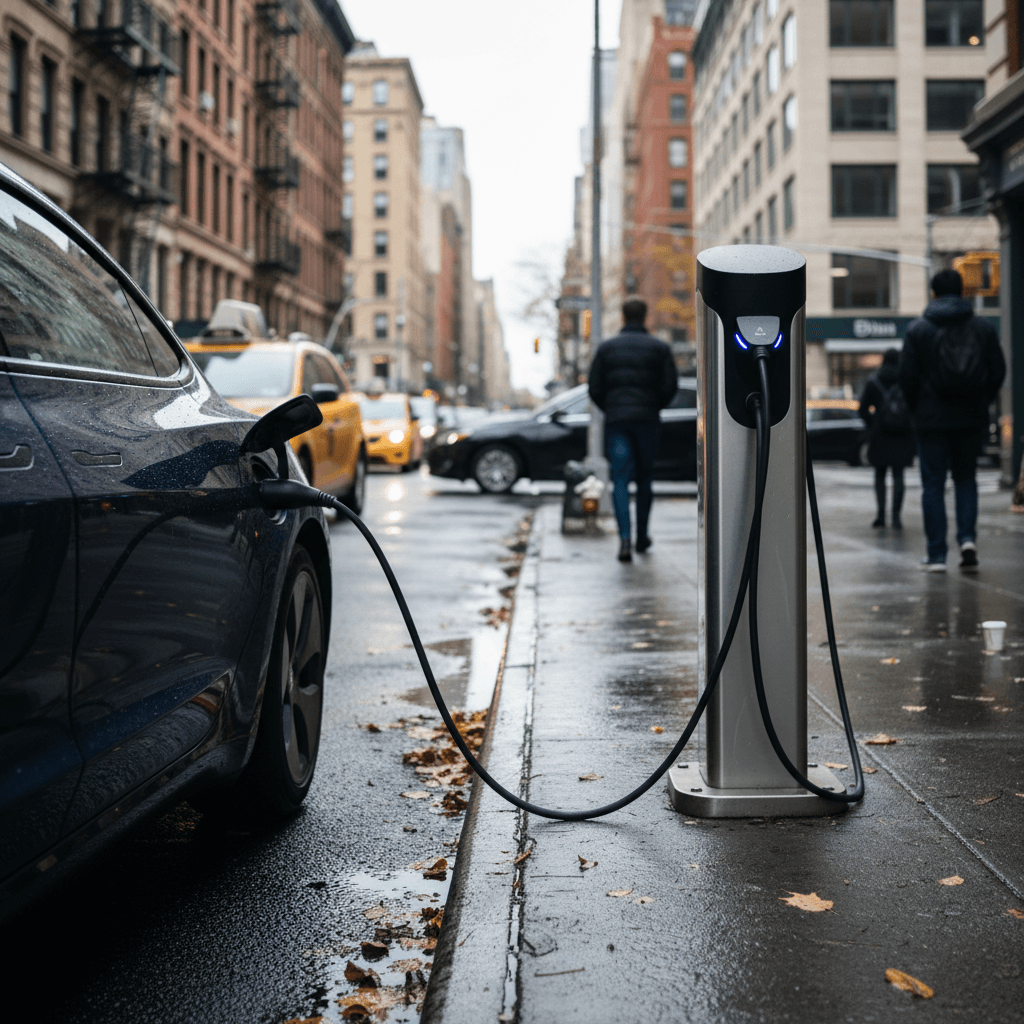
The federal Alternative Fuel Refueling Property Credit, which helps with the cost of home EV charging equipment, is scheduled to expire after June 30, 2026. Until then, qualifying homeowners may be able to claim up to 30% of their charger and installation costs (capped at $1,000 for residential properties), subject to evolving federal rules.
Don’t DIY a 240‑volt circuit to save a few bucks
Business and property owner charger rebates (EV Make‑Ready)
For businesses, multifamily buildings, and fleets in Westchester, New York’s EV Make‑Ready Program, including Con Edison’s POWERREADY incentives, helps cover much of the cost of bringing power to parking spaces for Level 2 and DC fast chargers.
Who it’s for
- Commercial and industrial properties adding charging for employees or customers.
- Apartment and condo buildings installing shared Level 2 chargers for residents.
- Fleet operators, delivery, service, or shuttle vehicles, based in Westchester.
What it can cover
- A large portion (sometimes up to 100%) of the utility‑side infrastructure costs: transformers, panels, conduit, and service upgrades.
- Technical support on siting and capacity planning.
- In some cases, partial support for charger hardware when it’s part of a broader site build‑out.
How to stack rebates and avoid common mistakes
Smart sequence for maximizing EV rebates in Westchester
1. Start with the car, not the rebate
List the EVs that actually fit your life, range, size, budget, before you chase the biggest incentive number. An inappropriate car with a big rebate is still a bad buy.
2. Check New York Drive Clean eligibility
Look up each candidate model on NYSERDA’s site to see its estimated Drive Clean Rebate. That gives you a realistic, up‑front discount number to plug into your budget.
3. Confirm any remaining federal help
If you signed a contract before the September 30, 2025 deadlines, talk with a tax professional about whether you still qualify. If not, build your plan assuming $0 federal vehicle credit.
4. Layer in utility savings
Estimate SmartCharge NY rewards and, if you own your home, any lower off‑peak rates you can get from Con Edison. Those will matter more month‑to‑month than a one‑time check.
5. Get pre‑qualified for financing
Before you fall in love on a test‑drive, get pre‑qualified so you know your real payment window after rebates. Recharged can help you see monthly payments on used EVs with transparent pricing and no dealership games.
6. Save every document
Keep purchase agreements, installer invoices, and utility enrollment confirmations. You’ll need them for rebate applications and at tax time.
Three common rebate mistakes in Westchester
Rebates for Westchester businesses and municipal fleets
Westchester’s towns, villages, and businesses are rapidly electrifying their fleets, and they’re doing it with help from state and utility rebates that don’t show up in typical consumer incentive lists.
Key programs for fleets and municipalities
If you manage vehicles or parking in Westchester, these are worth a look
Municipal ZEV Rebate Program
New York’s Department of Environmental Conservation periodically offers Municipal ZEV Rebates to help towns and cities buy or lease zero‑emission light‑ and medium‑duty vehicles. Westchester municipalities have received awards in recent rounds to add EVs to their fleets.
EV Make‑Ready for workplaces & depots
That same Make‑Ready framework that helps businesses install charging for customers also helps fleet depots build out overnight charging for work trucks, vans, and service vehicles. Combining state funds with Con Edison POWERREADY incentives can knock a huge chunk off infrastructure costs.
If you’re a fleet manager, property owner, or municipal official in Westchester, your best move is to sit down with your Con Edison account representative and your local clean‑energy coordinator. The fine print on fleet and infrastructure programs is complex, but the payoff in long‑term operating costs can be dramatic.
Step‑by‑step: How to actually claim your EV rebates
Paths to claiming EV incentives in Westchester
Buying or leasing a new EV
Research models and check NYSERDA’s Drive Clean Rebate tables for each candidate.
Get pre‑qualified for financing so you know your budget with the rebate included.
At the dealership, confirm that the Drive Clean amount and any manufacturer incentives are itemized separately on your buyers order or lease worksheet.
If you happen to qualify for a remaining federal credit, coordinate with your tax professional before year‑end so you don’t miss any documentation requirements.
Enroll in Con Edison SmartCharge New York once you’re charging the car at home or work in Westchester.
Buying a used EV
Decide what range and body style you actually need based on your Westchester commute and weekend trips.
Shop only vehicles with transparent battery‑health information, like the Recharged Score Report, so you don’t trade a missing federal rebate for a weak battery.
Price out your total cost of ownership: payment, insurance, electricity, and maintenance vs. your current gas car.
If you acquired the vehicle before the September 30, 2025 deadline, gather all purchase documents and talk to a tax professional about the used clean vehicle credit rules.
Enroll in utility programs (SmartCharge NY, special EV rates) as soon as your home charging is set up.
Installing charging at home or a small business
Talk to a licensed electrician about your panel capacity and the cost of adding a 240‑volt circuit where you park.
Get written quotes that separate hardware from labor and electrical upgrades; you’ll need that detail if you claim any federal credit for the charger.
If you own a rental property or small business in Westchester, explore whether EV Make‑Ready or POWERREADY incentives can offset the cost of bringing power to multiple spaces.
Submit any required pre‑approval forms to utilities or state programs before work begins, you usually can’t apply retroactively once the concrete is poured.
Keep all invoices, permits, and final inspection documents in one folder for rebates, tax credits, and potential future buyers of the property.
FAQs: EV rebates in Westchester County
Frequently asked questions about EV rebates in Westchester
Is an EV still worth it in Westchester with fewer rebates?
The short answer is yes, if you approach the purchase with clear eyes. The era of easy, across‑the‑board federal EV tax credits has ended, but for Westchester drivers, the story isn’t over. The NY Drive Clean Rebate, Con Edison programs like SmartCharge New York, and generous long‑term fuel and maintenance savings still tilt the math in favor of going electric for many households.
The key is to stop chasing headlines about giant rebates and start running your own numbers: what you drive now, how far you go, where you can charge, and which incentives you personally qualify for. When you’re ready to explore used options, Recharged can help you compare vehicles with verified battery health, transparent pricing, and financing support that bakes incentives into your real monthly payment, not wishful thinking.
In other words, the EV landscape in Westchester has grown up. There are fewer fireworks at tax time, but more everyday tools to make ownership affordable and straightforward. Use the rebates that remain, lean on trustworthy data, and you can still come out ahead behind the wheel of an electric car.