If you live in or around Richmond and you’re shopping for an electric vehicle, **EV rebates and tax credits** can easily make the difference between “maybe later” and “let’s do this now.” The challenge: incentives are a moving target, and Richmond drivers have to navigate federal rules, state policy shifts, and Dominion Energy programs that all change on different timelines. This guide pulls that together so you can see, in plain English, what’s on the table today and how to claim it.
Time-sensitive information
Why EV rebates matter in Richmond right now
EV growth and incentives in Virginia
Richmond has earned national recognition for its **electric vehicle policies and fleet electrification work**, and Dominion Energy, headquartered in the city, is layering on programs that make home and community charging easier and cheaper. For everyday drivers, that means you can often pair **federal incentives**, **utility rebates**, and flexible **financing from companies like Recharged** to bring a used EV within reach even if sticker prices feel high.
Quick overview: EV incentives available around Richmond
Main buckets of EV incentives in Richmond
Most Richmond EV buyers are choosing from some combination of these four.
1. Federal EV tax credits
New and used EV tax credits can lower your federal income tax if the vehicle, seller, and your income all qualify. Rules changed in 2025, so check the latest eligibility before you buy.
2. Federal charger tax credit
Install a home Level 2 charger and you may claim **30% of equipment and installation costs (up to $1,000)** as a federal tax credit if it’s in service by **June 30, 2026**.
3. Dominion Energy incentives
Dominion offers **EV Charger Rewards** (up‑front rebate plus yearly payments for smart chargers) and new **Residential Charger Program** options that can cut or spread out installation costs.
4. Local & employer perks
While Richmond doesn’t currently have a city‑wide cash rebate for EV purchases, some employers, multi‑family properties, and fleets tap into utility programs to install low‑ or no‑cost chargers on site.
Start with a savings list
Federal EV tax credits for Richmond buyers (2025–2026)
Federal EV incentives do most of the heavy lifting on the **vehicle side**. The details have changed several times since 2023, and 2025 brought another reset. As of early 2026, you’ll typically see two major buckets:
- A tax credit for **new EVs** purchased from qualifying dealers (often up to $7,500, subject to vehicle price caps, North American assembly requirements, and your income).
- A tax credit for **used EVs** purchased from a licensed dealer (often up to $4,000 or 30% of the price, whichever is less), again with income and price caps.
Because Congress and the White House changed the EV and clean‑energy credit landscape in 2025, and rules can differ for purchases in **calendar year 2025 vs. 2026**, you should always do two things before relying on any dollar figure:
How to verify your federal EV vehicle credit
1. Check the official IRS and DOE tools
Use the IRS and U.S. Department of Energy online tools for **"Clean Vehicle Credit"** and **"Previously Owned Clean Vehicle Credit"** to confirm whether a specific VIN and purchase date qualify for a tax credit.
2. Confirm your income eligibility
Federal EV credits phase out at higher income levels. Before you sign, make sure your **modified adjusted gross income (MAGI)** for the relevant tax year is under the published limit for your filing status.
3. Verify dealer participation
Used EV credits must run through a **licensed dealer** that can issue the correct documentation. If you’re buying a used EV online, make sure the platform or store is licensed in your state and can furnish the required IRS forms.
4. Get the paperwork before you leave
Ask the dealer for a **buyer’s report or closing disclosure** that clearly states whether your purchase is being treated as an EV credit‑eligible sale and which credit (new or used) may apply.
Credits are not automatic cash rebates
Federal tax credit for home EV chargers
If you’re planning to install a Level 2 charger at your Richmond home, you’re on the clock. The federal **Alternative Fuel Refueling Property** credit, updated by the Inflation Reduction Act, now expires **June 30, 2026**, rather than 2032, after a 2025 federal rollback.
Federal home charger tax credit at a glance
For Richmond homeowners installing a residential Level 2 charger.
| What it covers | Credit amount | Deadline (current law) | Key notes |
|---|---|---|---|
| Home EV charger hardware + installation | 30% of total cost | In service by June 30, 2026 | Residential cap of **$1,000** per tax return. |
| Bidirectional or smart chargers | Included if otherwise eligible | Same | Can pair well with utility managed‑charging programs. |
| Claim method | Form 8911 | Filed with your federal return | Credit is non‑refundable; it can’t generate a refund by itself. |
| Location rules | Primary residence only | Must be in the U.S. | Rental property rules differ, talk to a tax pro. |
Always confirm the latest rules on IRS Form 8911 instructions before you file.
Pair the federal credit with Dominion rebates
Virginia-wide EV incentives and policy signals
Virginia once floated a dedicated EV rebate program, but as of early 2026 there is **no statewide point‑of‑sale cash rebate** for buying an EV, new or used. Instead, the Commonwealth has leaned on federal programs, utility‑run incentives, and a series of tax‑ and policy‑driven nudges.
- Virginia previously allowed certain EVs with special plates to use HOV lanes solo during rush hour, but that perk expired in late 2025 alongside a federal rule change.
- General **state income‑tax relief** and higher standard deductions give households a bit more breathing room but aren’t EV‑specific.
- State agencies and cities, including Richmond, are aggressively electrifying their own fleets, building out charging, and signing multi‑year charging contracts, moves that indirectly help residents by expanding infrastructure and normalizing EV ownership.
Why this matters for Richmond shoppers
Dominion Energy programs for Richmond EV owners
If you’re in the **Dominion Energy Virginia** service territory (which includes most Richmond‑area customers), the most valuable local “rebates” for EV owners are coming from your utility bill, not the DMV. Two programs matter most for households:
Dominion residential EV programs to know
These can significantly shrink your real‑world charging costs.
EV Charger Rewards
Dominion’s **EV Charger Rewards** program pays you to let the utility briefly adjust charging on a smart Level 2 charger during peak demand.
- Enrollment incentive often around **$125** for a new qualifying charger.
- Ongoing **$40 per year** for staying enrolled, typically as bill credits or e‑gift cards.
- Up to 45 events per year, each up to four hours, with the option to opt out via your charger app.
You’ll need a Dominion‑approved, Wi‑Fi–connected Level 2 charger and must not already be on certain time‑of‑use rates.
Residential Charger Program
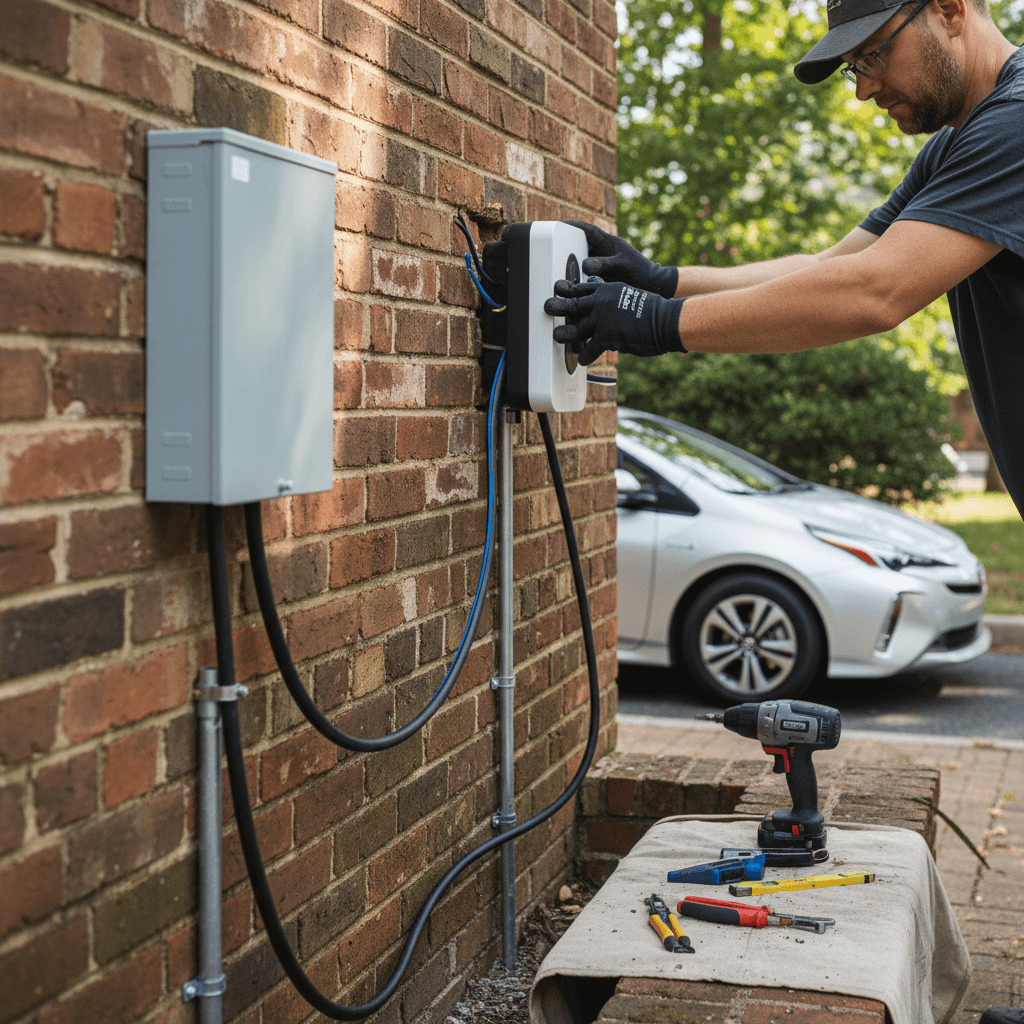
Launched in **September 2024**, this turnkey program helps you get a Level 2 home charger installed with lower up‑front pain.
- Equipment and installation costs can be paid back **over time on your Dominion bill**.
- Dominion connects you with vetted electricians and backs the package with a **multi‑year warranty**.
- Income‑qualifying customers may receive a complete charger + installation **at no cost**.
This is less a “rebate” and more a **financing + assistance** program, but it directly affects your out‑of‑pocket costs.
Good news for renters in townhomes and manufactured homes
Rebates for apartments, workplaces, and fleets
Not everyone in Richmond has a driveway or garage. That’s where **property‑level incentives** kick in. You might not see cash in your pocket, but you’ll feel the benefit in better charging access at home or work.
Dominion’s EV Charging Access Program
A major opportunity for apartments, workplaces, and fleets in certain neighborhoods.
No‑cost chargers in EJ communities
Dominion’s **EV Charging Access Program** offers no‑cost installation and ongoing maintenance of EV charging stations for qualifying sites in Environmental Justice (EJ) communities.
- Supports public, fleet, workplace, and multi‑family locations.
- Coverage includes utility upgrades, make‑ready work, and the chargers themselves.
- Applications for the current cycle opened in **December 2025** and run through **March 31, 2026**.
What this means if you’re a driver
You won’t apply directly as an individual, but you can:
- Ask your **apartment manager or HOA** whether your property sits in an eligible EJ community and if they’ve considered applying.
- Encourage your **employer’s facilities team** to explore the program for workplace chargers.
- Watch for new public chargers at community centers, libraries, and parking decks as projects come online.
Deadlines and limited funding
How to stack EV rebates in Richmond: example scenarios
Scenario A: Used EV + home charger in Short Pump
You buy a **used Chevy Bolt** from a licensed dealer for $19,000 and install a smart Level 2 charger at your single‑family home.
- You may qualify for the **federal used EV tax credit** (potentially up to $4,000, depending on income and final rules when you buy).
- You claim up to **30% of your charger + installation costs (max $1,000)** via the federal home charger credit.
- You enroll your new charger in **Dominion’s EV Charger Rewards** and receive an **enrollment rebate (~$125)** plus **$40 per year** you stay enrolled.
Net result: A used EV that effectively costs several thousand dollars less once tax time and rebates hit, plus a home charging setup whose real cost is heavily offset.
Scenario B: Apartment dweller downtown
You rent in a Richmond apartment with gated parking but no chargers yet.
- Your building applies to **Dominion’s EV Charging Access Program** and secures **no‑cost installation** of several shared Level 2 chargers.
- You skip the expense of a home charger entirely and focus on finding a **used EV at a fair price**, potentially eligible for a federal used‑EV credit.
- Your monthly energy costs are mostly public charging fees, but those are often lower than what you paid in gasoline, and the building markets the new chargers as an amenity, which helps your property value or rent justification.
Net result: Even without owning a driveway, you benefit from utility‑funded infrastructure instead of paying out of pocket.
Use total cost of ownership, not just sticker price
Step-by-step: how to actually claim these incentives
Your Richmond EV rebate action plan
1. Decide on new vs. used EV
Start with your budget and driving habits. If you’re price‑sensitive or want to avoid first‑year depreciation, a **used EV with a strong battery** and a potential federal used‑EV credit is often the sweet spot.
2. Confirm eligibility before you shop
Check IRS and DOE tools to see whether your ideal models and your **household income** line up with current federal credit rules for the year you plan to buy.
3. Lock in used-EV value
Use marketplaces like <strong>Recharged</strong> to compare **battery health, pricing, and financing** on used EVs. A healthy battery and transparent pricing matter just as much as any rebate.
4. Plan your charging strategy
If you own your home, talk with a licensed electrician about a 240V circuit and Dominion’s programs. If you rent, map out workplace, public, or future apartment charging options before you commit.
5. Stack charger incentives
Choose a **Dominion‑approved smart charger**, enroll in EV Charger Rewards, and time installation so you still qualify for the **federal charger credit** (before June 30, 2026). Save receipts and program confirmation emails.
6. Keep immaculate paperwork
For each incentive, maintain a folder, digital or physical, with purchase contracts, VIN, charger invoices, permit sign‑offs, and any Dominion or IRS forms. Your future self (or CPA) will thank you at tax time.
How Recharged helps Richmond shoppers maximize incentives
Navigating **EV rebates in Richmond** isn’t just about reading fine print, it’s about choosing the right car, the right charger, and the right financing so your total costs actually fall. That’s where Recharged comes in.
Where Recharged fits into your incentive game plan
We focus on the used side of the market, where value and transparency matter most.
Verified battery health
Every Recharged vehicle comes with a **Recharged Score Report** that includes independent battery health diagnostics. That helps you avoid cars whose range or degradation might eat up the savings you just got from rebates.
Fair, data-backed pricing
We benchmark **fair market pricing** based on condition, mileage, battery health, and local market trends. That’s your first line of defense before credits, and it’s often worth more over time than a one‑time rebate.
Financing & trade-in support
Recharged offers **financing, trade‑in options, instant offers, or consignment** and can coordinate **nationwide delivery**. Our EV specialists help you understand how incentives should show up in your budget, not just in ads.
Richmond Experience Center
FAQ: EV rebates and incentives in Richmond, VA
Frequently asked questions
Key takeaways for Richmond EV shoppers
If you’re shopping for an EV in the Richmond area, your best move is to treat **EV rebates as one piece of a larger affordability puzzle**. Federal vehicle credits, a soon‑to‑expire **home charger tax break**, and **Dominion’s EV programs** can work together to cut thousands from what you effectively pay, especially if you focus on a well‑priced used EV with strong battery health.
At the same time, incentives are changing quickly. That’s why it pays to (1) confirm eligibility for your specific vehicle and installation date, (2) keep every receipt and program email, and (3) shop with partners who actually understand Richmond’s incentive landscape. With the right plan, and some help from Recharged’s transparent used‑EV marketplace, you can turn a complex web of credits and rebates into a straightforward path to electric ownership.