If you’re retired, or getting close, and wondering whether a used EV for a retiree is a smart move, you’re not alone. Many older drivers are eyeing electric cars for their quiet comfort and low running costs, but they’re understandably cautious about batteries, range and budgets on a fixed income. This guide walks through the real-world pros, cons and best practices so you can decide with a clear head, not a sales pitch.
Who this guide is for
Why a used EV can be ideal in retirement
Why used EVs make financial sense now
For many retirees, a car stops being an all-purpose workhorse and becomes something narrower and more personal: a grocery‑getter, a doctor‑appointment shuttle, the occasional grandkid taxi. That change in how you drive lines up almost perfectly with what used EVs do best: short, predictable trips, low running costs and very little fuss.
- Lower running costs: Electricity is usually cheaper per mile than gasoline, and EVs skip oil changes, timing belts and many other service items.
- Quieter, smoother driving: Instant torque without gear shifts makes merging and passing easier, while cabin noise is often much lower than in older gas cars.
- Less stop-and-go fatigue: One‑pedal driving and strong regenerative braking reduce how often you move your right foot, which many older drivers find less tiring.
- Steep depreciation becomes your friend: New EVs lose value fast in the first years, which means a 3–6‑year‑old electric car can be a relative bargain compared with a similar‑age gas model.
But EVs aren’t right for every retiree
Is a used EV right for your retirement lifestyle?
Quick gut-check: does a used EV fit you?
Match your lifestyle before you start shopping listings
You have stable parking
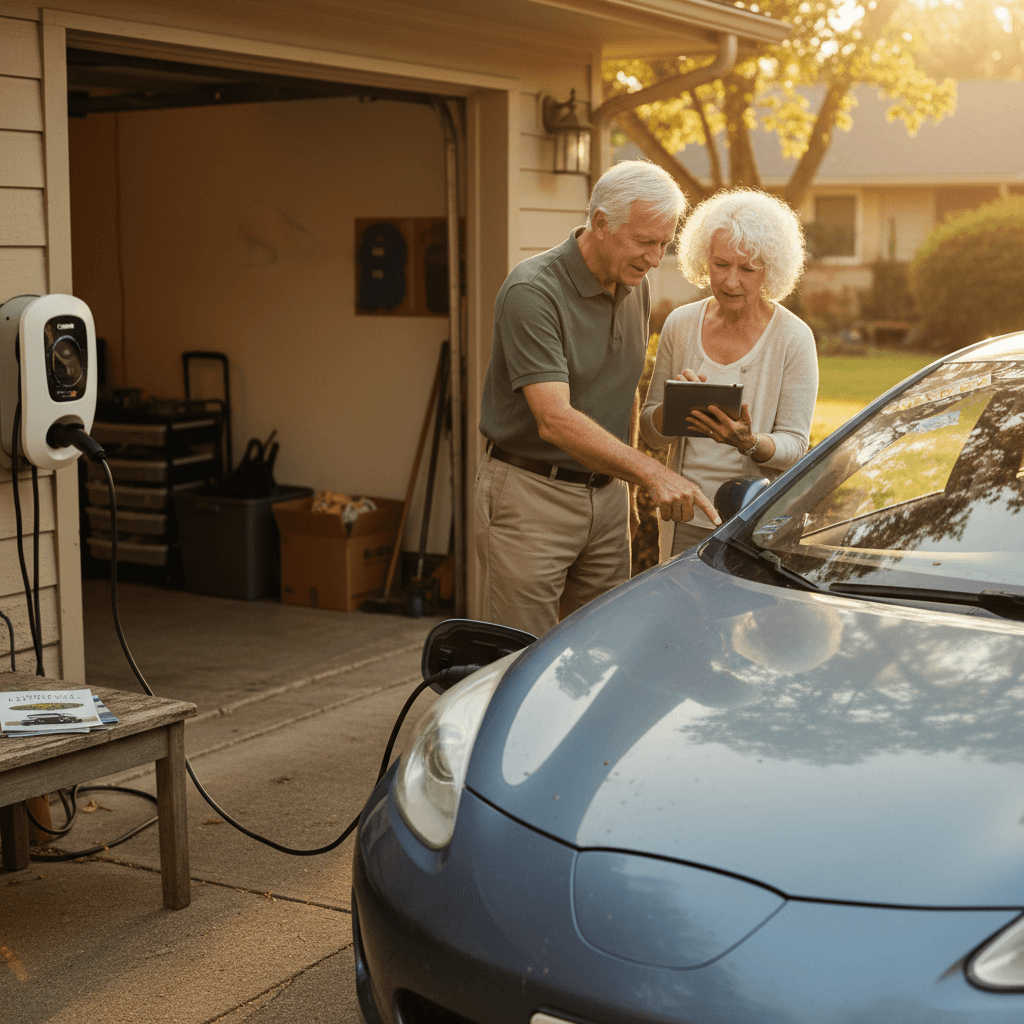
Owning or reliably renting a spot with access to electricity is the single biggest predictor of EV happiness. A basic 120V outlet is enough for many retirees.
Your trips are predictable
If most days look like a loop between home, shops, and healthcare within 20–40 miles, you’ll rarely worry about range, even in an older EV.
You think in total cost, not just price
EVs can look pricey on day one but cheaper over 5–10 years thanks to lower fuel and maintenance. If you plan to keep the car, that math favors you.
Great EV candidates
- You mainly drive locally with the occasional regional trip you could plan around charging.
- You or your building can offer at least a standard household outlet in a consistent parking space.
- You’re willing to learn a simple charging routine and use a smartphone app or two.
Better off with hybrid or gas
- You frequently drive 250+ miles in a single day with no time or patience for charging stops.
- You have street parking only, and landlords or HOAs refuse to talk about outlets.
- Technology causes major anxiety; even a simple touchscreen feels like too much.
Think 5–10 years, not 1–2
Key features retirees should prioritize in a used EV
The best used EV for a retiree usually isn’t the fastest or flashiest. It’s the one that’s easiest to live with when your priorities are comfort, safety and simplicity rather than bragging rights.
Retiree priorities in a used EV
How to weigh comfort, safety and tech when you shop
| Priority | What to look for | Why it matters |
|---|---|---|
| Ease of entry/exit | SUVs and crossovers with higher seating, wide door openings | Less strain on knees and hips; easier to help grandkids in and out. |
| Visibility | Large windows, slim pillars, good mirrors, 360° camera if possible | Boosts confidence in parking lots and tight suburban streets. |
| Simple controls | Physical knobs for climate/audio, clear menu layout | Reduces distraction; easier transition from older vehicles. |
| Driver assists | Automatic emergency braking, blind‑spot monitoring, rear cross‑traffic alert, lane-keeping assist | Acts as a safety net when reactions naturally slow with age. |
| Ride comfort | Smaller wheels, taller tire sidewalls, good seats with lumbar support | Softer, quieter ride; less fatigue on longer trips. |
| Charging connector | North American Charging Standard (NACS) or J1772 with included adapters | Ensures easy public charging as networks evolve. |
You don’t need every bell and whistle, focus on what genuinely reduces stress behind the wheel.
Battery health and range: what retirees really need
Battery health is where a used EV either becomes a low‑drama daily companion or a rolling anxiety machine. The good news: modern EV batteries have generally held up much better than early skeptics predicted, and for typical retired driving patterns, you likely don’t need anywhere near the full original range.
- For many retirees, 120–180 miles of real-world range is plenty, more than enough for several days of errands and appointments.
- Battery degradation is normal. A 6‑year‑old EV that started with 250 miles of range might realistically have 200–210 miles now and still be perfectly usable.
- What matters most is consistent, verified battery health, not chasing a like‑new number on a brochure from a decade ago.
Rule of thumb on range
Battery questions to ask before you buy
1. What’s the current usable range?
Don’t rely on the original EPA number. Ask for current real‑world range at highway speeds and around town, and compare it with independent road tests when the car was new.
2. Is there a recent battery health report?
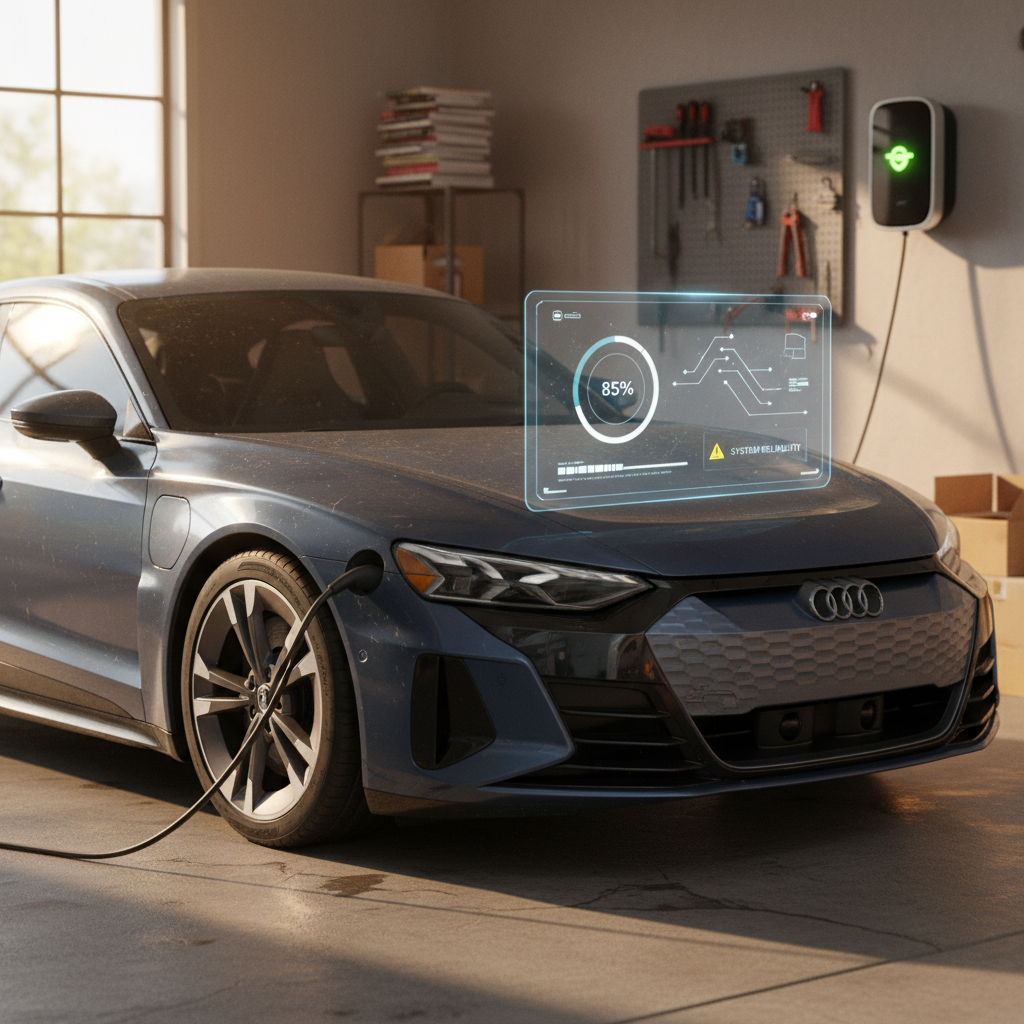
Look for a third‑party test or detailed report rather than just an on‑screen percentage. Recharged vehicles include a <strong>Recharged Score battery health report</strong> with state‑of‑health measurements.
3. Has the battery warranty expired?
Most EVs carried 8‑year battery warranties when new. For an older car, know exactly how much factory coverage, if any, remains.
4. How was the car charged?
Frequent DC fast charging can age a pack faster than mostly home Level 2 charging. Light, regular use is usually the healthiest pattern.
5. What climate did it live in?
Extreme heat is tougher on batteries than cold. A car that spent life in Phoenix deserves closer scrutiny than one from coastal New England.
Comfort, safety and accessibility checklist
Retirees often tell dealers they want something “easy.” That’s not a very helpful word in a showroom. Break it down into specific items you can check and test during a drive.
Test these five things on your drive
Don’t rush; this is the car you’ll live with every day
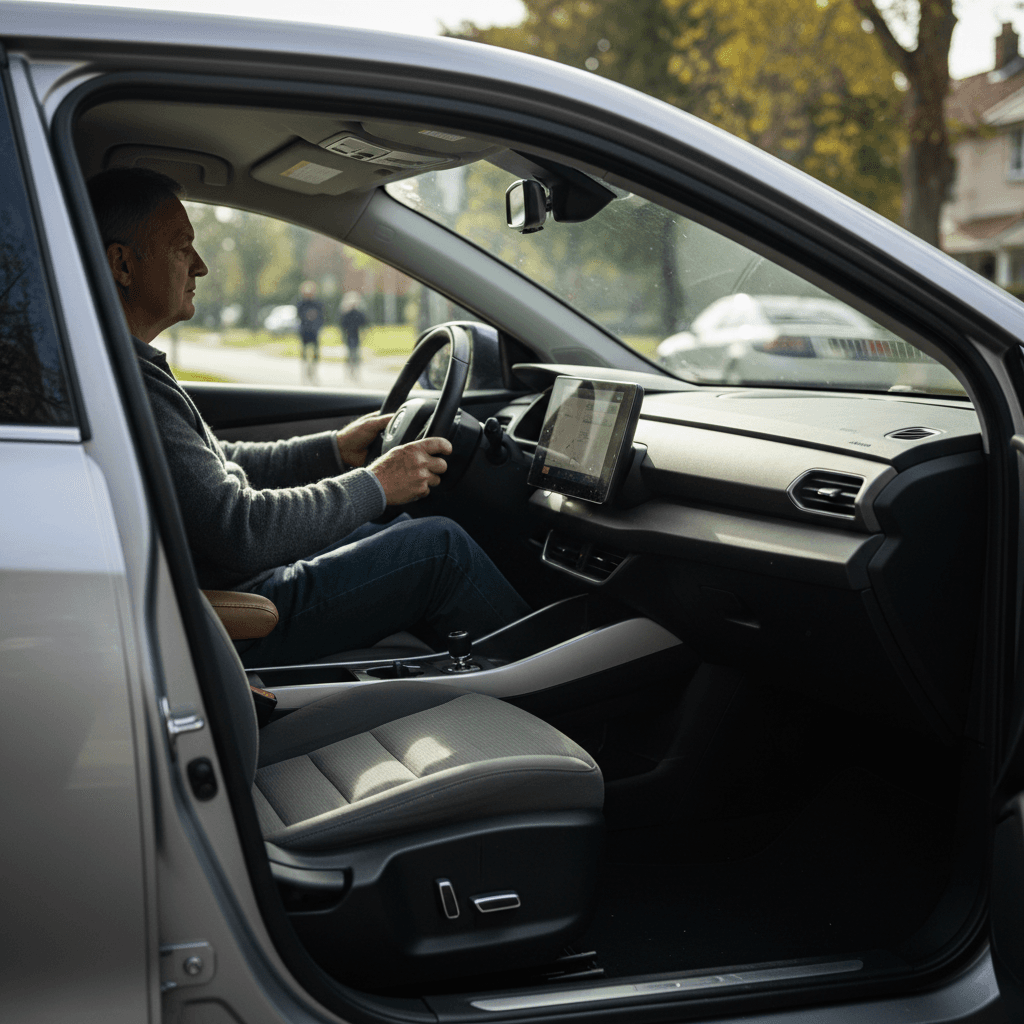
Seat comfort
Can you sit for 45 minutes without fidgeting or pain? Adjust lumbar support, thigh tilt and steering‑wheel reach until it feels natural.
Control effort
Is steering light enough at parking speeds? Are the pedals easy to modulate smoothly? You shouldn’t have to fight the car.
Visibility & cameras
Check over‑the‑shoulder blind spots, backup camera clarity and whether a 360° view is available. Try a few parking maneuvers.
Active safety tech
Confirm presence of automatic emergency braking, lane-keeping assist and blind‑spot monitoring. Ask to briefly test them with a salesperson.
Noise & harshness
Listen for wind and tire roar on the highway and over rough pavement. An EV should feel calmer than your old gas sedan, not harsher.
Getting in and out
Practice entering and exiting from both front seats. If you find yourself grabbing the door frame or twisting awkwardly, look for a higher‑riding model.
Bring your real life to the test drive
True cost of ownership on a fixed income
Sticker price gets all the attention, but retirees feel the monthly bite. The real question isn’t “Can I afford to buy this?” but “Can I comfortably afford to keep it?” That’s where used EVs start to look surprisingly friendly.
Where EVs save you money
- Fuel: At typical U.S. electricity prices, many EV drivers spend hundreds, not thousands, per year on energy, especially if they can charge at home overnight.
- Maintenance: No oil changes, fewer fluids, no exhaust system, no spark plugs. Over five years, an EV can easily save a few thousand dollars in routine service compared with a gas car.
- Brakes: Regenerative braking means pads and rotors often last significantly longer, which adds up if you drive mostly in town.
Where EVs can cost more
- Insurance: Some EVs cost more to insure because of repair complexity. Get quotes on specific models before you commit.
- Depreciation: EV values have been volatile. As a used buyer you benefit from early depreciation, but you still shouldn’t overpay on the front end.
- Home charging setup: You may need a dedicated 240V outlet or wallbox. Budget a few hundred to a couple thousand dollars if your panel needs work.
Run a 5‑year budget, not a 5‑minute one
Good used EV candidates for retirees
The right car depends on your body, your roads and your budget. Still, some patterns are emerging in the market: mid‑size crossovers with good visibility and range are the sweet spot for many retirees, while compact hatchbacks work beautifully for city‑living grandparents who rarely hit the interstate.
Example used EV types that work well for retirees
Not exhaustive or prescriptive, think in categories and traits, not just model names.
| Type | Why it suits retirees | What to double‑check on a used one |
|---|---|---|
| Compact hatchback EV (e.g., early Nissan Leaf‑class) | Easy to park, simple to drive, good for short‑range city errands. | Battery health and range, early cars can have significant degradation; make sure remaining range covers your needs with buffer. |
| Small/mid electric crossover | Higher seating position, easier access, more cargo for hobbies and grandkids. | Ride comfort (avoid huge wheels), driver‑assistance packages, and charging connector compatibility with today’s networks. |
| Electric sedan with comfort focus | Quieter cabin, smooth ride, often more range for highway‑happy retirees. | Low rooflines can make entry harder; test ingress/egress carefully and spend real time in the seats. |
| Electric luxury models (fewer years old) | Top‑tier comfort, advanced safety and often very gentle previous use. | Higher insurance and repair costs; make sure you’re not paying for performance you’ll never use. |
Always verify specific trims, years and features; safety equipment and range can change a lot within the same model line.
Beware of “bargain basement” EVs
How to buy a used EV with confidence
Shopping for a used EV isn’t fundamentally harder than buying any used car, but you are adding a major new component to evaluate: the battery. Treat it like you would an engine and transmission on a gas car, central, non‑negotiable, and expensive if it goes wrong.
Step‑by‑step used EV buying plan for retirees
1. Decide on your range and budget first
Write down your longest typical trips and a realistic total budget including any home charging work. This keeps you from being upsold into cars you don’t need.
2. Shortlist 2–3 body styles
Pick a few categories, compact hatchback, small crossover, sedan, rather than 20 specific models. Then look for cars that fit your body and parking reality.
3. Insist on a battery health report
Treat it like a pre‑purchase inspection. A credible report or diagnostic scan is worth far more than a free set of floor mats.
4. Drive it the way you actually drive
Don’t just loop the block. Take highway on‑ramps, rough streets and a parking lot. If you do a lot of night driving, test after dark to evaluate headlights and glare.
5. Check charging at home and away
Verify where you’ll plug in (outlet, wallbox, or shared charger) and sample the apps for public charging near your regular routes before you sign anything.
6. Read the fine print on warranties
Know exactly what’s covered, battery, motor, electronics, and for how long, whether from the automaker or the seller. A year or two of extra coverage can be worth paying for.
“The best retirement car is the one that disappears into the background of your life. It starts, it’s comfortable, it doesn’t surprise your budget, and you almost forget to think about it at all.”
How Recharged helps retirees shop safer
If all of this sounds like a lot to navigate, it is, that’s exactly why Recharged exists. The company is built around one idea: make used EV ownership simple and transparent, especially for buyers who aren’t living on TikTok and don’t want to decode engineer‑speak.
Why many retirees prefer buying a used EV through Recharged
Less guesswork, more clarity
Recharged Score battery report
Every vehicle comes with a Recharged Score Report that includes verified battery health, range insights and fair‑market pricing, so you’re not gambling on the most expensive part of the car.
EV‑specialist support
Recharged’s EV specialists can walk you through options in plain language, help you compare models and explain how a particular car fits your lifestyle and budget.
Nationwide, low‑stress process
You can browse, finance, arrange a trade‑in or consignment and schedule nationwide delivery without spending weekends at dealerships. There’s even an Experience Center in Richmond, VA if you prefer to see cars in person.
Built for buyers who value peace of mind
FAQ: used EV for retiree
Common questions retirees ask about used EVs
Bottom line: should you buy a used EV in retirement?
A used EV for a retiree can be a near‑perfect match: quiet, comfortable, inexpensive to run and well suited to the calmer driving patterns that come after the office keycard stops working. But it works best when the fundamentals are in your favor, steady parking with access to power, modest daily mileage, and a car chosen for comfort and safety rather than headline range.
If that sounds like your life, the smartest move is to slow the process down, get a clear picture of battery health and total cost of ownership, and test how the car fits your body and your routines. Whether you shop entirely online or visit the Recharged Experience Center in Richmond, VA, you don’t have to navigate this alone. With the right used EV, your retirement car becomes background music: always there, never intrusive, quietly saving you money while you get on with living.