If you live in or near Columbia, MD, you’ve probably heard a confusing chorus about electric vehicle incentives: the **federal credit ending**, Maryland’s **excise tax credit running out of funding**, utilities dangling **charger rebates and bill credits**. It’s a moving target, and if you’re trying to decide whether to buy a new or used EV, the noise doesn’t help. This guide cuts through that noise and focuses on one thing: what EV rebates Columbia, MD drivers can realistically count on in 2026, and how to actually get them.
Key context for 2026
Overview: EV rebates in Columbia, MD in 2026
2026 snapshot for Columbia, MD EV incentives
In Columbia, MD, your **EV rebates** fall into four buckets: remaining federal incentives, Maryland’s state-level programs, **BGE utility rebates**, and one-time federal credits for **home charging equipment**. The catch is that the biggest, splashiest programs, the federal new EV credit and Maryland’s excise tax credit, are either sunset or stuck behind funding limits, while the **quiet, boring programs** (utility bill credits, charger rebates) are still very much alive. If you’re shopping a used EV, exactly Recharged’s wheelhouse, those local and charger-related benefits often matter more than the headline-grabbing new-car credits you keep reading about.
Federal EV tax credits in 2026: what’s left
The federal EV tax credit has gone through more plot twists than a prestige TV drama. By late 2025, the well-known **up-to-$7,500 new EV credit** was effectively being phased out for many buyers, with tight rules around battery sourcing and which automakers still qualified. When Congress moved to roll back key EV subsidies by the end of 2026, and sunset the **used EV credit after 2025**, most normal shoppers understandably tuned out.
- If you signed a **binding contract** and made payment by September 30, 2025, for a qualifying new EV, you may still be able to claim a federal credit when the vehicle is placed in service, even if that happened in 2026.
- Some manufacturers (notably large U.S. brands) have continued offering their own **$7,500 lease incentives** on remaining inventory, essentially passing through a version of the old credit via leasing structures.
- For typical Columbia, MD buyers walking onto a lot in 2026, you should assume the **headline federal new-EV and used-EV tax credits are gone** unless you’re in a very specific edge case your tax pro can document.
Talk to a tax pro, not just the salesperson
Maryland EV excise tax credit: paused funding, not dead yet
Maryland’s big state perk is the **EV and fuel cell vehicle excise tax credit**, a one-time credit of up to **$3,000** for qualifying new zero-emission vehicles titled in the state between July 1, 2023 and June 30, 2027, with a base MSRP cap and minimum battery size. On paper, that means a Columbia resident buying a new qualifying EV in 2026 *should* be eligible.
In practice, it’s messier. The program is funded **year by year**, and for the current fiscal year (FY 2026, which began July 1, 2025), the Maryland MVA has announced that **funding is no longer available**. Applications are still accepted, but they’re effectively dropped onto a **waitlist** that will only be paid if the legislature restores more money to the fund later.
Maryland EV excise tax credit at a glance
How the program is supposed to work versus the reality in FY 2026.
| Feature | Official rule | 2026 reality for Columbia drivers |
|---|---|---|
| Credit amount | Up to $3,000 for qualifying zero-emission EVs | Still the nominal amount if funded, but **no FY26 money left**. |
| Vehicle type | New ZEV or fuel cell vehicles, not modified | Used vehicles do **not** qualify. |
| Price cap | Base purchase price ≤ $50,000 | Plenty of compact and mid-sized EVs qualify on price. |
| Timing | Purchased & titled between July 1, 2023 and June 30, 2027 | Your purchase date may qualify, but funding may not. |
| Per-person limit | 1 vehicle per individual, up to 10 per business | Same rules; business fleets also hit the funding wall. |
| Application | Form VR-334 + window sticker to MVA | You can still apply, but expect a **waitlist**, not a check. |
Always confirm current status on the MVA site before assuming you’ll receive this credit.
How to treat the Maryland excise credit in your budget
Do any Maryland rebates apply to used EVs?
Here’s the blunt truth: **Maryland does not currently offer a state tax credit for used EV purchases.** The state’s excise tax credit only applies to new, first-titled vehicles. If you’re eyeing a **used Tesla Model 3 or Chevy Bolt in Columbia**, no state-level purchase rebate is going to swoop in and cut the price.
That doesn’t mean you’re completely out of luck. Used EV shoppers in Maryland can still benefit from:
- Utility programs that don’t care whether your EV is new or used, only that it’s plugged in at home on their grid.
- Federal **home charger** tax credits (and sometimes utility rebates) that are available regardless of vehicle age.
- Lower operating costs, electricity is typically around **one-third the cost of gasoline per mile**, which are not technically “rebates” but do rescue your monthly budget all the same.
Why used EVs still pencil out
BGE EVsmart: rebates and bill credits in Columbia
If you live in Columbia, **Baltimore Gas and Electric (BGE)** is the most important player in your EV incentive story. Their **EVsmart** programs are funded by ratepayers, not Washington or Annapolis, which makes them more stable than the headline-grabbing tax credits politicians keep rearranging.
Key BGE EVsmart benefits for Columbia drivers
These programs apply whether your EV is new or used, as long as you’re a BGE customer.
Home charger rebate
BGE has offered **rebates around $300** for qualifying Level 2 smart chargers installed in single‑family homes.
Approved models often include popular options from ChargePoint, JuiceBox, and Siemens, always check the current eligible list.
Smart Charge bill credits
Through BGE’s **Smart Charge Management** program, eligible customers can earn up to **about $120 per year** in bill credits per participating EV or charger.
The catch: you must charge at home during utility-defined "smart" times most of the month.
Referral & registration perks
At times, BGE has layered on extras: **RFID credit cards** for using their public chargers when you refer friends, or small bonuses for simply registering your EV.
These promos change frequently, worth checking before you install anything.
Does Columbia qualify for BGE EVsmart?
Home charger rebates & tax credits around Columbia
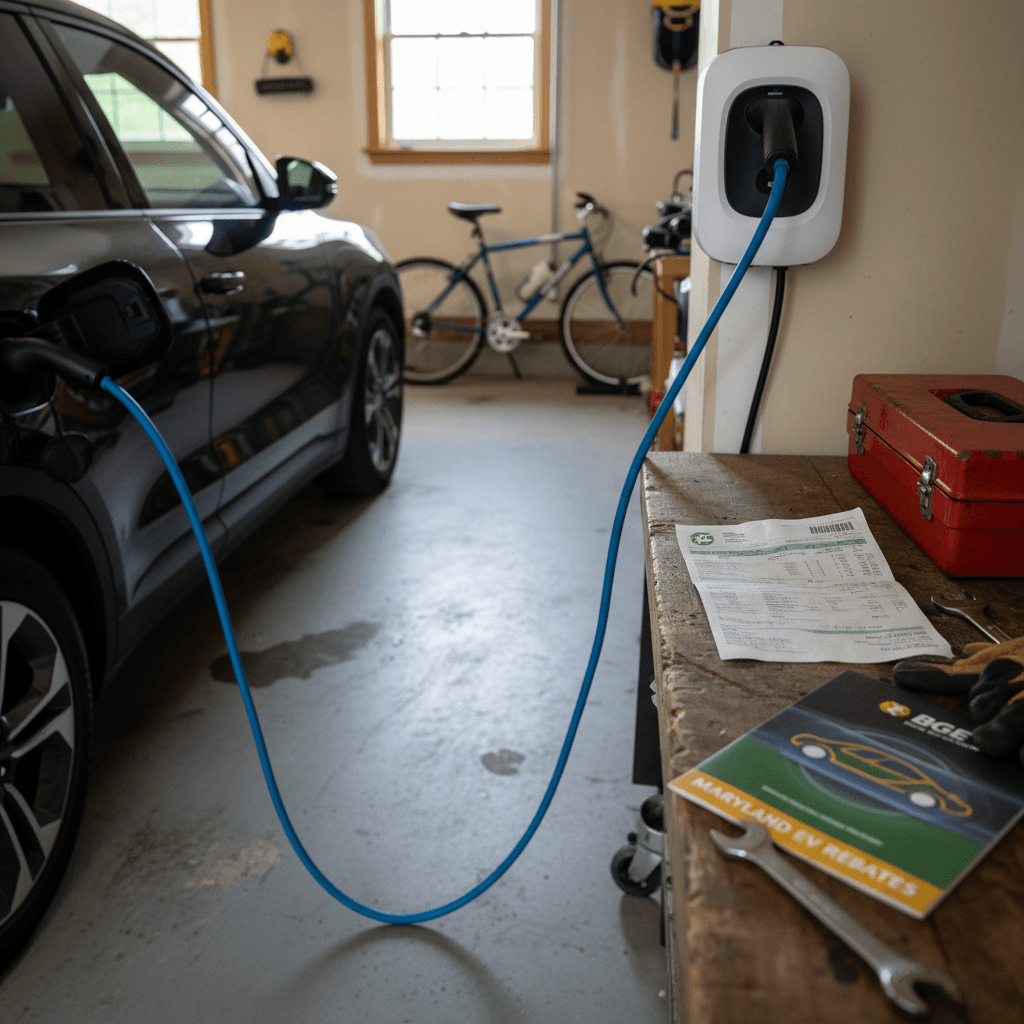
Home charging is where Columbia drivers can still find the **cleanest, most reliable incentives** in 2026. The structure is simple: the federal government helps defray your **upfront installation cost**, and BGE helps reward **when and how you charge**.
1. BGE Level 2 charger rebate
If you upgrade from a slow Level 1 trickle charger to a **240V Level 2 smart charger** in a single-family home, BGE has historically offered around a **$300 rebate** on approved units.
- You must buy an eligible "smart" charger from their approved list.
- You generally have to **apply within a set window** (often 30 days) after installation.
- Your charger must be connected to Wi‑Fi and share usage data with BGE.
2. Federal home EVSE tax credit
Separate from any vehicle rebate, the federal government offers a credit for **EV charging equipment (EVSE)** and installation costs.
- Covers **30% of the total cost**, up to **$1,000** for residential installations.
- Can include panel upgrades and wiring if they’re part of the charger install.
- Claimed on your federal tax return, not at point of sale.
Checklist: maximize your home charging incentives
1. Confirm BGE eligibility
Check that your Columbia address receives **electric service from BGE**, not a co‑op or another utility. Only BGE customers can tap EVsmart benefits.
2. Pick an approved Level 2 smart charger
Visit BGE’s EVsmart site and select a charger from the **current approved list**, common brands include ChargePoint and JuiceBox, but models change over time.
3. Get a licensed electrician quote
Level 2 chargers often require a dedicated 240V circuit and sometimes a panel upgrade. In older Columbia colonials and townhomes, budget for a bit of electrical work.
4. Document everything
Save your **itemized invoice**, permit sign-off, charger serial number, and photos. You’ll need them for BGE’s rebate application and your federal tax credit.
5. Apply for BGE rebate promptly
Many EVsmart rebates require you to apply within **30 days** of installation. Put a reminder in your phone; this is free money you really don’t want to forget.
6. File for the federal credit at tax time
Talk with your tax preparer about claiming the **30% EVSE credit**. Bring your receipts and know your installation date.
Are there city or county EV rebates in Columbia?
Columbia isn’t a city in the traditional sense, it’s a planned community within **Howard County**. That matters for EV incentives because some states and cities run their own climate or clean transportation rebates. As of early 2026, there’s no headline **Columbia-specific EV purchase rebate** or a widely advertised Howard County–only EV credit that rivals the state or utility programs.
What you do see locally are **policy choices that support EV ownership**: preferential parking for charging spots in some Columbia Association facilities, gradual build‑out of public charging, and zoning updates that make it easier to install EV infrastructure in new developments. None of these drop a check in your mailbox, but they make **day‑to‑day life with an EV** in Columbia less of a science project.
Where to watch for local pilots
Watch the fine print: fees, waitlists, and deadlines
Incentive programs have a way of giving with one hand while the state quietly adjusts fees with the other. Maryland is no exception. The state already charges an **extra EV registration fee** compared with conventional cars, and lawmakers have been debating mileage‑based highway‑use fees to replace missing gas tax revenue. None of that erases your incentive upside, but it does mean you can’t just look at the rebate headline and call it a day.
- Maryland’s **EV registration fee** can be higher than a standard car, so check current MVA schedules before you buy.
- High‑profile incentives like the **excise tax credit** are funding‑limited and subject to waitlists or mid‑year shutdowns.
- Utility programs often have **enrollment caps** or limited‑time promos, Smart Charge bill credits and referral bonuses can change from year to year.
Don’t count unhatched credits
How rebates change the math on a used EV
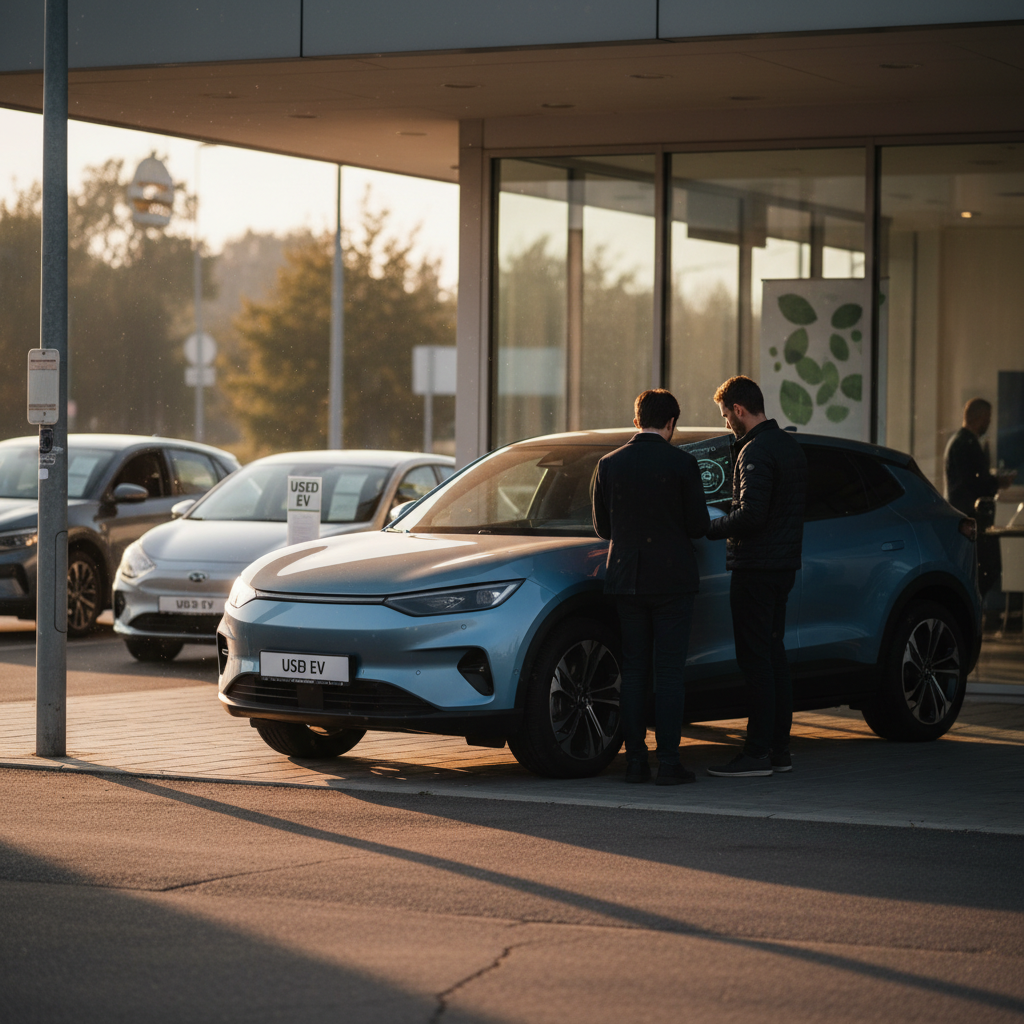
If you’re shopping a used EV in Columbia, you might feel jealous of the theoretical **$3,000 Maryland credit** and bygone federal subsidies for new cars. But here’s the twist: by 2026, those big incentives are one reason the **used EV market is so attractive.** New‑car buyers have already absorbed the depreciation hit. You get to swoop in later and buy the car closer to its long‑term value.
Why used EVs still win, even with fewer rebates
- Steeper early depreciation means a **3–5‑year‑old EV** can cost far less than a similarly equipped new gas car.
- Battery technology has matured; many 2019–2022 EVs have enough range for a Columbia–DC commute with room to spare.
- Home charging incentives (BGE rebate + 30% federal EVSE credit) don’t care whether your car was new or used.
Where Recharged fits in
Rebates are just one side of the ledger. The other is **risk**, specifically, battery health and fair pricing.
- Every vehicle sold through Recharged comes with a Recharged Score and **verified battery diagnostics**, so you’re not guessing about range loss.
- We benchmark each vehicle against Maryland and national pricing data to keep the deal **transparent and fair**, no “rebate shell game.”
- Need to sell or trade your current car? Recharged offers **instant offers, consignment, and financing** that line up cleanly with whatever incentives you do qualify for.
Step-by-step: how to actually claim your EV rebates
From browsing to refund: claiming EV incentives in Columbia
1. Map your eligibility before you shop
List which programs might apply to you: potential **Maryland excise tax credit** (if you’re considering new), BGE EVsmart rebates, Smart Charge bill credits, and the federal EVSE credit. Cross off anything that’s clearly inapplicable, like the state credit for a used EV.
2. Run the numbers without incentives
Ask your dealer or, if you’re browsing online, your EV retailer to show you **out‑the‑door pricing** with taxes and fees. Decide if the payment works **before** any rebates. This is where Recharged’s transparent pricing and financing estimates can keep you honest.
3. Lock in the car and save your paperwork
Whether you buy through Recharged or elsewhere, keep copies of the buyer’s order, sales contract, Monroney window sticker (for new), and title/registration documents. You’ll need them for Maryland’s excise credit forms and any tax filing.
4. Install home charging the smart way
If you’re upgrading your home charging, pick a **BGE‑eligible Level 2 smart charger** and hire a licensed electrician. Ask for a detailed invoice that clearly separates hardware, labor, and any panel upgrades.
5. Apply promptly for BGE and state programs
Submit your BGE EVsmart applications within their required window and, if you bought a new qualifying EV, send your **Maryland excise tax credit form** and documentation to the MVA even if funding is paused, you may land on a future payout list.
6. Capture federal benefits at tax time
Come tax season, talk with your preparer about claiming the **EVSE credit** and, if you’re in one of the remaining edge cases, any legacy federal EV vehicle credit you’re entitled to. Bring every receipt and program approval letter you have.
FAQ: EV rebates in Columbia, MD
Frequently asked questions about EV rebates in Columbia, MD
Bottom line for Columbia EV shoppers
The headline era of easy, generous **EV rebates in Columbia, MD** is fading. The federal new‑car credit is largely gone, Maryland’s excise tax credit is gridlocked behind funding limits, and the programs that remain are smaller, quieter, and frankly more bureaucratic. But if you zoom out, the picture is still good news: used EV prices have normalized, home charging is more attainable than ever, and BGE will literally pay you, albeit modestly, to charge smart at home.
If you’re shopping a used EV, the winning play in 2026 isn’t to chase a disappearing $7,500 sticker; it’s to buy a **well‑priced, well‑diagnosed car**, layer on **BGE and home‑charger incentives**, and enjoy an everyday driving experience that’s cheaper, quieter, and cleaner than the gas status quo. That’s exactly what Recharged is built for: transparent used EV pricing, **verified battery health**, nationwide delivery, financing, and support that doesn’t vanish once you click “buy.” In a world of shrinking rebates, clarity is the most valuable incentive you can get.