If you live in or around Cary, NC and you’re thinking about an electric vehicle, the obvious question is: **what EV rebates are still available in Cary, NC right now?** Between changing federal rules, limited state programs, and a patchwork of utility incentives, it’s easy to leave money on the table, or assume there’s more help than there really is.
Quick snapshot for Cary drivers
How EV rebates work in Cary, NC today
Before you start chasing every program you see online, it helps to understand the big picture. In North Carolina, and specifically for Cary residents, EV savings today come from four main places:
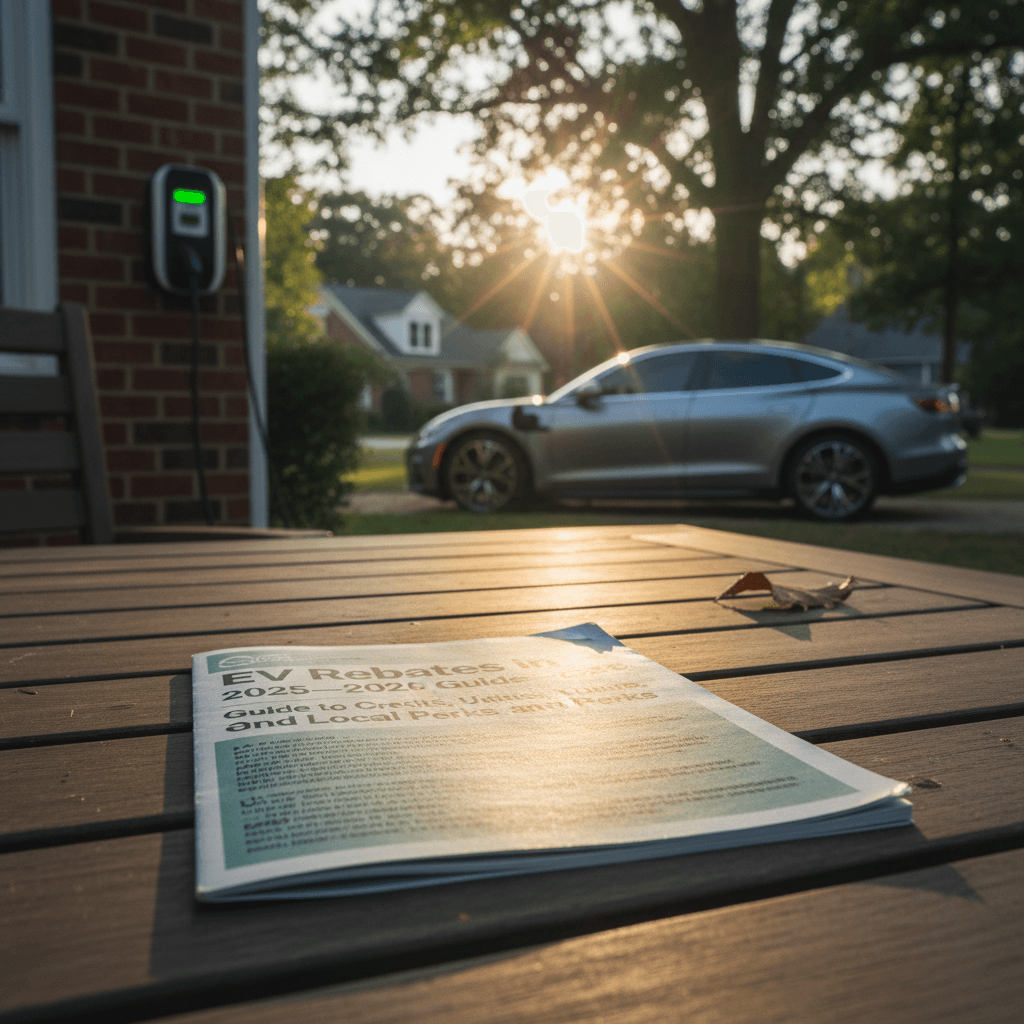
- Federal tax credits for new and used EVs (through September 30, 2025) and for home chargers (through June 30, 2026).
- Utility incentives, especially Duke Energy’s Charger Prep Credit program for make-ready electrical work that supports Level 2 or DC fast charging.
- Local perks such as free or low-cost public charging at Town of Cary facilities.
- Vehicle pricing advantages, particularly on used EVs where earlier federal incentives and faster depreciation are already “baked into” today’s market prices.
Key EV incentive dates for Cary-area drivers
Rules are in flux
Federal EV tax credits: timing matters through 2025
The backbone of EV rebates for Cary drivers has been the **federal clean vehicle tax credits**. Thanks to recent legislation, these are now on the clock.
Federal EV purchase credits Cary buyers can still use
Applies to North Carolina residents who buy qualifying vehicles before September 30, 2025
New Clean Vehicle Credit
Up to $7,500 for a qualifying new EV purchased from a dealer before September 30, 2025. The actual amount depends on battery size, assembly location, and critical-mineral rules.
- Income limits apply (roughly $300k joint / $150k single at the high end).
- MSRP caps apply (varies by vehicle type).
- Some models qualify for only part of the $7,500.
Previously Owned Clean Vehicle Credit
Up to $4,000 for a qualifying used EV purchased from a dealer for $25,000 or less before September 30, 2025.
- Vehicle must be at least 2 model years old.
- Income limits are lower than for new EVs.
- Credit is the lesser of 30% of price or $4,000.
The important point for Cary shoppers is that **these credits are scheduled to disappear for vehicles purchased after September 30, 2025**. If you plan to buy a new or used EV and want federal help, your window is measured in months, not years.
Tip for used EV shoppers in Cary
Federal credit for home EV chargers in Cary
Even after the vehicle credits sunset, Cary homeowners can still tap a separate federal incentive for charging equipment. The **EV charger tax credit (Internal Revenue Code Section 30C)** has also been shortened, but it’s still powerful if you are planning a Level 2 install at home.
Federal home EV charger credit for Cary homeowners
Residential credit rules for chargers placed in service before June 30, 2026
| Item | What it means for Cary homeowners |
|---|---|
| Credit amount | Up to 30% of installed cost (hardware + professional installation), capped at $1,000 per home. |
| Deadline | Charger must be placed in service by June 30, 2026. |
| Eligible equipment | Level 2 chargers and certain bidirectional chargers used at your residence. |
| How you claim it | Claim on your federal tax return using IRS Form 8911 for the year the charger was installed. |
| Stacking with other incentives | In many cases, you can combine this with **utility make-ready rebates** that cover some or all of the electrical work. |
Always confirm details on IRS Form 8911 or with a tax professional.
Why this matters in Cary
Statewide North Carolina EV incentives: what exists, and what doesn’t
If you’ve heard about generous state rebates in places like Colorado or New Jersey, it’s reasonable to ask whether **North Carolina offers a state-level EV rebate or tax credit**. As of 2025–2026, the answer is straightforward:
- North Carolina does not have its own statewide EV purchase rebate or tax credit for individual buyers.
- The state has focused more on **federal pass-through programs and infrastructure grants** rather than writing separate checks to buyers.
- You may see references to **home energy rebates** funded by the Inflation Reduction Act, those can support broader electrification upgrades, including wiring that’s helpful for an EV charger, but they’re not stand‑alone EV purchase rebates.
Where the state *does* play a role
Duke Energy EV Charger Prep Credit in the Triangle
For many Cary-area households, the most valuable "rebate" isn’t on the car at all, it’s on the wiring that makes home charging possible. That’s where **Duke Energy’s EV Charger Prep Credit program** comes in.
Duke’s program helps pay for **make-ready electrical work** that supports Level 2 or DC fast charging. Think conduit, wiring, new 240‑volt outlets, panel upgrades, and related labor. It does **not** cover the charger hardware itself.
Duke Energy EV Charger Prep highlights (North Carolina)
What Cary-area customers should know before scheduling home electrical work
| Feature | Residential takeaway |
|---|---|
| What it pays for | "Make-ready" work: conduit, wiring, outlets, breakers, panel work, trenching or boring needed to support an EV charger. |
| What it does NOT pay for | The EV charger unit itself, permitting fees, or unrelated electrical work. |
| Residential credit size | Up to roughly $1,000+ of qualifying electrical work for a single-family home, depending on scope. |
| Where it’s available | Available only to customers billed directly by Duke Energy. If you get your electric bill from a municipal utility (for example, some parts of Apex), you may not qualify. |
| How you apply | Use Duke’s online Charger Prep portal, submit itemized invoices, and provide permit documentation if required. |
Details vary by customer type and location; always confirm eligibility on Duke Energy’s website before you start work.
Utility territory matters
For a Cary homeowner who is a Duke Energy customer, a realistic scenario might look like this: your electrician charges $1,400 for a new 240‑volt circuit, conduit, and outlet in the garage. Duke’s make-ready rebate might cover most of that work, and the remaining cost plus your $400 charger could then be partially offset by the **30% federal charger tax credit**.
Local Cary, NC perks: free public charging and more
Even if you never receive a formal "rebate" check from the town, Cary’s local policies effectively act as **ongoing incentives for EV ownership**.
- The Town of Cary operates a network of **Level 2 public chargers** at locations like Bond Park, Town Hall, the Cary Regional Library parking deck, and several community facilities.
- As of early 2026, these town-owned stations are listed as **free to use during posted hours**, meaning you pay nothing beyond your regular taxes for the energy you draw while parked.
- Cary continues to expand its **sustainable and resilient infrastructure**, which often includes additional EV charging as new public projects come online.
Use free public charging strategically
Stacking EV incentives on a used EV purchase
For many Triangle families, the smartest move right now is a **used EV**. Prices have corrected from early-pandemic highs, and vehicles that originally benefited from federal credits are now entering the secondary market at attractive prices.
Example: Used EV bought before Sep 30, 2025
- You buy a 3‑year‑old used EV from a dealer in Cary for $22,000.
- The car qualifies for the used clean vehicle credit.
- You meet the income and other IRS requirements.
- You could receive up to $4,000 federal tax credit (or 30% of the price, whichever is less).
That’s effectively like paying $18,000 before any state or local benefits on charging.
Layering in charging incentives
- You install a Level 2 charger at home with $2,000 in total costs.
- Duke’s Charger Prep Credit covers, say, $900 of the electrical work.
- Your net installed cost is $1,100; the federal charger credit (30%) could reduce your tax bill by up to $330.
Combined, you’ve reduced your all‑in cost of going electric by several thousand dollars, without any North Carolina state purchase rebate.
Where Recharged fits in
Step-by-step: how to claim your EV rebates in Cary
Checklist: from test drive to tax return
1. Confirm your utility and eligibility
Look at your electric bill. If it’s from <strong>Duke Energy</strong>, you may qualify for the Charger Prep Credit. If it’s from a town utility, check their website or call to see if they offer any EV programs.
2. Decide on new vs. used, and timing
If you want to use federal **new or used EV credits**, plan to purchase before <strong>September 30, 2025</strong>. After that, the focus shifts to charger and infrastructure incentives only.
3. Pick the right vehicle with clear history
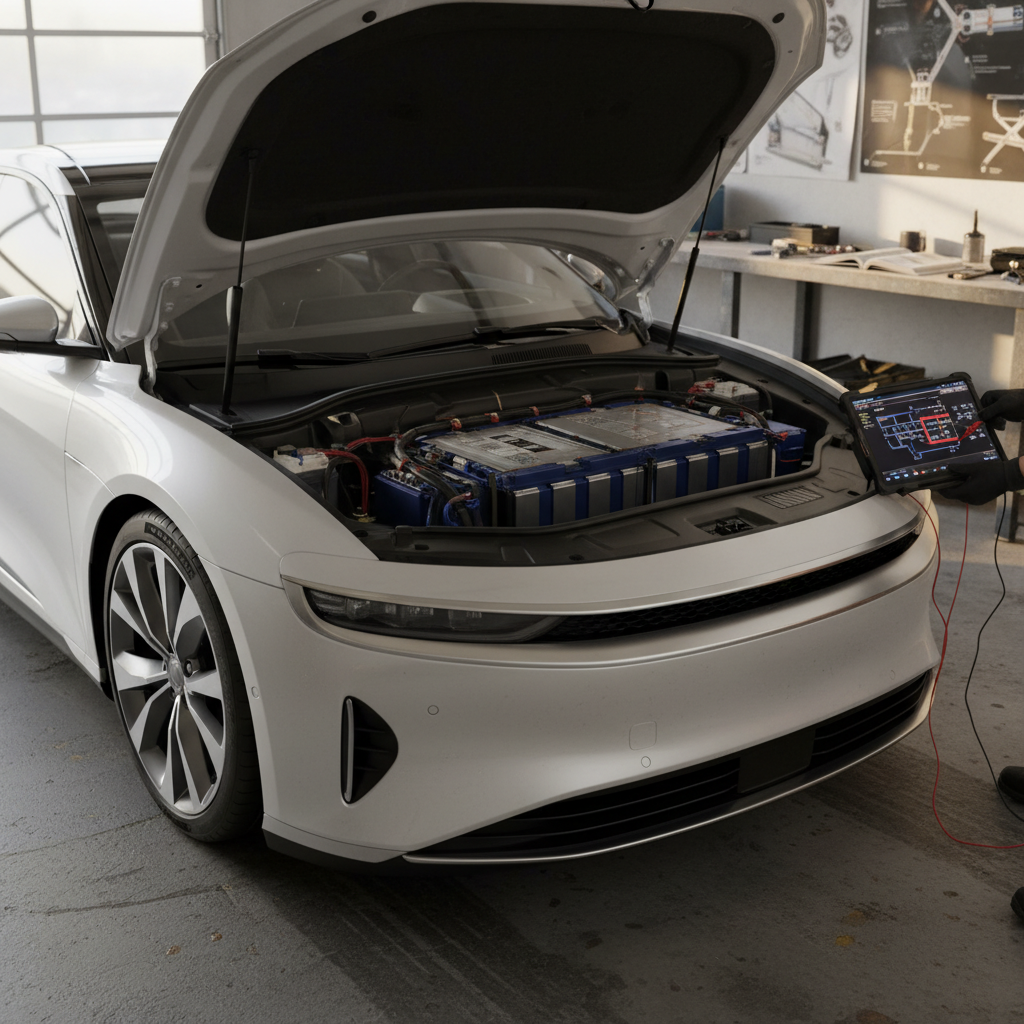
On a used EV, prioritize a verified battery report like the <strong>Recharged Score</strong>. You want proof of battery health, not just a Carfax and a smile.
4. Map out your home charging plan
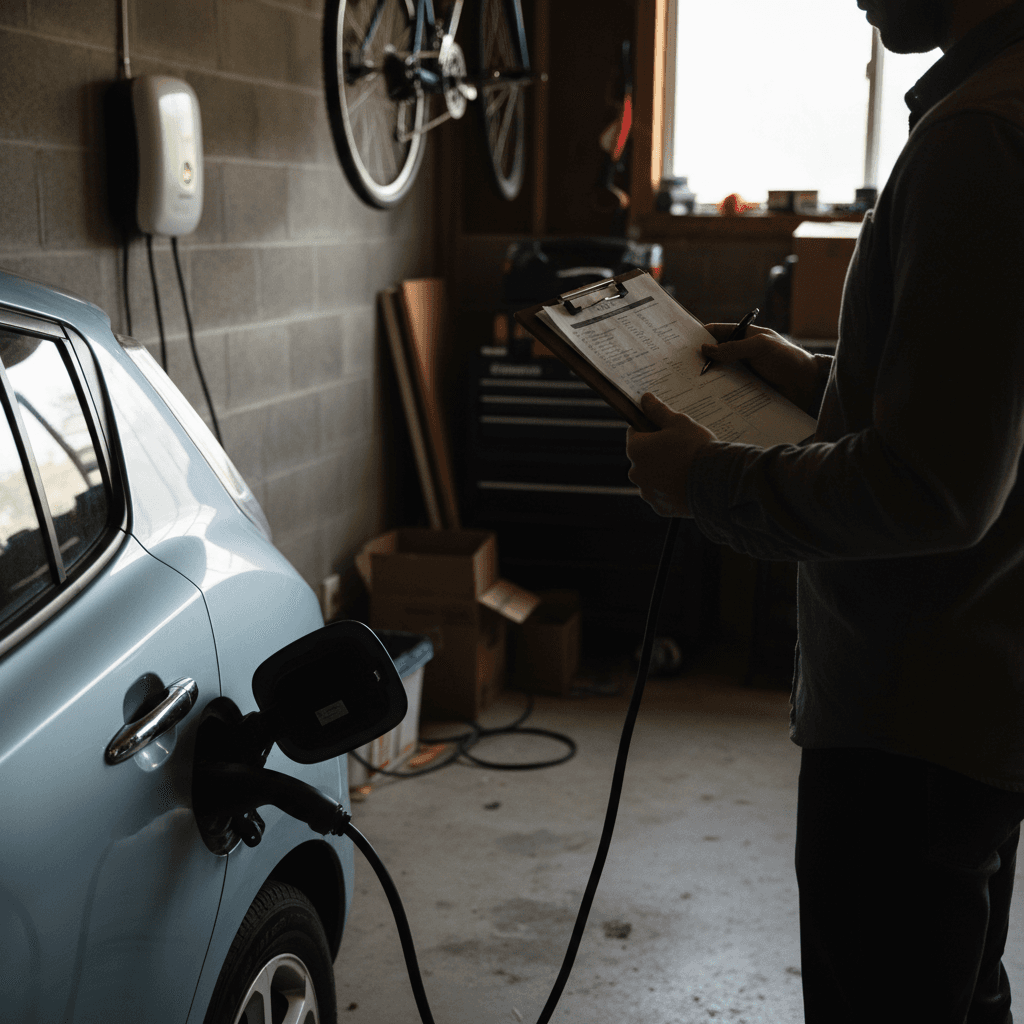
Ask a licensed NC electrician to quote the electrical work for a Level 2 charger. Get a detailed, itemized estimate that separates materials from labor, utilities and the IRS both like clean paperwork.
5. Apply for utility make-ready rebates
If you’re in Duke territory, start the **Charger Prep Credit** application before or immediately after work begins, following Duke’s checklist for photos, permits, and invoices.
6. Track every receipt and date
Keep closing documents from your EV purchase, your electrician’s final paid invoice, and proof of when your charger was placed in service. You’ll need these for your tax preparer.
7. File the right IRS forms
For vehicle credits, your dealer may provide documentation that plugs directly into Form 8936. For the charger credit, your tax pro will use <strong>Form 8911</strong>. Make sure they know you installed EV charging equipment at home.
Common pitfalls and deadlines to watch
Avoid these common EV incentive mistakes in Cary
A little planning can save you thousands, and some frustration
Missing the purchase deadline
Buying a new or used EV on October 1, 2025 instead of September 30 could be the difference between a $4,000+ tax credit and nothing at all.
Bad or incomplete paperwork
Utility rebates often require itemized invoices. "Electrical work – $1,400" may not be enough. Ask your electrician to spell out materials and labor related to the charger.
Assuming you’re in Duke territory
Parts of the Triangle are served by municipal utilities that don’t participate in Duke’s programs. Don’t schedule work assuming you’ll get a rebate, verify first.
Don’t base big decisions on outdated blogs
FAQ: EV rebates and incentives in Cary, North Carolina
Frequently asked questions about EV rebates in Cary, NC
Is an EV still worth it in Cary with fewer rebates?
Even as some of the flashiest EV rebates wind down, **Cary, NC remains a strong place to own an electric vehicle**. Lower fuel and maintenance costs, free public charging at town facilities, and the ability to pair a well-priced used EV with remaining federal and utility incentives keep the math compelling for many households, especially those with steady commutes and the option to charge at home.
The smartest move is to treat incentives as **the icing, not the cake**. Start with a vehicle that fits your budget and daily driving needs, then layer in federal credits, Duke Energy charger prep support (if you qualify), and the federal home charger credit where possible. If you’d like help running the numbers on a specific used EV, Recharged’s EV specialists can walk you through total cost of ownership, expected battery life, and what incentives you may still be able to claim, before you ever sign a contract.