You don’t need another breathless commercial telling you electric cars are the future. You need to know, in plain English, whether the EV pros and cons make sense for your life and your wallet in 2025, especially with prices, incentives, and charging infrastructure all in motion.
Where things stand in late 2025
Why EV pros and cons feel so confusing in 2025
If you’re researching electric vehicles, you’re probably whipsawed between two narratives: glowing stories about zero-emission mobility and doomscroll threads about dead batteries and broken chargers. The reality sits between those poles. EVs absolutely have real advantages over gas cars, but they also come with tradeoffs around upfront price, charging access, and long‑term uncertainty that hit some owners harder than others.
Drivers EVs usually work well for
- Daily commute under ~60–80 miles
- Off‑street parking or a garage for home charging
- Live in or near metro areas with public fast chargers
- Plan to keep the car at least 5–7 years
Drivers who may be better off in gas or hybrid
- No realistic way to charge at home or work
- Very low annual mileage (under ~6,000 miles)
- Regular long, rural road trips on sparse routes
- Need a cheap beater, not a techy daily driver
Quick view: top EV pros and cons
Electric vehicle pros and cons at a glance
Scan this first, then we’ll unpack the nuance.
Key pros
- Lower running costs if you drive enough and charge smart.
- Instant torque, quiet cabins, and smooth performance.
- Less maintenance, no oil, fewer moving parts.
- Zero tailpipe emissions and lower lifecycle emissions in most regions.
Key cons
- Higher upfront price and sometimes higher insurance.
- Charging access can be inconvenient without home charging.
- Battery health anxiety and expensive replacements if needed.
- Resale values still shaking out as tech moves quickly.
How EV costs stack up in 2025
Pro 1: Lower running costs (when the conditions are right)
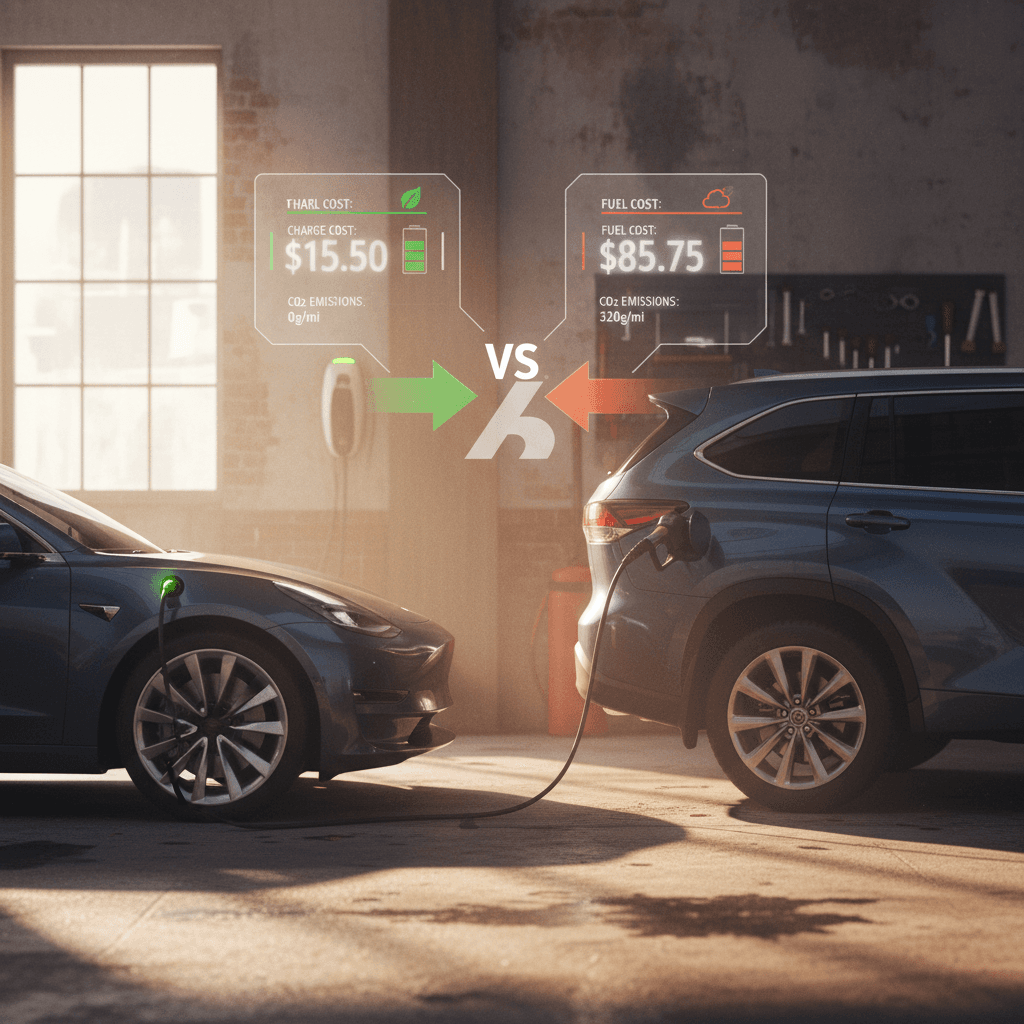
The central promise of an EV is that you pay more up front but spend less every month. In 2025, that’s often true, but not automatically. It depends on how much you drive, what you pay for electricity, and whether you’re mostly charging at home or leaning on pricey DC fast chargers.
Typical 5‑year cost comparison: EV vs gas car (U.S. averages, 2025)
Illustrative example for a mid‑size crossover, assuming ~12,000 miles per year. Your numbers will vary by state, utility, model, and driving style.
| Category | Electric vehicle | Gas vehicle | What it means for you |
|---|---|---|---|
| Purchase price | $56,000 | $48,000 | EV starts about $8k higher before incentives. |
| Fuel / charging (5 yrs) | ≈$3,400 | ≈$8,000 | Electricity is much cheaper per mile, especially at home. |
| Maintenance & repairs (5 yrs) | Lower by ≈$2,000 | Higher | No oil changes, fewer moving parts, less brake wear. |
| Total 5‑yr ownership | Roughly similar | Roughly similar | For many drivers the 5‑year total is now within a few hundred dollars either way. |
Sticker prices still favor gas, but fuel and maintenance lean toward EVs.
Make the math work for you
Pro 2: Quieter, cleaner, and often more fun to drive
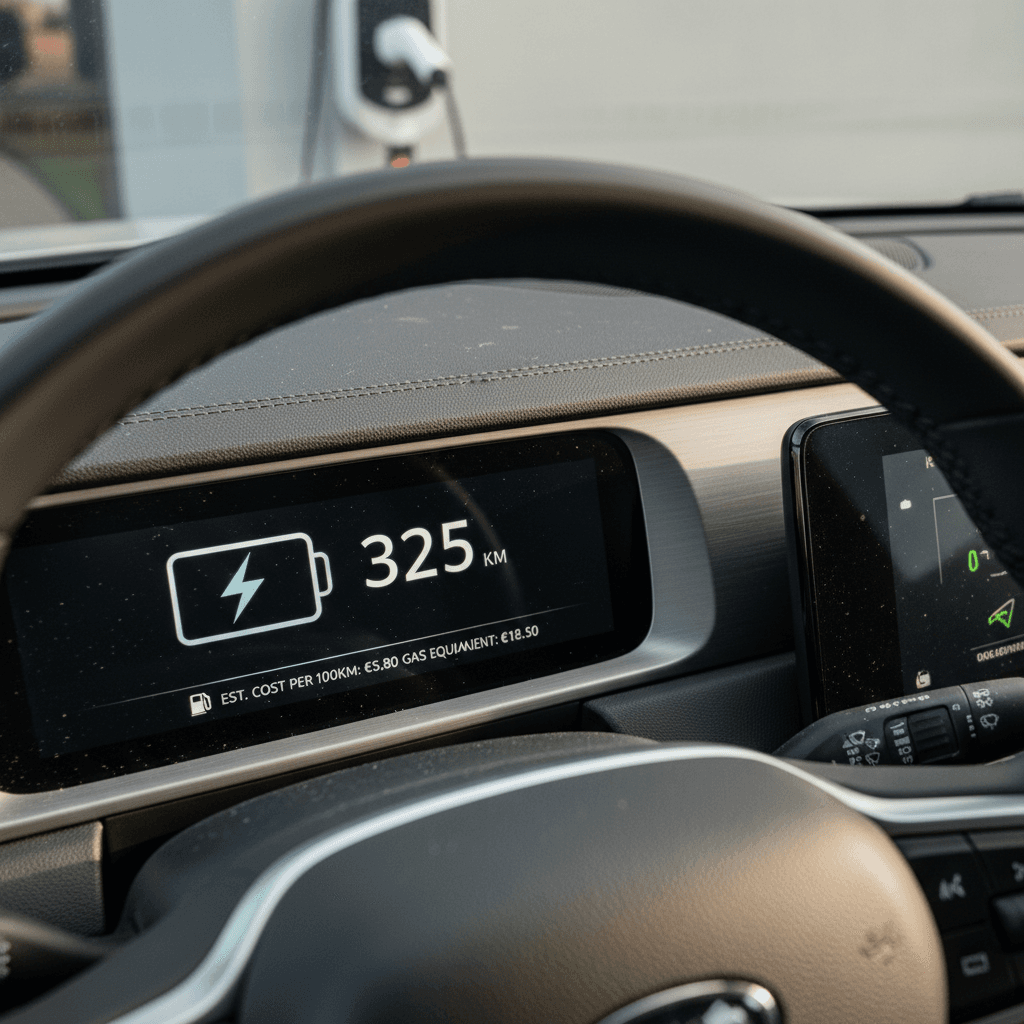
Strip away the spreadsheets and an EV is, first, a way of moving through the world. On that score they’re winning. Electric motors deliver instant torque, so even modest EVs jump away from lights with a quickness that would embarrass yesterday’s sport sedans. With no shifting and far less vibration, they feel calm in the way a good noise‑canceling headphone feels calm.
- Quieter cabins, especially around town and in traffic.
- Smooth, linear acceleration with no hunting gears.
- Low center of gravity from battery packs improves stability.
- Zero tailpipe emissions, better local air quality at street level.
Pro 3: Less maintenance and fewer breakdowns
Open the hood of a gas car and you’re looking at a century of mechanical evolution: pistons, valves, belts, exhaust plumbing. An EV powertrain is ruthlessly simple by comparison. Fewer moving parts means fewer things to break, fewer fluid changes, and fewer Saturday mornings spent in a service waiting room.
- No oil changes, spark plugs, timing belts, or exhaust systems.
- Regenerative braking extends brake pad and rotor life.
- Fewer routine services overall, especially in the first 5–8 years.
- Software updates can improve efficiency and features over time.
Why fleets love EVs
Pro 4: Home charging convenience and energy independence
Ask seasoned EV owners what they’d miss if they went back to gas, and you’ll hear the same line: “I’d hate going to gas stations again.” Being able to plug in at home and wake up to a full battery is a genuinely different way to live with a car.
- Charge overnight while you sleep, no special trips to refuel.
- Use scheduled charging to tap cheaper off‑peak electricity rates.
- Pair with rooftop solar and you’re effectively fueling from your roof.
- Never stand in the rain at a pump again. You just plug in and walk inside.
The catch: you need somewhere to plug in
Con 1: Higher upfront price and resale uncertainty
The uncomfortable truth is that, in 2025, EVs still cost more to buy. Average new EV transaction prices hover in the high‑50s, roughly $8,000–$9,000 more than comparable gas cars. For a lot of households, that’s the whole ballgame, even before we talk about chargers.
- Federal incentives have been shrinking and shifting, and some programs are scheduled to sunset or tighten eligibility.
- State and utility rebates can still be substantial but vary wildly by ZIP code.
- Rapid tech improvement (especially range and charging speeds) makes some buyers worry about their brand‑new EV feeling “obsolete” sooner than a gas car would.
Depreciation cuts both ways
Con 2: Charging infrastructure and range planning
Charging has improved dramatically in the last few years, Tesla opening much of its Supercharger network, other fast‑charging networks expanding, more 150–350 kW stations at highway stops. But the experience is still nowhere near as universally seamless as pulling into any gas station off any exit.
- Urban and suburban corridors are increasingly well served; rural gaps remain.
- Fast‑charging stations can be busy at peak times or unexpectedly offline.
- Road‑tripping sometimes means planning stops around chargers, not just coffee and scenery.
- DC fast charging is significantly more expensive than home charging, which can erode cost savings if you rely on it heavily.
How to sanity‑check your charging reality
Con 3: Battery degradation and replacement costs
Every lithium‑ion battery ages. In an EV that shows up as reduced range over time, not a sudden collapse. The good news: real‑world data from high‑mileage EVs shows that degradation is often gentler than early headlines implied. The bad news: if a pack does fail outside warranty, replacement can cost as much as a small car.
- Most modern EVs lose range slowly, on the order of a few percent in the first years, then tapering.
- Many manufacturers warranty the battery for 8 years or 100,000+ miles, typically down to ~70% capacity.
- Pack replacements can run from mid‑four figures to well into five figures depending on model and labor costs.
- Extreme climates, constant fast‑charging, and regularly running the pack near empty can all accelerate degradation.
Battery health is knowable, not mystical
Con 4: Insurance and repair costs can sting
Because EVs are packed with expensive batteries and advanced electronics, insurers and body shops tend to view them as high‑stakes patients. In 2025, many EVs still carry higher insurance premiums than comparable gas cars, and collision repairs can be eye‑watering if the battery pack is involved.
- Insurers price in higher repair bills, especially for newer models with limited parts availability.
- Some minor accidents that compromise a battery pack can result in a vehicle being totaled.
- Independent shops are catching up, but many EV repairs still funnel through brand dealers or specialist centers.
Ask these questions before you buy
Used EVs: special pros and cons you shouldn’t ignore
Used EVs are where the pros and cons really sharpen. On one hand, rapid depreciation plus improving tech means there are bargains to be had, quiet, quick, well‑equipped EVs for the price of a new economy car. On the other, you’re inheriting someone else’s charging habits, climate, and accident history, all of which matter much more to batteries than to gas engines.
Used EV upsides
- Much lower purchase price than new, a lot of depreciation already taken.
- Many still under original battery and powertrain warranties.
- Tech and safety features that would be pricey on a new gas car.
- Great city cars or second cars for households with home charging.
Used EV pitfalls
- Unknown battery history, fast‑charge heavy? Lived in desert heat?
- Out‑of‑warranty packs can be very expensive to replace.
- Early‑generation fast‑charging or range can feel dated.
- Spotty service history or repairs by shops not trained on high‑voltage systems.
How Recharged de‑risks used EVs
Checklist: Is an EV right for your life right now?
7 quick questions to pressure‑test EV pros and cons for you
1. Can you reliably charge where you park?
If you have a driveway or garage and can install at least a 240V Level 2 charger, EV ownership gets vastly easier. If you rely entirely on public charging, run the numbers on cost and convenience very carefully.
2. How many miles do you actually drive?
If you’re doing 10,000–15,000 miles a year, lower running costs can shine. If you only drive a few thousand miles a year, fuel savings won’t offset a higher purchase price as quickly.
3. What do your regular trips look like?
Frequent 300‑mile rural drives with sketchy charging coverage are still better served by gas or hybrid. Mostly metro commuting plus occasional interstate trips? That’s EV sweet‑spot territory.
4. What’s your local electricity situation?
Check your kWh rate, time‑of‑use plans, and any EV charging discounts. Expensive power and no off‑peak plan can eat into the savings story.
5. Are you comfortable with tech‑forward cars?
EVs are computers that happen to have wheels. Over‑the‑air updates, apps, driver‑assist systems, they’re all part of the deal. If that excites you, great. If that terrifies you, test‑drive with an open mind.
6. How long do you typically keep cars?
The longer you keep a solid EV, especially beyond the payoff of any loan, the more years you have to enjoy low running costs. Serial 2‑ to 3‑year flippers may find depreciation less friendly.
7. Do you have a backup vehicle?
In multi‑car households, putting one EV in the driveway and keeping a gas or hybrid for edge‑case trips can deliver most of the benefits with very little downside.
How Recharged tilts the odds in your favor
If you’ve decided that, on balance, an EV fits your life but you’re wary of the risks, battery health, resale value, charging realities, that’s exactly the gap Recharged was built to bridge. We focus on used EVs, because that’s where the financial upside is biggest and the information gap is widest.
Why shop used EVs with Recharged?
We sweat the complicated parts so you can focus on how the car drives.
Verified battery health
Fair, transparent pricing
EV‑specialist support
Ready to find your next EV?
Browse VehiclesOn top of that, Recharged offers financing, trade‑ins (including instant offers or consignment), and nationwide delivery, plus an in‑person Experience Center in Richmond, VA if you like to kick actual tires before you sign. The whole process is designed to feel more like ordering something thoughtfully online and less like an adversarial Saturday at a traditional dealership.
EV pros and cons: FAQ
Frequently asked questions about EV pros and cons
Bottom line: how to think about EV pros and cons
Viewed from 30,000 feet, the pros and cons of electric vehicles in 2025 look like a trade: you swap gas‑station convenience for home charging, mechanical complexity for software, tailpipe emissions for a bigger electric bill, and some upfront price anxiety for the possibility of lower long‑term costs.
For a lot of American drivers, especially those with garages, healthy commutes, and an appetite for modern tech, that trade already makes sense. For others, particularly rural drivers without charging options or buyers on very tight budgets, a efficient gas car or hybrid may still be the saner choice for now.
If you’re EV‑curious but risk‑averse, starting with a used, thoroughly vetted EV can be the smart middle path. That’s the niche Recharged occupies: surfacing solid used EVs, laying their strengths and weaknesses out in daylight, and helping you decide with clear eyes whether this is the right move, right now, not for some hypothetical driver, but for you.