If you’re shopping for an electric vehicle, the phrase “EV powertrain warranty vs. bumper-to-bumper” pops up constantly, and usually just when you think you’ve finally found the right car. The good news: once you understand how these warranties split up coverage between the battery, motor, and everything else, it gets a lot easier to compare cars and protect yourself, especially if you’re buying used.
Quick takeaway
Why EV warranties feel so confusing
Traditional gas cars trained us to think in simple terms: basic warranty, powertrain warranty, maybe rust. Electric vehicles add a massive, expensive battery pack and complex electronics, so automakers stack on extra coverage. That’s why you’ll often see three different headline promises on the same window sticker: a 3–5 year bumper-to-bumper warranty, a 5–10 year powertrain warranty, and an 8–10+ year battery warranty. They overlap, but they aren’t interchangeable.
To make things more interesting, some brands bundle the battery into the powertrain warranty, others break it out as its own line, and the rules can change depending on where the car was sold (for example, California requires many EV batteries to be covered for at least 10 years/150,000 miles). No wonder it feels like fine‑print bingo.
Think in layers, not labels
What an EV bumper-to-bumper warranty actually covers
A bumper-to-bumper warranty (also called a “basic” or “comprehensive” warranty) is the closest thing to a new‑car bubble wrap. It covers most parts and systems on the car, from the touchscreen and window regulators to sensors, wiring, and climate control. It usually does not cover wear‑and‑tear items like tires, wiper blades, brake pads, or interior trim damage.
- Typical length on EVs: 3 years/36,000 miles (many mainstream brands) to 4 years/50,000 miles (Tesla, many premium brands).
- What’s usually included: infotainment and screens, cameras and sensors, interior electronics, suspension components, HVAC, charging door actuators and latches, onboard chargers, and most non‑wear mechanical parts.
- What’s usually excluded: cosmetic damage, interior wear, glass chips, tires, brake pads and rotors, alignments, and anything caused by misuse or accidents.
“Bumper-to-bumper” is a marketing phrase
What an EV powertrain warranty covers (and how it differs)
On a gas car, the powertrain warranty covers the engine, transmission, and the bits that transfer power to the wheels. On an EV, there’s no engine or multi‑gear transmission, but there is a powertrain: usually a battery pack, one or more electric drive units, reduction gears, and related hardware that physically moves the vehicle.
Automakers define this differently, but an EV powertrain warranty typically covers:
- Electric drive motors and integrated gearboxes or drive units
- Single‑speed reduction gears, half‑shafts, and sometimes differentials
- High‑voltage cabling and junction boxes related to propulsion
- Sometimes the onboard charger or DC‑DC converter (check the wording)
- In some cases, the high‑voltage battery pack is explicitly included; in others, it’s carved out into a separate “battery” warranty
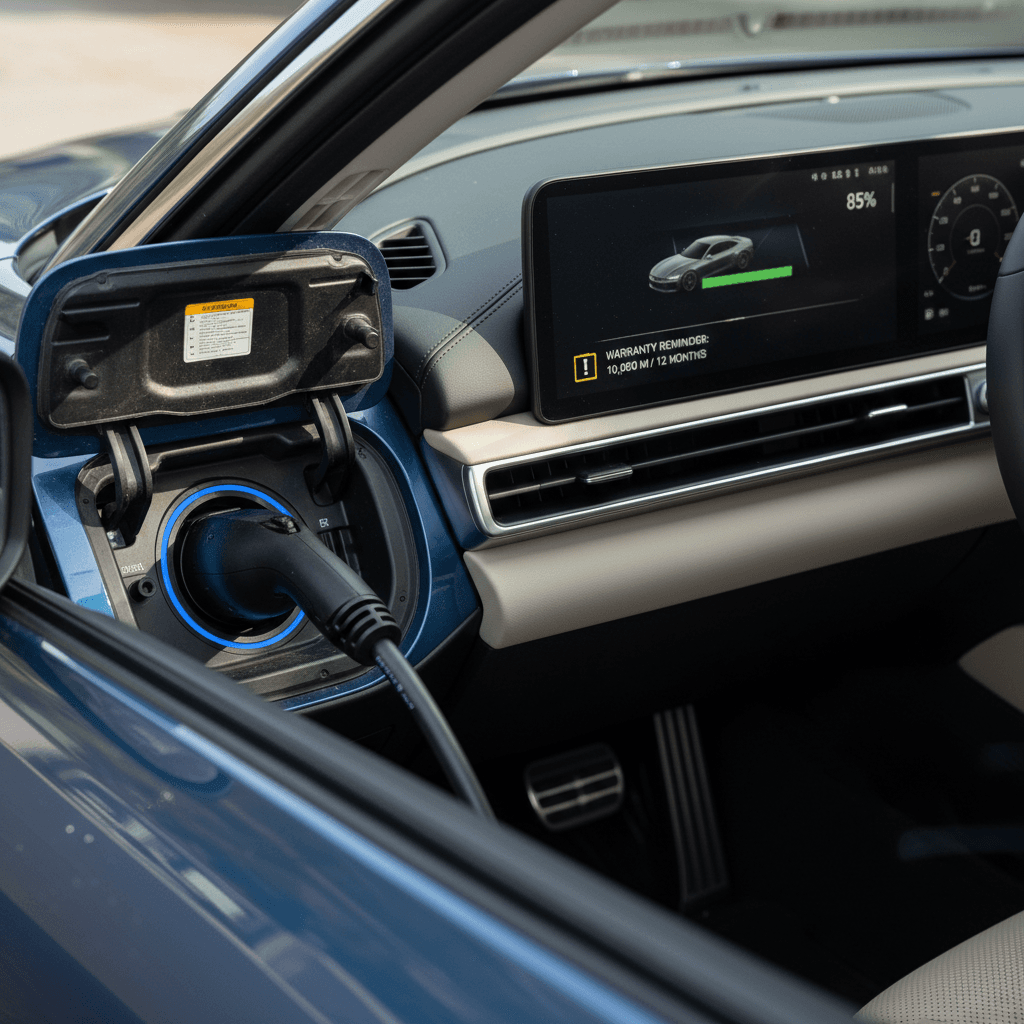
Whereas a bumper‑to‑bumper warranty might last 3–4 years, powertrain coverage on EVs often runs 5 years/60,000 miles or longer. Some EV‑focused brands go further, Hyundai, Kia, and a handful of newer players have stretched powertrain and battery protection to 8–10 years on specific models, and Rivian offers up to 175,000 miles of battery and drive‑unit coverage on certain configurations.
Where the high-voltage battery warranty fits in
Here’s the twist: in the EV world, the most important, and expensive, component usually has its own warranty layer. U.S. regulations require most EV batteries to be covered for at least 8 years or 100,000 miles, and many automakers go beyond that with longer mileage limits or better capacity guarantees.
A typical EV battery warranty includes two key promises:
- Time and mileage coverage – for example, 8 years/100,000 miles, 8 years/120,000 miles, or even 10 years/100,000 miles on some models.
- Capacity retention – if the usable battery capacity falls below a threshold (often around 70% of original) within that period, the manufacturer will repair or replace the pack or modules.
Battery warranty is not just “if it dies”
Side-by-side: EV bumper-to-bumper vs. powertrain vs. battery
Sometimes the easiest way to understand “EV powertrain warranty vs. bumper‑to‑bumper” is to see them next to each other, along with the battery warranty that sits on top of both.
Typical EV Warranty Coverage, Side by Side
Approximate ranges for major warranty types on many modern EVs. Always confirm exact terms for the specific vehicle you’re considering.
| Warranty Type | Typical Length (Years/Miles) | Mainly Covers | Does NOT Cover |
|---|---|---|---|
| Bumper-to-bumper | 3–4 years / 36,000–50,000 miles | Most components, interior electronics, screens, sensors, climate control, many charging components | Wear items (tires, brakes, wipers), cosmetic damage, accidents, abuse |
| Powertrain (EV) | 5–8 years / 60,000–100,000+ miles | Electric motors/drive units, reduction gears, some high‑voltage cabling, sometimes battery modules | Interior electronics, infotainment, suspension, body hardware |
| High-voltage battery | 8–10 years / 100,000–150,000+ miles | Battery pack and major high‑voltage components; often includes a capacity guarantee | Normal minor degradation above the threshold, damage from misuse or improper repairs |
Use these ranges as a sanity check when comparing different EV brands and models.
Think of the three layers like this
- Inner layer – Battery warranty: Protects the single most expensive EV component the longest.
- Middle layer – Powertrain warranty: Protects the hardware that turns battery energy into motion.
- Outer layer – Bumper‑to‑bumper: Protects all the supporting systems and tech that make the car pleasant to live with.
Why this matters when shopping used
On a 6‑year‑old EV, the bumper‑to‑bumper warranty is usually gone. The powertrain warranty may be close to expiring, but the battery warranty could have several years and tens of thousands of miles left. That remaining coverage can make an older EV far less risky if the battery and powertrain are in good health.
How long do EV warranties last in years and miles?
Exact coverage varies by brand and model, but you’ll see some clear patterns when you compare EVs side by side:
Typical EV Warranty Patterns Today
These aren’t rules, just common ranges you’ll see on window stickers and spec sheets.
Bumper-to-bumper
3 years/36,000 miles is common for mainstream brands. Premium and EV‑centric brands often step up to 4 years/50,000 miles.
Powertrain
Many EVs offer 5 years/60,000 miles of powertrain coverage, but some brands extend closer to 8 years/100,000 miles, especially when they bundle battery and drive units together.
High-voltage battery
Most EV batteries carry at least 8 years/100,000 miles of coverage, with some stretching to 120,000–150,000 miles or 10 years, particularly in states with stricter emissions rules.
Check the original sale state
Used EVs: What happens to these warranties?
When you’re looking at a used EV, the big questions are simple: What’s left of each warranty layer? And does it transfer to you as the next owner? The answers depend entirely on the brand’s rules.
Used EV warranty checklist
1. Confirm what’s transferable
Some brands fully transfer battery and powertrain warranties to subsequent owners; others shorten coverage for second owners or require registration. Always confirm the exact policy for that VIN, not just the model line.
2. Check in‑service date, not model year
Warranties start when the car was first sold or leased, not its model year. A 2021 EV sold in late 2022 effectively shifts all warranty timelines by a year.
3. Verify remaining miles
Warranties are “years <em>or</em> miles,” whichever comes first. A high‑mileage commuter EV can age out of coverage much faster than a low‑mileage city car from the same year.
4. Look for prior battery or powertrain work
Battery or drive‑unit replacements under warranty aren’t necessarily bad news, but you’ll want documentation to see what was done, when, and whether the new parts carry their own warranty.
5. Ask for a battery health report
Mileage alone doesn’t tell you how the pack is aging. A proper <strong>battery health report</strong> with a capacity estimate is far more useful than “still under warranty” in isolation.
How Recharged uses existing coverage
Reading the fine print: Key exclusions that surprise owners
Factory warranties are written by lawyers, not EV enthusiasts, so there are always surprises buried in the exclusions pages. When you’re comparing an EV powertrain warranty vs. bumper‑to‑bumper coverage, keep an eye out for these common carve‑outs:
- Normal wear and tear – the car is allowed to age. Faded trim, minor battery degradation above the guarantee threshold, and rattles that don’t affect function are rarely covered.
- “Environmental damage” – flooding, salt corrosion, rodent damage to wiring, and hail can all be excluded or limited to separate insurance claims.
- Improper modifications or repairs – tapping into the high‑voltage system, lifting or lowering the vehicle beyond spec, or using non‑approved parts can give the manufacturer an excuse to deny related claims.
- Charging outside of spec – using chargers or adapters that aren’t approved, or repeatedly ignoring thermal or charging warnings, can complicate fast‑charging or battery claims.
- Neglect – ignoring warning lights, continuing to drive with known faults, or skipping required services can weaken your position if something fails.
High-voltage work is not DIY territory
Are extended warranties on EVs worth it?
Extended warranties (service contracts) on EVs promise peace of mind after the factory coverage expires. The catch is that EVs have far fewer moving parts than gas cars, and the biggest risk, the battery, is already covered longer than almost everything else by the factory. That means many extended plans focus on electronics, infotainment, and convenience features rather than the high‑voltage hardware you’re most worried about.
When an extended warranty can make sense
- You’re buying a used EV that’s just out of bumper‑to‑bumper coverage but still has years of battery warranty left.
- You want protection for expensive electronics (screens, cameras, driver‑assist systems) that are no longer under the basic warranty.
- You drive high miles annually and will quickly hit the mileage limit of the remaining factory coverage.
When it often doesn’t
- The factory battery and powertrain warranties still have lots of time and miles left; you’d be double‑insuring the least likely failures.
- The contract has long lists of exclusions for the very tech features you care about.
- The price of the plan would cover several likely out‑of‑pocket repairs anyway.
Ask one pointed question
How Recharged helps you make sense of EV warranties
Most used‑car listings toss “still under warranty” into the description and call it a day. With EVs, that’s not nearly good enough. You need to know whether there’s meaningful battery, powertrain, or bumper‑to‑bumper coverage left, and how healthy the battery actually is today.
What Recharged adds on top of factory EV warranties
We connect the dots between fine print, real battery health, and your monthly budget.
Recharged Score Report
Every EV on Recharged comes with a Recharged Score that includes independently verified battery health and a clear view of where it falls relative to typical degradation for its age and mileage.
Warranty clarity for each car
We map out remaining factory coverage, battery, powertrain, and bumper‑to‑bumper, so you can see which claims are still on the table and for how long.
Financing and protection options
If you want extra protection, our team can walk you through financing, trade‑in options, and available service plans without pressure, so you can match coverage to your actual risk tolerance.
Because the entire buying process at Recharged is digital first, with optional in‑person visits at our Experience Center in Richmond, VA, you can compare several EVs, their Recharged Scores, and their remaining warranty coverage side by side before you decide which one deserves a spot in your driveway.
EV warranty FAQ
Frequently asked questions about EV powertrain vs. bumper-to-bumper warranties
Bottom line: Which EV warranty matters most?
If you remember nothing else from the EV powertrain warranty vs. bumper‑to‑bumper debate, remember this: the battery and powertrain warranties are the long game; bumper‑to‑bumper is the early safety net. On a new car, that basic warranty keeps all the fancy tech behaving while the powertrain and battery coverage quietly guard against the rare but expensive failures. On a used EV, the picture shifts, bumper‑to‑bumper may be gone, but a strong battery warranty plus a clean bill of battery health can make an older electric car a very smart buy.
The trick is seeing the whole picture at once: what each warranty covers, how much time and mileage is left, and how healthy the battery actually is. That’s exactly what the Recharged Score and our EV‑specialist team are designed to do, so when you choose your next used EV, you’re not buying a mystery. You’re choosing a car whose warranty layers, battery health, price, and support all line up with how you really drive.