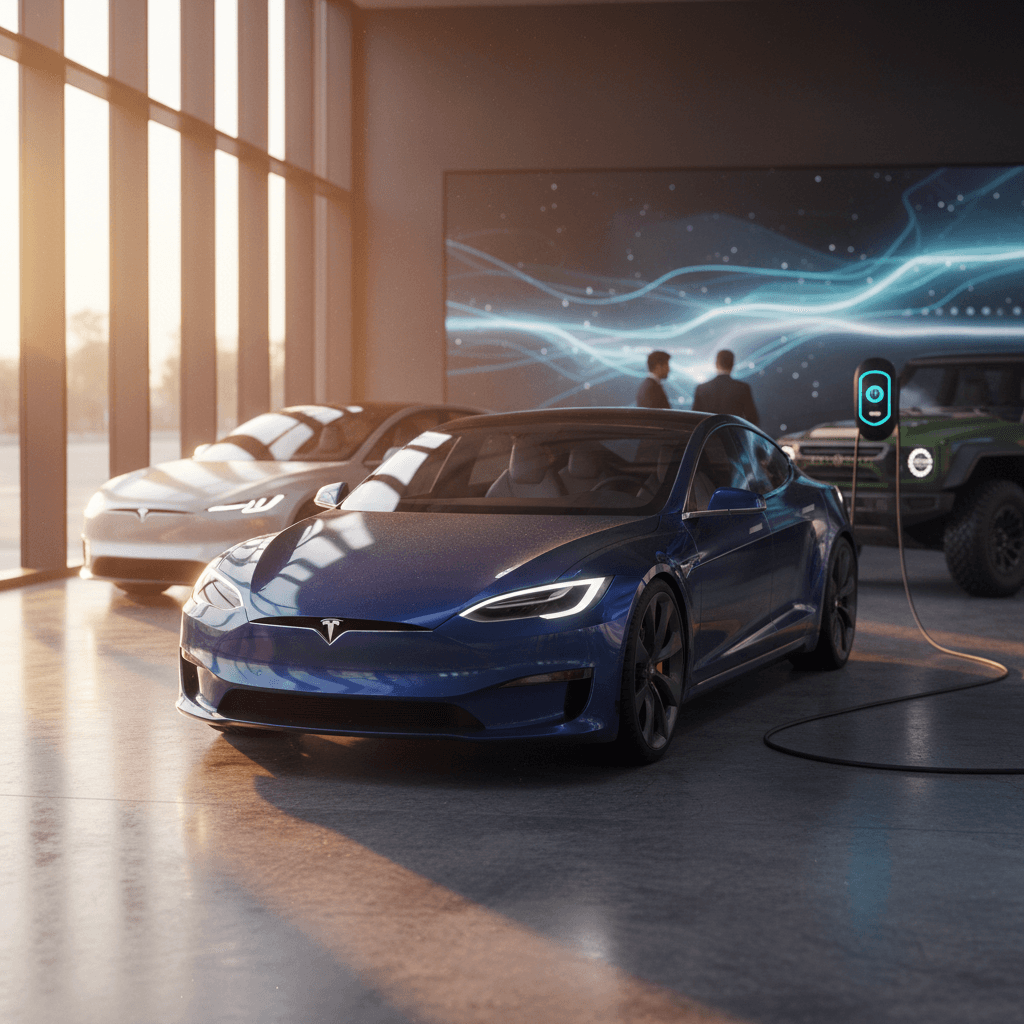
Search for “EV makers” and you’ll get a list of brand names and stock tips. Useful, maybe, but if you’re trying to decide which electric vehicle to buy (or which used EV to trust), what you really need is context. Who actually leads in electric vehicles today? Which EV manufacturers are likely to be around a decade from now? And which badges on a used car lot should make you lean in, or walk away?
Quick definition: what counts as an EV maker?
Why EV makers matter more than you think
When you buy an EV, you’re not just choosing a body style and range number. You’re buying into the engineering culture, software capability, and financial health of a specific EV maker. Those factors affect everything from charging performance and battery longevity to parts availability and over‑the‑air (OTA) software support years down the road.
- Battery engineering philosophy (aggressive fast charging vs conservative longevity)
- Software maturity (infotainment glitches vs smooth OTA updates)
- Dealer or direct‑to‑consumer service experience
- Availability of compatible fast charging (NACS, CCS, brand-specific networks)
- Likelihood the company still exists to support recalls and parts in 5–10 years
Think beyond the logo
How concentrated are EV makers today?
The 2025 EV makers scoreboard: who’s actually winning?
Strip away the hype and you end up with a fairly clear scoreboard. Looking at global plug‑in deliveries (battery‑electric plus plug‑in hybrid) through 2024 and into 2025, a handful of EV makers account for most of the market.
Top global EV makers by 2025 market share (approximate)
Major EV makers by global plug‑in deliveries in 2025, combining BEVs and PHEVs.
| Rank | Group | Home base | Approx. 2025 plug‑in share | Notable EV brands |
|---|---|---|---|---|
| 1 | BYD | China | ~20% | BYD, Denza, Yangwang |
| 2 | Geely Group | China | ~10% | Geely, Volvo, Polestar, Zeekr |
| 3 | Tesla | USA | ~8% | Tesla |
| 4 | Volkswagen Group | Germany | ~7% | VW, Audi, Skoda, Porsche, Cupra |
| 5 | SAIC | China | ~6% | MG, IM Motors, Roewe |
| 6 | Changan | China | ~4% | Changan, Deepal, Avatr |
| 7 | Hyundai–Kia | South Korea | ~3% | Hyundai, Kia, Genesis |
| 8 | Chery | China | ~3% | Chery, Exeed |
| 9 | BMW Group | Germany | ~3% | BMW, MINI |
| 10 | Stellantis | EU/US | ~3% | Jeep, Peugeot, Fiat, Opel, Dodge, Ram |
These figures combine battery‑electric (BEV) and plug‑in hybrids (PHEV) and are rounded for clarity, based on public industry data.
Three archetypes of today’s EV makers
Most brands you know fit into one of these buckets.
Pure‑play EV specialists
Companies that only build EVs, with no legacy gas business.
- Tesla (global premium mass market)
- Rivian (adventure trucks & SUVs)
- Lucid (luxury sedans/SUVs)
Legacy automakers
Incumbents shifting from gas to EVs.
- VW Group, GM, Ford, Hyundai–Kia
- Stronger dealer/service footprint
- Mixed EV quality as they transition
Chinese champions
Export‑oriented EV makers with scale.
- BYD, Geely, SAIC, Changan, Chery
- Very cost‑competitive batteries
- Fast product cycles, limited U.S. presence
Don’t confuse volume with quality
EV makers in the U.S.: who you’ll actually see on the road
Globally, Chinese EV makers dominate the volume charts, but if you’re in the U.S. your day‑to‑day reality looks very different. Because of tariffs and political risk, Chinese EV makers have almost no presence in the American new‑car market today. Instead, the playing field is dominated by Tesla, a handful of legacy brands, and a few U.S.‑based startups.
Leading EV makers in the U.S. market (2024–2025)
Approximate standing among U.S. battery‑electric registrations based on recent data.
| Position | Brand/group | 2024 EV sales snapshot | Key EV nameplates |
|---|---|---|---|
| 1 | Tesla | ~634k U.S. EVs in 2024, ~44% share | Model Y, Model 3, Model X, Cybertruck |
| 2 | Ford | ~98k BEVs in 2024, fastest‑growing legacy brand | Mustang Mach‑E, F‑150 Lightning, E‑Transit |
| 3 | GM (Chevrolet, Cadillac, GMC, Honda/Acura JV) | Rapid growth from Ultium‑based crossovers | Equinox EV, Blazer EV, Cadillac Lyriq, Honda Prologue |
| 4 | Hyundai–Kia–Genesis | Strong growth with E‑GMP platform | Hyundai Ioniq 5/6, Kia EV6/EV9, Genesis GV60 |
| 5 | Rivian | Dozens of thousands of lifestyle EV trucks/SUVs | R1T, R1S, upcoming R2 |
| 6 | Others (VW, BMW, Mercedes, Nissan, Toyota, Volvo, Subaru…) | Smaller shares but important nameplates | VW ID.4, BMW i4, Mercedes EQE, Nissan Ariya, Toyota bZ4X, Subaru Solterra |
These are the EV makers you’re most likely to encounter in the U.S. new and used market.
Why the U.S. mix matters for used shoppers
Legacy automakers vs EV specialists
EV specialists (Tesla, Rivian, Lucid)
- Pros: Clean‑sheet EV platforms, usually better software integration, fewer compromises from adapting gas platforms.
- Charging: Tesla’s NACS plug and Supercharger network remain a major advantage; Rivian and Lucid now use NACS on new models.
- Risks: More exposure to demand shocks. If growth slows sharply, cost cutting can hit service and software support.
Legacy automakers (Ford, GM, VW, Hyundai–Kia, etc.)
- Pros: Deep service networks, established parts supply, lots of body styles and price points.
- Charging: Rapid transition to NACS in North America, plus compatibility with third‑party DC fast‑charging networks.
- Risks: Some first‑ and second‑generation EVs were compromised by legacy platforms, leading to efficiency or reliability quirks.
A balanced view for used‑EV buyers
Chinese EV makers and the tariff wall
BYD, Geely, SAIC, Changan and Chery have become the volume kings of the global EV world. They benefit from dense domestic supply chains, aggressive battery innovation and intense price competition in China. But trade policy has effectively built a wall around the U.S. market, and tariffs are rising in Europe as well.
How Chinese EV makers fit into the picture
Influential globally, but mostly invisible in the U.S. for now.
BYD
Now the world’s largest plug‑in maker by volume, with affordable BEVs and PHEVs across segments. Expanding manufacturing in Europe and Mexico to dodge tariffs.
Geely Group
Owns or controls Volvo, Polestar, Lotus and several Chinese brands. You may already drive a Geely‑engineered EV without realizing it.
SAIC, Chery, Changan
Big exporters of EVs and hybrids, often under the MG or other revived European badges in Europe and Latin America.
Tariffs shape what you can actually buy
EV startups: what survived, what didn’t
The last decade saw a wave of EV startups trying to follow Tesla’s path. By 2025, many have merged, gone private, sharply downsized or simply failed. That matters because a used EV from a collapsed maker can be cheap up front but painful to own later.
EV startup scorecard (high level)
Not investment advice, just an ownership‑risk lens for used shoppers.
Survivors with real volume
- Rivian: Building a loyal base with R1T/R1S; planning mass‑market R2.
- Polestar: Backed by Geely/Volvo, with growing global sales.
Question marks
- Lucid: Strong tech, but limited volume and high prices.
- Several small niche brands with uncertain long‑term scale.
Exited or distressed
- Names like Lordstown, Fisker and others have restructured or failed.
- Used examples can be temptingly cheap but carry higher support risk.
Be cautious with orphaned brands
What this EV maker shake-up means if you’re buying used
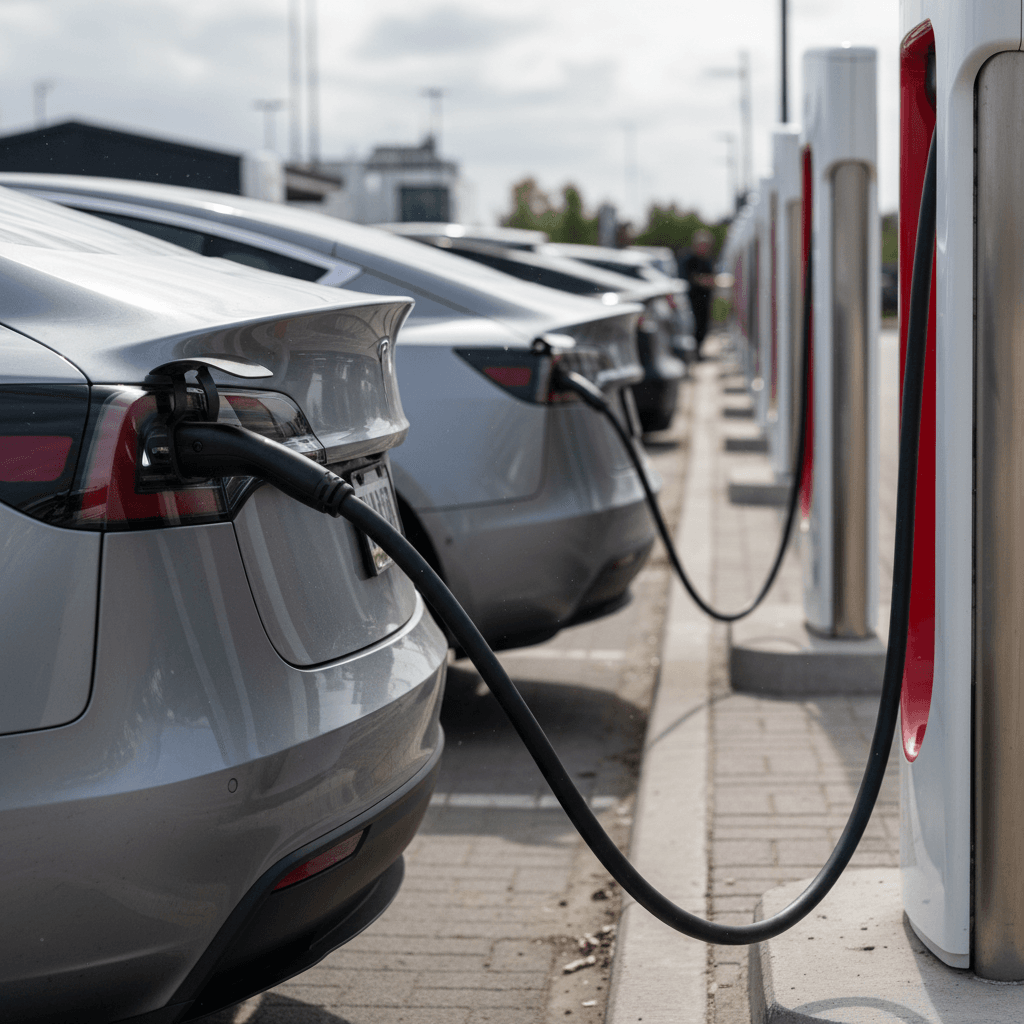
On a used lot, you’re not buying into today’s press releases; you’re buying last decade’s engineering bets. The best EV makers for used shoppers are the ones that built robust batteries, adopted widely supported charging standards, and kept improving vehicles with software updates rather than abandoning them.
EV makers that tend to age well
- Tesla: Strong OTA update culture, efficient powertrains, broad NACS fast‑charging access. Earlier build‑quality quirks, but huge ecosystem and parts pool.
- Hyundai–Kia: Ioniq and EV lines offer excellent efficiency and DC fast‑charging speeds, especially on E‑GMP platform.
- Ford & GM: Improving rapidly; newer Ultium‑based and Mach‑E/Lightning products are much more competitive than first‑gen efforts.
EV makers that need extra homework
- Early experiments: First‑gen compliance EVs or adapted gas platforms can have limited range and odd packaging.
- Low‑volume luxury brands: Fantastic tech but uncertain parts cost and long‑term support.
- Defunct startups: Cheap to buy, expensive if something major fails.
Where Recharged fits in
Ready to find your next EV?
Browse VehiclesHow to compare models across different EV makers
Comparing a used Tesla Model 3 to a Hyundai Ioniq 5 or a Ford Mustang Mach‑E isn’t just about brand loyalty. You’re weighing different engineering and business models. Here are four lenses that cut across EV makers and make apples‑to‑apples comparison easier.
Four lenses for cross‑brand EV comparison
Use these instead of just obsessing over 0–60 times.
Efficiency
Look at kWh/100 miles or MPGe. More efficient EVs give you more real‑world range from the same battery size and lower charging costs.
Charging performance
Check peak DC fast‑charge speed and how long the car holds high power. Some makers aggressively advertise peaks that only last a few minutes.
Charging ecosystem
North American Charging Standard (NACS) access, CCS support, and whether the EV maker has fixed early charging‑hardware bugs matter as much as port shape.
Service & support
Consider the EV maker’s dealer footprint, recall track record, and how easily independent shops can access parts and diagnostics.
Use data, not vibes
Checklist: evaluating an EV beyond the badge
Practical checklist for comparing EV makers on a used lot
1. Confirm charging standard and adapters
Is the car using NACS or CCS, and does it include the adapters you’ll need for the fast‑charging networks where you actually drive?
2. Look up battery chemistry & reputation
Some EV makers use chemistries that handle fast charging and heat better than others. Research known issues for that model and year, especially rapid‑charging or heat‑pump bugs.
3. Check software support history
Has the EV maker been issuing regular OTA updates and bug fixes, or did they effectively abandon the model after a few years?
4. Examine dealer and service coverage
If it’s a legacy brand, does your local dealer actually understand EVs? If it’s a startup or import, who will fix it if something big fails?
5. Verify battery health, not just mileage
Two identical EVs with the same miles can have very different battery health depending on how they were charged and driven. Use tools like the <strong>Recharged Score battery diagnostics</strong> to see what’s happening beneath the range estimate.
6. Stress‑test total ownership cost
Compare warranty coverage, likely out‑of‑warranty repair costs for that EV maker, and insurance. A cheap purchase price from a shaky startup can be more expensive in the long run.
FAQ: common questions about EV makers
Frequently asked questions about EV makers
The bottom line on EV makers in 2025
The story of EV makers in 2025 is less about a single winner and more about a market that’s finally maturing. Chinese giants dominate global volume, Tesla still leads in mindshare and U.S. sales, and legacy automakers are closing the gap with credible EV platforms of their own. For you as a buyer, especially in the used market, the smart move is to focus on battery health, charging access, and long‑term support rather than getting caught up in brand tribalism or stock‑market narratives.
If you want help cutting through the noise, Recharged can do the unglamorous but critical work in the background: verifying battery condition, benchmarking fair pricing, and highlighting model‑specific risks tied to particular EV makers. That way, you can take advantage of the EV maker shake‑up, rather than being caught out by it, when you choose your next electric vehicle.