If you’re comparing EV maintenance costs vs gas, you’re really asking a bigger question: “Will an electric car actually save me money once I own it?” In 2025, the answer on maintenance and repairs is increasingly clear, EVs are cheaper to keep on the road, but there are a few expensive wildcards you need to understand before you buy, especially if you’re looking at a used EV.
Key point in one sentence
Why EV maintenance costs vs gas matters now
Sticker price still dominates most car conversations, but in 2025 the real financial story is in total cost of ownership. Fuel, maintenance, repairs, insurance, and depreciation together can easily dwarf the price you negotiate in the showroom. As purchase incentives for new EVs sunset and interest rates wobble, buyers are right to ask whether lower EV maintenance and fuel costs are enough to offset higher upfront prices. For used‑vehicle shoppers, the gap can be even more attractive because the initial buyer has already absorbed the steepest depreciation.
EV vs gas maintenance at a glance (2025)
Quick answer: How much cheaper are EVs to maintain?
Typical annual maintenance costs
- Electric vehicle (EV): about $150–$300 per year for routine service on a typical compact or crossover.
- Gasoline car: about $900–$1,800 per year for oil changes, transmission service, belts, spark plugs, exhaust, and more.
That’s roughly a 65–85% reduction in annual maintenance spending for many drivers, especially if you keep up with manufacturer schedules.
Cost per mile, just for maintenance
- EV: often lands around $0.03–$0.05 per mile for maintenance and routine repairs over the first several years.
- Gas car: commonly in the $0.08–$0.10 per mile range when you factor in wear items and occasional repairs.
Over 75,000–100,000 miles, that difference adds up to thousands of dollars in favor of electric.
Think in miles, not months
What maintenance EVs skip vs gas cars
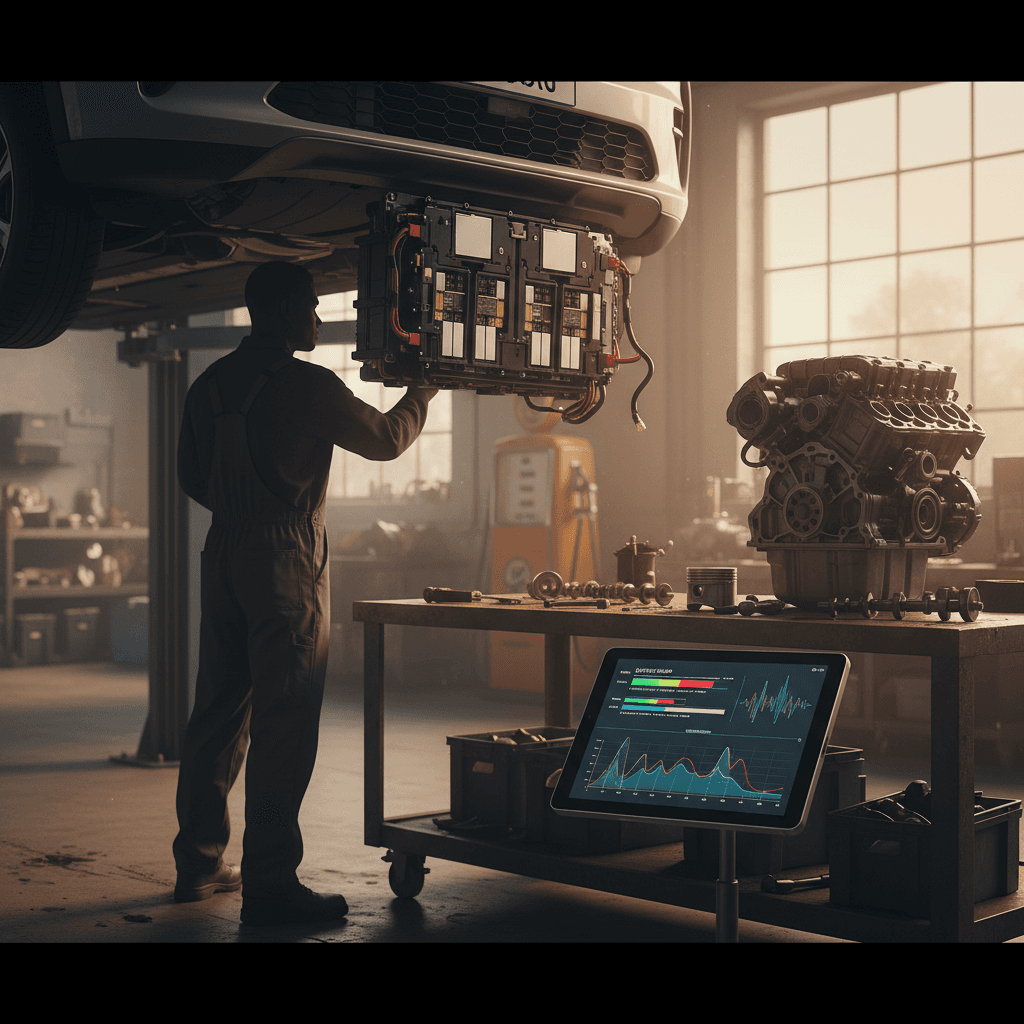
The biggest reason EV maintenance costs vs gas look so different is simple: there’s no internal combustion engine to service. A battery‑electric vehicle has a battery pack, one or more electric motors, power electronics, and software. Fewer moving parts mean fewer things that wear out, leak, or need adjustment.
EV vs gas: Components you do and don’t service
Same car ownership, very different service lists
What EVs don’t need
- No engine oil or oil filter changes
- No spark plugs or ignition coils
- No timing belts or chains
- No fuel filters or injectors
- No exhaust or catalytic converter repairs
- No multi‑speed automatic transmission service
What EVs still need
- Tire rotations and replacements
- Brake inspections and fluid changes
- Cabin air filter replacement
- Coolant service for the battery/thermal system
- Occasional software updates (often over‑the‑air)
What gas cars add on top
- Regular oil and filter changes
- Transmission fluid and filter service
- Drive belts and timing belt/chain service
- Exhaust and emissions repairs
- Engine tune‑ups and fuel system cleaning
One EV quirk to watch
Annual maintenance cost comparison: EV vs gas
Typical 2025 annual maintenance costs
Approximate ranges for a mainstream compact or small SUV driven about 12,000–15,000 miles per year. Actual costs vary by brand, region, and how well the car was maintained.
| Vehicle type | Routine service per year | What it usually covers |
|---|---|---|
| Battery‑electric EV | $150–$300 | Tire rotations, brake and coolant checks, cabin filter, basic inspections |
| Gasoline car | $900–$1,800 | Oil changes, transmission service, belts, plugs, filters, emissions and exhaust repairs |
| Hybrid / Plug‑in hybrid | $700–$1,400 | Combination of EV‑style items plus engine oil and other ICE service |
EVs concentrate most of their costs in tires and basic inspections, while gas vehicles add significant engine and transmission service.
These ranges line up with what many owners and fleet operators are seeing in 2025: battery‑electric vehicles are at the low end of maintenance spending, plug‑in hybrids sit in the middle, and traditional gas cars typically cost the most to keep serviced over time.
Long‑term costs over 5–10 years
Annual numbers are helpful, but most drivers keep a vehicle for at least five years, and many keep it closer to a decade. Over that span, the maintenance gap between EVs and gas vehicles gets harder to ignore.
5‑year maintenance cost snapshot (typical ownership)
Illustrative totals assuming 12,000–15,000 miles per year and regular service. These are ballpark figures, not quotes for a specific model.
| Vehicle type | Estimated 5‑year maintenance | Notes |
|---|---|---|
| Battery‑electric EV | $750–$1,500 | Mostly tires, inspections, and occasional fluid service |
| Gasoline car | $4,500–$9,000 | Oil/transmission services plus wear‑related repairs as the car ages |
| Commercial EV fleet vehicle | ≈$4,600 | Fleet data often shows substantially lower service spend than comparable diesel fleets over 5 years |
In many real‑world cases, EV owners save mid‑four figures on maintenance over a 5‑year window.
Maintenance savings help offset higher prices
Big-ticket repairs: batteries vs engines
When people worry about EV maintenance costs vs gas, they’re usually thinking about “what if the battery dies?” The truth is more nuanced. Major failures are rare on both sides, but when they happen, both powertrains can generate eye‑watering repair bills.
EV big‑ticket items
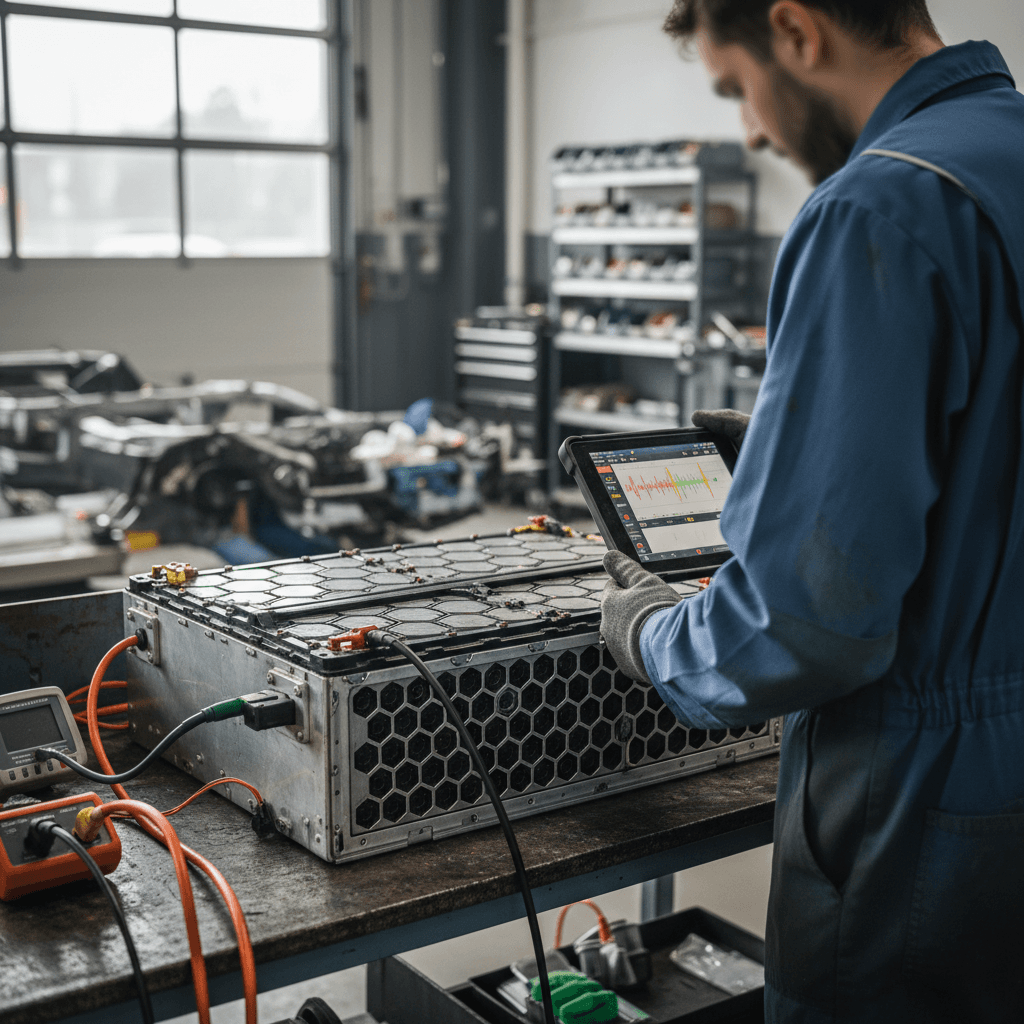
- High‑voltage battery pack: Replacements can run into the five‑figure range if out of warranty, though prices have been trending down as battery costs fall.
- Power electronics / inverters: Less common failures, but specialized parts and labor can be expensive.
- On‑board charger and DC fast‑charge components: Occasional issues, but covered under many warranties in the early years.
Most modern EVs carry 8–10 year battery warranties, often to 100,000 miles or more, which shields you from most catastrophic battery costs in the years many buyers own the vehicle.
Gas big‑ticket items
- Engine repairs or replacement: A major internal failure can cost several thousand dollars.
- Transmission overhauls: Automatic transmission rebuilds commonly run into the $3,000–$5,000 range.
- Emissions systems: Catalytic converters, turbochargers, and exhaust components are frequent four‑figure repairs, especially as vehicles age.
Unlike EV batteries, many gas‑car powertrain warranties expire in 5 years or 60,000 miles, leaving more of that risk in the owner’s lap over the long haul.
Collision repairs can be higher for EVs
Other cost factors: insurance, tires, and depreciation
Maintenance is only one piece of the ownership puzzle. To get a realistic comparison between an EV and a gas car, you also need to factor in insurance, tires, and depreciation, especially for new‑vehicle buyers.
Three expenses people forget to compare
Maintenance is lower on EVs, but what about everything else?
Insurance
Many new EVs cost more to insure than similar gas models today. Higher vehicle prices, specialized repair procedures, and expensive battery packs all play a role. Shopping carriers and comparing quotes by VIN is essential.
Tires
EVs often use heavier, higher‑torque drivetrains and low‑rolling‑resistance tires. That can mean faster tire wear and replacement costs that are slightly higher than an equivalent gas car.
Depreciation
New EVs can depreciate faster than comparable gas cars, especially when incentives or rapid tech changes reshape the market. Buying used can let you benefit from lower maintenance without eating the steepest depreciation.
Used EVs: how lower maintenance changes the math
For many shoppers, the sweet spot is a used EV with documented battery health. Here the maintenance advantage is amplified: someone else already took the early depreciation, but you still get a simple, low‑maintenance powertrain. The key is knowing what you’re buying.
Why a used EV can be a maintenance bargain
1. Fewer surprise repairs
With no engine or transmission to fail, most surprise expenses on a used EV center around tires, brakes, and suspension, repairs you’d face on any vehicle.
2. Lower routine service bills
Oil changes, tune‑ups, and transmission services never show up on your invoice. That keeps ownership more predictable, especially if you drive a lot each year.
3. Warranty still in play
Many used EVs still carry significant battery and powertrain warranty coverage, reducing the risk of big‑ticket failures during your ownership window.
4. Depreciation already absorbed
Buying used means someone else took the first big value drop. You can focus more on running costs, where EVs often shine, than on worrying about resale.
How Recharged helps with the “what if” question
Simple maintenance checklist for EV owners
EV ownership isn’t maintenance‑free, but it is refreshingly straightforward. Follow this checklist and you’ll avoid most unpleasant surprises while keeping your electric car in top shape.
Practical EV maintenance checklist
Rotate tires every 6,000–8,000 miles
EVs are heavy and deliver instant torque, which can chew through tires. Regular rotations and proper inflation are your best defense against premature wear.
Have brakes inspected regularly
Even though regenerative braking reduces wear, you still need a technician to check pads, rotors, and fluid every year or two, especially in salty or humid climates.
Service cooling and thermal systems on schedule
Your EV’s battery and power electronics rely on coolant and proper flow. Follow the manufacturer’s intervals for coolant checks and changes.
Replace cabin air filters as recommended
A simple, inexpensive item that affects HVAC performance and air quality. Many EVs recommend replacement every 20,000–30,000 miles.
Keep software up to date
Over‑the‑air updates can improve range, charging behavior, and diagnostics. Make sure your car is set to receive them or ask your service center to update during visits.
Document everything
Just as with a gas car, service records help with resale value and can simplify warranty claims if anything goes wrong.
When a gas car can still make sense
Despite the clear advantages in EV maintenance costs vs gas, there are still scenarios where a gas vehicle might be the better fit for now. The right choice depends as much on your driving pattern and local infrastructure as on a spreadsheet.
Situations that favor gas today
- Very long rural commutes with limited charging options and few public stations.
- Frequent towing or hauling where current EV options don’t meet range or payload needs within your budget.
- No consistent home or workplace charging, forcing you to rely on pricier public DC fast charging for most energy.
Ways EVs still win in those cases
- Even with heavier use, maintenance remains simpler on an EV than on a comparable gas truck or SUV.
- If you can secure overnight Level 2 charging at home or a shared parking area, fuel and maintenance savings start stacking up quickly.
- As used EV prices normalize, a well‑vetted used EV can undercut many new gas models on total cost of ownership.
Try before you commit
FAQs: EV maintenance costs vs gas
Frequently asked questions
Bottom line: EV maintenance vs gas
If you’re focused specifically on EV maintenance costs vs gas, electric wins by a comfortable margin. You trade oil changes, transmission service, and complex engine repairs for a shorter list of simpler tasks: tires, brakes, fluids, and software. That doesn’t mean EVs are cost‑free, or that every situation favors electric, but it does mean the old assumption that “EVs are expensive to maintain” simply doesn’t hold up in 2025.
Where you go from here depends on how you drive, where you’ll charge, and whether you’re looking new or used. If you want to see how a specific EV stacks up against a gas car you’re considering, you can browse used EVs on Recharged, review each car’s Recharged Score Report, and get expert EV‑specialist support from first question to final delivery. The more you look at the full ownership picture, not just the window sticker, the more sense the right EV can make.