EV insurance rates have climbed right along with gas-car premiums, but in 2026 the spread from state to state is wider than ever. If you’re shopping for an electric car, especially a used one, the question isn’t just **“what’s the average?”** It’s **“what will I pay where I live, and what can I do about it?”** This guide walks through EV insurance rates by state in 2026, why EVs often cost more to insure than gas cars, and how to keep premiums from wrecking the savings you expect from going electric.
Key takeaway for 2026
Overview: EV insurance rates by state in 2026
2026 auto & EV insurance snapshot
When you see national averages, remember they blend together **high‑risk coastal states** with hurricane and flood exposure, dense urban markets with heavy traffic, and **low‑risk rural states** with fewer claims. On top of that, EVs layer in higher repair costs, specialized parts, and still‑evolving actuarial data. The result: EV insurance is extremely "local", your **state regulations, weather, and medical/legal environment** often matter just as much as the badge on your hatchback.
How much more do EVs cost to insure than gas cars?
Let’s answer the question most shoppers ask first: **are EVs always more expensive to insure?** In 2026, the honest answer is **“often, but not always.”**
- Across many insurers and datasets, EV premiums typically run **10–20% higher** than comparable gas models, with some analyses showing even wider gaps for certain brands or trims.
- EVs themselves often have **higher MSRPs** than similar gas vehicles, and higher vehicle value means there’s more for the insurer to protect.
- High‑voltage batteries, aluminum body panels, and sensor‑packed bumpers make **collision and comprehensive claims** more expensive to settle.
- Repair networks for EVs are still maturing, so cars sometimes get **declared total losses** where a gas car would be repaired, another factor insurers price into their models.
Watch out for brand and model effects
The other half of the story is positive: as EVs age and move into the **used market**, values drop, replacement‑cost risk falls, and insurers gain more claims data. That’s one reason a used EV, properly priced and in good health, can strike a better balance between **fuel savings** and **insurance cost** than a brand‑new one.
State-by-state EV insurance patterns in 2026
No two sources publish the same exact ranking, because they use different driver profiles and coverage assumptions. But when you look across the major 2025–2026 car‑insurance studies, some **clear regional patterns** emerge that apply to EVs and gas cars alike:
Regional patterns in 2026 auto & EV insurance costs
Broad trends that show up again and again across studies
Gulf & hurricane‑exposed states
States like Louisiana and Florida have some of the highest overall auto premiums in the country, driven by storm exposure, litigation, and high repair costs. Insuring an EV here often means stacking a higher vehicle‑type surcharge on top of already steep state averages.
Dense coastal metros
Large metro areas in New York, New Jersey, California, and parts of the Northeast face higher crash frequency, theft, and repair‑shop costs. If your EV lives in a dense urban ZIP code, expect rates well above your state’s overall average.
Lower‑risk heartland states
Many states in the Great Plains and Mountain West see lower claim severity and fewer large‑scale weather disasters. Their average full‑coverage premiums often land hundreds or even a thousand dollars below national norms, and EV surcharges feel more manageable as a result.
From an EV shopper’s standpoint, the practical takeaway is this: **"EV insurance rates by state" matter as much as the EV badge itself.** A family‑friendly electric crossover in Ohio or Idaho can cost less to insure than a modest compact EV in Miami or New Orleans, even with similar drivers.
Cheapest and most expensive states for EV insurance
Because insurers don’t yet publish a consistent, public table that isolates **EV‑only premiums by state**, the smartest way to think about 2026 is to start with overall auto‑insurance rankings and then layer EV‑specific effects on top. States that are expensive for gas cars tend to be expensive for EVs, and vice versa.
High‑cost vs. lower‑cost auto insurance states in 2026
How overall auto premiums compare by state, and what that usually means for EVs.
| Group | Examples | What this usually means for EV insurance |
|---|---|---|
| Highest‑cost tier | Louisiana, Florida, New York, Michigan, Nevada | Full‑coverage premiums here can easily run well above $3,000 per year, and EVs often carry a noticeable surcharge. A high‑value EV in a dense or coastal ZIP code can push premiums north of $4,000. |
| Upper‑mid tier | Colorado, California, Georgia, New Jersey, Texas | Rates have climbed in recent years due to repair costs, weather, and traffic growth. EV premiums are often above national averages but still vary widely by model and insurer. |
| Middle tier | Virginia, Pennsylvania, Minnesota, Wisconsin | Balanced risk, moderate weather exposure, and competitive insurance markets keep many drivers closer to national averages. EV owners here may see a 10–20% bump over gas cars, but good driver profiles can blunt the impact. |
| Lower‑cost tier | Maine, Idaho, Vermont, Ohio, Iowa | Lower traffic density and fewer catastrophic claims keep typical premiums well below the national average, sometimes under $1,500–$1,800 for full coverage. EVs still cost more than gas cars to insure in many cases, but the absolute dollars are less painful. |
These are directional groupings, not precise quotes. Your own rate will depend on your profile, coverage, and vehicle.
Think by tier, not by single number
Why EV insurance rates vary so much by state
Insurers don’t start by asking, “Is it electric?” They start with **where the car lives and how it’s used.** Then they price in EV‑specific repair, theft, and total‑loss behavior. Here are the biggest state‑driven levers that affect what you’ll pay.
State-level factors that move EV insurance rates
Claim costs & medical environment
States with higher medical costs, generous injury benefits, or high rates of litigation tend to see more expensive liability coverage for all cars. Your EV’s bodily‑injury and uninsured‑motorist coverages are heavily influenced by this backdrop.
Weather & catastrophe exposure
Hurricanes, hail storms, floods, and wildfires all drive large, costly claims. That’s why coastal and storm‑prone states often sit at the top of premium rankings, regardless of powertrain.
Repair‑shop labor and parts costs
In markets where labor is expensive and body shops are booked solid, insurers anticipate higher severity per claim. If local shops also have limited EV expertise, that trend is amplified.
Minimum coverage requirements
States that require higher liability limits and additional coverages (like personal injury protection) naturally produce higher average premiums, even before EV factors are added.
Insurance-market competition
Some states support robust competition from national and regional insurers. Others have fewer carriers, tougher filing rules, or recent insurer exits. Less competition often means higher prices for everyone, including EV owners.
The EV mix on the road
States with lots of EVs in circulation, think California, parts of the Northeast, and Colorado, give insurers more real‑world claims data. Over time, that should help separate **high‑risk models** from **low‑risk models** instead of treating all EVs as one risk bucket.
How EV fees and incentives in each state affect your bill
Insurance is just one line item in your **total cost of EV ownership** by state. Many states now layer in **annual EV registration fees** to replace lost gas‑tax revenue, while others offset those fees with generous purchase incentives. None of that changes your premium directly, but it absolutely changes what “expensive” or “cheap” insurance feels like in your budget.
States with added EV fees
Dozens of states now charge annual EV fees on top of normal registration, often $100–$250 per year for battery‑electric vehicles, sometimes less for plug‑in hybrids. These fees don’t show up on your insurance bill, but they eat into the fuel‑savings you expect from going electric.
If you live in one of these states, it pays to be especially sharp on insurance shopping. Trimming even $20–$40 a month off your EV premium can completely offset the extra fee.
States with strong EV incentives
On the flip side, some states still offer **rebates, tax credits, or utility bill incentives** for EV buyers, sometimes even for used EVs. While incentives don’t lower premiums, they reduce your effective cost to get into the car, which can free up budget for a slightly higher insurance bill.
When you run the math, look at the whole stack: purchase price, incentive value, registration fees, expected fuel savings, and insurance.
Use total cost of ownership, not just the premium
Used EVs and insurance: what buyers should know

The used‑EV market has matured dramatically since 2020. Prices have come down, selection has improved, and more mainstream buyers are testing the waters. Insurance is the last thing you want to be surprised by after you’ve fallen in love with a particular car online.
How used EVs change the insurance equation
Why a pre-owned electric car can be easier to live with than a new one
Lower vehicle value
Insurance protects the value of the car. A three‑ or four‑year‑old EV often costs thousands less than its new equivalent, so the insurer’s maximum payout is lower. All else equal, that helps bring premiums down.
More claims history
As a model ages, insurers accumulate more data on how often it’s in accidents, how it behaves in crashes, and how expensive it is to repair. That makes pricing more refined and helps low‑risk EVs stand out from the pack.
Battery health matters
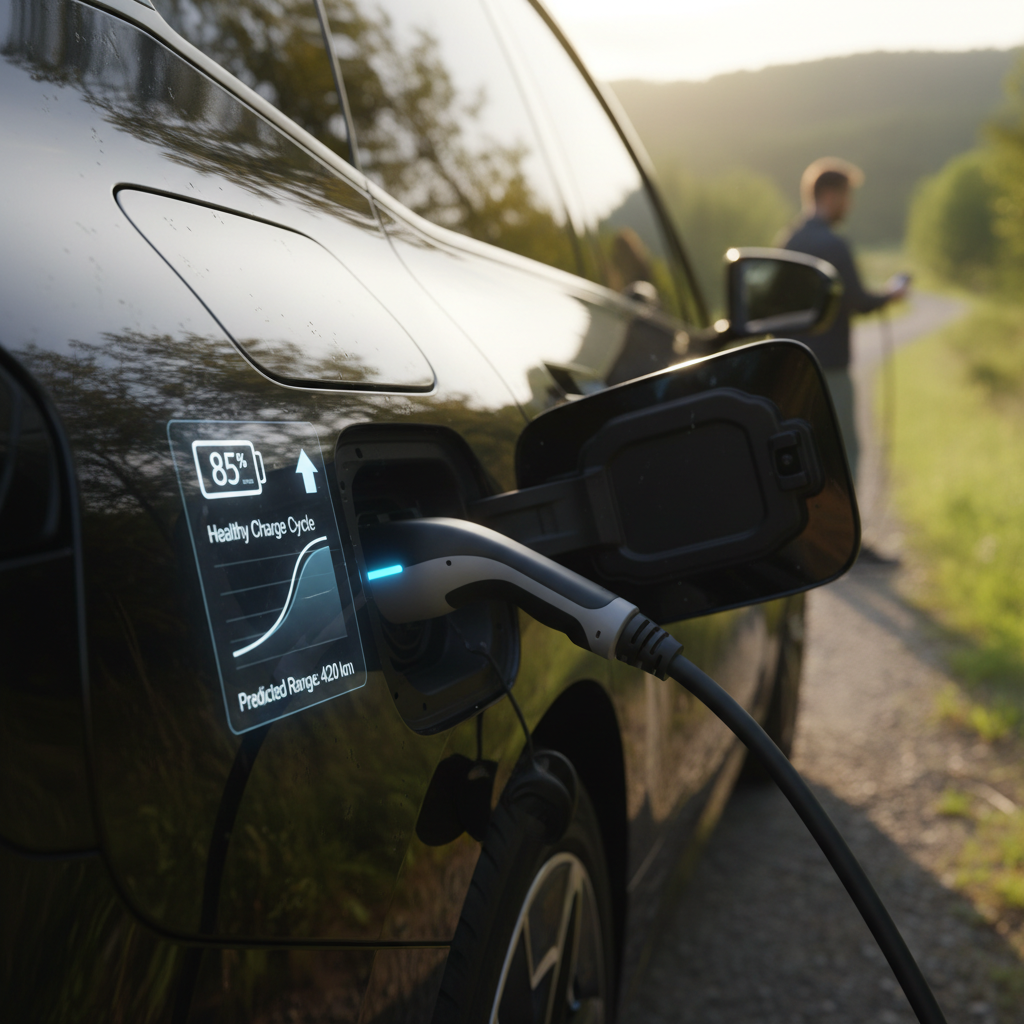
While most insurers don’t directly price your battery’s state of health, a strong battery report supports the car’s value and future insurability. It also helps you avoid overpaying for a vehicle that might be headed for costly repairs.
How Recharged helps on the used side
Ready to find your next EV?
Browse VehiclesBefore you get too attached to any used EV listing, make a quick pit stop for insurance quotes. Ask for numbers on **two or three different models** you’d actually consider. You’ll often find that one model lines up beautifully with your budget while another, on the same driveway, would feel uncomfortably expensive to insure in your state.
7 strategies to lower EV insurance in any state
You can’t move your state line, but you have much more influence than you might think over your EV insurance bill. Here are strategies that work across most of the country.
Action plan: keep your EV insurance affordable in 2026
1. Shop multiple insurers with the same details
Get quotes from at least **three carriers** using identical coverage limits, deductibles, and annual mileage. Some insurers are aggressively courting EV drivers; others price them conservatively. The spread can be hundreds of dollars a year.
2. Right‑size your coverage, don’t just cut it
Start by matching or slightly exceeding your current liability limits, especially if you own a home or have assets to protect. Then see what happens when you raise comprehensive and collision deductibles from, say, $500 to $1,000. That often trims the bill without leaving you dangerously under‑insured.
3. Ask about EV‑friendly and telematics programs
Many insurers offer **usage‑based or driving‑behavior programs** that monitor how hard, how far, and when you drive. EVs already tend to rack up predictable, mostly local miles, exactly the kind of profile that can earn 10–20% discounts in these programs.
4. Bundle home, renters, or umbrella policies
Classic advice, but still effective: bundling multiple policies with the same carrier often unlocks discounts that soften the EV premium bump. It’s especially powerful in high‑cost states where base rates are steep to begin with.
5. Choose wheels and trims with repair costs in mind
Low‑volume wheels, panoramic glass roofs, and heavily optioned driver‑assist suites can all make crash repairs more expensive. If you’re on the fence between trims, ask your agent to quote each one; sometimes a simpler configuration carries a meaningfully lower premium.
6. Mind where and how you park
Insurers like **garaged, off‑street parking** in low‑crime areas. If your EV can be garaged overnight, be sure that fact is reflected in your application. It can help with both theft risk and weather‑related claims.
7. Re‑shop regularly, especially after claim‑free years
Auto insurance pricing has been volatile since 2022. calendar. After a year or two of clean driving in your EV, gather fresh quotes. New competitors enter states, rating formulas change, and your personal profile improves over time.
What not to do
Choosing the right EV with insurance in mind
If you’re cross‑shopping a few electric vehicles, especially used ones, the smartest move is to treat **insurance quotes** as part of your test‑drive, not an afterthought. Two EVs that feel similar behind the wheel can look very different to an underwriter.
Balance battery, value, and risk
The sweet spot for many buyers is a **3–6‑year‑old EV** with a healthy battery, a solid safety record, and wide availability of parts. These cars avoid the steepest part of the new‑car depreciation curve and often sit in a more comfortable insurance band than brand‑new halo models.
When you shop on Recharged, you’ll see a Recharged Score Report summarizing battery health and fair market value. Bring those details to your insurer so you’re pricing a realistic value, not guessing off the original MSRP.
Match the EV to your state’s reality
In high‑cost states, coastal Florida, Louisiana, parts of New York, it may make sense to favor mainstream models with simpler repairs and strong safety data. In lower‑cost states, you might be able to stretch into a higher‑end EV without blowing up your budget.
Either way, compare **at least two models** with your agent. Ask which one has historically been cheaper to insure for similar drivers in your area.
Use financing and insurance together
FAQ: EV insurance rates by state in 2026
Frequently asked questions about 2026 EV insurance by state
Bottom line: what EV insurance means for your next used EV
EV insurance rates by state in 2026 are a study in contrasts. In a high‑cost coastal state with storm exposure and pricey medical care, a brand‑new premium EV can carry a hefty insurance bill. In a lower‑risk Midwestern or Mountain‑West state, a sensible used EV can deliver strong fuel savings with an insurance tab that looks far more reasonable than the headlines suggest. The trick is to **treat insurance as a core part of your shopping process**, not an afterthought.
If you start with realistic expectations for your state, gather multiple quotes for specific EVs, and favor models with healthy batteries, solid safety records, and reasonable repair costs, you’ll be in far better shape than the average shopper. And if you’d like help pairing a **fairly priced used EV** with the right financing and a clear picture of ownership costs, Recharged can connect you with EV‑specialist support and a **Recharged Score Report** so you’re not guessing about what you’re buying, or what it will cost to insure.