If you’re shopping for an electric vehicle in 2026, Connecticut is still one of the better states for incentives, even after the big federal EV tax credits ended on September 30, 2025. The key is understanding how the state’s CHEAPR rebates, income-qualified bonuses, and charger rebates work today, and how they apply differently to new and used EVs.
Quick snapshot for 2026
Overview: EV incentives in Connecticut for 2026
Key Connecticut EV incentives in 2026 at a glance
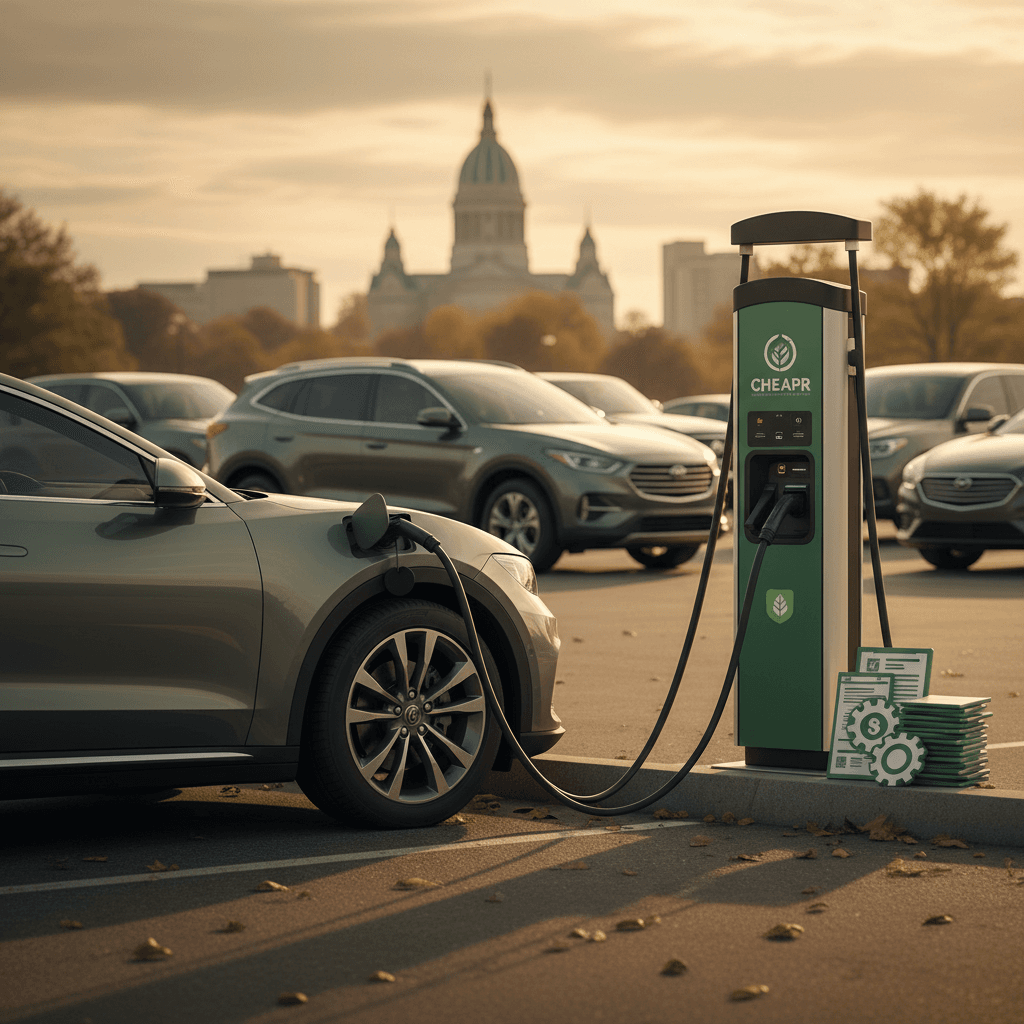
Connecticut’s flagship EV incentive is the Connecticut Hydrogen and Electric Automobile Purchase Rebate (CHEAPR). It offers point‑of‑sale rebates at participating dealers for eligible new and used battery electric vehicles (BEVs), plug‑in hybrids (PHEVs), and fuel cell vehicles. On top of that, there are charger installation rebates and a still‑active federal 30% tax credit for home charging equipment through mid‑2026.
- CHEAPR new‑vehicle rebates (with extra help for lower- and moderate‑income buyers)
- CHEAPR used‑vehicle rebates when you buy from a participating Connecticut dealer
- Utility and CT Green Bank rebates for Level 2 home chargers
- The federal 30C tax credit for home charging equipment through June 30, 2026
No more federal purchase credit
CHEAPR basics for 2026: How Connecticut’s main EV rebate works
The CHEAPR program is funded by the state and administered by the Connecticut Department of Energy & Environmental Protection (DEEP). It’s designed to make cleaner vehicles more affordable and is still active in 2026, though specific rebate amounts and income caps have been adjusted over time to preserve the budget.
CHEAPR 2026 basics you should know
Understand the ground rules before you pick a car
1. Eligible vehicles only
CHEAPR only applies to specific models and trims of new and used BEVs, PHEVs, and FCEVs. You must choose from the program’s eligible vehicle list.
Before you sign, have the dealer confirm eligibility by VIN and trim.
2. Connecticut residency
You must be a Connecticut resident with a valid CT driver’s license and register the vehicle in Connecticut. Out‑of‑state buyers or registrations generally don’t qualify.
3. Point‑of‑sale structure
For most buyers, CHEAPR now functions as a point‑of‑sale rebate. The dealer applies it as a discount on the purchase or lease, then gets reimbursed by the program.
Some income‑qualified Rebate+ benefits may involve a pre‑approval step or follow‑up verification, ask the dealer to walk you through it.
Program rules have shifted in recent years as demand and funding changed. Since late 2025, Connecticut has focused more of its CHEAPR dollars on lower‑ and moderate‑income shoppers and on right‑sizing standard rebates for higher‑income buyers. That makes it even more important to confirm the current terms before you shop.
Where to confirm today’s rebate amounts
Standard vs. Rebate+ CHEAPR incentives
CHEAPR effectively has two layers: a Standard rebate that many Connecticut residents can qualify for and a Rebate+ bonus targeted at income‑qualified households. The exact numbers have been updated a few times, but the structure remains similar in 2026.
Typical CHEAPR structure in 2026 (illustrative ranges)
These ranges reflect how CHEAPR has generally been structured; always confirm the exact amounts and caps before you buy, as the program can change mid‑year.
| Vehicle type | Buyer type | Where the rebate applies | Approximate range* |
|---|---|---|---|
| New BEV / FCEV | Standard (non‑income‑qualified) | Point‑of‑sale rebate | Around $1,000–$2,250 |
| New BEV / FCEV | Rebate+ income‑qualified | Additional bonus on top of Standard | Up to roughly $3,000 more |
| New PHEV | Standard | Point‑of‑sale rebate | Typically lower than BEV, often hundreds rather than thousands |
| Used BEV / PHEV | Rebate+ only | Used purchase from CT franchised dealer or OEM | Up to around $3,000 for qualifying buyers |
Illustrative CHEAPR 2026 ranges based on recent program structures. Use this as a planning tool, not a guarantee.
Important caveat on amounts
Standard CHEAPR rebates
Standard CHEAPR rebates are aimed at typical middle‑income Connecticut residents. They often apply regardless of whether you buy or lease, as long as you:
- Buy an eligible new EV from a participating CT dealer
- Keep the vehicle registered in Connecticut for a minimum holding period
- Stay under vehicle price caps (luxury trims may not qualify)
Standard rebates won’t always cover thousands of dollars anymore, but they can still close the gap between a gas car and a mainstream EV.
Rebate+ income‑qualified bonuses
Rebate+ is CHEAPR’s way of directing more help to households that need it most. If your household income falls below a certain multiple of the federal poverty level or state median income, you could:
- Stack a Rebate+ New bonus on top of the Standard new‑vehicle rebate
- Access a Rebate+ Used incentive that only income‑qualified buyers can use
- Get higher caps on the total assistance available
You may need to pre‑qualify or submit extra documentation. Start that process early so paperwork doesn’t delay your purchase.
Used EV incentives in Connecticut: Where CHEAPR really shines
In 2026, the sweet spot for many Connecticut drivers is a used EV plus CHEAPR Rebate+. With the federal used EV credit gone, the state program and the natural price drop on used electrics combine to create compelling deals.
Why used EVs plus CHEAPR can be a bargain
Especially for income‑qualified buyers
Lower starting price
Two‑ to four‑year‑old EVs have already taken their initial depreciation hit. Models like the Chevy Bolt, Nissan Leaf, Hyundai Kona Electric and Kia Niro EV can often be found well under $25,000 in 2026.
Stackable used rebates
Income‑qualified drivers may see used EV rebates around the low‑thousands when buying from a participating Connecticut dealer, depending on current CHEAPR rules.
On an already‑affordable used EV, this can knock a big chunk off your financed amount.
Better value per mile
Because many used EVs still carry ample battery life and low maintenance costs, your total cost per mile can be significantly lower than a newer gas car, even without the old federal tax credit.
There are a few catches. Used CHEAPR rebates generally require you to buy from a Connecticut franchised dealer or an OEM‑direct program, not a private seller. And if you’re not income‑qualified for Rebate+, you may not see much used‑vehicle help at all.
How Recharged can help on a used EV
EV charger and home wiring rebates in Connecticut
Even if your EV purchase incentives are modest, you can still take a meaningful bite out of home charging costs. In 2026, Connecticut drivers can often stack three layers of help for a Level 2 home charger: a state or CT Green Bank rebate, a utility program, and the federal 30C tax credit, at least until mid‑year.
Steps to capture charger and wiring incentives
1. Verify your utility’s EV program
If you’re an Eversource, United Illuminating or municipal utility customer, check their EV pages for current residential charger rebates and off‑peak rate plans. Many offer <strong>several hundred dollars</strong> toward a wall‑mounted Level 2 charger or a smart Wi‑Fi unit.
2. Look for CT Green Bank partnerships
Connecticut’s Green Bank has supported EV charger rebates and financing bundles, sometimes paired with solar or whole‑home electrification projects. In 2026, some programs can provide up to <strong>around $500</strong> towards a qualified charger or installation, depending on the offer.
3. Plan for the federal 30C tax credit
Through June 30, 2026, the federal 30C credit can reimburse <strong>30% of the cost of buying and professionally installing</strong> a home EV charger, up to $1,000. Keep detailed receipts for your electrician and equipment so you or your tax professional can file correctly.
4. Choose the right charger capacity
Don’t over‑buy. If your EV can only accept 32 amps, paying extra for a 48‑amp charger doesn’t add speed. A <strong>properly sized Level 2 unit</strong> typically balances cost, load on your home panel and future flexibility.
5. Coordinate permits and inspections
Some rebates, especially from utilities, require proof that your charger was installed to code, often with a permit number or inspection sign‑off. Talk with your electrician and utility before work starts so you don’t miss a paperwork requirement.
Mind the June 30, 2026 federal deadline
What’s left of federal EV incentives in 2026?
The landscape changed dramatically when Congress phased out the big federal clean‑vehicle credits in 2025. For vehicles delivered on or after October 1, 2025, those purchase and lease credits are no longer available. That means in 2026 you should focus on Connecticut and utility programs, with one notable federal exception.
- No federal purchase credit for new EVs delivered in 2026
- No federal credit for used EV purchases in 2026
- Limited commercial incentives remain for fleet buyers, but not typical households
- Federal 30C credit for home charging equipment continues through June 30, 2026, at 30% of eligible costs up to $1,000
You may still file for a 2025 purchase
How to stack Connecticut EV incentives for maximum savings
With the big federal credits gone, stacking state, utility and remaining federal incentives is how you squeeze the most value out of an EV purchase in 2026. The good news is that many Connecticut incentives are designed to work together, as long as you follow the timing rules and documentation requirements.
Scenario A: Income‑qualified used EV buyer
Imagine you’re shopping for a used Chevy Bolt EUV or Hyundai Kona Electric at around $23,000 from a Connecticut franchised dealer.
- Use CHEAPR Rebate+ Used for a potential rebate in the low‑thousands (exact amount depends on current program rules and your income).
- Finance the remainder through a lender comfortable with EVs, Recharged partners with EV‑friendly lenders and can walk you through estimated payments.
- Apply any savings from CHEAPR toward a modest down payment or to preserve cash for installing a home Level 2 charger.
This combination can put your all‑in payment closer to a used gas crossover while slashing fuel and maintenance costs.
Scenario B: New EV plus home charger
Now assume you’re a middle‑income buyer opting for a new mainstream EV priced around $38,000.
- Apply the Standard CHEAPR rebate at the dealership to trim the MSRP or cap cost.
- Have a licensed electrician install a 240‑volt circuit and Level 2 charger, taking advantage of any utility/CT Green Bank rebates.
- Use the remaining federal 30C charger credit on your 2026 return, 30% of qualified costs up to $1,000.
Stacked together, those benefits can effectively reduce your payment on the car and spread out the cost of your home charging setup.
Where a used EV marketplace fits in
Ready to find your next EV?
Browse VehiclesSmart 2026 strategies by buyer type
Incentive strategies tailored to your situation
Income‑qualified buyer (Rebate+ eligible)
Focus first on <strong>CHEAPR Rebate+ Used</strong> options, where the combination of lower prices and strong rebates can be most powerful.
Apply for Rebate+ pre‑qualification early so dealers can show you accurate out‑the‑door pricing.
Consider slightly older but well‑cared‑for EVs where a Recharged Score or similar battery‑health report confirms remaining life.
Channel some of your savings into a basic home Level 2 charger if you park off‑street, daily charging convenience is a huge quality‑of‑life upgrade.
Middle‑income commuter
Look for <strong>Standard CHEAPR</strong> eligible BEVs and PHEVs in the $30,000–$40,000 range, paying attention to efficiency as well as sticker price.
If you have a long commute, prioritize EVs with conservative real‑world range estimates under Connecticut winter conditions.
Use utility and CT Green Bank programs plus the federal 30C credit to make a home charger affordable before that credit expires June 30, 2026.
Run side‑by‑side cost projections for gas vs. electric fuel and maintenance over 5–7 years; total cost of ownership often favors the EV even without the federal purchase credit.
Homeowner planning major upgrades
If you’re already considering solar, heat pumps or a panel upgrade, ask about <strong>bundled incentives</strong> that include EV chargers.
Time your project so all EV‑related work is complete before the <strong>30C deadline</strong> for charger credits.
Think ahead about driveway layout, future second EVs and guest charging when choosing charger placement.
Ask contractors how their systems integrate with time‑of‑use or off‑peak electric rates for lower overnight charging costs.
Urban / apartment dweller
If you can’t install home charging, focus on <strong>efficiency and access to public Level 2/DC fast charging</strong> near home and work.
Ask your landlord or building management whether they’re aware of <strong>multifamily EV charging incentives</strong> offered by utilities or CT Green Bank.
Consider lower‑range, lower‑cost BEVs or PHEVs where a Standard CHEAPR rebate brings the monthly payment into reach.
Factor parking and public charging fees into your budget, just as you would fuel and parking for a gas car.
Common mistakes with Connecticut EV incentives
Avoid these 2026 EV incentive missteps
Assuming a federal purchase credit still exists
Many buyers still assume the old federal $7,500 new / $4,000 used credits are available. For 2026 purchases, they’re not. Build your budget and expectations around state, utility and charger incentives instead.
Not confirming CHEAPR eligibility by VIN
Model names and trims can be confusing. Always verify with the dealer that <strong>your exact VIN</strong> is CHEAPR‑eligible and confirm the rebate line on the purchase order before signing.
Ignoring income‑qualified opportunities
If you’re on the fence about whether you qualify for Rebate+, it’s worth checking. A short application and some paperwork can unlock significantly larger used‑EV or new‑vehicle assistance.
Missing charger paperwork
Rebates and the federal 30C credit require clean documentation: invoices, permit numbers, installation dates and model information. Keep a digital folder with every EV‑related receipt.
Waiting too long on charger installation
Contractors and utilities can get backed up, especially ahead of a program deadline. Don’t wait until May or June 2026 to start a project if you want to capture the 30C credit before it ends.

FAQ: EV incentives in Connecticut 2026
Frequently asked questions about Connecticut EV incentives in 2026
Bottom line: Making Connecticut’s 2026 EV incentives work for you
Connecticut’s 2026 EV incentive landscape is more complex than it was a few years ago, but there’s still real money on the table, especially if you’re open to a well‑chosen used EV and you qualify for income‑based Rebate+ benefits. Even without a federal purchase credit, CHEAPR, charger rebates and the remaining federal 30C credit can collectively trim thousands of dollars off the cost of going electric.
The key is to plan your purchase around the incentives, not the other way around: verify CHEAPR eligibility by VIN, check your income status, map out charger rebates and timelines, and be realistic about your total budget. If you’d like help comparing used EVs, understanding battery health and modeling your real‑world costs, a specialist marketplace like Recharged can streamline the process, from exploring vehicles and incentives online to arranging financing, trade‑in and delivery across Connecticut.