If you’ve ever watched your EV’s range tumble on a cold morning, you’re not imagining it. Climate control is a huge part of winter energy use, and the choice between EV heated seats vs cabin heat can mean the difference between getting home comfortably or white‑knuckling it with the temperature turned down.
Cold weather reality check
Why heated seats and cabin heat matter for EV range
In a gas car, most cabin heat comes from waste heat the engine produces anyway. In an EV, there’s no hot engine block to raid. Almost all cabin heat has to be made from the battery you drive with. That’s why climate choices are suddenly a range decision.
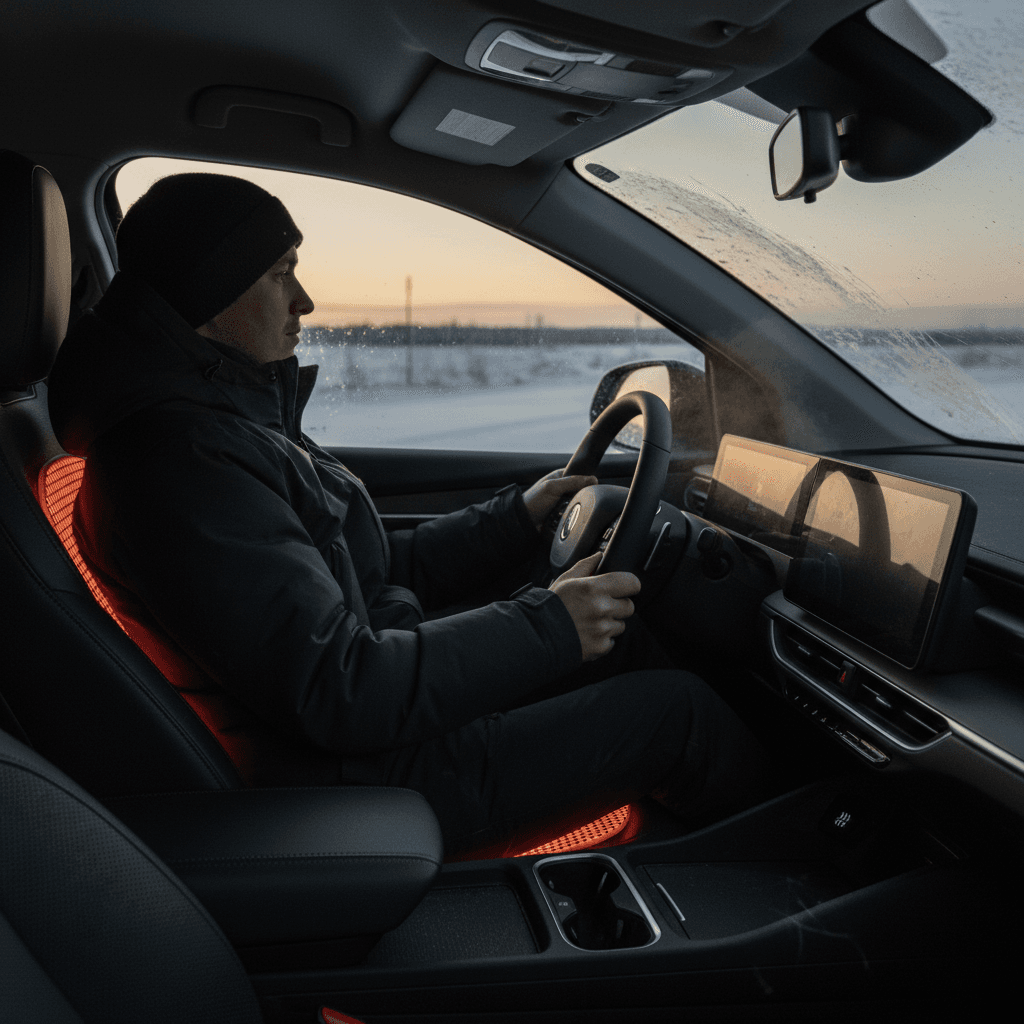
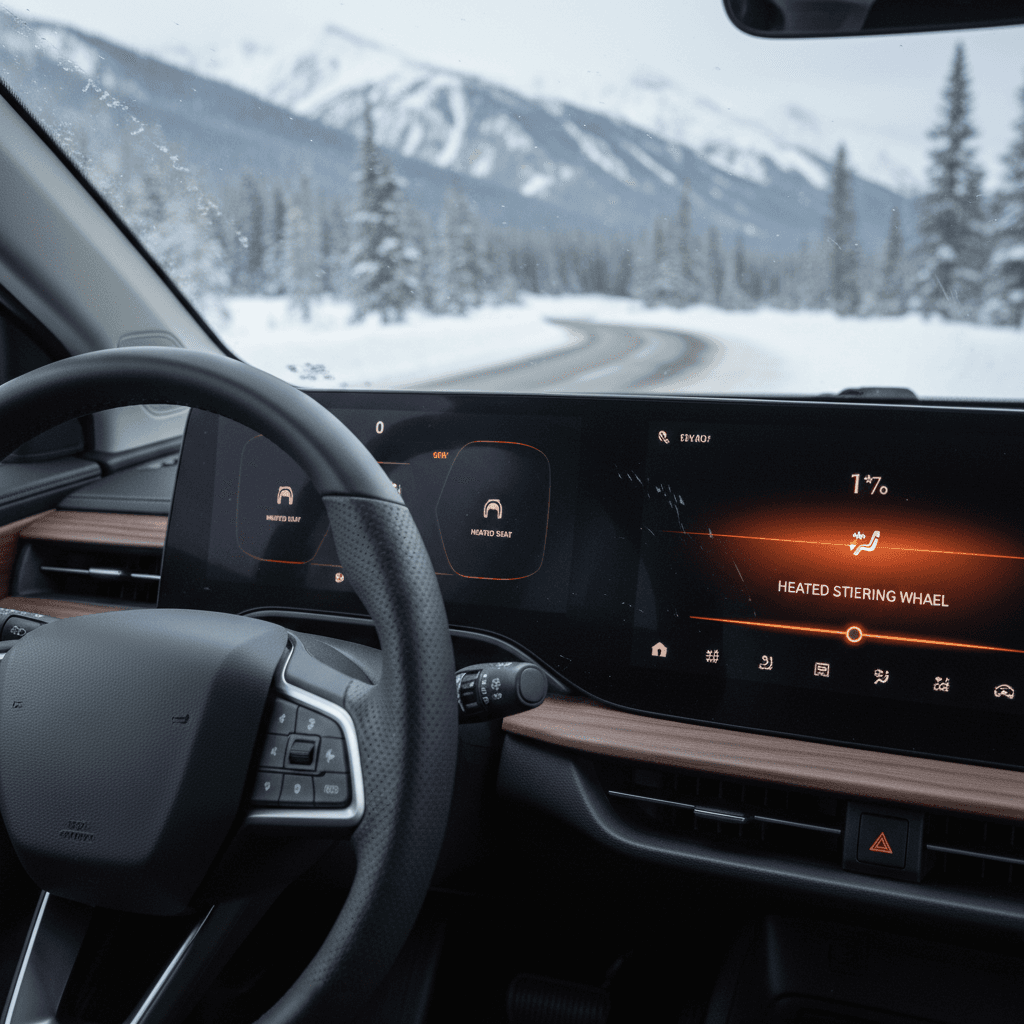
Heated seats and heated steering wheels feel like a luxury feature, but in an EV they’re also an efficiency tool. They warm you directly instead of trying to heat all the air in the cabin. Cabin heaters, whether a basic electric heater or a more efficient heat pump, have to work much harder, especially at highway speeds and in deep cold.
Think "warm person," not "warm room"
How much energy do EV heated seats really use?
Heated seats are remarkably efficient. Exact power draw varies by automaker and heat level, but most EV seat heaters use on the order of 50–100 watts per seat on low and up to a few hundred watts on high. Even with two front seats on high and a heated steering wheel, you’re typically talking about under 1 kW total once everything is warmed up.
Typical EV heated seat & wheel energy use
To put that in driving terms: if your EV normally uses around 250 Wh/mile at highway speeds, an extra 500–800 W from heated seats and wheel might cost you only 2–4 miles of range per hour of driving. That’s background noise compared with what a cabin heater can draw.
Seats are your efficiency superpower
Cabin heat: the real winter range killer
Cabin heating is where things get serious. In cold weather, EV cabin heaters can draw anywhere from 3 to 7 kW continuously at highway speeds, and brief defrost bursts can spike even higher. That’s several times more than a typical air‑conditioning load in summer.
Independent winter tests on popular EVs routinely show that with the heater running, highway range at freezing temperatures can drop by 25–40% compared with the same drive in mild weather. That’s not all HVAC, cold batteries and thicker air play a role, but climate control is often the single biggest knob you can turn as a driver.
Typical energy draw: seats vs cabin heat
Approximate continuous power demand once everything is warmed up, for a mid‑size EV in winter.
| Feature | Approx. Power Draw | Range Impact at 70 mph* | Comment |
|---|---|---|---|
| Driver heated seat (med) | 100–150 W | ~0.3–0.4 mi/hr | Barely noticeable |
| Two front seats + wheel | 400–800 W | ~1–2 mi/hr | Still a small hit |
| Cabin heat – efficient heat pump | 2–4 kW | ~6–11 mi/hr | Noticeable but manageable |
| Cabin heat – resistive heater | 4–7 kW | ~11–20+ mi/hr | Major range penalty |
Numbers vary by model, temperature, and settings, but the relationship between seat heaters and cabin heat is consistent: seats sip, cabin heat gulps.
*Assuming ~20 kW to move the car at 70 mph. Your exact numbers will differ, but the proportions are similar.
Don’t underestimate defrost
Real-world range loss: heated seats vs cabin heat
Let’s translate power numbers into something that matters to you on a trip: miles of range.
- You’re driving a mid‑size EV rated for 260 miles in mild weather.
- At 70 mph in cold weather, it needs around 20 kW just to cruise (no climate control).
- You switch on cabin heat at a steady 5 kW draw using a resistive heater.
- Total draw jumps to ~25 kW. That’s about a 25% increase in power, so your effective range drops from 260 miles to roughly 195 miles.
- Now imagine you instead keep cabin set cooler, use 2–3 kW of heat plus seats and wheel. You might only lose 10–15% of your rated range.
By contrast, running just heated seats and steering wheel at, say, 700 W bumps your total from 20 to 20.7 kW, a rounding error. Your practical range barely moves.
Max comfort, max loss
- Cabin set to 72–74°F.
- Fan high, full windshield and face vents.
- Resistive heater running at 4–7 kW.
- Range loss: Often 25–40% in freezing weather.
Targeted warmth, modest loss
- Cabin set lower, 64–68°F.
- Heated seats and steering wheel on.
- Heat pump or moderate heater load: 2–3 kW after warm‑up.
- Range loss: Often closer to 10–20%.
Heat pump vs resistive heater: why your EV’s hardware matters
Not all cabin heat is created equal. EVs generally use one of two systems: a resistive heater (think giant electric space heater) or a heat pump (like a reversible air conditioner). Many newer EVs, including recent Teslas and several Hyundai, Kia, VW, and Ford models, use heat pumps or hybrid systems that combine a heat pump with a backup resistive element.
Two ways EVs make cabin heat
Your winter range depends heavily on which one you have.
Resistive heater
Converts electricity directly into heat, 1:1.
- Simple and inexpensive.
- Draws 3–7 kW in cold weather.
- Can cut range by 25–40% in deep cold.
Heat pump
Moves heat instead of creating it, often delivering 2–3 units of heat per unit of electricity in mild cold.
- Typical draw 2–4 kW for same comfort.
- Often limits range loss to ~10–20% at freezing temps.
- Efficiency drops as temps fall below ~0°F, then relies more on resistive backup.
At around 20–32°F, that difference can easily mean 30–50 extra miles of usable winter range from the same battery. Below about 0°F, heat pumps start to behave more like resistive heaters, so the gap narrows, but they still often help in the shoulder seasons and milder winter days most drivers see.
Check your spec sheet
Smart winter settings: stay warm, save miles
You don’t have to choose between freezing and running out of range. A few tweaks to how you use heated seats vs cabin heat can deliver real comfort and far better winter efficiency.
Dial in your EV climate settings for winter
1. Lead with heated seats and wheel
Turn on seat and steering wheel heaters early and let them do most of the work for your comfort. They draw far less power than cranking cabin temp.
2. Lower the cabin setpoint a few degrees
Instead of 72°F, try 64–68°F and rely on direct heaters. Most drivers find this comfortable once they’re dressed for the weather.
3. Use "Eco" or "Eco HVAC" modes
Many EVs offer climate‑saving modes that limit heater power and fan speed. They’re designed exactly for this tradeoff between warmth and range.
4. Aim airflow at feet, not face
Warm feet and core go a long way. Floor vents plus seat heaters can feel cozy with less overall cabin heat.
5. Defrost, then back down
Use full defrost only long enough to clear glass. After that, switch to a lower fan speed and targeted vents to trim power draw.
6. Dress like you’re outside
This sounds obvious, but a light jacket, hat, and gloves mean you can comfortably keep setpoint lower and lean on heated seats and wheel.
Use climate timers when parked at home
Parking, preconditioning, and short-trip strategies
Winter range loss isn’t just about the heater’s steady draw. A cold-soaked battery and cabin mean big energy bursts every time you start a short trip. That’s why your consumption can look terrible on a 5‑mile errand loop but reasonable on a 60‑mile highway run.
- Precondition while plugged in. Warming the cabin and battery before you unplug shifts that energy cost to the grid. Many EVs let you trigger this from an app or on a schedule.
- Bundle errands. One 40‑minute drive uses less heating energy than four 10‑minute drives where the car keeps reheating everything from cold.
- Park indoors or in the sun. A garage, even if unheated, or a sunny spot takes the edge off extreme cold and reduces heater demand.
- Use seat heaters while parked. If you’re waiting in the car, seats and wheel will keep you comfortable with much less drain than high cabin heat.
Watch your state of charge when idling with heat
What this means when you’re shopping for a used EV
If you live where winters are real, how an EV handles heat and cold isn’t a small detail, it’s part of whether the car fits your life. When you’re comparing used models, it helps to separate three questions: How big is the battery? Does it have a heat pump? and What’s the current battery health?
Winter range factors to check on a used EV
These matter just as much as the original EPA range number.
Actual battery health
Heat pump or resistive?
Realistic winter range
At Recharged, every used EV comes with a Recharged Score battery health report, expert guidance on what to expect in winter, and support setting up home charging so you can comfortably precondition. You can browse cars, arrange financing, and even handle your trade‑in entirely online, or visit our Experience Center in Richmond, VA if you want to talk through winter driving in person.
FAQ: EV heated seats vs cabin heat and range
Frequently asked questions
Bottom line: how to think about heat and range
In an EV, heat is no longer free. Cabin heaters can quietly devour a big chunk of your winter range, while heated seats and steering wheel give you most of the comfort for a fraction of the energy. Understanding the tradeoff between EV heated seats vs cabin heat range impact lets you choose when to prioritize comfort, when to prioritize miles, and how to find a balance that feels sane on a dark, cold commute.
If you’re already in an EV, experiment: next cold snap, turn the cabin down a bit, turn the seats up, and watch your projected range settle down too. If you’re shopping for a used EV, especially through Recharged, ask about battery health, heat pump availability, and real‑world winter behavior. The right car, plus a few smart climate habits, makes winter driving feel like no big deal, just quieter, cleaner, and still warm enough to enjoy the ride.