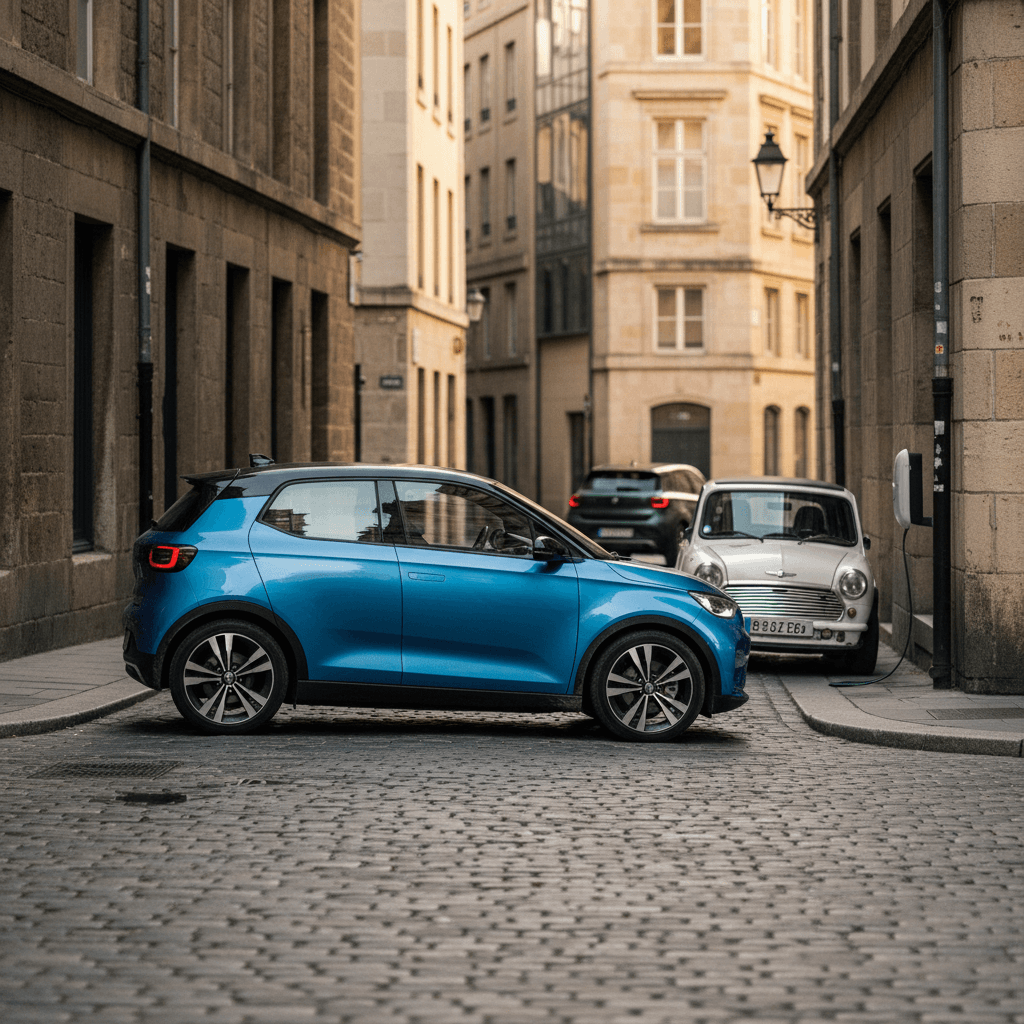
If you live with narrow streets, tight alleys, and comically tiny parking spots, the wrong car will punish you every single day. The good news: modern EVs include some brilliantly small, city‑friendly options. This guide breaks down how to choose the right EV for narrow streets and tight spaces, with real dimensions, turning circles, and used‑EV picks that won’t feel like a delivery van in an old-city neighborhood.
City driving is a different sport
Why small EVs matter on narrow streets
American streets are getting more crowded, but American vehicles keep getting bigger. Full‑size pickups and three‑row SUVs might rule the suburbs, yet put one into a century‑old neighborhood and you’re suddenly three point turns and mirror‑clenching anxiety. A compact EV flips that script. Shorter length and narrower width mean you can thread through parked cars, construction cones, and double‑parked vans instead of waiting them out.
EVs also carry their batteries low in the chassis, so even tiny models feel planted. That means you can dart into gaps and U‑turn in tight intersections without feeling like you’re about to tip over. Add instant electric torque and one‑pedal driving and you’ve got the perfect tool for the stop‑and‑go ballet of urban traffic.
Why compact EVs shine in the city
What makes an EV good in tight spaces?
Forget the marketing categories. What you care about is how physically big the car is and how easily it pivots in cramped spaces. Here are the specs that matter when you’re shopping for an EV for narrow streets and tight parking.
6 specs that matter more than horsepower in the city
Use this checklist while you browse listings or walk dealer lots.
1. Overall length
2. Overall width
3. Turning circle
4. Wheelbase & overhangs
5. Visibility & cameras
6. Ride & ground clearance
How to spot a tight turning circle in the wild
Top compact EVs for narrow streets and tight parking
Below are EVs, new and used, that stand out for short length, relatively narrow width, and easy maneuverability. Exact dimensions can vary slightly by model year and trim, but the character of these cars is consistent: they’re built for real cities, not just mall parking lots.
City‑friendly EVs that punch above their (small) size
Approximate U.S. specs; always confirm for your specific model year before you buy.
| Model | Body style | Approx. length | Notable traits for tight spaces |
|---|---|---|---|
| Fiat 500e (2024–) | Mini hatchback | ~143 in | Currently the smallest EV sold in the U.S.; extremely short, easy to park, ideal second car for dense cities. |
| Mini Cooper SE (2020–) | 2‑door hatch | ~152 in | Classic MINI go‑kart feel, very short length, eager steering, great for darting through gaps. |
| Hyundai Kona Electric | Subcompact SUV | ~165 in | Short footprint with hatchback practicality; friendly for garages and tight street parking. |
| Kia Niro EV | Compact crossover | ~172 in | Compact but not tiny; still relatively narrow with a usefully tight turning circle for a crossover. |
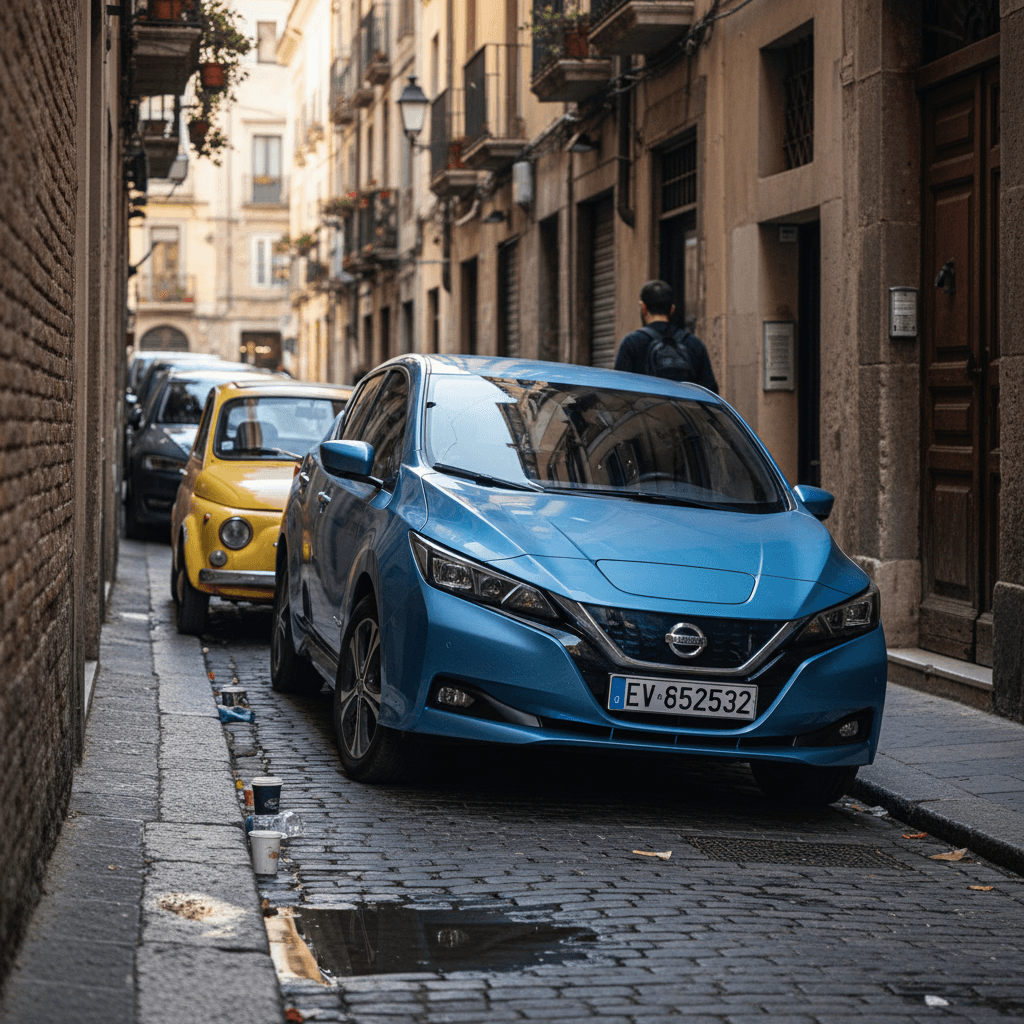
| Nissan Leaf (1st/2nd gen) | Hatchback | ~176 in | Not the smallest, but soft suspension and good visibility make it forgiving in rough, tight urban use. |
| Chevy Bolt EV/Bolt EUV | Hatchback | ~164–169 in | Short, tall body and great outward visibility; feels smaller than the numbers suggest. |
Lengths rounded to the nearest inch; ranges are EPA or close U.S. estimates where available.
Beware the “compact” SUV that’s not compact
Key dimensions & turning radius: how they actually compare
Specs sheets are dry; city streets are not. Here’s how some popular smaller EVs stack up on the numbers that matter for living with narrow streets. These are approximate U.S. figures, always verify against the exact model year you’re shopping.
Fiat 500e: the alley‑cat
The modern Fiat 500e is the spiritual successor to Europe’s classic city cars. At roughly 143 inches long, it’s nearly two feet shorter than many compact crossovers. That means parallel‑parking in spaces other drivers simply roll past and slipping around double‑parked delivery vans without a blood‑pressure spike.
The trade‑off is range and space. Around 140–150 miles of range is plenty if you mostly run local errands and have home or workplace charging, but it’s not a road‑trip machine.
Kona Electric & Niro EV: small but livable
The Hyundai Kona Electric and Kia Niro EV are great sweet‑spot choices if you want a compact footprint without feeling like you’ve downsized into a phone booth. Around 165–172 inches long with turning circles in the mid‑30‑foot range, they still feel wieldy in tight garages but offer adult‑sized rear seats and real cargo space.
Think of them as city‑friendly daily drivers that you can still take out of town on weekends.
At‑a‑glance maneuverability for popular compact EVs
Shorter turning circle and length generally equals easier maneuvers in tight spaces.
| Model | Approx. turning circle | Parking‑garage & alley behavior |
|---|---|---|
| Fiat 500e | ~31–32 ft | Feels like a scooter with doors; spins around in tight intersections with ease. |
| Mini Cooper SE | ~35 ft | Quick steering; loves switchbacks and cramped downtown blocks. |
| Chevy Bolt EV | ~34–35 ft | Tall glasshouse makes it easy to judge corners when threading through parked cars. |
| Hyundai Kona Electric | ~34–35 ft | Short enough to feel nimble; still comfy over potholes and expansion joints. |
| Kia Niro EV | ~34–35 ft | Compact crossover shape, but doesn’t feel oversized in older parking structures. |
Figures are approximate and can vary by wheel size and trim; check the door‑jamb sticker or owner’s manual for exact specs.
A low‑tech test before you buy
Used small EVs: smart buys for city drivers
If your priority is maneuverability over maximum range, the used market is suddenly very attractive. Plenty of early compact EVs were designed around city use back when long‑range packs were expensive, which keeps prices reasonable today.
Used compact EVs that make tight streets feel bigger
These models often offer great value because they were under‑appreciated new but shine in dense cities.
Chevy Bolt EV
Nissan Leaf (earlier gens)
BMW i3
Don’t ignore battery health on older city EVs
This is exactly where something like the Recharged Score matters. Every vehicle on Recharged comes with a battery‑health report, pricing analysis, and condition details, so you’re not guessing whether that cheap city runabout still has the daily range you need.
Living with an EV in tight city spaces
Once you’ve picked the right size EV, the day‑to‑day reality of tight streets comes down to how you charge, where you park, and how cleverly you use the tech that’s already baked into the car.
City‑living checklist: make a small EV work harder for you
1. Prioritize home or guaranteed overnight charging
With a compact EV, you don’t need massive range. What you do need is predictability: a driveway outlet, garage Level 2 charger, or a dependable workplace charger means you can start every day with enough battery for your local miles.
2. Choose the right cable length
In tight garages, a charging port can land on the “wrong” side. Make sure your charging cable is long enough to snake around another car or a structural column without pinching or tripping hazards.
3. Dial in your parking‑assist tech
Many small EVs include rear cross‑traffic alert, parking sensors, and camera guidelines. Spend ten minutes learning the beeps and lines, it will save you from curbed wheels and bruised bumpers.
4. Use one‑pedal driving in traffic
Strong regenerative braking lets you slow with just the accelerator. In stop‑and‑go traffic, that means smoother creep through tight gaps without constantly swapping pedals.
5. Watch door swing in narrow streets
Short cars can still have long doors. Test how far the doors open in a cramped parking space or alley before you commit to daily parallel parking with kids or older passengers.
6. Think vertically as well as horizontally
Tall curbs, steep garage ramps, and crowned alleyways can scrape low bumpers. A slightly higher‑riding subcompact EV can be a better choice than the absolute lowest microcar.
When an EV is “just right” for your street
How Recharged helps city drivers pick the right EV
Shopping for an EV for narrow streets and tight spaces can be weirdly stressful. Dealer lots and online listings rarely highlight the specs you actually care about, turning circles, camera quality, how tall the hatch opens in your low‑ceiling garage. That’s where a used‑EV specialist makes life easier.
- Every vehicle on Recharged includes a Recharged Score report with verified battery health, so you know a “city‑range” EV still has the miles you need.
- You can browse by body style and size to quickly zero in on compact hatchbacks and small crossovers instead of wading through three‑row giants.
- EV‑specialist advisors can talk through your actual parking situation, alley access, condo garage, on‑street permits, and suggest models that fit.
- Financing, trade‑in, and even consignment options are baked in, so you can move out of a too‑big vehicle without juggling multiple vendors.
- Nationwide delivery and a Richmond, VA Experience Center mean you can shop fully online or get in‑person help if you prefer.
Thinking about downsizing into a city EV?
FAQ: EVs for narrow streets and tight spaces
Frequently asked questions about city‑friendly EVs
Bottom line: finding the right EV for tight spaces
A great EV for narrow streets and tight spaces doesn’t shout about its capabilities. It just quietly goes where other cars can’t, squeezes into the last spot on the block, and pirouettes out of bad situations with a dab of steering lock and a whirr of electric torque.
Focus on footprint, turning radius, visibility, and battery health before you worry about top‑speed bravado. Use your test drive to stress‑test the worst parts of your daily route, not the nearest freeway on‑ramp. And if you’d rather not decode spec sheets alone, let Recharged do some of the heavy lifting, shortlisting compact, healthy‑battery used EVs that actually fit your street, your lifestyle, and your parking space.