If you’re looking at an electric car, you’re probably asking the same question as every shopper: what’s the EV electricity cost per month on average, and how will it change my budget compared with gas? The good news is that once you do the math, the answer is refreshingly simple, and usually much cheaper than filling up at the pump.
Key takeaway in one line
Why EV electricity cost per month matters
Monthly cost is where EVs either calm your nerves or spook your wallet. You don’t see kilowatt‑hours spinning by like gallons at a gas pump, so it’s easy to worry that your electric bill will go through the roof. In reality, once you know your electric rate, your car’s efficiency, and your monthly miles, you can estimate your EV electricity cost per month within a few dollars. That makes it much easier to compare owning an EV to the gas car in your driveway today.
Rule of thumb
Quick answer: the average EV electricity cost per month
Typical U.S. EV monthly charging costs
To put a stake in the ground: many U.S. EV owners who mostly charge at home pay around $35–$60 per month for electricity to cover typical driving. That assumes about 1,000–1,200 miles per month, an average efficiency EV, and standard residential electricity rates. If your rates are higher, you fast‑charge a lot, or you drive more than average, your bill can land above that range, but you’re still usually beating gasoline by a wide margin.
Why your number may differ
How to calculate your own monthly EV charging cost
You don’t need an engineering degree to estimate your EV electricity cost per month average. Grab your latest power bill and your car’s efficiency rating (usually shown as kWh/100 miles or MPGe), then walk through this simple process.
- Find your electricity rate: Check your utility bill for your price per kWh. Many U.S. homes fall between $0.10 and $0.25 per kWh, but your rate may be higher or lower.
- Find your EV’s efficiency: Look for kWh/100 miles on the Monroney window sticker, in the owner’s manual, or on the EPA fuel economy label. If you only see MPGe, you can look up the kWh/100 mi figure online for your exact model/year.
- Estimate your monthly miles: Use your current odometer and trip logs, or a round number like 900, 1,000, or 1,200 miles per month.
- Use the core formula: Monthly cost = (Monthly miles ÷ 100) × (kWh per 100 miles) × (Price per kWh).
- Adjust for real‑world use: Add 10–15% if you drive fast, live in very hot/cold climates, or fast‑charge often. Subtract a bit if you baby the accelerator and mostly drive in mild weather.
Quick example with the formula
Real-world examples: small SUV, sedan, and commuter EVs
Numbers are easier to trust when you can see them in context. Here’s how the math works out for three common types of EVs, all assuming 1,000 miles per month and a home electricity rate of $0.15/kWh. These are ballpark examples, not tied to a single brand.
Sample monthly EV electricity cost by vehicle type
Estimates assume 1,000 miles per month and a home rate of $0.15/kWh.
| Vehicle type | Typical efficiency (kWh/100 mi) | Monthly energy (kWh) | Estimated monthly cost |
|---|---|---|---|
| Compact commuter EV | 24 | 240 | $36 |
| Midsize sedan | 27 | 270 | $40.50 |
| Small crossover/SUV | 30 | 300 | $45 |
| Performance EV or large SUV | 34 | 340 | $51 |
Use your own electric rate and efficiency to refine these numbers for your specific car and location.
What you should notice

Home charging vs public fast charging: monthly costs
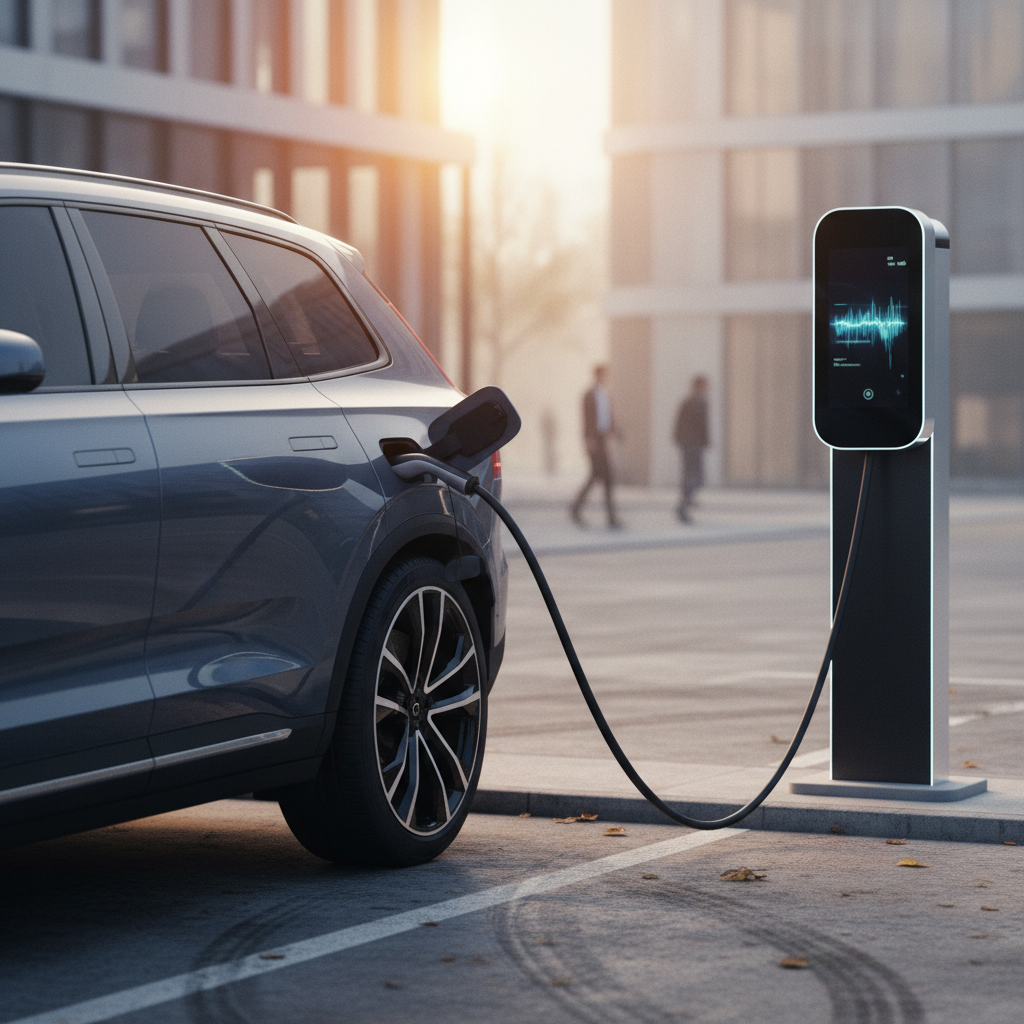
Where you plug in is just as important as what you drive. Home Level 2 charging is usually the cheapest way to power an EV, while DC fast charging at highway stations can cost as much, or sometimes more, per mile than gasoline.
Mostly home charging
- Typical cost: roughly $30–$60 per month for average mileage.
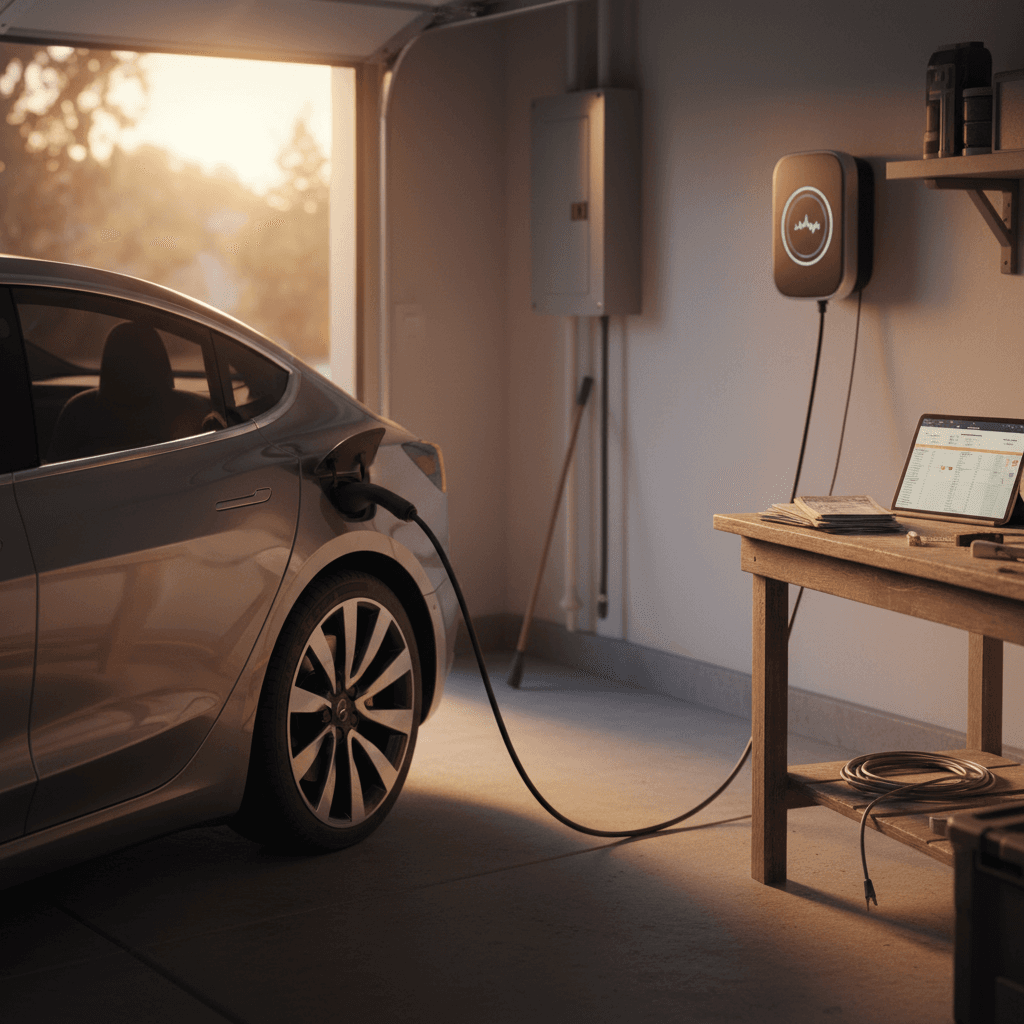
- Best for: Households with a driveway or garage and a Level 2 charger or 240V outlet.
- Per‑kWh pricing is stable and predictable, especially with off‑peak or EV‑specific rates.
Mostly public fast charging
- Typical cost: monthly total can double compared with home charging for the same miles.
- Per‑kWh price is often similar to paying $0.35–$0.50 per kWh or more.
- Great for road trips, but expensive as a daily habit if you have a home option.
If you rely on fast charging every day
7 ways to lower your EV electricity bill
Once you’ve estimated your EV electricity cost per month, there are several levers you can pull to push that number down, without driving less.
Practical tactics to shrink your EV charging bill
1. Use time-of-use or off‑peak rates
Many utilities offer lower overnight prices for EV owners. Set your car’s charge timer so most energy flows during those off‑peak hours.
2. Install (or share) a Level 2 home charger
Level 2 doesn’t just charge faster; it also makes overnight scheduling easy. If a full wall‑box isn’t in the cards, a 240V plug‑in portable charger can be a smart middle ground.
3. Avoid unnecessary DC fast charging
Fast charging is great for road trips and emergencies, but it’s usually the most expensive per kWh. Use it when you need it, but don’t treat it like a daily gas station stop if home charging is available.
4. Keep speeds reasonable
Aerodynamic drag rises sharply above highway speeds. Cruising 5–10 mph slower can shave meaningful energy use and a few dollars from each month’s electricity bill.
5. Watch your climate control
Cabin heat and air conditioning draw real power. Pre‑condition the car while it’s still plugged in, and use seat heaters and steering‑wheel heat instead of blasting the cabin heater when possible.
6. Keep tires properly inflated
Under‑inflated tires add rolling resistance, which means more kWh per mile. Check pressures monthly, just as you would on a gas car, to keep efficiency in its sweet spot.
7. Use your EV’s efficiency tools
Most modern EVs offer an efficiency screen or eco‑driving coaching. A few weeks of paying attention to that data can trim your consumption enough to notice on your bill.
How EV electricity cost compares to gas every month
For most people, this is the real question: not just what you’ll pay to charge, but how that compares to your old fuel bill. Let’s stack a typical EV against a reasonably efficient gas car on the same 1,000 miles per month.
Monthly EV electricity vs gasoline cost (example)
Example uses 1,000 miles, 28 kWh/100 miles EV at $0.15/kWh, and 30 mpg gasoline car at $3.50/gal.
| Vehicle | Assumptions | Energy cost per unit | Monthly energy use | Estimated monthly fuel cost |
|---|---|---|---|---|
| Electric vehicle | 28 kWh/100 mi, 1,000 mi/month | $0.15/kWh | 280 kWh | $42 |
| Gasoline car | 30 mpg, 1,000 mi/month | $3.50/gal | ~33 gal | $115.50 |
Numbers will shift with your local gas prices and electricity rates, but the gap between EV energy cost and gasoline is usually substantial.
What that means for your budget
Used EV buyers: what monthly electricity costs to expect
If you’re shopping for a used EV, you’ve got an extra question in the mix: how will a slightly older battery and drivetrain affect your monthly electricity cost? The answer is: usually not by much, but it’s worth paying attention to efficiency and battery health.
Monthly electricity cost considerations for used EVs
Battery health and efficiency matter more than model year on the window sticker.
Battery health & range
Real-world efficiency
Transparency tools
How Recharged can help
FAQ: EV electricity cost per month
Frequently asked questions about monthly EV electricity cost
Bottom line on average EV electricity cost per month
When you strip away the jargon, the story is straightforward: for most U.S. drivers who can charge at home, an EV’s monthly electricity cost is modest, often around what you might spend on one or two tanks of gas, stretched across an entire month of driving. And in many cases, you’ll cut your total fuel spending in half or better.
If you’re considering a used EV, understanding your electricity cost per month is a key piece of the total‑ownership puzzle, alongside insurance, maintenance, and financing. At Recharged, every vehicle comes with a Recharged Score Report that makes battery health, efficiency, and fair pricing transparent, so you can run the numbers with confidence before you ever click “buy.”
Ready to put real numbers to the page? Grab your electric rate, estimate your monthly miles, and use the simple formula in this guide. Once you see how the math pencils out, you may find that switching to a used EV doesn’t just feel good, it feels good on your monthly budget, too.