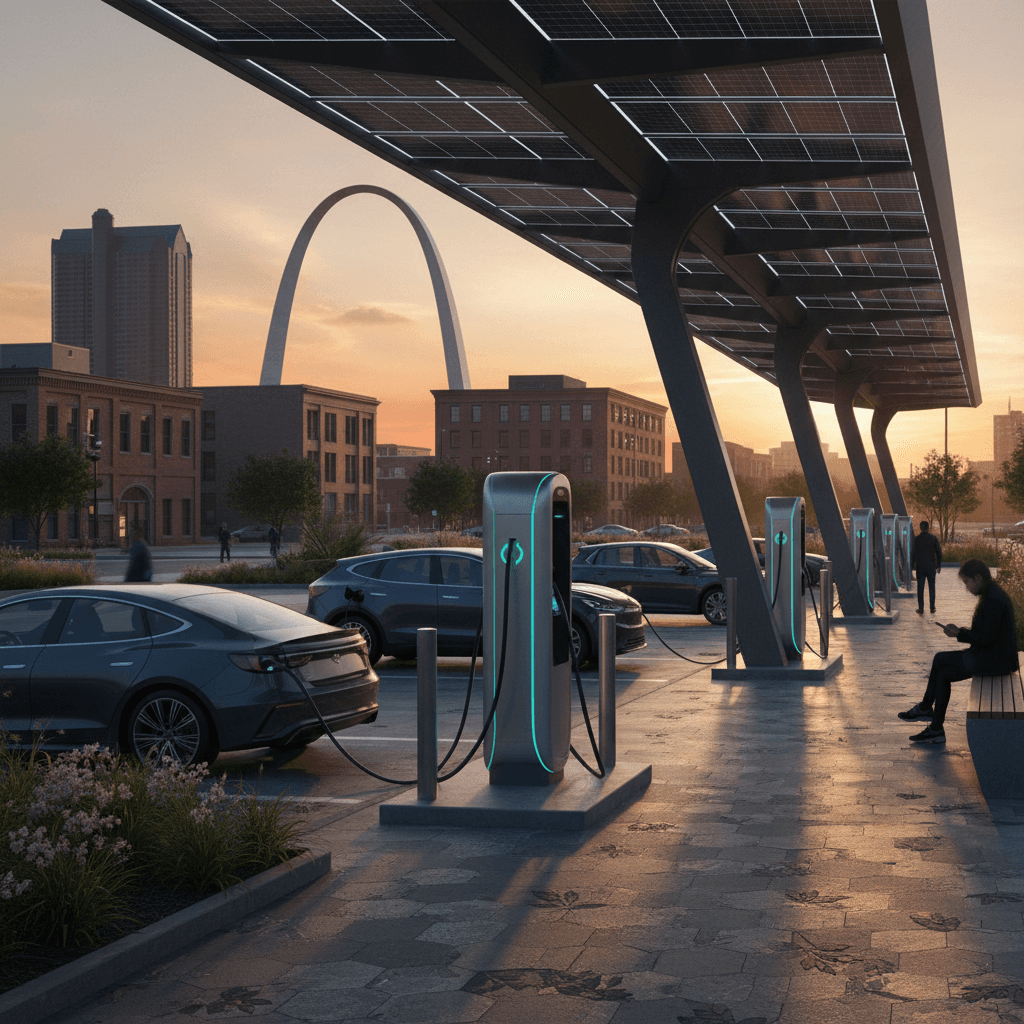
If you drive an electric vehicle in the St. Louis area, you’re no longer an early adopter hunting for that one lonely plug behind City Hall. Today there are hundreds of EV charging stations in and around St. Louis, MO, including free Level 2 options and a growing web of DC fast chargers along I‑64, I‑70, and I‑55. This guide walks you through where to find them, what they cost, and how to make charging fit smoothly into your daily life.
St. Louis is quietly well‑served
St. Louis EV charging at a glance
EV charging snapshot: St. Louis region
The exact numbers change month to month as new stations come online, but the takeaway is simple: if you live or work in the core St. Louis metro, you can realistically daily‑drive an EV with a mix of home and public charging. Where you’ll feel the gaps is at the outer edges of the metro and in rural Missouri, where fast chargers can be 40–60 miles apart.
Watch the Illinois–Missouri line
Where EV charging stations are concentrated around St. Louis
Common EV charging hotspots around St. Louis
Expect multiple chargers, nearby amenities, and decent lighting at these locations.
Retail & big‑box parking lots
Downtown & civic buildings
Parks, attractions & entertainment
Suburban clusters
In the suburbs, Clayton, Brentwood, Kirkwood, Chesterfield, and St. Charles County, chargers tend to appear in shopping centers, office parks, and along major arterials like Manchester Road or Olive Blvd. These are great spots for commuters who can’t charge at home.
Interstate exits
If you’re road‑tripping, prioritize interchange exits along I‑70, I‑44, I‑55, and I‑64. That’s where you’ll find most of the high‑power DC fast chargers from Electrify America, EVgo, Tesla Supercharger sites, and other networks, often paired with 24‑hour food and restrooms.
Use local knowledge with national apps
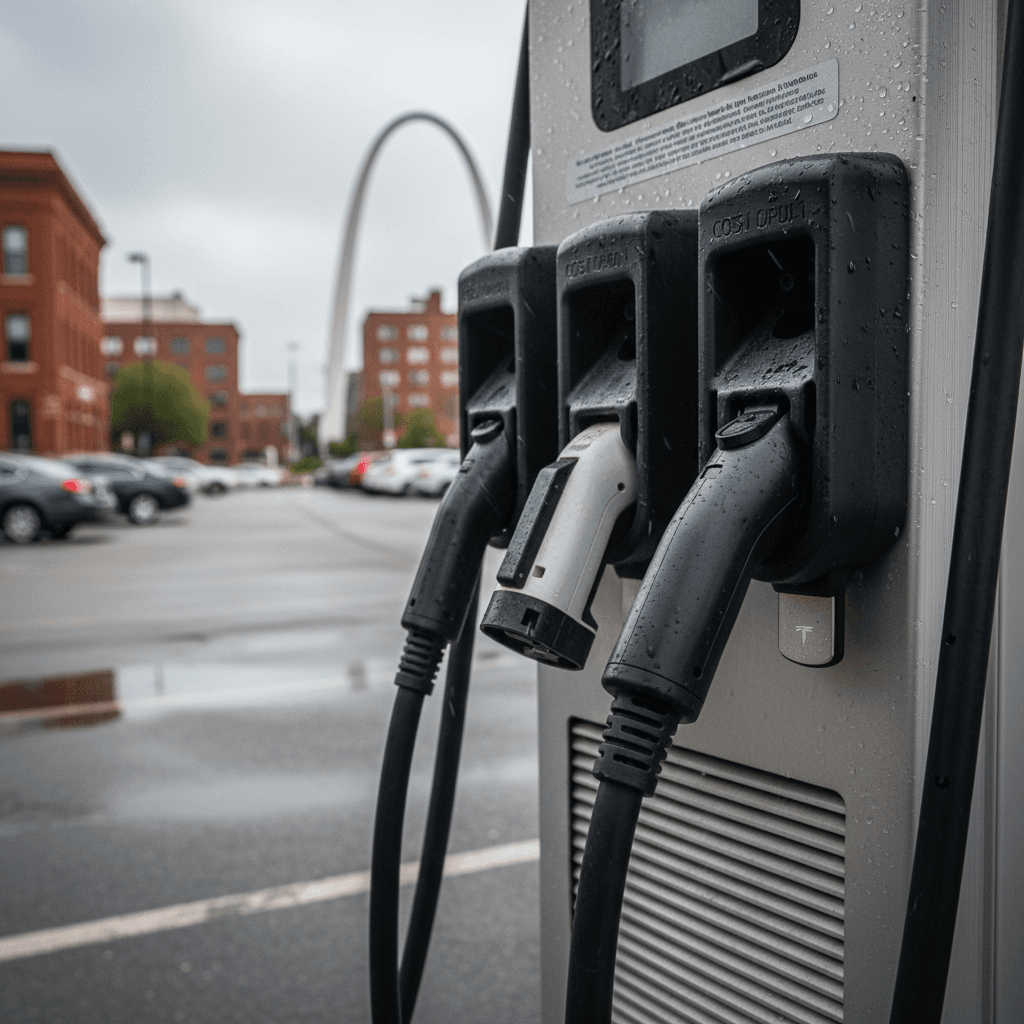
Major EV charging networks serving St. Louis
When you search for “EV charging stations St Louis MO,” you’ll see the same handful of names pop up over and over. Here’s how those networks typically show up around the metro and what they’re best for.
Common St. Louis charging networks and how to use them
Exact locations change frequently, but these are the players you’re most likely to encounter in and around St. Louis.
| Network | Typical locations | Main connector types | Best for |
|---|---|---|---|
| Tesla Supercharger | Highway exits, travel plazas, some urban sites | NACS (Tesla plug), some sites support CCS via adapters | Fast long‑distance charging, especially for Tesla owners |
| Electrify America | Walmart, Sam’s Club, highway exits | DC fast CCS, some CHAdeMO | High‑power corridor charging for CCS‑equipped EVs |
| EVgo | Grocery stores, urban parking lots, travel centers | DC fast CCS, some CHAdeMO; occasional Level 2 | Quick top‑ups inside the metro core |
| ChargePoint | Workplaces, garages, office parks, universities | Mostly Level 2 J1772, some DC fast CCS | Daily charging near work or home |
| SemaConnect, Blink, others | Smaller retail sites, private lots, older installs | Primarily Level 2 J1772 | Topping up while you shop or dine |
Before a road trip, install the main charging apps and set up payment so you’re not fumbling at the charger in the rain.
Always check the connector type
Types of EV chargers you’ll see in St. Louis
St. Louis has everything from slow trickle chargers at older parking garages to 350 kW highway fast chargers. Understanding the differences will save you a lot of frustration, and money.
Level 1 vs. Level 2 vs. DC fast in the Gateway City
Match the charger to how long you’ll be parked and how much range you need.
Level 1 (120V)
Standard household outlet. You’ll see this mostly at home, not public locations.
- Speed: ~3–5 miles of range per hour
- Best for: Overnight at home, occasional top‑ups
Level 2 (240V)
The workhorse of St. Louis public charging, found at workplaces, garages, and retail.
- Speed: ~20–40 miles per hour
- Best for: Shopping runs, dinner, office days
DC fast charging
High‑power stations at highway exits and select urban sites.
- Speed: 150–250+ miles per hour (vehicle‑dependent)
- Best for: Road trips, quick turnarounds
Don’t rely on DC fast charging for 100% of your driving
How much EV charging costs in St. Louis
Missouri’s electric rates are generally lower than the national average, which helps EV drivers. But your cost per mile still depends heavily on where you plug in and when.
Home electricity vs. public networks
On a standard residential rate with Ameren Missouri, many households pay the equivalent of roughly $0.03–$0.05 per mile when charging at home, depending on vehicle efficiency and time of use. Public DC fast charging in the St. Louis region can easily run 2–4× that cost per mile, because you’re paying for power, infrastructure, and convenience.
Typical public charging prices
- Level 2 in paid garages: Often an hourly fee or modest per‑kWh rate, plus parking.
- Retail Level 2: Sometimes free for customers (time‑limited) or priced similarly to home power.
- DC fast charging: Usually priced per kWh or per minute; exact rates vary by network and membership.
Apps for each network (Tesla, Electrify America, EVgo, ChargePoint) show up‑to‑date pricing before you start a session.
How local drivers keep costs down
Planning a St. Louis commute or road trip in an EV
Whether you’re commuting from Kirkwood to downtown or driving I‑70 to Kansas City, a little planning turns range anxiety into routine. St. Louis is well enough covered that you rarely have to white‑knuckle it, as long as you think one or two stops ahead.
Step‑by‑step: planning EV charging around St. Louis
1. Start with a live charging map
Use PlugShare, ChargeHub, or your vehicle’s navigation to view all nearby stations, filter by connector type, and read recent user reviews. Focus on stations with multiple plugs and good uptime.
2. Map your daily “anchor points”
Identify where you already spend time, workplace, gym, grocery store, kids’ activities. Look for <strong>Level 2 chargers</strong> near those locations so you can charge while you’re there, not as a separate errand.
3. Favor redundancy on road trips
Driving I‑44 to Springfield or I‑70 toward Columbia? Pick <strong>fast‑charging sites where you have a backup within 20–30 miles</strong>. That way a busy or broken station doesn’t derail your plans.
4. Watch for slower rural gaps
Outside the metro, chargers may be 40–60 miles apart, and sometimes just one or two plugs. Build in extra buffer and avoid arriving with under 10–15% state of charge in winter weather.
5. Check parking rules and hours
Some garages and civic lots in St. Louis close overnight or charge extra beyond certain hours. Make sure you can get both in and out during your planned charging window.
6. Have at least one backup payment method
Set up an account in advance for at least two major networks you see around St. Louis. Apple Pay or a credit card in the app beats digging through your glovebox at midnight.
Good news for mixed‑brand households
Home vs. public charging for Missouri drivers
Public charging keeps improving, but if you own your home, especially in the suburbs, a dedicated Level 2 charger is still the best move for most St. Louis drivers. You’ll wake up full every morning, avoid peak public‑charging prices, and leave fast chargers for the trips that truly need them.
When home charging makes the most sense
- You have off‑street parking or a garage.
- Your daily round‑trip commute is under ~80 miles.
- You’d rather pay a predictable Ameren bill than public‑charging markups.
- You plan to keep your EV at least 3–5 years.
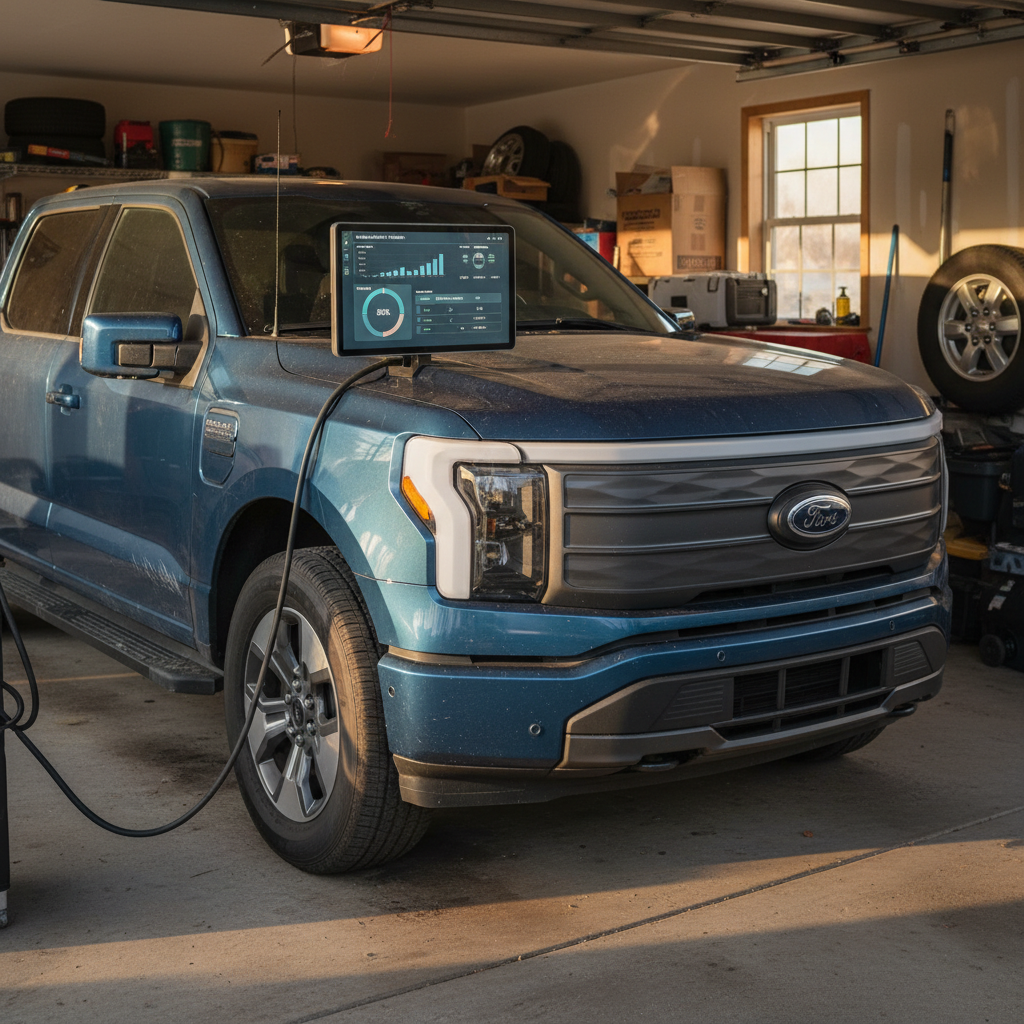
In these cases, a 32–48 amp Level 2 charger usually pays for itself in convenience and lower per‑mile energy costs.
Who can rely mostly on public charging
- Apartment residents without access to outlets near parking.
- Students or downtown workers with reliable garage or workplace charging.
- Drivers who log low annual mileage and don’t mind occasional DC fast‑charging stops.
If this is you, treat St. Louis public charging as your “virtual gas tank” and keep two or three favorite stations in rotation in case one is down.
Check for utility or employer incentives
How Recharged helps St. Louis EV drivers
Charging is one of the biggest question marks for first‑time EV shoppers in St. Louis. That’s exactly the problem Recharged is built to solve. When you shop for a used EV through Recharged, you don’t just see photos and a price, you get a Recharged Score battery health report and clear information about real‑world range so you can match the car to the charging options you actually have.
What Recharged brings to your EV ownership journey
Designed to make going electric as simple as buying any other car, just with fewer gas stops.
EVs matched to your charging reality
Verified battery health & range
Financing, trade‑in & delivery
Ready to find your next EV?
Browse VehiclesUse charging as part of your test‑drive plan
St. Louis EV charging FAQ
Frequently asked questions about EV charging in St. Louis, MO
St. Louis may not get the same EV headlines as the coasts, but in practical terms it’s a very livable market for electric vehicles. With a solid mix of Level 2 and DC fast charging, relatively low electricity prices, and a metro that’s more compact than it looks on the map, you can confidently make an EV your primary car here, especially if you pair smart route planning with a good home or workplace charging setup. When you’re ready to find a used EV that fits your St. Louis life, Recharged is here to help you understand the battery, the range, and exactly how you’ll keep it charged day after day.