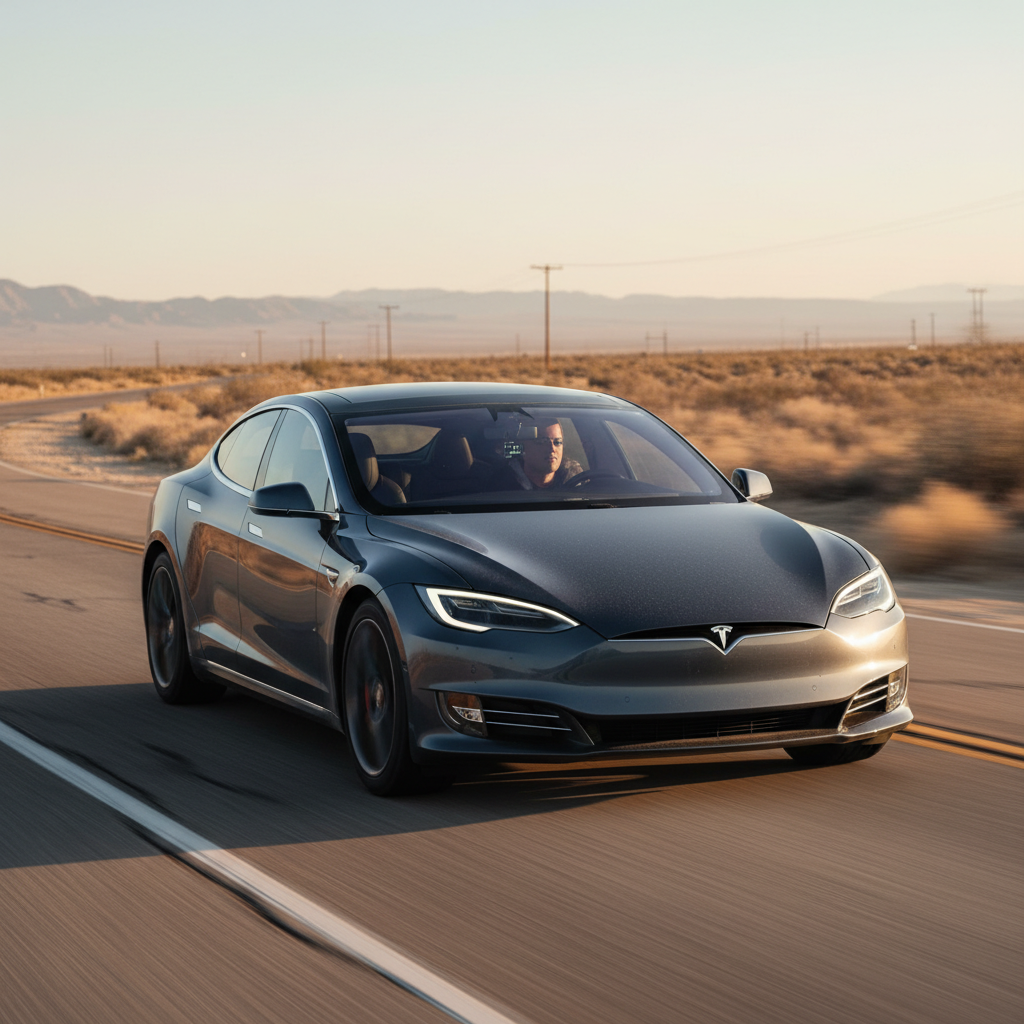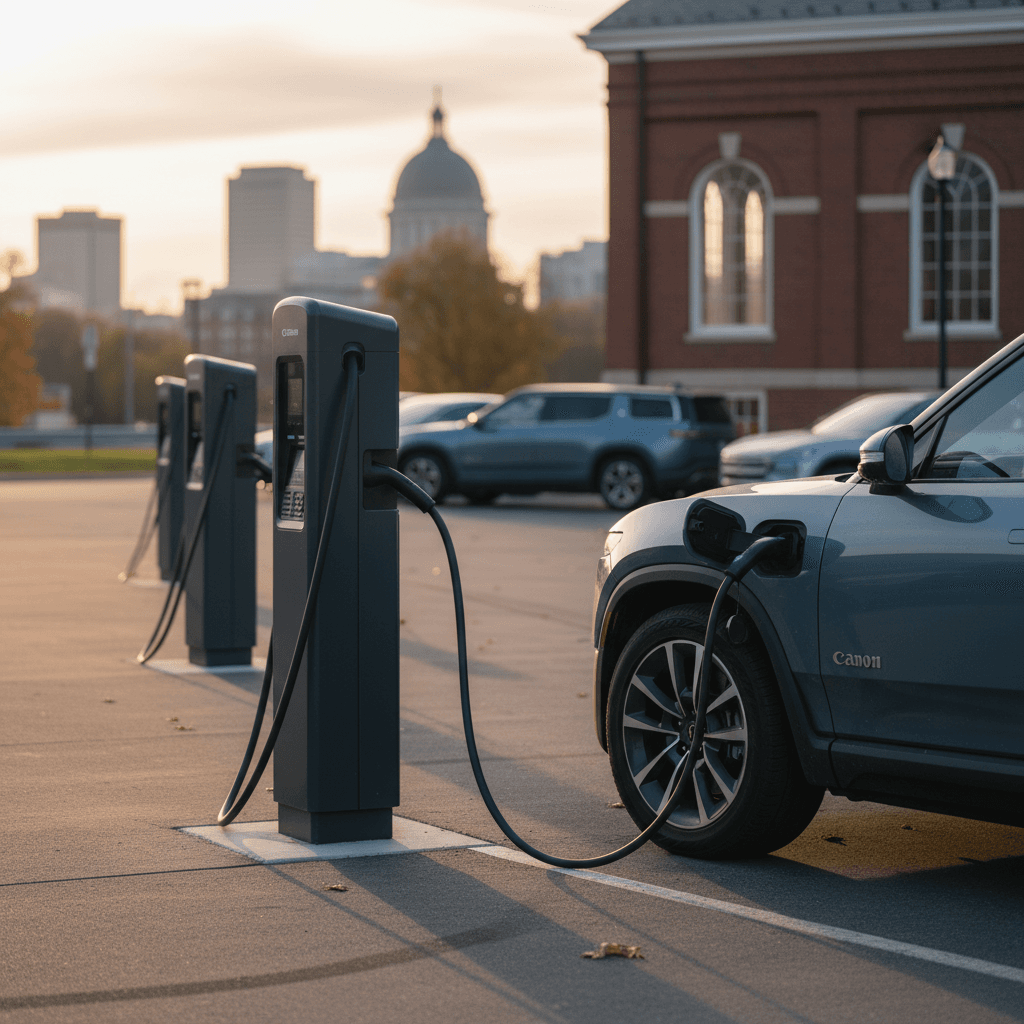
If you drive an electric vehicle in Central Virginia, you’ve probably asked yourself: **are there enough EV charging stations in Richmond, VA to live with one every day?** The short answer is yes, if you know where to look and how to use what’s already here. This guide walks you through Richmond’s public charging networks, fast-charging locations, typical costs, and how to blend public and home charging into a simple routine.
By the numbers
Richmond’s EV charging scene in 2026
Snapshot of EV charging in and around Richmond
Zooming in, Richmond sits in a pretty comfortable middle ground. You don’t have a fast charger on every corner, but you’re also not living in a charging desert. **Most daily driving can be handled with home or workplace Level 2**, while DC fast chargers cluster along interstates, busy commercial corridors, and big-box retail parking lots.
What’s still uneven
Types of EV charging stations around Richmond, VA
Level 1: Regular wall outlet (120V)
Level 1 is the slowest form of charging and uses a standard household outlet. You’ll typically add **2–4 miles of range per hour**. In Richmond, this is mainly a backup option, useful overnight if your commute is short and you have all day to recover miles.
- Works from almost any outlet
- No electrician needed if the circuit is healthy
- Best for plug‑in hybrids or very low daily mileage
Level 2: 240V, public and at home
Level 2 is the workhorse of Richmond EV life. These chargers use a 240V circuit, the same as a dryer, and can add **20–40 miles of range per hour**, depending on your car and the station’s amperage.
- Found at workplaces, garages, hotels, parking decks, and shopping centers
- Most public stations in Richmond today are Level 2
- Ideal for overnight home charging or long workday top‑offs
If you’re just commuting across town or up to Short Pump, **Level 2 will quietly cover 90% of your life**. The trick is thinking of charging like your phone: plug in whenever you’ll be parked for a few hours anyway.
DC fast charging (Level 3)
DC fast chargers send high‑power direct current straight to your battery, skipping the slower onboard charger in your car. Speeds range widely, but a typical modern station in Virginia delivers **50–150 kW**, and some newer hardware goes higher.
- Best for road trips or emergency top‑ups
- Often located at highway exits, travel plazas, big retail centers
- Can take you from low state‑of‑charge to 80% in 20–45 minutes, depending on your car
Connector types in Richmond
- CCS – The current standard for most non‑Tesla fast charging.
- NACS (Tesla) – Tesla’s connector, now being adopted by Ford, GM, and others. Expect more NACS cables on non‑Tesla networks over the next couple of years.
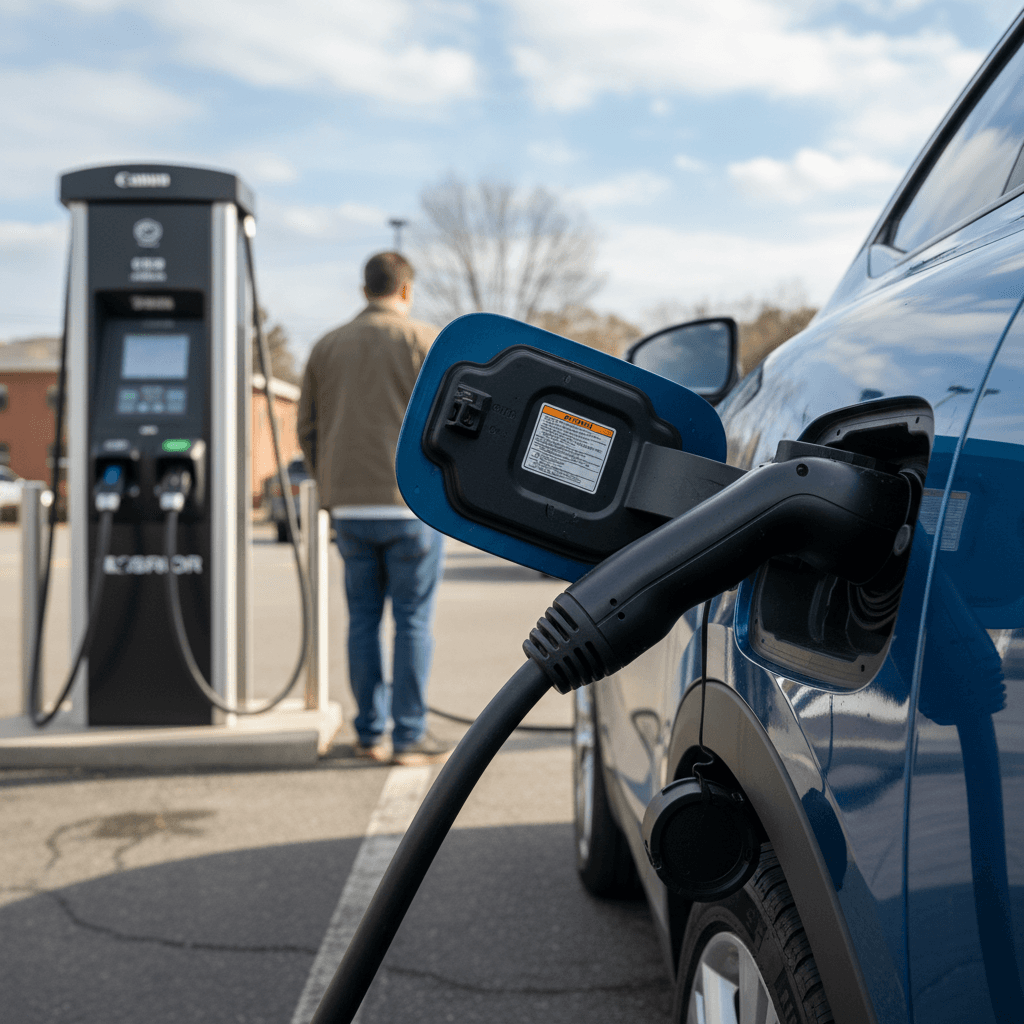
- J1772 – The common connector for Level 2 AC charging.
Most new EVs sold in 2025–2026 either ship with NACS or include an adapter, so you’ll have more flexibility with both Tesla and non‑Tesla stations as the transition plays out.
Where to find EV charging stations in Richmond, VA
Best tools for finding Richmond EV chargers
Use more than one app, their maps don’t always match
PlugShare & ChargeHub
Crowdsourced maps like PlugShare and ChargeHub are staples for Richmond drivers. They list most Level 2 and DC fast chargers, show recent check‑ins, and flag broken equipment.
- Filter by connector (CCS, NACS, CHAdeMO)
- See parking fees and user photos
- Great for scouting new areas of town
Network apps
Networks like EVgo, Electrify America, ChargePoint, and others run many of the DC fast sites you’ll use on I‑95 and I‑64.
- Real‑time status and pricing
- Start/stop sessions from your phone
- Membership discounts and idle fees clearly shown
In‑car navigation
Most newer EVs will locate compatible chargers through built‑in navigation. In the Richmond area, that’s especially helpful for routing to **fast chargers along the interstates** or avoiding stations your car knows are offline.
Pair this with a phone app for backup when you’re exploring backroads or less‑traveled parts of the region.
Inside the city, you’ll see clusters of public chargers in **downtown decks, around VCU and the hospital complexes, Carytown and Scott’s Addition, Short Pump, and near major grocery and big‑box stores**. Think like a retailer: where there’s already a lot of parking and traffic, there’s usually at least a few plugs.
How to sanity‑check a station
Fast charging in Richmond: road-trip ready spots
If you’re pointing the nose toward D.C., Hampton Roads, or North Carolina, **DC fast charging is what keeps road trips from turning into overnight stays**. Richmond benefits from being a crossroads: I‑95, I‑64, and key U.S. routes all carry traffic that supports higher‑power stations.
Typical fast‑charging locations around Richmond
Exact sites change as networks add hardware, but this gives you a feel for where high‑speed chargers usually live.
| Area / Corridor | Typical locations | Networks you’ll often see | Use case |
|---|---|---|---|
| I‑95 north & south of Richmond | Travel plazas, truck stops, big‑box parking lots near exits | Electrify America, EVgo, Tesla Supercharger (NACS), others | Long‑distance drives between D.C., Richmond, and North Carolina |
| I‑64 toward Short Pump & Charlottesville | Shopping centers and outlet‑style retail | Electrify America, ChargePoint, Tesla Supercharger | Weekend trips west, quick top‑ups while you shop |
| Downtown & near VCU/VCU Health | Parking decks, municipal lots, hospital garages | ChargePoint, city/utility‑managed Level 2, some DC fast | Hospital staff and visitors, downtown commuters |
| Southside & Chesterfield corridors | Walmart/Target centers, newer gas‑station plazas | Mix of networks, including EVgo and others | Daily drivers and regional commuters |
Always confirm details in your app before you roll in on a low battery.
Don’t run down to 0%
What it costs to charge an EV in Richmond
Charging costs in the Richmond area depend on three things: **where you plug in, how fast the station is, and when you draw power**. You’ll pay the least per mile at home and the most at high‑power DC fast chargers.
- **Home Level 2 (Dominion territory):** With typical residential rates, many drivers effectively pay the equivalent of **$0.03–$0.06 per mile** when charging overnight, depending on the car’s efficiency and your exact tariff.
- **Public Level 2:** Some Richmond sites are free (often as a perk at workplaces, hotels, or municipal lots); others may charge around **$1–$2 per hour** or a per‑kWh rate that works out to **$0.10–$0.30 per kWh**.
- **DC fast charging:** Expect higher prices. Per‑kWh rates at major networks usually translate to something in the ballpark of **$0.25–$0.50 per kWh**, or roughly **$0.08–$0.18 per mile** for a typical EV. Idle fees can kick in if you stay plugged in after your session ends.
Stack your savings
Finding free and low-cost charging around Richmond
While you shouldn’t build your entire life around hunting free electrons, **Richmond does have a healthy mix of free or very low‑cost Level 2 stations** that can make ownership easier, especially if you’re apartment‑based or still waiting on home wiring.
Common places to find free or cheap Level 2 in Richmond
Workplaces that support EVs
Many larger employers and institutions in the Richmond metro have added Level 2 chargers in staff lots or garages. Some remain free as a benefit; others charge a modest fee. Ask HR or facilities if you haven’t already.
Hotels and downtown parking decks
Downtown and near‑downtown garages often host Level 2 chargers, sometimes bundled into the cost of parking. Hotels around Short Pump and near interstates also advertise free charging to attract EV‑driving guests.
Libraries, parks, and municipal lots
Look for chargers at civic buildings, libraries, and park‑and‑ride lots. A portion of these are still free or underwritten by city sustainability programs, though time limits may apply.
Retail “come shop with us” incentives
Grocery and big‑box chains increasingly use EV charging as a customer draw. In some lots you’ll find **2 hours of free Level 2** while you shop, then a paid rate afterward. Always check the signage and app listing.
Read the fine print
Home charging in Richmond: do you still need public stations?
If you have off‑street parking, **a simple Level 2 home charger is the single biggest quality‑of‑life upgrade you can buy for EV ownership in Richmond**. Instead of planning your day around charging, you just plug in at night and leave every morning with a full “tank.”
Setting up home Level 2
- Have a licensed electrician evaluate your panel and install a 240V circuit (often 40–60 amps).
- Choose a wall‑mounted or plug‑in Level 2 charger that matches your car’s max AC rate.
- Mount the unit in a spot where the cable easily reaches your charge port without stretching.
Dominion Energy and other programs periodically offer **rebates or turnkey installation packages** for residential chargers, so it’s worth checking current incentives before you buy hardware on your own.
How public chargers fit in
Even with home charging, Richmond’s public network still matters:
- Top off downtown or at the mall on heavy errand days
- Lean on DC fast chargers for trips to the mountains or the beach
- Use workplace charging to save a little extra (or if you rent without charger access)
Think of public chargers as your **flexibility and backup**, not your primary fuel source, unless your housing situation makes home charging impossible.
How Recharged can help
Ready to find your next EV?
Browse VehiclesBuilding a reliable charging routine in Richmond
Once you know where the plugs are, the real secret is routine. Richmond rewards drivers who treat charging as a quiet background habit instead of a last‑minute scramble.
Sample charging routines for Richmond drivers
City commuter (15–40 miles/day)
Install (or use existing) Level 2 at home if you can.
Plug in most nights and set your charge limit to 70–80% for battery longevity.
Use free or low‑cost Level 2 downtown or at work as bonus miles, not your lifeline.
Save DC fast charging for weekend trips or true emergencies.
Suburban family in Short Pump / Chesterfield
Home Level 2 is your anchor, plug in whenever you return from school runs or errands.
Map the nearest DC fast site on I‑64 or I‑95 for road‑trip days.
Use big‑box parking‑lot chargers as a chance to top off during shopping, not to go from 5% to 100%.
Keep at least 15% in the battery when you head out in winter to leave room for detours.
Apartment dweller without home charging
Identify 2–3 dependable Level 2 sites near home and work (look for good lighting and consistent uptime).
Charge less often but longer, aim for one or two big Level 2 sessions per week instead of many tiny ones.
Consider using a nearby DC fast site once every week or two to quickly refill to 80%.
Talk with your landlord or HOA about adding shared chargers; that conversation is getting easier every year.
Give yourself a buffer
Richmond EV charging FAQ
Frequently asked questions about EV charging in Richmond, VA
So… is Richmond a good place to own an EV?
If you drew a map of U.S. cities where owning an EV feels natural, **Richmond would be colored in, maybe not as dark as the West Coast, but comfortably solid.** The public network has grown from a curiosity to real infrastructure, fast chargers are turning interstates into EV‑friendly corridors, and home Level 2 charging is within reach for many single‑family households.
The key is matching the car and charging plan to your life. If you’re mostly bouncing between the Fan, Short Pump, and Chesterfield with home charging at night, Richmond already feels like the future. If you’re apartment‑based and living off public plugs, you’ll want to choose your neighborhood, and your EV, carefully and keep a couple of trusted fast chargers starred in your apps.
When you’re ready to make the jump into a used EV, **Recharged can help you line up the whole picture**: verified battery health, realistic range for Virginia driving, financing, trade‑in, and even delivery, plus guidance on how your local charging options in Richmond will work with the car you pick. Electric driving in Central Virginia isn’t a science experiment anymore; it’s just another way to get across town, as long as you know where the plugs are.