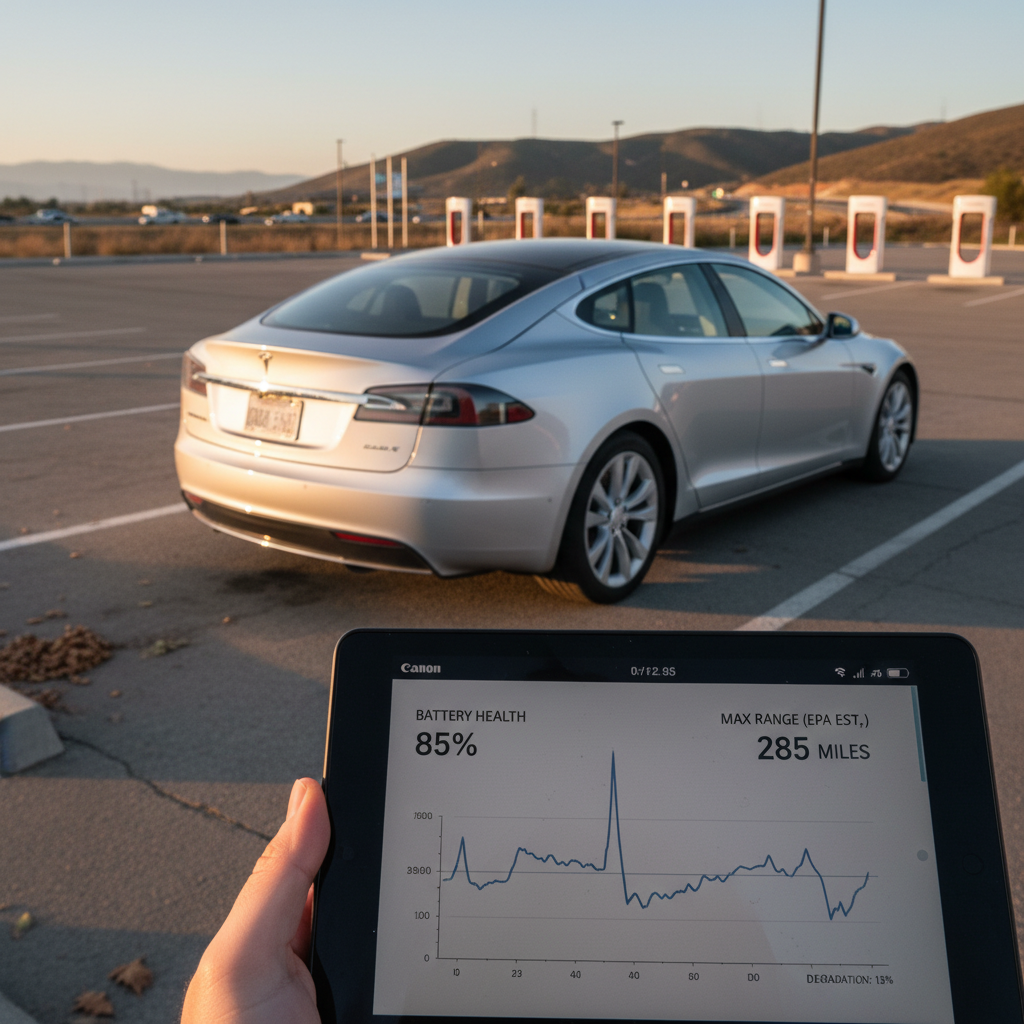
If you drive an electric vehicle in the Steel City, you quickly learn that **EV charging stations in Pittsburgh** aren’t laid out like a neat grid of gas stations. Coverage is growing, but it’s uneven by neighborhood and charging speed. This guide walks you through where to charge, which networks actually matter here, and how to keep Pittsburgh’s hills, tunnels, and winter weather from turning into range anxiety.
Pittsburgh is actively adding chargers
Why EV charging in Pittsburgh deserves its own guide
On a map, Pittsburgh looks like a mid‑sized metro with several interstates, universities, and hospitals, exactly the sort of place you’d expect strong EV support. In reality, **fast charging is clustered** along a few corridors and shopping centers, while big chunks of the city still rely on slower Level 2 stations or home charging.
- Hilly terrain and cold winters mean your range can drop faster than on flat ground in mild weather.
- Many neighborhoods rely on on‑street parking, which complicates overnight charging.
- The region’s fast‑charging build‑out has leaned more on EVgo and site‑by‑site deployments than a blanket buildout from one network.
The upside: Pittsburgh’s leaders and local utility are investing in more public options, and as an EV driver you can absolutely make the city work, if you know **where** and **how** to charge. That’s what we’ll cover next.
Types of EV charging you’ll see around Pittsburgh
Before you start memorizing addresses, it helps to understand the three main types of charging you’ll see around Pittsburgh and western Pennsylvania.
Charging levels in and around Pittsburgh
Match the charger type to your schedule and battery size
Level 1 (120V)
Standard household outlet. Adds roughly 3–5 miles of range per hour.
- Best for: overnight top‑offs, plug‑in hybrids
- Common in: single‑family homes with driveway/garage
Level 2 (240V)
Most public chargers around workplaces, garages, and some curbside spots. Typically adds 15–35 miles of range per hour, depending on your car and amperage.
Best for: destination charging while you work, shop, or sleep.
DC fast charging
High‑power stations along highways and at select shopping centers. Can add 60–200+ miles in 30–45 minutes, depending on charger speed and your battery.
Best for: road trips and quick top‑ups.
Know your car’s max speed
Major EV charging networks in Pittsburgh
Several national networks operate EV charging stations in Pittsburgh, but they’re not equally represented. In practice, you’ll see a mix of **EVgo, ChargePoint, Tesla, and a handful of others**, plus city‑owned and utility‑supported projects filling in the gaps.
What Pittsburgh’s public charging landscape looks like
EVgo
For non‑Tesla drivers who need DC fast charging inside the city, EVgo is often your first stop. Edgewood Towne Center and the Target on Broad Street are two examples with fast chargers that serve CCS‑equipped vehicles.
The EVgo app shows real‑time status, pricing, and supports Autocharge+ on compatible cars, so you can plug in and walk away.
ChargePoint & others
Much of Pittsburgh’s Level 2 destination charging runs on ChargePoint hardware, especially at employers, universities, and parking facilities. You’ll also see single‑site operators in garages, hotels, and hospitals.
For these, apps like PlugShare are invaluable for checking photos, user reviews, and parking fees on top of charging costs.
Tesla’s Supercharger network also has a footprint in the metro area and along nearby interstates. As more stations open to non‑Tesla EVs via adapters and new connectors, they’re becoming part of the equation for Pittsburgh drivers as well.
Don’t assume Electrify America everywhere
DC fast charging corridors around Pittsburgh
For long‑distance trips, or just quick top‑ups between meetings, DC fast charging is what keeps your EV feeling as flexible as a gas car. Around Pittsburgh, you’ll find fast chargers in three main patterns: city‑edge shopping centers, highway interchanges, and select travel plazas further out.
Typical DC fast‑charging locations around Pittsburgh
Examples of where DC fast chargers tend to cluster. Always confirm live status in an app before you go.
| Area type | Typical hosts | What to expect | Best use case |
|---|---|---|---|
| City shopping centers | Targets, big‑box stores, mixed‑use plazas | EVgo or similar 50–350 kW chargers, 2–6 stalls, paid parking at some garages | Quick charge while you shop or grab food |
| Interstate interchanges | Travel plazas, convenience stores, highway‑adjacent retail | DC fast chargers from multiple networks, usually near I‑376, I‑79, I‑76 | Ideal for heading toward Ohio, West Virginia, or central PA |
| Outer suburbs & exurbs | Sheetz, Walmarts, regional plazas | Combination of Level 2 and DC fast chargers, sometimes only 1–2 fast stalls | Trip planning buffer or backup options on road trips |
Use this as a pattern guide, not an exhaustive list, sites change quickly.
Plan around tunnels and bridges
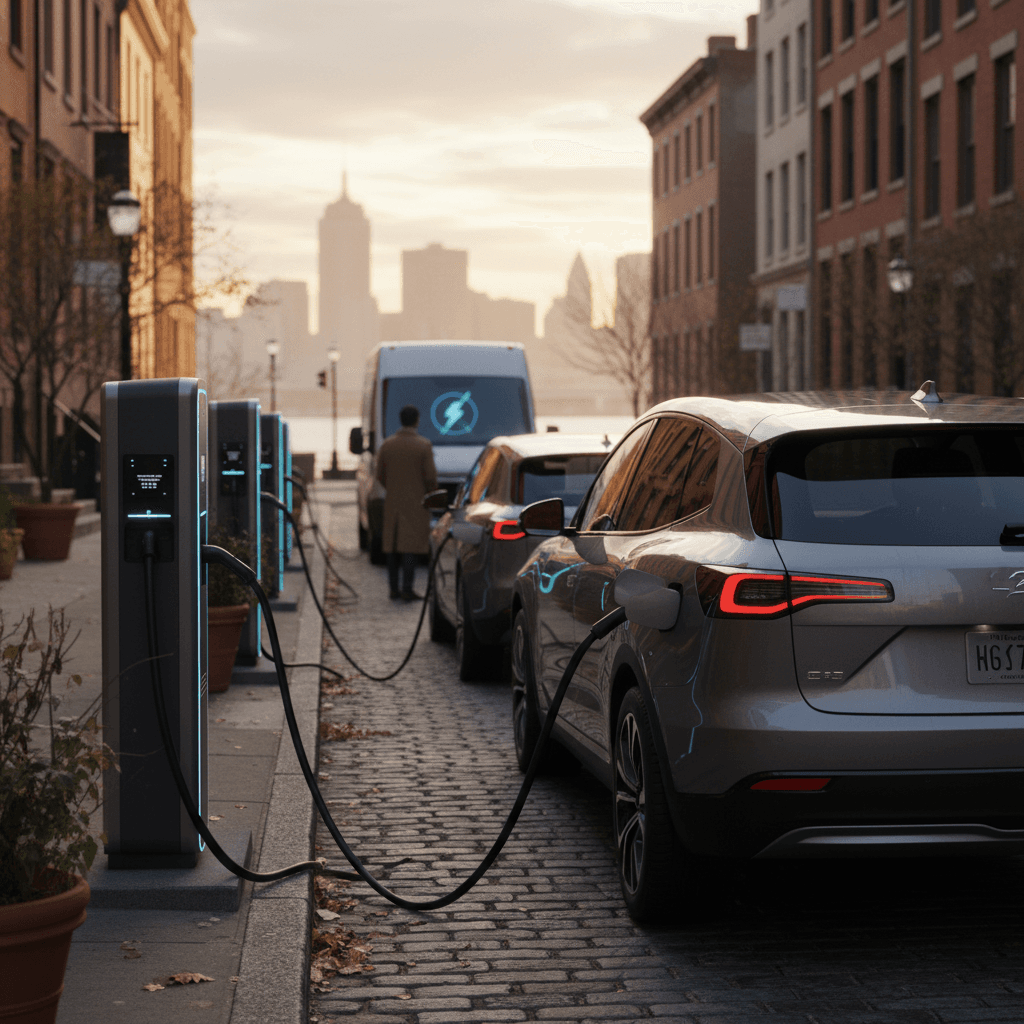
Neighborhood Level 2 EV charging in Pittsburgh
If you live in or often visit dense neighborhoods, Oakland, Shadyside, Lawrenceville, the Strip District, Level 2 charging is your quiet workhorse. You’ll see a mix of public curbside stations, garage‑based chargers, and employer‑provided spots.
Where Level 2 chargers tend to show up
Common patterns inside the city limits
Universities & hospitals
Expect clusters of Level 2 stations at and around institutions like Pitt or major hospitals. Some are public; others are reserved for staff or students.
Parking garages & lots
Downtown, Oakland, and North Shore garages increasingly reserve a row of spaces for EV charging. You’ll pay both parking and charging fees, but the combo can be worth it.
Parks & community sites
New grant‑funded chargers are being installed at city parks and community facilities, improving access for residents without driveways or garages.
Good news for apartment dwellers
City and utility programs supporting EV charging
Behind the scenes, Pittsburgh’s charging map is shaped by a mix of city policy, federal funding, and local utility programs. If you own an EV, or are planning to, these programs can reduce your costs or expand your options.
City of Pittsburgh initiatives
The city is using federal "Investing in America" funds and local matches to build out roughly 100 new public charging stations across about 21 sites. Many will be in parks, garages, and curbside locations, especially in areas with multi‑unit dwellings.
The goal is to make it possible to own an EV even if you can’t install a home charger, critical in older neighborhoods with tight on‑street parking.
Duquesne Light programs
Duquesne Light offers several EV‑related programs, including:
- EV Bonus Cash for letting them know you own an EV.
- An EV‑specific time‑of‑use rate that encourages off‑peak overnight charging with lower kWh prices.
- Rebates for Level 2 and DC fast‑charging stations for non‑residential customers in its territory.
If you’re in DLC territory, it’s worth checking whether you can cut your home‑charging bill or get workplace/tenant stations installed with help from these incentives.
State‑level help, too
How to plan Pittsburgh EV trips with apps and maps
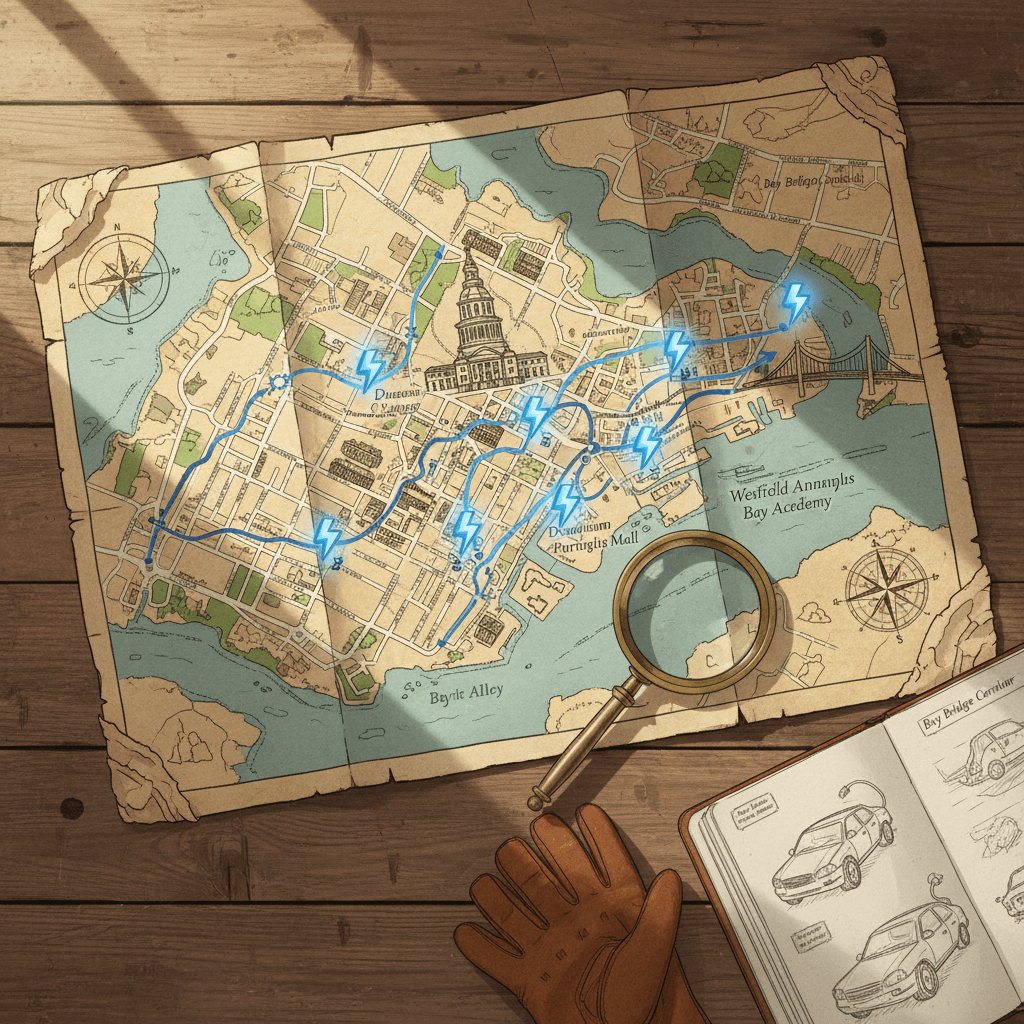
Because coverage varies by neighborhood and network, you’ll want a **digital tool kit** before you rely on EV charging stations in Pittsburgh. Think of it as your backup to the car’s built‑in navigation.
Apps and tools Pittsburgh EV drivers should install
1. PlugShare or A Better Routeplanner
Crowd‑sourced maps like PlugShare help you see every network at once, along with photos, check‑ins, and recent reliability reports. A Better Routeplanner (ABRP) is great for road‑tripping I‑76, I‑79, and I‑80.
2. Your primary network app
If you fast‑charge mostly at EVgo or another specific network, install their app for pricing, membership discounts, and remote start/stop. This also makes it easier to see if a station is down before you arrive.
3. Your utility or city portals
Duquesne Light’s online tools and the city’s sustainability pages are where new programs and publicly funded charger locations typically show up first.
4. Your EV’s native nav
Most newer EVs can route through chargers automatically. In the Pittsburgh region, this is especially useful for plotting a route that avoids long grades or gives you a buffer before a tunnel backup.
Always check recent check‑ins
What it costs to charge an EV in Pittsburgh
Your charging costs in Pittsburgh depend on where and when you plug in. Think in three buckets: home, public Level 2, and DC fast charging.
Home charging
If you have off‑street parking and can install a Level 2 charger, this is usually the cheapest option per mile. A time‑of‑use rate from Duquesne Light can further lower overnight kWh prices.
For many drivers, home charging feels like paying the equivalent of 1–$1.50 per gallon of gas, depending on rates and efficiency.
Public Level 2
Public Level 2 rates vary, it might be free at some workplaces, or priced per kWh or per hour elsewhere. When parking fees are added, public Level 2 often costs more than home, but less than repeated DC fast charging.
DC fast charging
Fast charging is the most expensive way to fuel your EV, but also the quickest. Expect pricing per kWh or per minute, with network memberships offering discounts. Reserve it for road trips, tight schedules, or when home charging isn’t available.
Stack savings where you can
Apartment and street‑parking EV owners: realistic strategies
Pittsburgh’s older housing stock and steep, narrow streets make **home charging tricky** if you don’t have a driveway or garage. That doesn’t mean you can’t drive electric, but you’ll need a plan.
Ways to make EV ownership work without a driveway
1. Treat Level 2 like your weekly “gas station”
Pick 1–2 reliable Level 2 stations near places you already go, gym, grocery store, favorite coffee shop, and plug in for a few hours once or twice a week.
2. Talk to your landlord or HOA
Bring concrete options: hardware cost estimates, Duquesne Light non‑residential rebates, and rough timelines. Showing that incentives can offset installation costs makes the conversation easier.
3. Use fast charging as backup, not your default
Relying on DC fast charging for every fill‑up is expensive and less convenient. Use it when your schedule is tight or weather slashes your range, but aim to handle most charging at Level 2.
4. Watch for new curbside stations
As the city rolls out grant‑funded chargers in park and curbside locations, your closest reliable spot may change. Re‑scan your neighborhood in PlugShare every few months.
Be careful with extension cords
Buying a used EV in Pittsburgh? Don’t forget charging
If you’re shopping for a used EV in western Pennsylvania, whether through a traditional dealer or a digital retailer like Recharged, you should evaluate the **charging situation alongside price, mileage, and battery health**.
Charging questions to answer before you buy
Especially important for used EV shoppers around Pittsburgh
1. How and where will this car charge?
Map your daily routine and identify likely charging spots. If you can’t install home charging, make sure there are reliable Level 2 or DC fast chargers near your home, work, or usual routes.
2. Is the battery healthy enough for local terrain?
Pittsburgh’s hills, winter temperatures, and highway speeds can all reduce effective range. A verified battery health report, like the Recharged Score, helps you understand how much usable range you’ll have in real life.
3. Is everything compatible with local networks?
Most modern EVs use CCS or Tesla’s NACS standard. Check whether you’ll need an adapter for certain networks and whether it’s included in the sale price.
4. Are there incentives or rate plans I can tap?
Factor in state rebates, Duquesne Light programs, and time‑of‑use rates. A slightly higher purchase price can still be a better deal if your charging costs stay low for years.
Recharged specializes in used EVs and includes a Recharged Score Report with verified battery health and fair‑market pricing, plus experts who understand what it’s like to run an EV in a city like Pittsburgh. That support can be a big help when you’re trying to match a car’s range and charging needs to your daily life.
Pittsburgh EV charging FAQ
Frequently asked questions about EV charging in Pittsburgh
Key takeaways for Pittsburgh EV drivers
Pittsburgh isn’t yet overflowing with EV chargers, but it’s also far from a dead zone. If you learn how the different networks fit together, keep a short list of reliable Level 2 and DC fast‑charging spots, and take advantage of Duquesne Light and state programs, day‑to‑day driving is straightforward. The coming wave of city‑backed chargers should only make things easier.
If you’re weighing a used EV in the Pittsburgh area, make charging part of your decision from day one. A vehicle with healthy battery range, compatible fast‑charging hardware, and a clear plan for where you’ll plug in will feel as simple as a gas car, just cleaner and cheaper to run. Recharged can help you compare options, understand battery health with the Recharged Score, arrange financing and trade‑ins, and have your next EV delivered to your driveway, ready for its first charge in the Steel City.