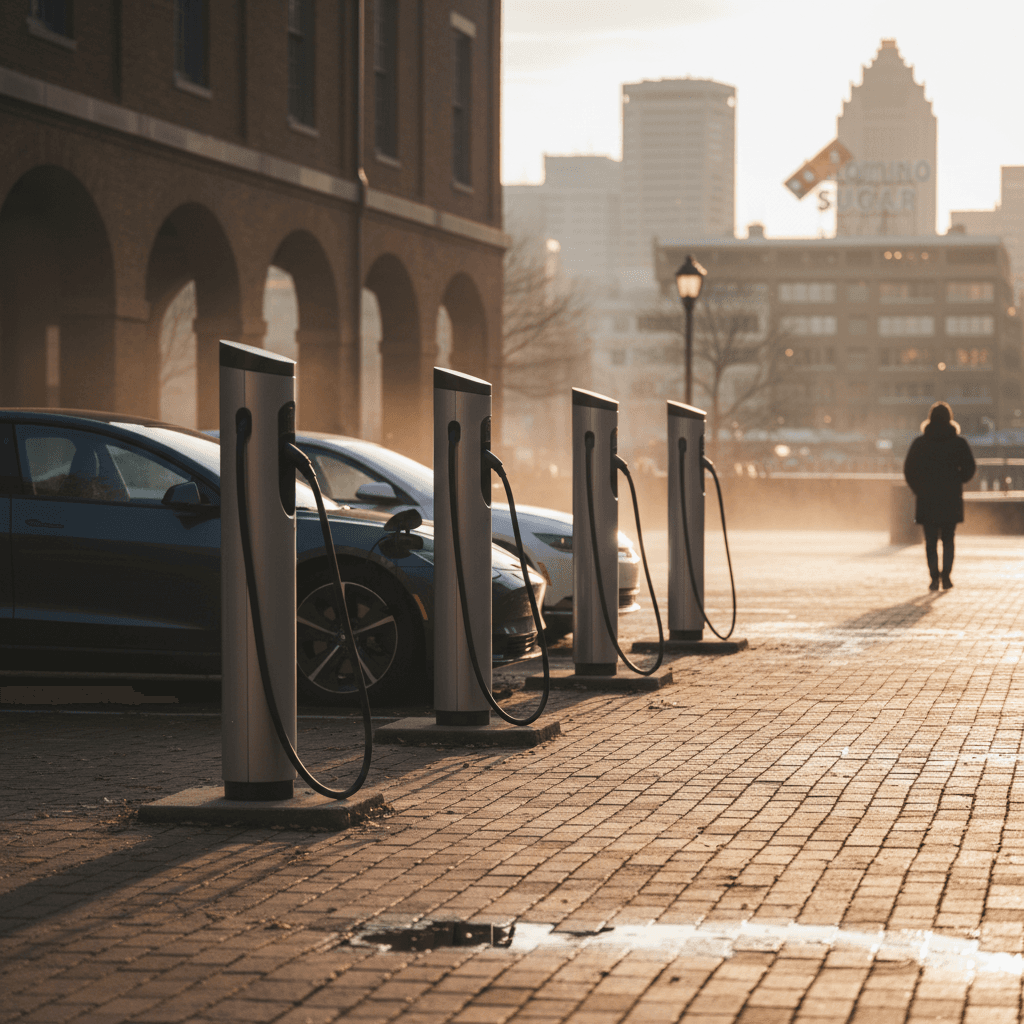
If you drive an electric car, or you’re thinking about buying a used EV, on Long Island, EV charging stations on Long Island are no longer a novelty. The region now accounts for more than a quarter of New York State’s EV registrations, and public charging is racing to keep up. This guide explains where to plug in, how fast you can charge, what it costs, and how to make Long Island’s infrastructure work for your daily commute and weekend escapes.
Long Island is an EV hotspot
Why Long Island EV charging is different
Long Island’s growing EV and charging landscape
Compared with much of the country, Long Island EV drivers benefit from dense population, strong incentives, and growing utility support. That combination makes public charging far more accessible than it was even a few years ago, especially around commuter rail stations, downtowns, shopping centers, and waterfront destinations.
Traffic matters more than maps
EV charging basics on Long Island
Before you hunt for specific EV charging stations on Long Island, it helps to understand the three main charging levels you’ll see in apps and on signage. Knowing what you’re looking at will tell you whether a stop is suited for a quick top-up or an overnight charge.
Common charging options you’ll see on Long Island
How Level 1, Level 2, and DC fast charging compare in speed and best use case.
| Type | Connector on Long Island | Typical Power | Typical Use Case | Approx. Speed* |
|---|---|---|---|---|
| Level 1 (120V) | Standard household outlet | 1–1.4 kW | Emergency/overnight at home | 2–5 miles of range per hour |
| Level 2 (240V) | J1772 or Tesla NACS | 6–19 kW | Homes, workplaces, public lots | 20–40 miles of range per hour |
| DC Fast Charging | CCS, NACS (Tesla) | 50–350 kW | Highway corridors, major hubs | Up to 150–200+ miles in ~30–45 min |
Use this as a quick cheat sheet when you’re browsing PlugShare, ChargePoint, or other maps.
What’s happening with connectors?
Where to find EV charging stations on Long Island
Long Island’s chargers are clustered where drivers already spend time: near the Long Island Rail Road, downtown main streets, shopping centers, marinas, and major parkways. The fastest way to find them is through apps that aggregate stations across networks.
Best tools to locate charging stations on Long Island
Use more than one app so you’re covered if a network’s map is slow or down.
PlugShare
Crowd-powered coverage. PlugShare shows virtually every public charger on Long Island, regardless of network.
- User check-ins and photos reveal whether sites are easy to access.
- Filter by connector (CCS, NACS, CHAdeMO) and power level.
- Helpful for smaller municipal or hotel chargers that don’t show up elsewhere.
ChargePoint & other network apps
Real-time status for major networks.
- Apps like ChargePoint, EVgo, and Electrify America show live availability and pricing.
- Good for frequent commuters who rely on the same hubs.
- Often required to start a session or unlock lower pricing tiers.
In-car navigation & Google Maps
Plan around Long Island traffic.
- Most EVs integrate charging stops into route planning.
- Google Maps and Apple Maps increasingly show real-time plug availability.
- Handy when you’re already navigating busy parkways like the LIE or Sunrise Highway.
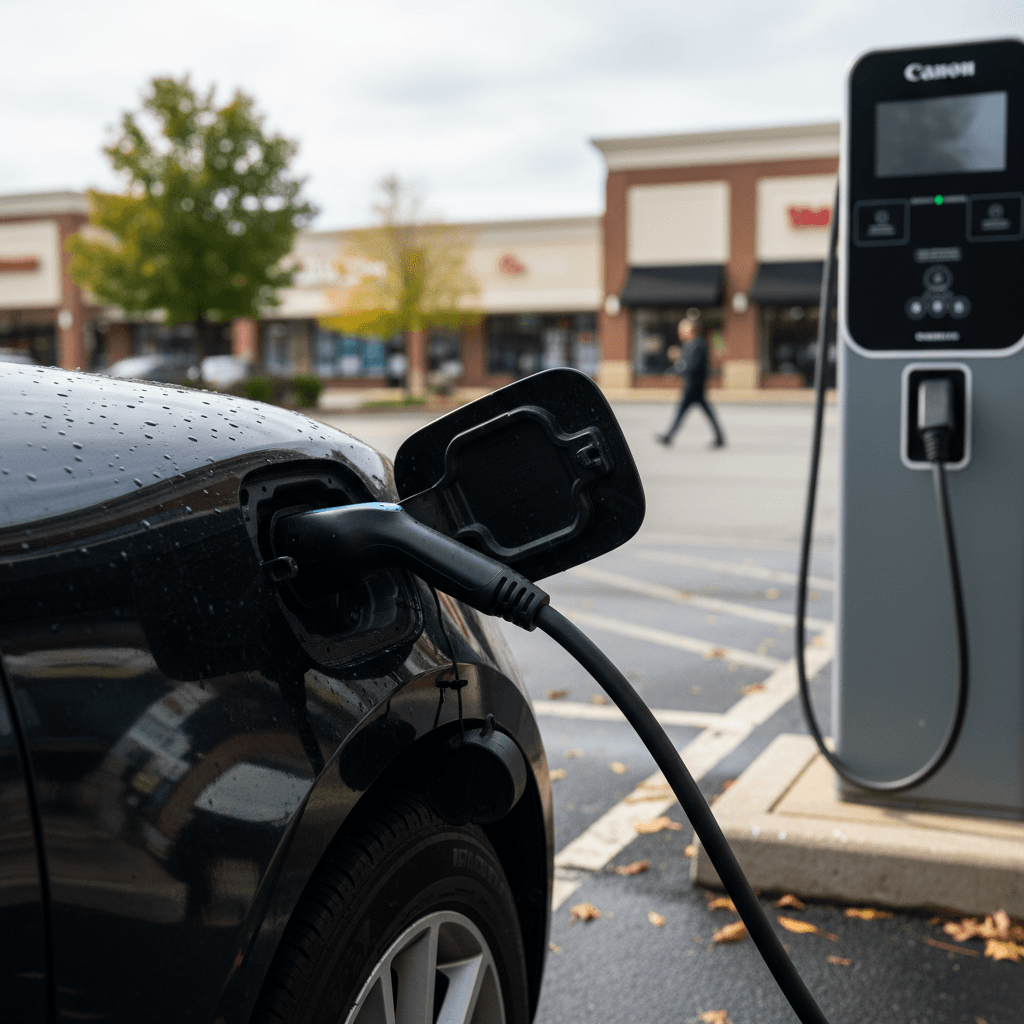
Typical Nassau County locations
- Commuter parking at LIRR stations like Mineola, Garden City, and Rockville Centre.
- Municipal lots in towns such as Hempstead, North Hempstead, and Oyster Bay.
- Shopping centers and big-box retail along Old Country Road and Northern State Parkway corridors.
- College campuses and hospitals that have added visitor charging as a perk.
Typical Suffolk County locations
- Park-and-ride lots near the LIE and Sunrise Highway.
- Downtowns like Patchogue, Huntington, Riverhead, and Port Jefferson.
- Tourist-heavy areas around the North Fork and Hamptons (often a mix of hotel and municipal chargers).
- Rest areas and service plazas where EVolve NY or other DC fast chargers are being installed.
Check parking rules before you plug in
Major charging networks serving Long Island
You’ll see a mix of national networks and utility- or state-backed programs across Long Island. Most drivers end up using two or three networks regularly, depending on commute patterns and weekend travel.
Key public charging providers on Long Island
Signing up with a few networks up front makes life much easier on busy days.
ChargePoint, EVgo, Electrify America & others
Private networks at workplaces, malls, and highway stops.
- ChargePoint has a strong footprint in office parks, hospitals, and municipal lots.
- EVgo and Electrify America focus more on DC fast charging in high-traffic retail corridors.
- Pricing usually varies by time of day, power level, and membership status.
EVolve NY & state-backed infrastructure
New York’s fast-charging backbone.
- EVolve NY sites, funded through the New York Power Authority, add 50 kW+ fast chargers along key routes connecting Long Island to the rest of the state.
- They’re designed for highway-style stops, think 20–40 minutes instead of all-day parking.
- Helpful when you’re leaving the Island toward the Hudson Valley, upstate, or New England.
Good news for non-Tesla drivers
Home and workplace charging on Long Island
With Long Island’s stop-and-go traffic and dense neighborhoods, Level 2 charging at home or work is often the difference between a low-stress EV and constant range anxiety. Fortunately, state and federal programs can soften the up-front cost of installing a charger, especially in multifamily buildings and workplace lots.
Steps to set up practical daily charging
1. Confirm your panel and parking situation
If you own a home, talk with a licensed electrician about your service panel capacity and the best spot for a 240V circuit. If you rent or live in a co-op/condo, check your building’s policies and whether parking spaces are deeded, assigned, or shared.
2. Choose the right Level 2 charger
Most Long Island drivers are fine with a 32–40 amp wall-mounted charger, which adds roughly 25–35 miles of range per hour. Look for Wi‑Fi control, scheduling for off-peak hours, and a cable long enough to reach your preferred parking spot.
3. Explore New York and federal incentives
New York’s programs, including Charge Ready NY 2.0, can help reduce installation costs for Level 2 chargers at multifamily buildings and workplaces. On top of that, federal credits can cover a portion of charger and installation costs in eligible census tracts.
4. Talk to your employer or building owner
If you don’t control the property, ask HR or property management about adding a few shared chargers. Citing incentives and growing EV adoption on Long Island can help make the business case.
5. Use scheduled charging to save money
Once you have reliable daily charging, use your car or charger app to schedule sessions in lower-demand hours at night. That smooths out grid demand and can align with lower time-of-use rates or future rate designs.
Leverage incentives for apartments and workplaces
What it costs to charge on Long Island
Charging prices on Long Island depend on where and how fast you plug in. Home charging is typically cheapest on a per‑mile basis, while DC fast charging commands a premium for speed and convenience, especially at peak times and popular locations.
Typical home charging costs
- Residential electricity rates in New York are higher than the national average, but home charging still tends to beat gasoline on cost per mile.
- Assuming mid‑teens cents per kWh effective cost, many EVs see the equivalent of paying roughly $1–$1.50 per gallon of gasoline.
- Charging overnight can help align your usage with lower‑demand periods, which supports the grid and can reduce future rate pressure.
Public Level 2 and DC fast costs
- Public Level 2 on Long Island may be free (subsidized by a municipality or employer), kWh‑based, or time‑based, commonly a few dollars for a multi‑hour session.
- DC fast charging is priced higher, often comparable to or slightly below gas on a per‑mile basis, depending on network and time of day.
- Some networks offer memberships or subscriptions that trim per‑kWh or per‑minute rates for frequent users.
Watch for idle fees and time limits
Planning Long Island trips with an EV
From beach days in the Hamptons to fall weekends on the North Fork, Long Island road trips are where charging strategy really matters. Distances aren’t extreme, but traffic, parking scarcity, and seasonal demand can magnify small planning mistakes.
Checklist for stress-free EV trips on and off Long Island
1. Start with a realistic state of charge
Aim to leave home with at least 70–80% charge if you’re heading east of Patchogue or north of Huntington. That buffer covers traffic jams, detours, and potential waits at busy chargers.
2. Identify primary and backup charging stops
Use PlugShare or your in‑car navigation to pick a main charging stop plus at least one backup within 10–15 miles. On busy summer weekends, backups are essential in the Hamptons, Montauk, and ferry terminals.
3. Check recent user check-ins
Scroll recent check-ins and photos before you commit to a station. Long Island’s salty air and busy parking lots can occasionally mean damaged cables or blocked spaces that haven’t been fixed yet.
4. Confirm parking and access rules
Some chargers are in gated resort lots, private garages, or permit‑only town beaches. Make sure you’re allowed to park and charge as a visitor before you count on that stop.
5. Plan food and rest stops around charging
Instead of seeing charging as lost time, align it with meals, groceries, or a beach walk. This matters most for 30–45 minute DC fast‑charging sessions.
6. Consider ferries and off‑Island travel
If you’re heading to New England via Orient Point or Port Jefferson, map out DC fast chargers beyond the ferry terminals as well, especially in Connecticut and Rhode Island.
Traveling to NYC or Upstate?
Tips for used EV buyers on Long Island
With Long Island leading New York in EV adoption, the used EV market is maturing quickly. That’s great news if you want to go electric without paying new‑car prices, but it also means you’ll see a wide range of battery conditions and charging capabilities.
What Long Island drivers should check before buying a used EV
Battery health and charging access matter more here than in many markets.
Verified battery health
Long Island stop‑and‑go traffic and hot summers can stress older packs. Ask for a battery health report and pay attention to real‑world range versus the original EPA rating.
Charging speed limits
Some older EVs top out at slower DC fast‑charging speeds or limited Level 2 rates. If you plan frequent trips off the Island, make sure the car can accept at least mid‑tier DC fast‑charging power.
Daily charging fit
Match the car’s range to your real commute between Nassau/Suffolk and New York City, plus errands and school runs. In heavy traffic, a 40‑mile commute can feel like 60 miles of energy use.
How Recharged can help
If you’re selling or trading in a used EV, Long Island’s strong demand can work in your favor. Recharged offers financing, trade‑in options, instant offers or consignment, and nationwide delivery, backed by EV‑focused support so you’re not left guessing about range or charging performance.
Long Island EV charging FAQ
Frequently asked questions about EV charging stations on Long Island
Bottom line: driving electric on Long Island
Long Island has quickly evolved from an EV outlier to a leader. With strong adoption, expanding public networks, and targeted state incentives, EV charging stations on Long Island are becoming part of the everyday landscape, from LIRR lots to downtown main streets and beach towns. If you pair a realistic charging plan with the right vehicle, electricity can easily cover your commute and weekend getaways.
Whether you’re ready to buy your first used EV or upgrade to something with more range, Recharged is built to make that transition smoother. Every vehicle comes with a battery health report, fair pricing, and EV‑savvy support, so you can focus on enjoying the drive, not worrying about where to plug in.