Trying to figure out how practical an electric vehicle is in Hoboken usually comes down to one question: where will I charge if I don’t have a driveway? The good news is that Hoboken has quietly built one of New Jersey’s most extensive urban EV charging networks, with curbside stations, garage options, and DC fast chargers spread across the square-mile city. This guide walks you through how EV charging stations in Hoboken work in 2026, what they cost, and how to build a charging routine that actually fits city life.
Hoboken is punching above its weight
Overview: EV charging in Hoboken today
Hoboken’s public charging network at a glance
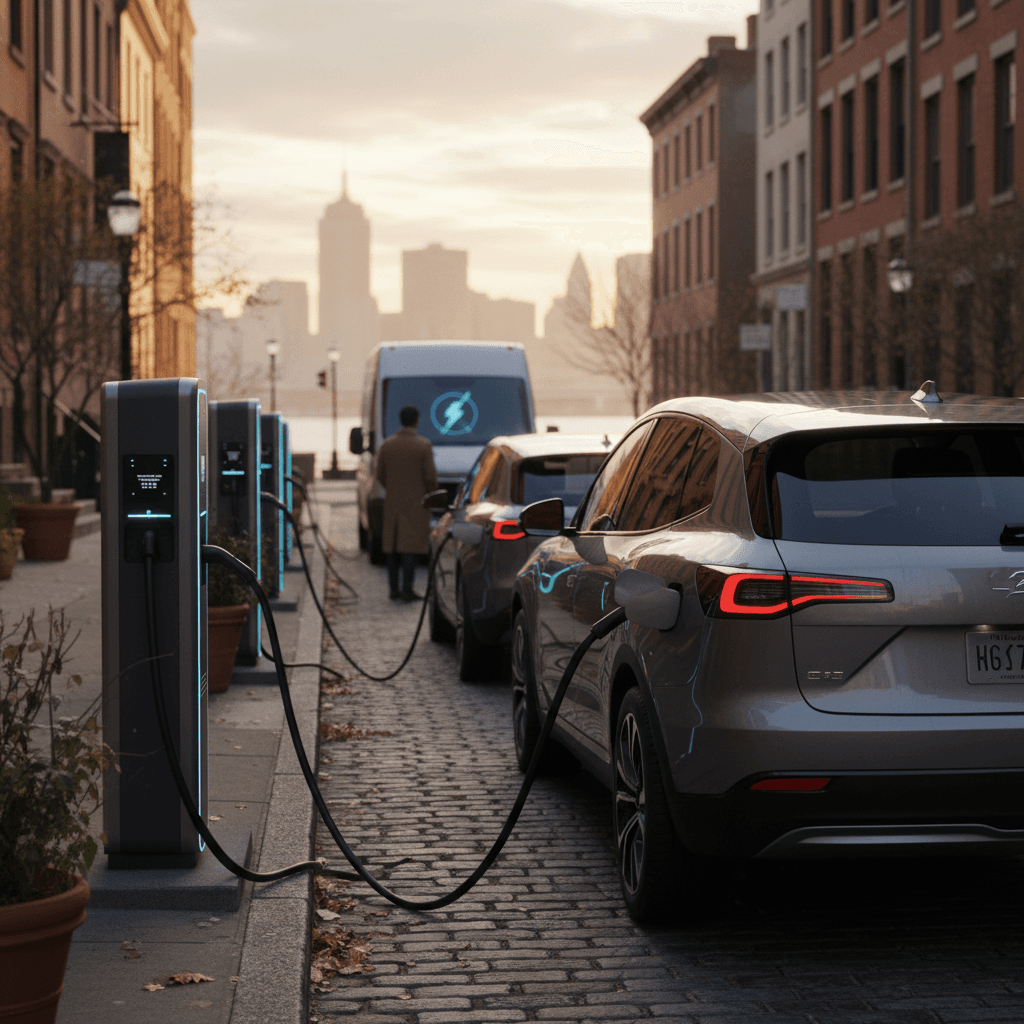
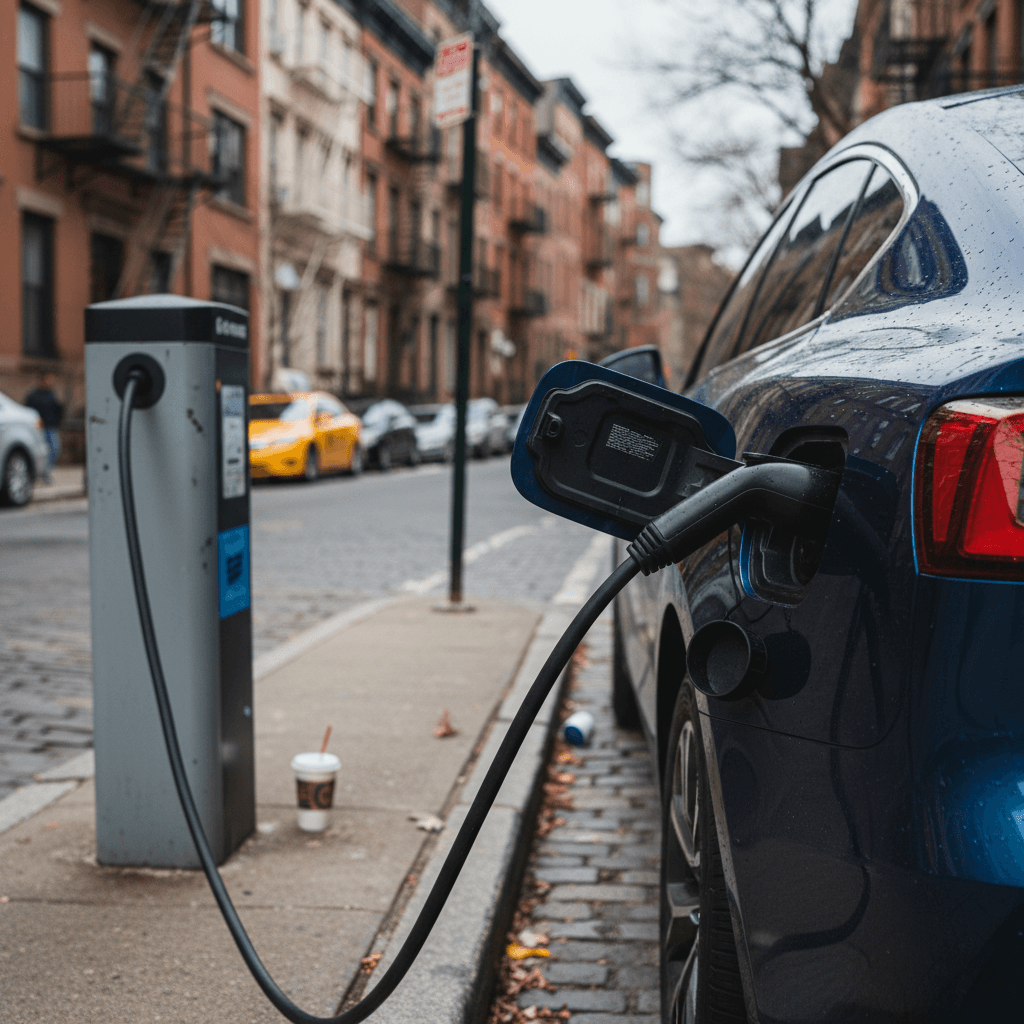
Since 2021, Hoboken has layered curbside Level 2 chargers onto neighborhood blocks and added DC fast charging on key streets like Newark Street and Washington Street. The city has also shifted operations of many on‑street stations to Jolt Charge Inc., while garage chargers run on familiar networks like ChargePoint. For you as a driver, that means you’ll typically interact with one of three things: Jolt curbside chargers, DC fast chargers at prominent corners, or Level 2 stations inside municipal garages.
Use the city’s map as your base layer
Where to find EV charging stations in Hoboken
High‑usage EV charging spots in Hoboken
These locations have seen especially strong demand in recent years.
Newark St between Grand & Adams
Home to some of Hoboken’s fastest DC chargers, this corridor is a workhorse location that sees heavy daily use.
- Great for quick top‑ups
- Easy in‑and‑out from Observer Highway
- Popular with commuters and ride‑hail drivers
1st St between Washington & Hudson
Curbside chargers near the heart of downtown, close to restaurants, the waterfront, and PATH access.
- Ideal if you’re grabbing dinner or running errands
- Spots can turn over quickly at busy times
10th St at Columbus Park
Neighborhood‑scale charging near a major park.
- Useful for residents on the north side
- Combine a charging session with time at the park
Beyond the headline locations, you’ll find curbside Jolt stations scattered along streets like Fourth Street near Garden, on Monroe and Jackson near resiliency parks, and on key north–south corridors. Municipal garages, Garage B, Garage D, and Midtown, offer ChargePoint Level 2 stations that can be a lifesaver during busy weekends or snow emergencies when curbside space is tight.
Watch the curbside signage
DC fast charging vs Level 2 in Hoboken
DC fast charging in Hoboken
Hoboken’s DC fast chargers sit on major corridors like Newark Street and Washington Street, plus sites near resiliency parks. Power levels around 50–125 kW mean you can usually go from roughly 20% to 80% in about 30–60 minutes, depending on your car.
- Best for road trips, long commutes, or when you’re truly low on charge
- More expensive per kWh than Level 2
- Not ideal to use every day if you want to minimize battery wear
Level 2 charging in Hoboken
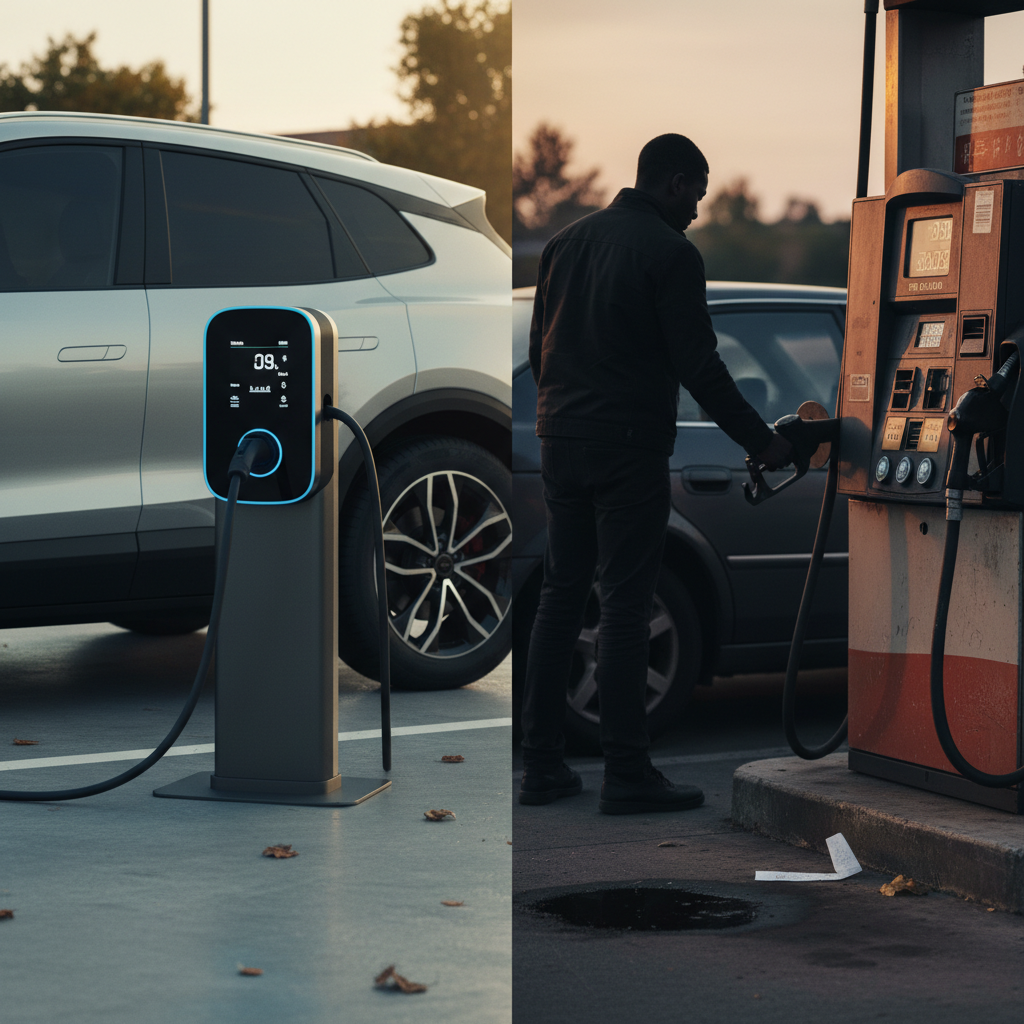
Level 2 chargers, both curbside and in garages, typically provide around 10 kW of power. That translates to roughly 20–25 miles of range added per hour for many EVs, which is plenty for routine city driving.
- Best for topping up while you’re at home, working, or out for a few hours
- Lower cost per kWh than DC fast charging
- Gentler on battery health for long‑term ownership
Match the charger to your day, not just your battery
How to use Jolt and other public chargers
Step‑by‑step: starting a charge in Hoboken
1. Install the right apps first
Download the <strong>Jolt</strong> app for curbside on‑street chargers and the <strong>ChargePoint</strong> app for municipal garages. Create accounts and add a payment method before you’re sitting at 5% on a cold night.
2. Confirm connector compatibility
Most public stations in Hoboken use the North American standard connectors: <strong>J1772 for Level 2</strong> and <strong>CCS or NACS for fast charging</strong>. If you drive a Tesla without a native NACS port or an older model with only CHAdeMO support, make sure you have the proper adapter in your trunk.
3. Start the session in the app
With Jolt or ChargePoint, you’ll typically select the station or port number in the app, then hit "Start". Some stations also allow tap‑to‑pay with an RFID card or NFC wallet, but the app gives you better control and session history.
4. Plug in and verify charging
Insert the connector firmly into your charge port, listen for the latch click, and check your car’s dash or app to verify that it’s actually charging. In the winter, your EV might briefly pre‑condition the battery before ramping up.
5. Move your car when you’re done
Once you’ve hit your target charge, often 70–80% is enough, unplug and move your car so someone else can use the space. In Hoboken, <strong>sitting at 100% in a curbside EV spot is a fast way to annoy your neighbors</strong> and potentially draw enforcement attention.
6. Log your favorite spots
Use your apps’ favorite features to save stations that are consistently reliable, easy to access, and fairly priced. Over time you’ll build your own personalized map of go‑to chargers around town.
Don’t rely on a single network
How much EV charging costs in Hoboken
Typical public charging costs in Hoboken (2026)
Actual pricing can change; always confirm current rates in the relevant app before plugging in.
| Location / type | Provider | Power level | Approx. pricing | Best use case |
|---|---|---|---|---|
| Curbside Level 2 on-street | Jolt | ~10 kW | ≈ $0.35/kWh + $1 connection | Routine top‑ups while you’re home or out for a few hours |
| On-street DC fast | Jolt or partner network | 50–125 kW | ≈ $0.50/kWh + $1 connection | Quick charge when you’re low or leaving town |
| Garage Level 2 (B, D, Midtown) | ChargePoint | ~7–10 kW | App‑set rate (often similar to $0.30–0.40/kWh) | Longer stays, bad weather, or Green Pass parking |
| Other regional public Level 2 | Various | 6–11 kW | Often $0.25–0.40/kWh | Topping up while shopping or working in nearby towns |
Prices shown are directional, based on city‑published Jolt rates and common Level 2/DC fast pricing patterns in early 2026.
Because Hoboken’s chargers are municipally coordinated but privately operated, the city can negotiate competitive rates, especially for Level 2. Still, you’ll usually pay more per kWh at public stations than you would plugging into a residential off‑peak rate in New Jersey. On the flip side, you avoid the cost and hassle of installing a home charger in a building you don’t own, which is part of why public charging makes sense in dense cities.
Think in “cost per mile,” not just price per kWh
Garage charging and Hoboken’s Green Pass program
If you’re a Hoboken resident with an on‑street parking permit, the city’s Green Pass program is one of the most under‑appreciated tools for making EV ownership work without a driveway. Approved EV and plug‑in hybrid owners can get discounted long‑stay parking while charging in three municipal garages: Garage B (2nd Street), Garage D (Hudson Street), and Midtown Garage (4th Street). Chargers in these garages are ChargePoint Level 2 units with standard J1772 plugs.
How to use the Green Pass EV charging program
1. Confirm you have a resident permit
You’ll need a valid <strong>Hoboken Resident On‑Street Parking Permit</strong> to qualify. If you’re new to town, start by getting that squared away with the city first.
2. Apply for Green Pass online
Fill out the city’s online Green Pass application with your EV details. Once approved, your plate and vehicle info are added to the garage access system so discounts apply automatically when you exit.
3. Park and plug in at a participating garage
Look for EV‑designated spots in Garage B, Garage D, or Midtown. Use the ChargePoint app to start a Level 2 charging session as you normally would.
4. Take advantage of long‑stay discounts
Green Pass reduces the cost of up to eight hours of parking while you charge, after which normal garage rates kick in. That can make an overnight or full‑workday session much more affordable.
Why the garages matter
Planning your charging routine without a driveway
For Hoboken residents
Your goal is to treat charging like you treat groceries or laundry, a regular errand, not a daily emergency. Many residents find a cadence that looks like this:
- One or two Level 2 sessions per week while they’re home in the evening
- Occasional DC fast charge before a road trip or heavy‑driving week
- Backup plan using a municipal garage when weather or events disrupt curbside space
Once you know which stations near you are most reliable, you can plan around their typical availability windows, late nights, early mornings, or midday lulls.
For building owners & HOAs
If you manage a condo or rental building in Hoboken, your residents are already bumping up against public charging constraints. Adding even a handful of shared Level 2 spaces in your garage can make your building dramatically more attractive to high‑income EV drivers.
Pair those with utility make‑ready incentives from PSE&G and you may be able to minimize upfront electrical upgrade costs while future‑proofing your property.
Block out recurring “charging appointments”
Charging strategies for commuters and visitors
Smart charging playbooks by use case
Different patterns of life in and around Hoboken call for slightly different charging habits.
NJ suburb commuter
If you’re driving in from the suburbs and parking in Hoboken for work:
- Use garage Level 2 if you’ll be parked 6–8 hours
- Keep public on‑street DC fast chargers free for locals in a pinch
- Do your heavy charging at home on a residential rate when possible
PATH & ferry users
Live in Hoboken but commute by train or ferry?
- Top up at curbside Level 2 near your home the night before
- Consider a once‑a‑week DC fast session if your weekly miles are high
- Garage charging can cover weeks when street space is tight
Weekend visitors
Driving in for dinner, a game, or a weekend stay:
- Target garage Level 2 so you’re not competing with residents
- Use PlugShare or similar apps to check real‑time availability
- Skip charging entirely if you have plenty of range for the round‑trip
Respect that locals live on public charging
EV charging tips for Hoboken used‑EV buyers
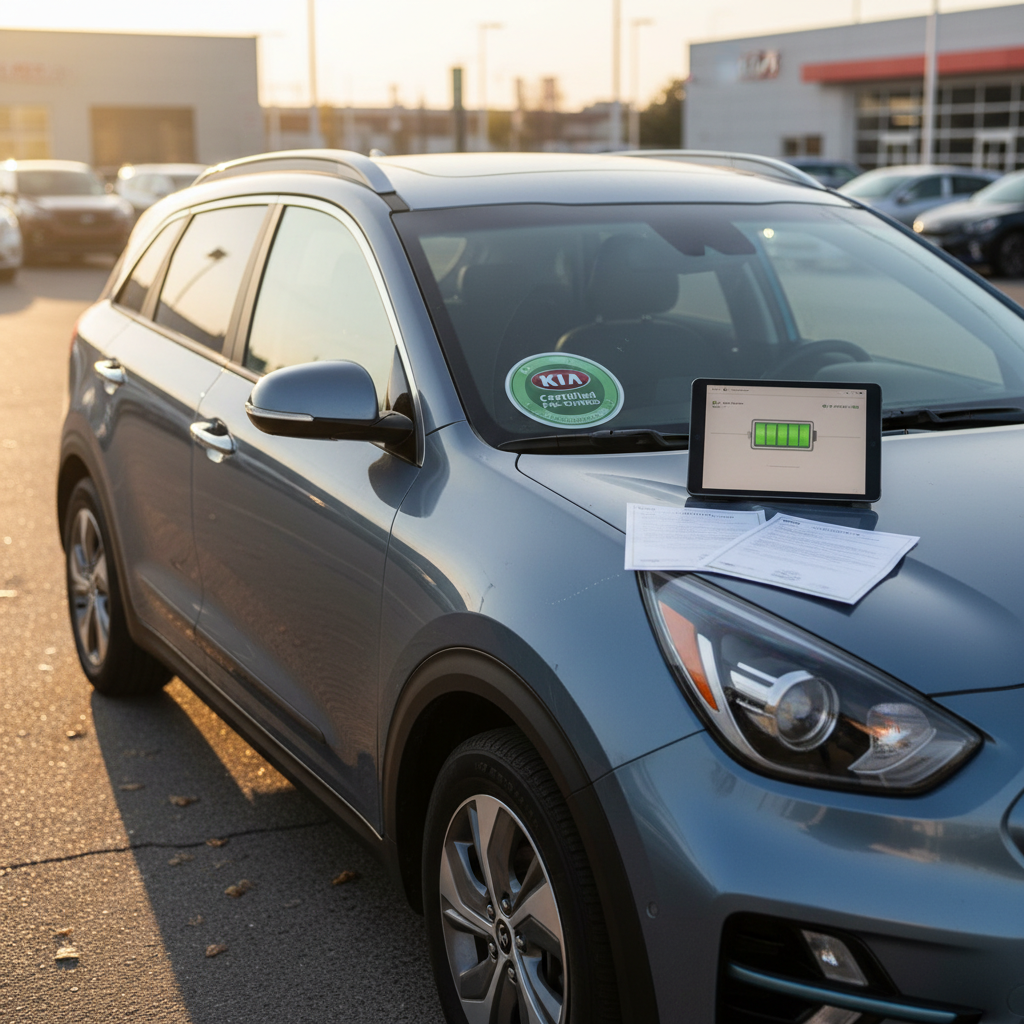
If you’re shopping for a used EV in or around Hoboken, charging access isn’t just an afterthought, it should shape which car you choose and what you pay. At Recharged, every used EV includes a Recharged Score battery health report and detailed charging specs so you can sanity‑check how the car will fit into a public‑charging lifestyle before you ever sign paperwork.
Checklist: choosing a used EV that works with Hoboken’s charging network
Confirm DC fast charging compatibility
Make sure the car supports <strong>CCS or NACS DC fast charging</strong>, since that’s what you’ll encounter in and around Hoboken. Older CHAdeMO‑only models can be cheaper upfront but are increasingly inconvenient.
Check onboard AC charging speed
Look for at least a <strong>7–11 kW onboard charger</strong> so you can take full advantage of Hoboken’s 10 kW Level 2 stations. Slower 3.3 kW onboard chargers will tie up spots for much longer.
Review battery health
In a city where you may rely on public charging more often, a healthy battery matters. A detailed battery health report, like the Recharged Score, helps you avoid cars with significant hidden degradation.
Think honestly about your weekly miles
Layer your real mileage, errands, commuting, weekend trips, onto Hoboken’s charging map. A smaller‑battery city EV might be fine if you drive 40–60 miles a week, but less forgiving if you frequently leave the metro area.
Plan your first‑week charging routine
Before you buy, sketch where you’d charge in your first week with the car: two specific curbside Level 2 stations, one backup garage, and one DC fast charger for emergencies.
How Recharged can help Hoboken drivers
Ready to find your next EV?
Browse VehiclesFAQ: EV charging stations in Hoboken
Common questions about EV charging in Hoboken
Bottom line: can an EV work in Hoboken?
If you’re used to a private driveway and a home wallbox, the idea of relying on EV charging stations in Hoboken can feel like a leap of faith. But the combination of dense curbside Level 2 coverage, targeted DC fast chargers, and flexible garage options adds up to a surprisingly workable ecosystem, especially if you’re proactive about planning your routine.
The real question isn’t whether Hoboken has enough chargers; it’s whether your next EV is aligned with how those chargers are distributed and how you actually drive. That’s where resources like a Recharged Score battery health report, clear charging specs, and EV‑savvy guidance become powerful. If you’re considering a used EV for life in Hoboken or the broader New York metro area, Recharged can help you match the right car to the city’s evolving charging network so you spend more time enjoying electric driving, and less time hunting for your next kilowatt.