If you drive an electric vehicle in the Midlands, you’re probably asking a simple question: where are the EV charging stations in Columbia, SC, and are there enough of them to make daily driving and road trips realistic? The answer is increasingly yes, especially if you understand how public charging fits together with home charging and pick an EV that matches Columbia’s infrastructure.
Columbia’s EV charging story, in brief
Why EV charging in Columbia, SC is getting easier
South Carolina has moved from EV laggard to quiet contender. By late 2025, the state had roughly 1,800+ public charging ports, with Columbia and Greenville seeing the fastest growth. In Columbia, city council approved grant funding to install new Level 2 and DC fast chargers at downtown garages, the public library, and Columbia Metropolitan Airport. That means more options in places where you’re already parking for work, flights, or errands.
EV charging snapshot: Columbia and South Carolina
Look for PLUGinSC signs
Where to find EV charging stations in Columbia, SC
Public EV charging stations in Columbia, SC are concentrated in a few predictable zones: downtown garages, major shopping corridors, the university area, and key highway exits. Think of them in four buckets, downtown, airport, campus/medical, and retail corridors.
Columbia EV charging hotspots
Focus on these areas first when you need a plug
Downtown garages & library
City‑owned garages like the Short Street and Fifth & Walnut facilities are adding a mix of Level 2 and DC fast chargers. The Columbia Public Library lot is slated to host Level 2 ports as well, ideal if you’re downtown for several hours.
- Walking distance to offices, restaurants, and Main Street
- Best for workdays, meetings, and evening events
Columbia Metropolitan Airport (CAE)
The airport is planning multiple DC fast chargers in its parking areas. That’s useful for quick top‑ups before or after flights, rideshare drivers, and anyone shuttling between Columbia and Charleston or Greenville.
- Expect higher power DC fast chargers
- Likely pay‑per‑use with network apps or credit cards
University & medical district
The USC campus and nearby hospitals are natural early adopters. You’ll find Level 2 charging in select campus and medical parking structures, sometimes restricted to permit holders during the day but open to visitors after hours.
- Great for students, staff, and long appointments
- Check access rules and time limits in your app
Retail corridors & highway exits
National networks have planted Level 2 and DC fast chargers at big‑box stores, grocery chains, and travel centers along I‑20, I‑26, and I‑77. Expect ChargePoint, Electrify America, EVgo, and increasingly Tesla hardware.
- Good for road trips and weekend errands
- Often 24/7 access with restrooms and food nearby
Don’t trust your nav system alone
Level 1, Level 2, and DC fast charging in Columbia
Level 1: Household outlets
Level 1 uses a standard 120‑volt outlet, the kind already in your garage. It adds roughly 3–5 miles of range per hour. That’s painfully slow for road trips but fine if:
- You drive 20–30 miles a day or less
- You can leave the car plugged in overnight
- You live in a single‑family home with easy outlet access
In Columbia’s warm climate, Level 1 can work for short commutes, but most owners quickly graduate to faster options.
Level 2 & DC fast: What you’ll actually use
Level 2 runs on 240 volts and typically adds 20–40 miles of range per hour, depending on your car and the charger amperage. It’s the backbone of both home and workplace charging.
DC fast charging skips the onboard charger and feeds high‑voltage DC directly to your battery. In South Carolina, ports rated from 50 kW up past 150 kW are common, giving you:
- 10–80% charge in about 30–45 minutes on many modern EVs
- Quick top‑ups along I‑20, I‑26, and I‑77
Compatibility check
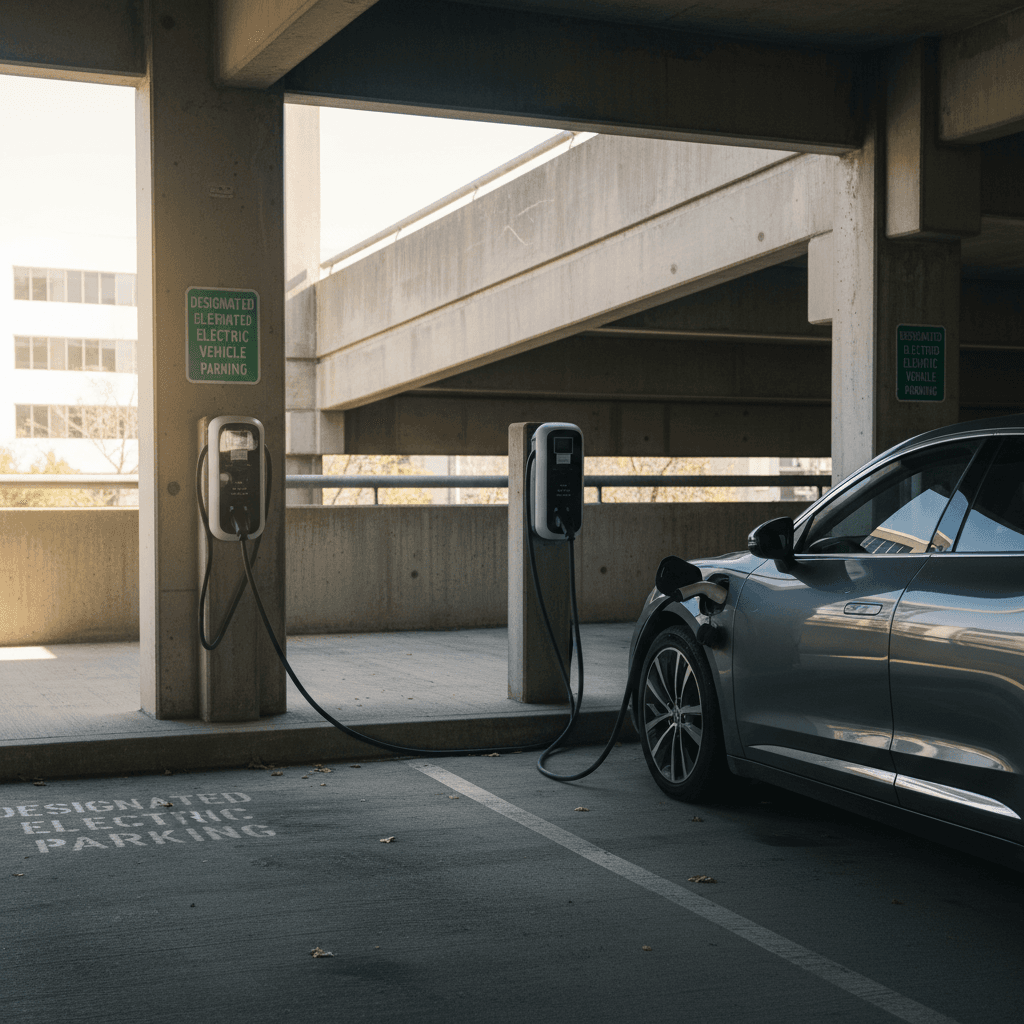
Key public charging networks in Columbia and how they compare
Columbia doesn’t rely on a single provider. You’ll see ChargePoint equipment in office parks, Electrify America and EVgo sites along highway retail, plus Tesla Superchargers and Destination Chargers that are slowly opening up to more vehicle brands. Reliability and experience vary, so it helps to know what you’re plugging into.
Major EV charging networks you’ll see around Columbia, SC
These are the networks most Columbia drivers encounter on day trips and highway runs.
| Network | Typical locations | Fast charging? | Common plug types | How to pay |
|---|---|---|---|---|
| ChargePoint | Office parks, city garages, hospitals, some retail | Some DC fast, lots of Level 2 | J1772, CCS, some NACS | App, RFID card, some tap‑to‑pay |
| Electrify America | Big‑box stores and highway exits | Yes, 150 kW+ at many sites | CCS, limited CHAdeMO | App, credit card at station |
| EVgo | Grocery stores, urban retail centers | Yes, 50–350 kW depending on site | CCS, CHAdeMO, growing NACS | App, tap‑to‑pay |
| Tesla | Supercharger sites, hotels, shopping centers | Yes, 150–250 kW Superchargers | NACS (Tesla), some CCS access for non‑Teslas | Tesla app or in‑car for Tesla; Tesla app for others |
| Hotel & workplace | Hotels, apartments, corporate campuses | Mostly Level 2 only | J1772, some Tesla wall connectors | Guest access codes, front desk, or free for tenants |
Always confirm plug type, power level, and pricing in the network app before driving out of your way.
Download at least two apps
How much does EV charging cost in Columbia?
Your per‑mile cost in Columbia depends less on the car and more on where you plug in. Broadly, think in three buckets: home, public Level 2, and DC fast charging. In South Carolina, home is usually the cheapest, DC fast is the priciest, and public Level 2 sits in the middle.
- Home charging: Around $0.12–$0.18 per kWh in much of South Carolina, especially if you’re on a time‑of‑use plan and charge overnight. That’s often the equivalent of paying $1–$1.50 per gallon of gas in terms of cost per mile.
- Public Level 2: Prices vary widely, anywhere from free at a hotel to roughly $0.20–$0.30 per kWh or by the hour in garages and retail lots.
- DC fast charging: Convenience costs money. In South Carolina, you’ll often see effective rates around $0.40–$0.50 per kWh, with idle fees if you stay plugged in after you’re done. Still cheaper than gas per mile, but not by a huge margin.
Watch for idle fees
Home charging in Columbia: when it beats public stations
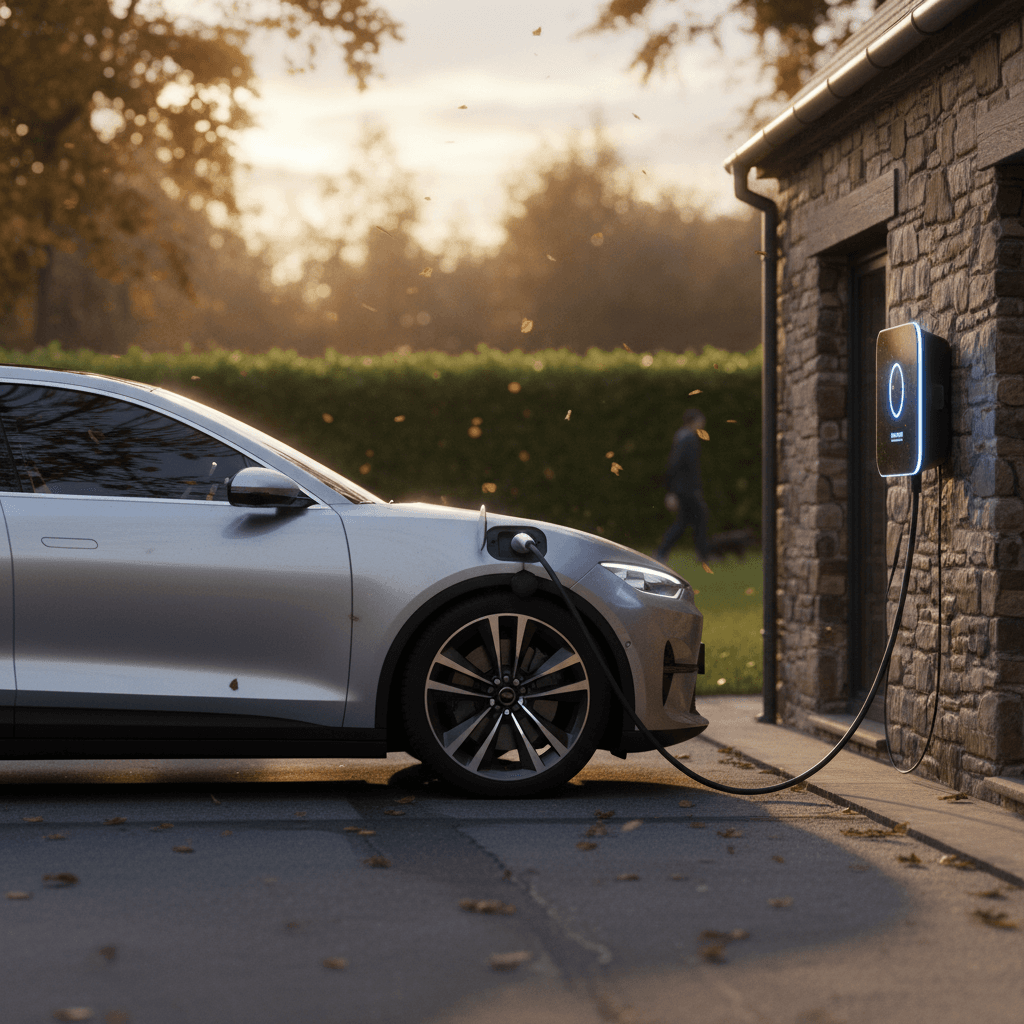
Public EV charging stations in Columbia, SC are getting better, but if you own your home, the smartest move is usually to bring most of your charging in‑house. Overnight Level 2 charging turns every morning into a “full tank” without the detours, and utilities across South Carolina offer rebates and favorable rates to encourage it.
Checklist: Setting up home charging in Columbia
1. Confirm your panel capacity
Have a licensed electrician confirm whether your service panel can support a 40‑ or 50‑amp circuit for a Level 2 charger. Older Columbia homes may need a panel upgrade, which can be offset by utility rebates or the federal EV charger tax credit (available through mid‑2026).
2. Decide on plug‑in vs. hardwired
A NEMA 14‑50 outlet with a portable Level 2 charger gives flexibility if you move. A hardwired wall unit looks cleaner and can support higher amperage. Both will charge most EVs overnight without issue.
3. Apply for South Carolina and utility incentives
South Carolina doesn’t offer a standalone state EV tax credit, but utilities like Duke Energy and others provide <strong>hundreds of dollars in rebates</strong> toward Level 2 hardware and installation. Combine that with the federal 30% home charger tax credit while it lasts.
4. Use time‑of‑use (TOU) rates
Ask your utility about TOU plans that make electricity cheaper at night. Program your car or charger to start charging after peak hours so you’re paying the lowest possible rate per kWh.
5. Think about parking routines
If you park on‑street or in a shared lot, check HOA and city rules about running cables across sidewalks or installing shared stations. In some Columbia condos, an HOA‑approved shared Level 2 charger solves the problem for multiple residents.
How Recharged fits in
Ready to find your next EV?
Browse VehiclesPlanning road trips from Columbia using public charging
Columbia sits at the crossroads of I‑20, I‑26, and I‑77, which makes it an ideal launchpad for EV trips to Charleston, Greenville, Charlotte, and the coast. The key isn’t memorizing every charger; it’s building a simple planning routine that keeps you clear of the red zone on your battery gauge.
Typical routes & charging patterns
- Columbia → Charleston (I‑26): Roughly 115 miles. Most modern EVs can do this in one shot, but a DC fast stop around Orangeburg gives peace of mind and flexibility for side trips.
- Columbia → Greenville (I‑26/I‑385): Around 100–115 miles depending on your exact route. Expect multiple fast‑charging options near Spartanburg and along the interstate.
- Columbia → Charlotte (I‑77): About 90 miles. Easy in one hop for nearly any EV; fast chargers cluster near Rock Hill and the metro area if you need a top‑up.
Simple trip‑planning routine
- Plot your route in your favorite app (A Better Routeplanner, PlugShare, or built‑in nav).
- Identify one primary and one backup fast‑charging stop.
- Check recent user check‑ins or reviews to confirm stations are working.
- Arrive with at least 15–20% battery on long legs so you’re not dependent on a single charger.
- Charge only to what you need plus a buffer, usually 80%, to save time and money.
Avoid the “0% roulette” mindset
Choosing a used EV that fits Columbia’s charging reality
Infrastructure is improving, but Columbia still isn’t Manhattan or Los Angeles for public charging density. The best EV for you is the one that fits your daily routes, your home situation, and the charging you can realistically access, not an idealized map of future stations.
What to prioritize in a used EV around Columbia
Match the car to your charging options, not the other way around
Real‑world highway range
Look at actual highway range at 70 mph, not just the EPA number. From Columbia, 200–230 real‑world miles is a comfortable minimum if you want easy round‑trips to nearby cities without constant charging stops.
Battery health & degradation
Used EVs can lose range as they age. A battery health report, like the Recharged Score we provide, shows how much usable capacity remains so you can judge whether that 2019 model still fits your commute.
Charging port & adapter support
Check which fast‑charging standard your prospective EV uses (CCS, CHAdeMO, or NACS) and how well that matches Columbia’s public network. Strong adapter support and dual‑standard stations give you far more flexibility on the road.
Leverage vehicle history + battery data
Frequently asked questions about EV charging in Columbia, SC
Columbia EV charging FAQs
The bottom line for Columbia, SC EV drivers
Columbia won’t rival the biggest EV hubs overnight, but the direction of travel is clear: more EV charging stations in Columbia, SC, better signage, and a growing mix of Level 2 and DC fast options in the places you already go. If you pair that public network with a solid home or workplace charging plan, and choose a used EV whose range and port type match South Carolina’s infrastructure, you can drive electric here with confidence.
If you’re considering a used EV, that’s where Recharged comes in. Our battery‑health‑first inspections, transparent pricing, and EV‑savvy support team are built to make charging, costs, and day‑to‑day usability clear before you buy, not after. Combine that with Columbia’s expanding charging map, and owning an EV in the Midlands starts to look a lot less like an experiment and a lot more like the new normal.