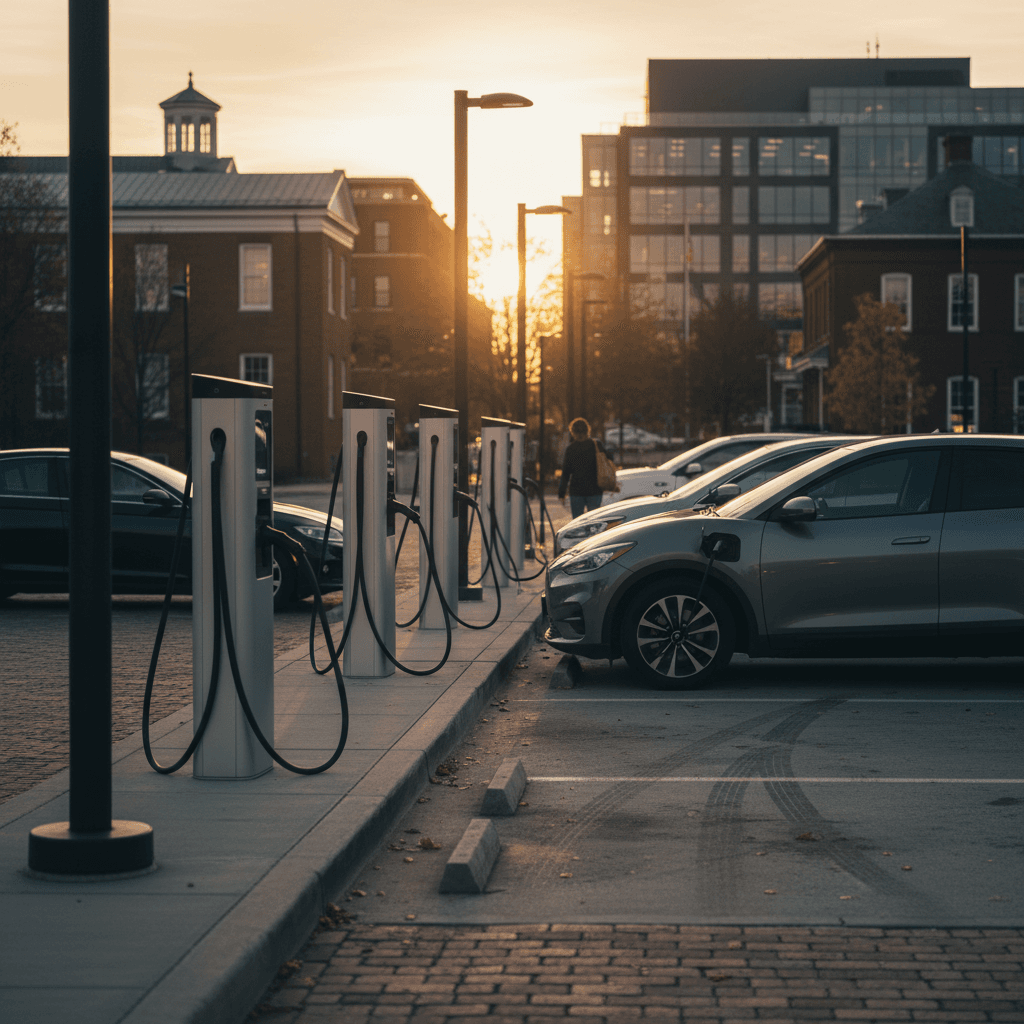
If you drive an EV in Central Virginia, Charlottesville is one of those towns you pass through, linger in, and sometimes circle endlessly looking for a place to plug in. The good news: EV charging stations in Charlottesville are becoming easier to find and, with a little planning, easy to live with. The bad news: the network is patchy, and you can’t just assume there’ll be a free fast charger waiting downtown on a Friday night.
Why Charlottesville feels different from big-city EV hubs
Charlottesville EV charging overview
EV charging in Charlottesville at a glance
Most Charlottesville EV owners do the bulk of their charging at home and use public chargers as **range insurance**: top-ups at work, at the Downtown Mall, or during grocery runs. The city has invested in an EV Charging Infrastructure Grant program to encourage more publicly accessible stations, particularly near commercial and tourist hubs, so you’ll increasingly find Level 2 chargers where you already want to spend time.
Fast-charger musical chairs
Where to find EV charging stations in Charlottesville
There’s no single, city-branded app that shows every EV charging station in Charlottesville, but you’re not flying blind. The city maintains an online EV charging locator map, and most commercial sites are listed on the big national platforms. For day‑to‑day use, think in three layers: aggregated apps, network apps, and your vehicle’s built‑in navigation.
Best tools for finding EV chargers in Charlottesville
Use more than one app, redundancy is your friend when you’re low on range.
1. Aggregator apps (start here)
Use crowd‑sourced maps like PlugShare, PlugMap, or VoltAtlas to see nearly every public station around Charlottesville and Albemarle County.
- Filter by connector (CCS, CHAdeMO, J1772, NACS)
- Check recent user check‑ins and photos
- Spot temporary outages before you arrive
2. Network‑specific apps
Major networks active around Charlottesville, like Tesla, ChargePoint, Blink, and Shell Recharge, all have their own apps.
- Start/stop sessions without RFID cards
- See live stall availability (where supported)
- Track pricing changes that aggregators can miss
3. Your car’s built‑in navigation
Modern EVs from Hyundai, Kia, GM, Ford, BMW and Tesla all bake charging data into the nav.
- Route planning that includes charging stops
- Battery‑aware estimates (arrive with x% SOC)
- Good backup if your phone dies or apps glitch
Local pro move
DC fast charging in and around Charlottesville
If Level 2 is your daily bread and butter, DC fast charging is the espresso shot: more expensive, more stressful if it’s busy, but absolutely essential for road trips and emergency top‑ups. Charlottesville proper has limited DC fast capacity at any given moment, so think regionally rather than just within the city limits.
Typical DC fast charging options near Charlottesville
Exact locations change as networks add, upgrade, or retire hardware, but this table shows the patterns you’ll see when you open a live map.
| Location type / corridor | Likely networks | Typical power (kW) | Connectors | Best use case |
|---|---|---|---|---|
| City shopping centers & parking lots | ChargePoint, Blink, Shell | 50–150 | CCS, some CHAdeMO | Quick top‑ups while running errands |
| I‑64 / I‑81 interchanges | Electrify America, Tesla, other highway‑oriented sites | 150–350 | CCS, some NACS/Supercharger | Road‑trip fast charging |
| Hotel clusters around US‑29 | Mixed networks | 50–150 | CCS, J1772 nearby | Overnight charging when you’re staying in town |
| Future public sites via city grants | Varies | 50+ | Likely CCS / NACS | Strategic fast charging near key activity centers |
Always confirm connector type, power level, and pricing in your chosen app before you rely on a specific site.
Don’t count on CHAdeMO for the long haul
DC fast charging etiquette around Charlottesville
Don’t treat fast chargers like parking spots
Once you’ve reached your target charge, often 80% on most EVs, move your car. In a small market like Charlottesville, one inconsiderate session can effectively block the fast‑charging network for an hour.
Prioritize CCS/NACS if you road‑trip often
If you’re choosing a used EV and expect to travel I‑64 or I‑81 regularly, life will be easier in a car that uses CCS or NACS fast charging, not CHAdeMO.
Watch per‑minute vs per‑kWh pricing
Some networks bill by the minute, others per kWh. If your car charges slowly in cold weather, per‑minute pricing can sting, plan accordingly in winter.
Precondition the battery when possible
If your EV supports battery preconditioning for fast charging, use it. Arriving at a DC fast charger with a warm pack can shave precious minutes off your stop.
Level 2 public chargers: best places to top up
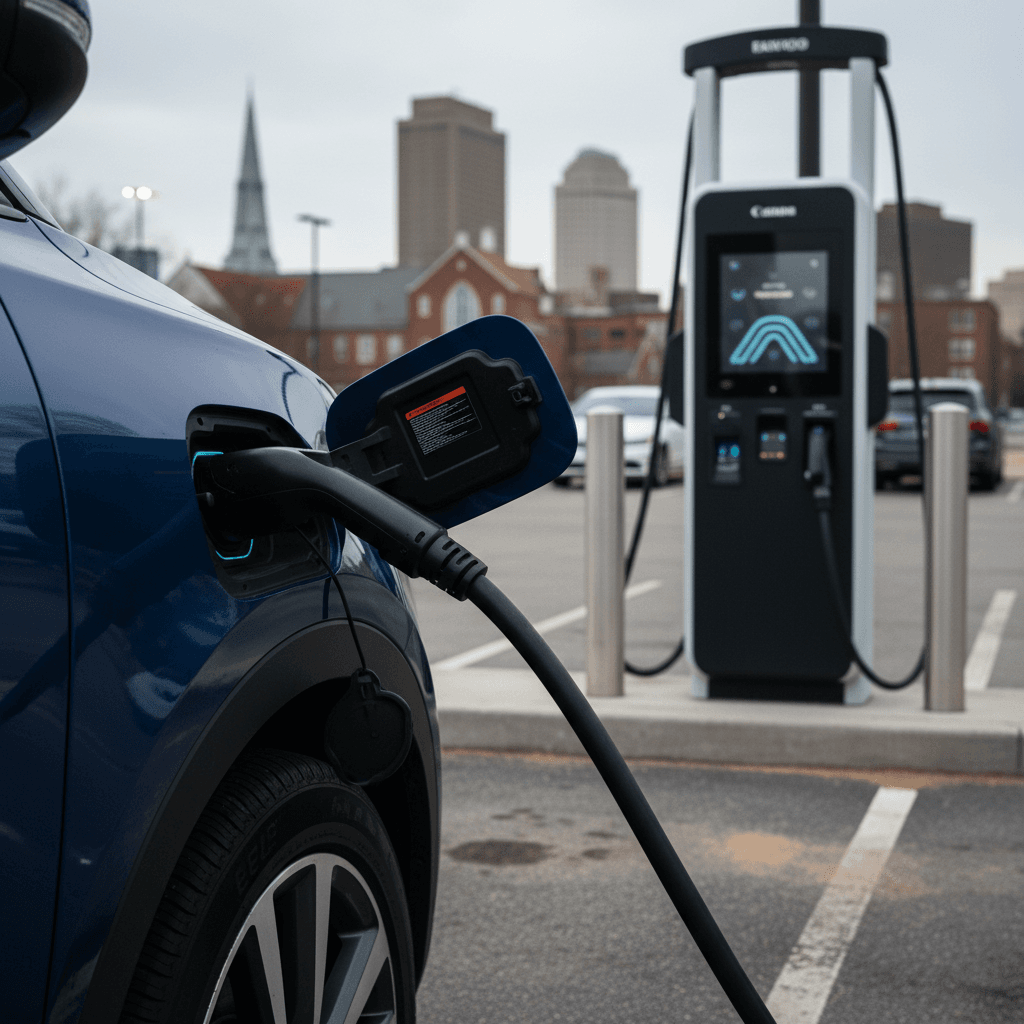
Level 2 chargers are Charlottesville’s unsung heroes: not flashy, not headline‑grabbing, but perfectly matched to the city’s rhythms. You plug in, wander the Downtown Mall, catch a show on the Corner, or knock out a grocery run, and return to a car that’s quietly added 20–40 miles of range.
Downtown & UVA area
Look for Level 2 stations in and around:
- City‑owned garages and lots close to the Downtown Mall
- Mixed‑use developments and hotels serving UVA visitors
- Private lots that participated in the city’s EV Charging Infrastructure Grant
The grant program nudges property owners to install publicly accessible, modest‑fee chargers near shops and restaurants, so a "park and plug" lunch is increasingly realistic.
Errand‑friendly locations
On the US‑29 corridor and other commercial strips, you’ll find Level 2 units at:
- Grocery stores and retail centers
- Gyms and big‑box parking lots
- Some workplaces and multifamily complexes (check access rules)
Many of these are "opportunistic" chargers, perfect for adding 10–25 kWh while you do the boring stuff you had to do anyway.
How to turn Level 2 into your daily workhorse
Home EV charging in Charlottesville
If you have a driveway or garage and a somewhat cooperative electrical panel, home charging is where the real ownership magic happens. Plug in at night, wake up to a full battery, and forget that gas stations exist. In Dominion Energy territory, home charging pairs nicely with time‑of‑use rates and new programs designed to make installation less painful.
Home charging options for Charlottesville residents
Think in terms of voltage, speed, and how long you plan to stay in this house.
Level 1: Standard 120V outlet
Good for: Plug‑in hybrids or very light daily driving (<30 miles/day).
- ~3–5 miles of range per hour
- No electrician required if outlet is in good shape
- Useful as a backup even if you add Level 2 later
Level 2: 240V dedicated circuit
Ideal for: Most battery‑electric drivers.
- ~25–40 miles of range per hour on a 32–40A charger
- Requires new 240V circuit and wallbox or hard‑wired unit
- Sweet spot for overnight charging
Smart Level 2 with scheduling
Best for: Tapping Dominion’s off‑peak pricing.
- Schedule charging to start after 9 p.m. or on weekends
- Track energy use per session
- Some models play nicely with utility demand‑response programs
Dominion’s EV programs: worth a look
Checklist for setting up home charging around Charlottesville
Confirm your electrical service capacity
An electrician can tell you whether your panel can handle a 40A or 50A 240V circuit for Level 2. Older homes close to downtown sometimes need panel upgrades, budget accordingly.
Decide how fast you really need to charge
If you drive 25–40 miles a day, a 32A charger is usually enough. Higher‑amp units make sense for big‑battery SUVs or households sharing one charger between two EVs.
Ask about Dominion‑friendly hardware
When you get quotes, ask which chargers integrate cleanly with Dominion Energy programs or can be enrolled later. It’s easier to choose compatible gear now than to swap it in three years.
Plan for future‑proofing
If you think you’ll add a second EV or move soon, route conduit and place the charger to keep your options open, a bit of foresight now beats tearing out drywall later.
Charging costs in Charlottesville: what to expect
EV ownership math in Charlottesville is refreshingly straightforward: electricity is cheaper than gasoline, but how much cheaper depends on where and when you charge. Think of it as a sliding scale from “dirt‑cheap off‑peak electrons” at home to “you’re paying for convenience” at highway DC fast chargers.
Home charging on Dominion Energy
On Dominion’s basic residential rate, you’re typically paying the equivalent of low‑to‑mid‑teens cents per kWh. With the Off‑Peak Plan’s time‑of‑use structure, super off‑peak hours can drop a bit lower, while peak hours climb.
- Charge after 9 p.m. on weekdays when possible
- Push big charging sessions to weekends or holidays
- Pair a smart charger with scheduled charging for “set it and forget it” savings
Public Level 2 and DC fast charging
Public stations layer network fees, parking, and sometimes idle fees on top of basic energy costs.
- Level 2: Often the equivalent of ~$0.20–$0.35/kWh
- DC fast: Can effectively reach $0.40–$0.60/kWh or higher, especially per‑minute sites with slow‑charging vehicles
- Some city‑incentivized sites keep prices modest to attract shoppers downtown
Rule of thumb for local costs
Planning charging for UVA commuters and downtown drivers
Charlottesville’s traffic map is basically a spider with all the legs labeled "toward UVA" or "toward the Downtown Mall." If your daily life revolves around Grounds, the hospital, or the pedestrian mall, your charging strategy should respect that reality: short hops, irregular parking, and the occasional surprise campus detour.
Charging playbooks for common Charlottesville drivers
UVA faculty, staff, and students
Investigate on‑campus or UVA‑affiliated parking with EV charging; some garages offer Level 2 as a perk.
If you commute from Crozet, Ruckersville, or further out, aim to start each day at 70–90% from home, so you’re not hostage to a full garage.
Keep a short list of reliable public Level 2 options near Grounds in PlugShare in case your usual spot is full.
Use DC fast only as a safety net before long drives up or down US‑29 or I‑64.
Downtown Mall and Belmont residents
If you have no off‑street parking, mix neighborhood Level 2 options with occasional sessions in city garages.
Treat charging like grocery shopping: one or two deep Level 2 sessions per week instead of many short panicked visits.
When the city adds new public stations via its grant program, be an early adopter, your feedback helps keep them maintained and fairly priced.
If you frequently street‑park, consider a used EV with a smaller pack but strong efficiency, easier to refill during a coffee or dinner stop.
Suburban commuters on US‑29
Install Level 2 at home if at all possible; your life gets dramatically simpler.
Use public Level 2 at grocery stores and shopping centers as occasional top‑ups, not your main fuel source.
If you park in a lot all day, ask your employer or building manager about installing a small cluster of shared chargers, Dominion’s programs can help lower the cost.
For those with long commutes, favor EVs with larger battery packs or strong highway efficiency to avoid winter‑range stress.
Parking policy matters as much as plug count
Road-tripping through Charlottesville
Charlottesville is a natural waypoint between Northern Virginia, Richmond, the Shenandoah Valley, and the Blue Ridge. As a road‑trip stop, it’s ideal: scenic, compact, and full of better food than you’ll find at the average interstate exit. The challenge is simply making the **charging** work as seamlessly as the **wine tasting**.
- Use your car’s built‑in route planner or an EV‑specific app to choose fast‑charging stops on I‑64 or I‑81 first, then decide whether you actually need to plug in while you’re in town.
- If you’re driving a Tesla or a 2025‑onward EV with NACS, check for Superchargers within your comfortable detour range, these often deliver the simplest, fastest experience.
- Aim to arrive in Charlottesville with 20–40% battery, then top up shortly before you leave instead of fighting for a charger at peak dinner hours downtown.
- When booking hotels, filter for on‑site Level 2 charging; an overnight top‑up is worth far more than an extra 50 kW DC fast stop on the highway.
Think like a pilot, not a passenger
How charging should shape your used EV shopping
Buying a used EV in Charlottesville without thinking about charging is like buying a farmhouse without checking the well. You might get lucky. More likely, you’ll discover the limitations in the least convenient way possible, in February, at night, with 12% battery.
Match the car to Charlottesville’s charging reality
- Connector type: Prefer CCS or NACS for long‑term support; treat CHAdeMO as a local‑use‑only proposition.
- Onboard charger speed: A car that can accept 11 kW on Level 2 will refill noticeably faster at public stations than one limited to 6.6 kW.
- Real‑world range: Look at winter highway range at 70 mph, not the idealized EPA number. Routes to DC, Richmond, and the Valley all involve hills and weather.
Leverage Recharged’s data and support
Every used EV sold through Recharged comes with a Recharged Score Report that includes verified battery health and fair‑market pricing. That matters in a town where a tired pack can turn a 150‑mile highway round‑trip into a nail‑biter.
Our EV specialists can also help you:
- Understand how an individual car will behave on local hills and highways
- Plan home charging upgrades in Dominion territory
- Compare models based on your actual commute and road‑trip plans
Shop entirely online, get help with financing, trade‑ins, or consignment, and have a vetted used EV delivered to your driveway, no interstate dealer safari required.
Charlottesville‑smart EV shopping
Charlottesville EV charging FAQ
Frequently asked questions about EV charging in Charlottesville
Key takeaways for Charlottesville EV drivers
Charlottesville isn’t yet a plug‑it‑anywhere EV paradise, but it’s also far from a charging desert. If you know where to look and how to stack the options, home Level 2 where possible, smart use of public Level 2 around your routine, and strategic DC fast charging on the interstates, you can live very comfortably with an electric car here.
- Use live apps like PlugShare, PlugMap, and network apps to confirm station status before you drive.
- Favor EVs with CCS or NACS fast charging and healthy batteries if you plan to road‑trip regularly.
- If you’re on Dominion Energy, lean into off‑peak rates and consider their Residential Charger Program before you hire an electrician.
- For apartment and downtown living, treat charging like a standing appointment, not an emergency errand.
- When you’re ready to shop for a used EV, work with a seller that understands the local charging reality and can show you verified battery health, not just a shiny detail job.
Recharged exists to make that last part easier. From the Recharged Score battery‑health report on every vehicle to expert help with financing, trade‑ins, and nationwide delivery, we’re built for people who want an EV to be simple, not a science project. If Charlottesville is your home base, or just your favorite stop between here and somewhere else, the right car and the right charging plan can make every plug‑in feel like part of the scenery, not the main event.