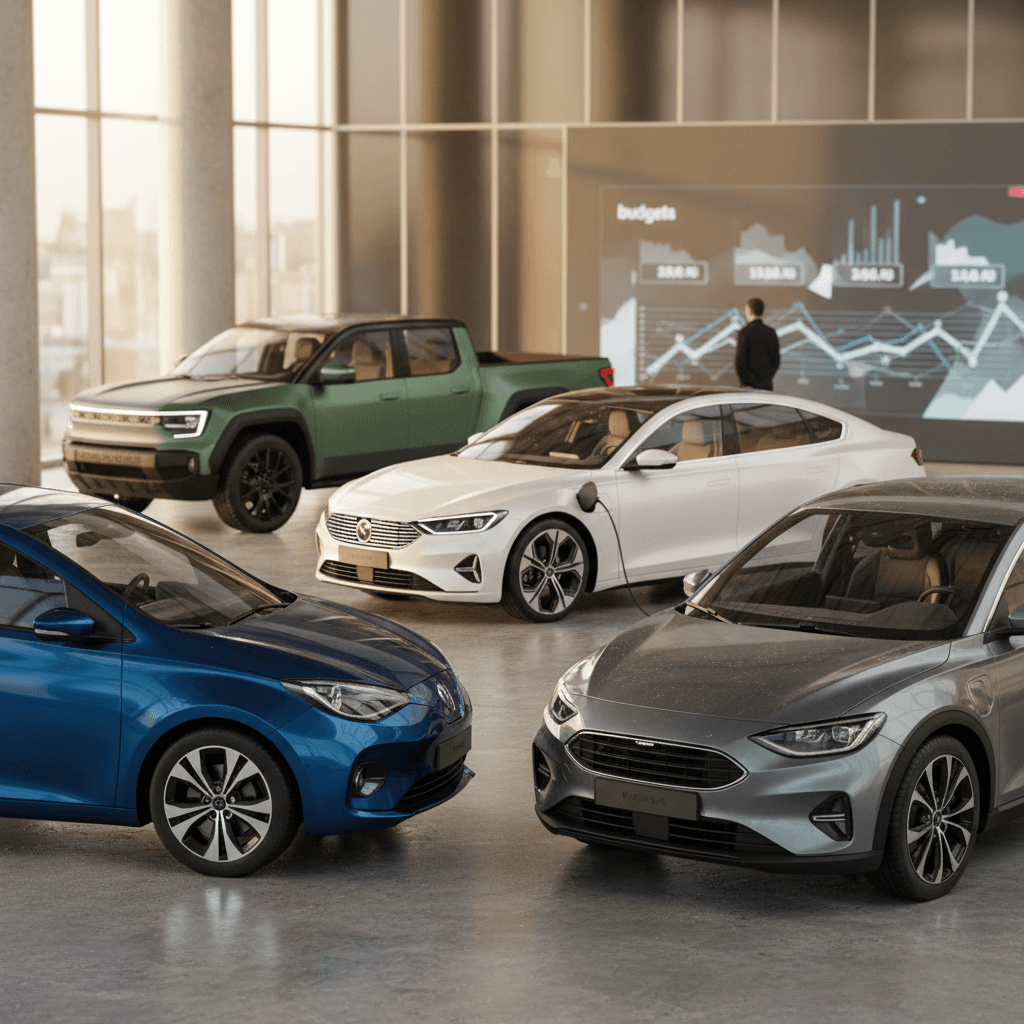
If you’ve searched for an EV car list lately, you’ve probably found either endless spec tables or breathless “top 50” slideshows that don’t tell you which electric cars are actually worth owning. This 2025 EV car list cuts through the noise: it focuses on the models U.S. buyers are really choosing, how they fit different budgets and lifestyles, and what you should think about if you’re buying used.
What this list is (and isn’t)
Why this 2025 EV car list matters
By 2024 the U.S. passed roughly 1.3 million EV sales per year, with well over two dozen nameplates on sale. That choice is good, but it also makes it harder to tell solid, well-supported EVs from science experiments. On top of that, many shoppers are looking at used electric vehicles for the first time, where battery health and fast‑changing pricing can make or break the deal.
EV market snapshot behind this car list
Where Recharged fits in
How to use this EV car list
Below, you’ll see the EV car list organized three ways: by sales reality (what’s actually selling), by budget, and by body style and use case. Treat it as a short list builder: pick the 2–4 models that fit your life, then dig deeper into test drives, charging plans, and, if you’re shopping used, battery health reports.
Four steps to narrowing this EV car list
1. Start with your budget, not the badge
Decide how much total you want to spend (or what monthly payment works) before falling in love with a particular EV. This keeps you comparing realistic options.
2. Filter by body style and space
Crossovers and SUVs dominate EV sales because they fit family life. If you need a hatch, wagon, or 3-row, skip sedans no matter how good the reviews are.
3. Think about your charging reality
If you can charge at home, a shorter‑range EV can make sense. If you’re apartment‑based or road‑trip often, prioritize range and fast‑charging speeds.
4. Shortlist 2–4 models
Use this EV car list to pick a small set of candidates that fit your budget, space, and charging situation, then compare deals, especially on well‑specced used examples.
Top-selling EVs in the US: what shoppers actually buy
One way to build an EV car list is to start with the models U.S. drivers already vote for with their wallets. In 2024, the top of the sales charts was still dominated by Tesla, but the story underneath was growing variety from Ford, Hyundai, GM, Honda, Kia, and Rivian.
2024 U.S. best-selling EVs by model
These models anchor the EV car list because they combine volume, support, and improving deals, especially on nearly new inventory.
| Rank | Model | Type | 2024 US sales* | Why it matters |
|---|---|---|---|---|
| 1 | Tesla Model Y | Compact SUV | 372,613 | Benchmarks efficiency, space, and charging; huge used inventory and price spread. |
| 2 | Tesla Model 3 | Sedan | 189,903 | Still the go‑to affordable long‑range EV sedan, especially on the used market. |
| 3 | Ford Mustang Mach‑E | Crossover | 51,745 | Ford’s volume EV; aggressive discounting in 2024 made it a strong value. |
| 4 | Hyundai Ioniq 5 | Crossover | 44,400 | 800V fast charging and comfortable ride; strong road‑trip credentials. |
| 5 | Tesla Cybertruck | Pickup | 38,965 | Polarizing but meaningful volume for an electric truck; watch resale volatility. |
| 6 | Ford F‑150 Lightning | Full‑size pickup | 33,510 | Mainstream electric truck choice with improving pricing and fleet adoption. |
| 7 | Honda Prologue | Crossover | 33,017 | Newcomer that ramped quickly using GM’s Ultium platform; early leases are key. |
| 8 | Chevrolet Equinox EV | Compact SUV | 28,874 | One of the more affordable new family EVs with solid range for the price. |
| 9 | Cadillac Lyriq | Luxury SUV | 28,402 | Luxury Ultium showcase; depreciation could make it a compelling used buy. |
| 10 | Rivian R1S | Adventure SUV | 26,934 | Family/adventure EV with 3 rows, off‑road cred, and improving charging access. |
Sales rounded to nearest unit, U.S. registrations 2024.
New isn’t always better for value
Best EVs by budget in 2025
EV car list by budget band
Approximate U.S. transaction prices in late 2025 (before local incentives).
Budget: under $30,000 (mostly used)
Ideal for: First EV, second car, shorter daily commutes.
- Chevrolet Bolt EV / EUV (used) – 200–260 miles of range, compact but surprisingly roomy, great value after early depreciation.
- Nissan Leaf (40–62 kWh, used) – Older tech and CHAdeMO fast charging, but extremely affordable local‑use EV.
- Hyundai Kona Electric (used) – Strong efficiency and range, subcompact footprint, but check for battery recalls and warranty status.
In this band, focus on battery health and remaining warranty above all else.
Value sweet spot: $30,000–$45,000
Ideal for: Daily drivers who want range, safety, and modern tech.
- Tesla Model 3 (used or entry new) – Huge charging network, good efficiency, and lots of supply in the used market.
- Hyundai Ioniq 5 / Kia EV6 – Excellent 800V fast charging, comfortable cabins, and attractive leasing offers.
- Ford Mustang Mach‑E – Discounts and tax‑credit eligibility often make this a compelling family EV.
This is where many buyers find the best balance of range, features, and total cost of ownership.
Premium & performance: $45,000+
Ideal for: Enthusiasts, luxury shoppers, heavy road‑trippers.
- Tesla Model Y Long Range / Performance – Still the default family EV for many, with strong resale and charging.
- Rivian R1T / R1S – Adventure‑oriented EVs with off‑road capability and growing charging access.
- Cadillac Lyriq, BMW i4/i5, Mercedes EQE – Luxury options where leasing or buying used can dramatically improve value.
At this level, focus on ride quality, driver‑assist tech, and charging performance, not just 0–60 times.
Buying new vs. used in each budget tier
Best EVs by body style and lifestyle
Compact & midsize cars
If you don’t need SUV ride height, traditional cars are often the most efficient and affordable entries on any EV car list.
- Tesla Model 3 – Excellent efficiency, robust Supercharger access, and abundant used supply.
- Hyundai Ioniq 6 – Aerodynamic sedan with impressive range; less common but a great highway cruiser.
- Chevy Bolt EV – Technically a hatchback, but often cross‑shopped with small cars; ideal city EV.
These are perfect for commuters, couples, or small households that prioritize efficiency and parking ease.
Crossovers, SUVs, and family haulers
Crossovers dominate the EV car list because they fit car seats, strollers, and road‑trip gear without feeling like a truck.
- Tesla Model Y – The de facto family EV with a huge cargo area and available 3rd row.
- Ford Mustang Mach‑E – Comfortable, practical, with an improving software and charging story.
- Hyundai Ioniq 5 / Kia EV6 – Futuristic design, quick DC charging, and solid real‑world efficiency.
- Rivian R1S – If you need real off‑road capability and 3 rows, this is the standout, priced accordingly.
When comparing EV SUVs, pay close attention to usable cargo volume and rear‑seat headroom, not just stylized rooflines.
EV car list by lifestyle
Match the EV to how you actually drive, not how you imagine your life on Instagram.
Daily commuter
- Chevy Bolt EV/EUV – Efficient, cheap to run, easy to park.
- Nissan Leaf – Fine for local use; just be realistic about fast‑charging limitations.
- Tesla Model 3 RWD – If you can stretch the budget, it adds long‑range flexibility and strong resale.
Road-trip regular
- Tesla Model Y / 3 Long Range – Supercharger access still makes road trips simpler.
- Hyundai Ioniq 5 / Kia EV6 – Ultra‑fast DC charging on 800V hardware shortens charging stops.
- Rivian R1T / R1S – For adventure travel and towing, with access to both Rivian and NACS networks.
Towing & work
- Ford F‑150 Lightning – Familiar F‑150 experience with bidirectional power for tools or home backup.
- Rivian R1T – Strong towing and clever storage (Gear Tunnel), great for recreation.
- Tesla Cybertruck – Still early‑adopter territory; consider resale volatility before stretching here.
Long-range EV car list: when you drive a lot
Range anxiety is more about charging access and planning than a single number, but if you’re frequently doing 200‑mile days or live in a sparse charging region, it makes sense to prioritize EVs with robust range and fast‑charging performance.
Representative long-range EVs to prioritize
Approximate EPA ranges; actual range varies with wheel size, weather, and driving style.
| Model | Body style | Approx. max EPA range | Fast-charging strength |
|---|---|---|---|
| Tesla Model 3 Long Range | Sedan | 330 mi | Excellent Supercharger coverage and strong efficiency. |
| Tesla Model Y Long Range | Crossover | 310 mi | Family‑friendly with similar charging advantages. |
| Hyundai Ioniq 6 | Sedan | 305 mi | Aerodynamic design plus 800V system for quick DC charging. |
| Hyundai Ioniq 5 / Kia EV6 | Crossover | 290–303 mi | Among the quickest DC fast‑charging times in their class. |
| Rivian R1T / R1S (large pack) | Truck / SUV | up to ~350 mi | Good range for heavy vehicles; charging options improving quickly. |
| Mercedes EQE SUV | Luxury SUV | ~280 mi | Decent range with comfortable cruising bias; best as a lease or used buy. |
Focus less on headline range and more on how quickly the car can recover miles at a DC fast charger.
Range vs. charging speed
Used EV car list: proven choices with track records
The used market is where the EV car list really opens up for value‑seekers. Early adopters have already taken the biggest depreciation hits, while battery tech and software support have matured. The key is avoiding problem children and making sure the specific car you’re considering has a healthy pack.
Used EVs that often make sense
Always verify battery health, software support, and charging compatibility on the specific car.
Frequently smart used buys
- Tesla Model 3 / Model Y – Massive used supply, strong charging network, lots of third‑party support. Pay attention to build year and hardware changes.
- Chevy Bolt EV / EUV – Post‑battery‑recall cars can be bargains; compact, efficient, and simple to own.
- Hyundai Kona Electric & Kia Niro EV – Solid range in small footprints; check for back‑to‑back DC fast‑charging limits.
- Hyundai Ioniq 5 / Kia EV6 (early years) – Leasing volume means attractive off‑lease inventory with modern charging tech.
Approach with extra caution
- Early CHAdeMO‑only cars (older Nissan Leaf, etc.) – Limited fast‑charging infrastructure in the U.S. going forward.
- Low‑volume or discontinued EVs – Parts and software support can get tricky over time.
- High‑mileage DC-fast‑charged cars – Fast charging is fine in moderation, but extreme use can accelerate degradation.
These can still be good buys, but you want objective battery diagnostics before signing.
How Recharged de-risks used EVs
Ready to find your next EV?
Browse VehiclesHow to evaluate any EV that’s not on this list
No matter how comprehensive an EV car list is, there will always be niche models, new entries, and local bargains that don’t make the headline sections. The good news is that you can evaluate almost any EV with the same simple framework: battery, charging, practicality, and total cost of ownership.
Quick checklist for evaluating any EV
1. Battery size, chemistry, and health
Look at usable kWh, chemistry (for example, LFP vs. NMC), real‑world range tests, and, on used EVs, objective battery health data. The pack is the most expensive component in the car.
2. Charging speed & connector
Check AC (Level 2) charging capability for home use and DC fast‑charging peak and curve for road trips. In North America, confirm NACS support or adapter availability going forward.
3. Space, ergonomics, and visibility
Make sure the EV actually fits your height, car seats, cargo, and driveway. Some “coupe‑like” crossovers trade away too much headroom or rear visibility for style.
4. Software & support
Evaluate the infotainment system, over‑the‑air updates, driver‑assist tech, and the brand’s track record for fixing issues. EVs are rolling computers as much as cars.
5. Warranty, recalls, and service network
Understand how much battery and drivetrain warranty remains, look for recurring issues, and make sure you have a convenient service option in your region.
6. Total cost of ownership
Factor in electricity rates, likely depreciation, insurance, and any home‑charging install. A slightly more expensive EV with better efficiency and resale can be the cheaper choice long‑term.
Don’t ignore battery diagnostics
FAQ: EV car list & buying questions
Frequently asked questions about this EV car list
Bottom line: picking the right EV from the list
An EV car list is useful only if it helps you take the next step toward the right electric car for your life, not someone else’s. Use the models here as a starting shortlist, then narrow by budget, body style, charging reality, and how much range you actually need. If you’re leaning toward a used EV, insist on transparent battery data and support from people who live and breathe EVs, because the battery and charging experience will shape how you feel about the car years from now.
Recharged exists to make that process straightforward: a curated selection of used EVs from lists like this one, each with a Recharged Score battery health report, fair‑market pricing, EV‑savvy guidance, and nationwide delivery. That way, when you finally pick a car from your personal EV car list, you’ll know you’re getting more than just the right badge, you’re getting the right electric car for how you actually drive.