If you’re Googling “EV battery pack for sale”, you’re probably staring down a painful quote from a dealer or wondering if it’s cheaper to resuscitate an older EV instead of buying another car. The good news: in 2025, full battery replacement is still rare, and you have more options, including used and second‑life packs, and in many cases, simply buying a different EV with a healthy battery instead of playing pack roulette.
Key takeaway up front
Why you’re searching “EV battery pack for sale”
Most people looking for an EV battery pack for sale fall into one of three situations:
- Your current EV has lost too much range, and you’re weighing a battery swap vs selling the car.
- Your vehicle is out of battery warranty and a dealer quote gave you sticker shock.
- You’re a tinkerer, shop owner, or builder hunting for used or second‑life packs for projects or energy storage.
Each of these paths has very different risks, costs, and trade‑offs. Before you start wiring money to someone on a forum for a “low‑miles Tesla pack,” it’s worth understanding what’s actually inside these batteries, how pricing works in 2025, and when replacing the pack simply isn’t the rational move.
What an EV battery pack actually is (and why it’s expensive)
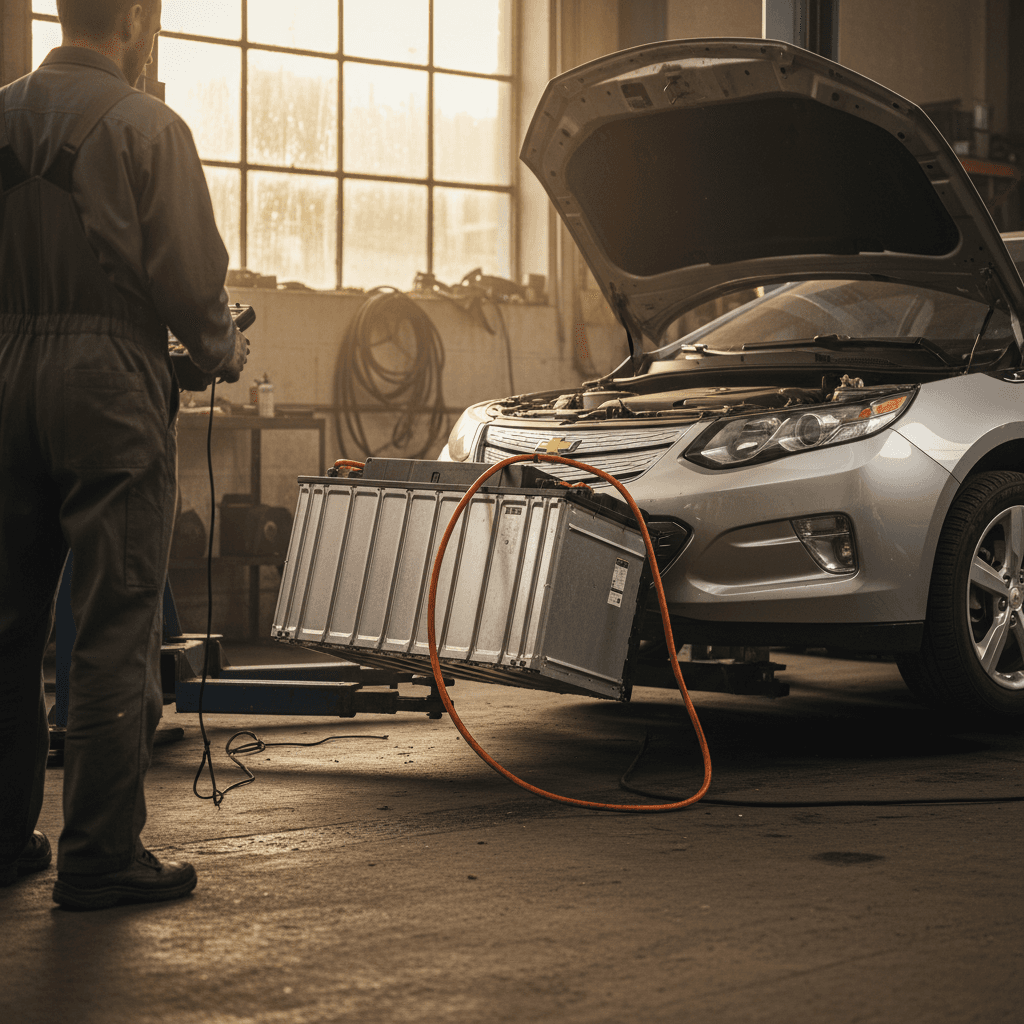
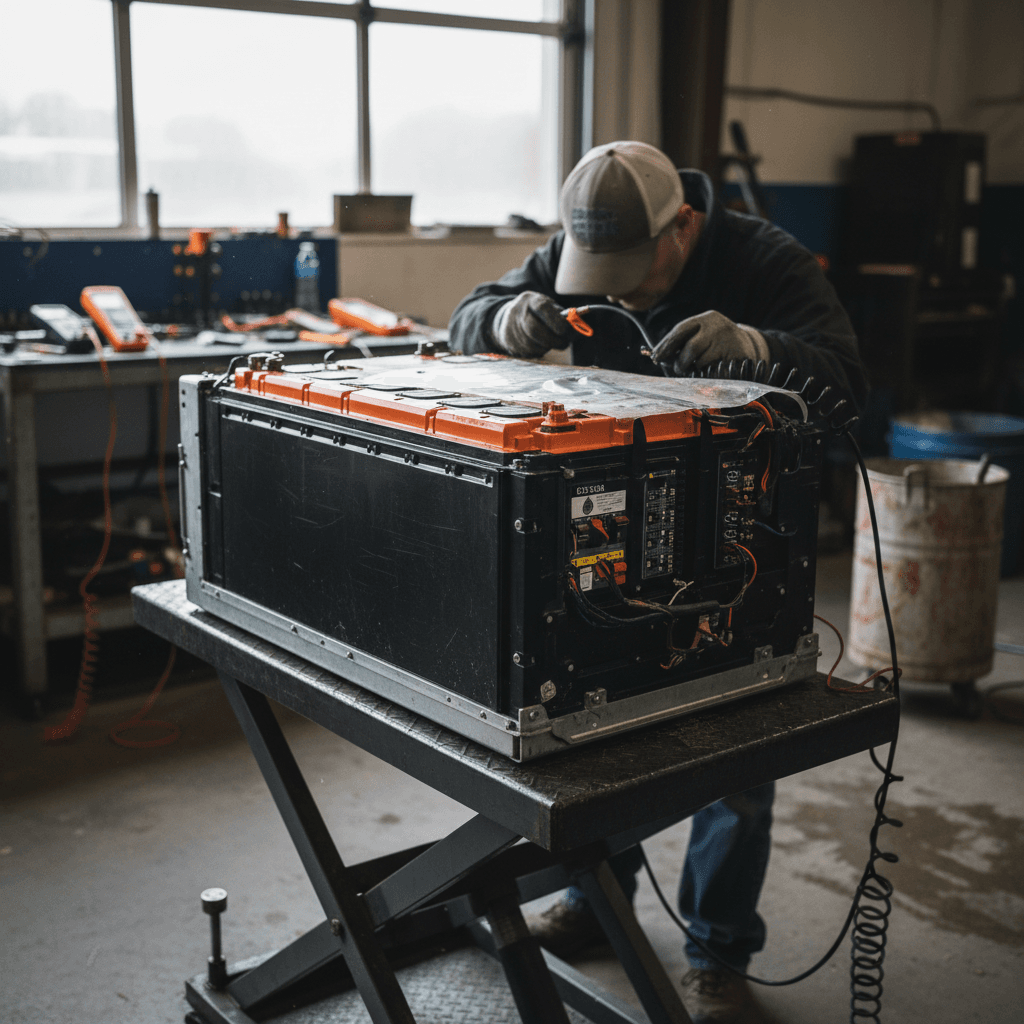
An EV battery pack isn’t a single big block you can swap like a 12‑volt battery. It’s a complex, structural assembly made up of:
- Hundreds to thousands of individual lithium‑ion cells arranged into modules
- A cooling system (liquid or air) to manage temperature and longevity
- High‑voltage contactors, fuses, and wiring for safety
- A battery management system (BMS) that monitors every cell’s voltage, temperature, and state of charge
- Structural components that often form part of the vehicle’s floor or crash structure
Why packs last longer than you think
How much an EV battery pack costs in 2025
In 2025, most complete EV traction battery replacements in the U.S. land between $5,000 and $20,000 installed, depending on pack size, vehicle class, and whether you choose a brand‑new OEM pack or a refurbished / used one. Compact EVs tend to be on the lower end, while luxury models and electric pickup trucks are on the high end.
Typical 2025 EV battery replacement costs
These are real 2024–2025 market numbers, not scare‑stories. The direction of travel is encouraging: pack costs per kWh continue to fall as manufacturing scales up, and industry projections suggest sub‑$80/kWh pack pricing in the next several years. That means future replacements will often be cheaper than they are today.
Don’t forget the warranty
New vs used vs second-life EV battery packs
When you see an EV battery pack for sale, it usually falls into one of three categories. Each has different pricing, risk, and best‑use cases.
Three main types of EV battery packs for sale
Understand what you’re actually buying before you wire money.
1. New OEM replacement
What it is: A brand‑new pack from the vehicle manufacturer or authorized supplier.
- Highest reliability and safety
- Usually includes a fresh warranty
- Most expensive option
Best for: Newer, higher‑value EVs where you plan to keep the car for many more years.
2. Refurbished / remanufactured
What it is: A pack rebuilt from tested modules, often with weak cells replaced and BMS updated.
- 30–50% cheaper than new
- Shorter warranty (1–3 years is common)
- Quality varies by provider
Best for: Out‑of‑warranty EVs where a full‑price OEM pack doesn’t pencil out, but you want predictable performance.
3. Second-life / repurposed
What it is: Packs or modules from retired EVs that still have 60–80% capacity.
- Great for stationary storage (solar, backup)
- Usually not reinstalled into road cars
- More DIY and engineering required
Best for: Home or commercial energy storage projects, not for getting your daily driver back on the road.
Why second‑life packs are booming
When a battery replacement makes sense vs replacing the car
The hard truth: for many mainstream EVs, buying a new or refurbished battery pack doesn’t make economic sense once the car is older and out of warranty. You can easily spend more on the pack than the vehicle is worth on the used market.
When a replacement pack can make sense
- Your EV is relatively new, high‑value, and otherwise in excellent condition.
- The pack failed due to an isolated defect, not long‑term abuse, and you can get a partial goodwill or warranty contribution.
- You plan to keep the car 5–10 more years and can amortize the cost over that time.
- You’re using the vehicle for high‑utilization work (rideshare, delivery) where uptime is critical.
When it’s smarter to replace the car
- The quote for a new pack is close to, or higher than, the vehicle’s market value.
- The car is already 8–12 years old with dated range, tech, and crash safety.
- You’d need financing to afford the pack, but qualify for a competitive rate on a newer EV.
- You can buy a used EV with a healthy battery for not much more than the replacement cost.
How Recharged fits into this decision
Ready to find your next EV?
Browse VehiclesWhere to find EV battery packs for sale
If you’ve run the numbers and a replacement truly makes sense, here’s where people typically shop for an EV battery pack for sale in 2025, and what you need to watch for in each channel.
Common sources of EV battery packs for sale
Pros and cons of typical places you’ll see packs advertised.
| Source | Typical Use Case | Pros | Cons |
|---|---|---|---|
| OEM dealer | Daily driver EV, in‑warranty or just outside | Correct part, software support, and install; new warranty; lowest risk | Highest price; limited flexibility; may only offer full pack, not module‑level repairs |
| Independent EV specialist | Out‑of‑warranty EV you plan to keep | Can source new or refurbished packs; may offer module repairs; more price options | Quality varies by shop; warranty terms differ; geographic availability can be limited |
| Certified remanufacturer | Fleet / high‑mileage EVs, cost‑sensitive owners | Refurbished packs with testing and warranty; lower cost than OEM | Still not cheap; may be limited to popular models; core exchange requirements |
| Salvage auction / breaker | DIY rebuilds, projects, second‑life storage | Lowest upfront price; access to late‑model packs from totaled cars | High risk; unknown abuse or crash damage; you’re on your own for testing and integration |
| Online marketplaces & forums | Tinkerers and small shops | Huge variety, sometimes rare packs or modules | Scams, misrepresented health, no support; shipping high‑voltage packs is non‑trivial and regulated |
For any non‑OEM source, due diligence on diagnostics, warranty, and provenance is critical.
Safety first: high‑voltage is not a hobby
Risks of buying a random used EV battery pack
Used EV packs can look like bargains compared with OEM pricing, but there’s a reason serious second‑life players invest heavily in diagnostics and logistics. The risks for individual buyers are real.
- Unknown state of health (SoH): A seller’s “80% capacity” claim may be optimistic or based on crude tools.
- Thermal and crash damage: Packs from written‑off vehicles may have internal damage that isn’t obvious from the outside.
- Software and compatibility issues: Swapping packs between model years or trims can trigger BMS and ECU conflicts, immobilizing the car.
- No meaningful warranty: Once the pack is in your car, you own every future problem.
- Logistics and regulation: Shipping high‑voltage lithium packs is expensive and tightly regulated; cutting corners here is dangerous and often illegal.
“Reusing EV batteries is powerful for the grid, but it only works if you can reliably test, grade, and integrate them. That’s not something a casual DIYer can do in a weekend.”
If a deal looks too good…
Smarter alternative: buy a used EV with a healthy pack
In many cases, hunting down an EV battery pack for sale is solving the wrong problem. If your current EV is aging, needs other work, or has limited range even with a new pack, it can be more rational to let that car go and move into a used EV with a verified strong battery.
Why a healthy used EV often beats a battery swap
Especially when you can see battery health up front.
Transparent battery health
Every vehicle on Recharged comes with a Recharged Score Report that includes verified battery health diagnostics, so you’re not guessing about remaining capacity or past abuse.
Instead of buying a mystery pack, you buy a car where the battery story is already clear.
Financing and total cost of ownership
Dropping $10,000+ cash on a replacement pack can hurt. With Recharged, you can finance a newer used EV, factor in low running costs, and often end up with a better car and predictable payments.
Trade‑in, instant offers, and nationwide delivery make the transition straightforward.
If you’re comparing a $12,000 pack replacement on a 9‑year‑old EV vs buying a newer model with better range, faster charging, and modern safety tech, the used EV often wins, especially when you know exactly what you’re getting in terms of battery health.
Checklist before you buy any EV battery pack
10 checks before you commit to a pack
1. Confirm warranty status first
Check your EV’s in‑service date and mileage. If you’re still within the battery warranty window, work through the manufacturer or an authorized dealer before exploring third‑party options.
2. Get a real diagnostic report
Insist on detailed State of Health (SoH), cell balance, and temperature history from proper diagnostic tools, not just a dashboard screenshot or seller claim.
3. Verify pack provenance
Know exactly where the pack came from: VIN of the donor vehicle, mileage, accident history, and whether it was involved in flood or fire.
4. Understand compatibility
Confirm that the pack’s part number and software version are compatible with your car’s model year, trim, and region. Small differences can cause big headaches.
5. Ask about warranty & support
For anything other than a brand‑new OEM pack, get written warranty terms and who handles labor if the pack fails early.
6. Budget for labor and extras
Include installation, programming, coolant, brackets, and any required high‑voltage safety inspections in your total cost.
7. Consider resale value
Ask yourself how the car’s resale value looks after spending this money. If the post‑repair value is close to or below your all‑in cost, it may not be worth it.
8. Compare against buying another EV
Price out a used EV with known‑good battery health, ideally with a report like the Recharged Score. Sometimes a swap is simply the more rational economic choice.
9. Think about second‑life uses instead
If your pack is degraded but still functional, repurposing it for home storage and replacing the car entirely may deliver more value than trying to keep it on the road.
10. Don’t DIY high‑voltage work
Unless you’re properly trained and equipped, leave pack handling, installation, and repair to professionals. Your safety is worth more than the labor savings.
FAQ: EV battery pack for sale
Frequently asked questions about EV battery packs for sale
Bottom line
Searching for an EV battery pack for sale in 2025 means you’re dealing with one of the most consequential decisions in EV ownership. Packs are expensive, complex, and increasingly valuable in second‑life markets, which is why true bargains are rare and risky. For some newer, higher‑value vehicles, a professionally supplied and installed pack is the right call. For many older EVs, however, that money is better spent moving into a different car with a stronger battery and more modern tech.
If you’re leaning toward the latter, Recharged is built for exactly this moment. Every used EV we list comes with a Recharged Score Report that verifies battery health, fair market pricing, and a transparent total cost picture. Combine that with financing, trade‑in options, and nationwide delivery, and it’s often the cleaner, lower‑risk path compared with gambling on a mystery battery pack.