You can buy a home EV charger on your phone in about 90 seconds. Getting it safely wired into your house is another story. If you’re wondering whether you really need an electrician to install an EV charger, you’re not alone, and in 2025, the answer is more important than ever.
Bottom line up front
Why an electrician matters for EV charger installation
A Level 2 home charger isn’t a fancy phone charger. It’s a high‑demand appliance, like an electric range or hot tub, that can pull 32–60 amps for hours at a time. That continuous load exposes any weak links in your home’s electrical system, undersized wire, tired breakers, loose connections, much faster than a toaster ever will.
- Level 2 charging adds roughly 25–30 miles of range per hour, which means high sustained current draw.
- Most chargers require a dedicated 240 V circuit with their own breaker and properly sized wire.
- The National Electrical Code treats EV charging as a continuous load, so circuits must be sized at 125% of the charger’s rated current.
- Bad wiring doesn’t just trip breakers; it can overheat in your walls where you can’t see it.
The quiet risk in the wall
Do you always need an electrician to install an EV charger?
When you do, and don’t, need an electrician
Most Level 2 installs? Call a pro. Here’s the nuance.
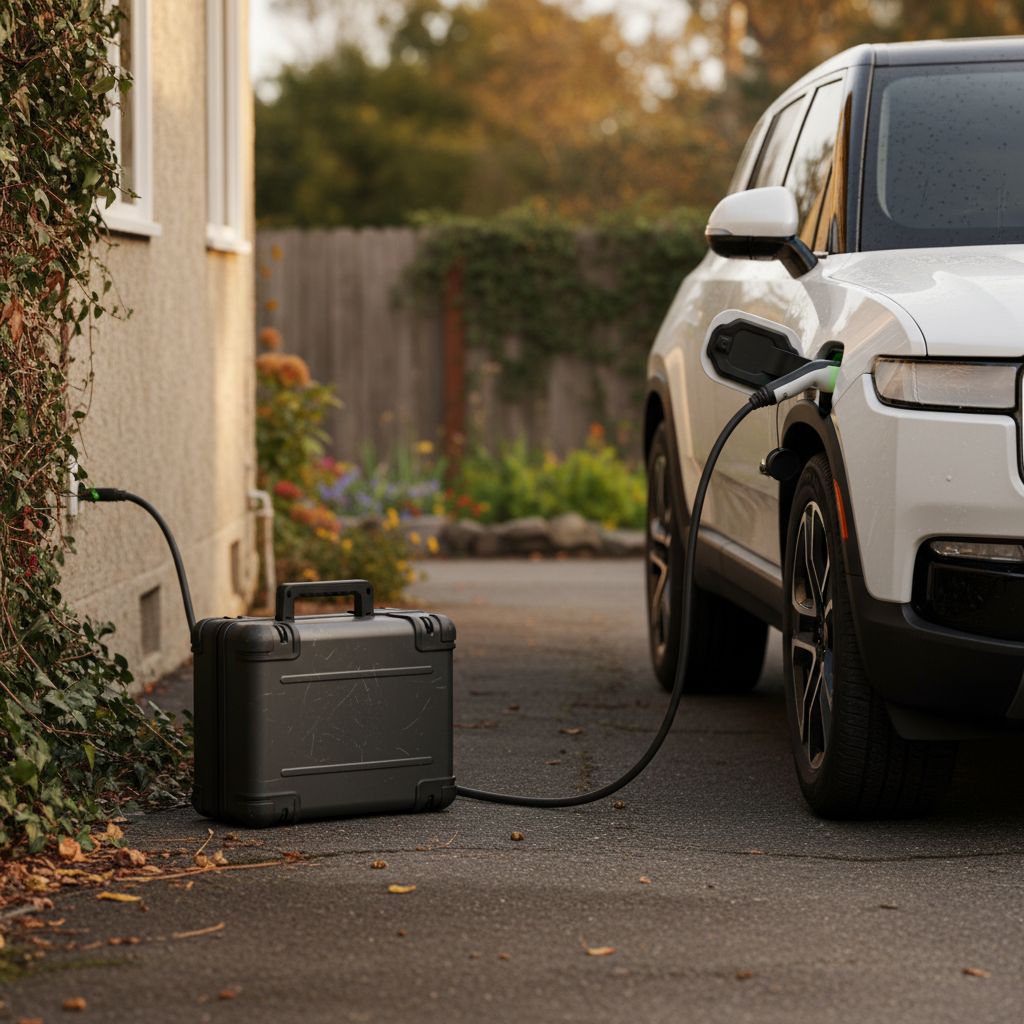
Using the cable that came with your EV
Level 1 (120 V) charging from a modern, grounded outlet is usually okay without calling an electrician, if the outlet and circuit are in good shape.
Have an electrician inspect if the outlet gets warm, the breaker is old, or you’re using an extension cord (hint: don’t).
Plug‑in Level 2 charger (NEMA 14‑50, 6‑50)
If you already have a properly installed 240 V outlet on a suitable breaker near your parking spot, you may not need new wiring, but it’s worth a quick inspection.
If you’re adding or moving that outlet, you absolutely need a licensed electrician and a permit.
Hard‑wired wallbox charger
Any hard‑wired Level 2 wall charger is electrician territory, full stop. New circuit, proper breaker sizing, cable routing, and load calculations are all part of the job.
Most municipalities require a permit and inspection for this work.
Check your local rules
Quick primer: how home EV chargers actually work
Understanding the basics makes it much easier to talk to an electrician, and to spot nonsense on a quote. Your EV charger is really a smart switch and safety device that tells the car, “Here’s how much current is safely available.” The actual charger electronics live mostly in the car.
- Level 1 (120 V): Standard household outlet. Adds about 3–5 miles of range per hour. Usually the cable that came with your car.
- Level 2 (240 V): Dedicated circuit, 16–80 amps depending on charger and vehicle. Typical home setups are 32–48 amps.
- Continuous load rule: Because EV charging can run for many hours, circuits must be sized so that the charger uses no more than 80% of the breaker rating (for example, a 40 A charger on a 50 A breaker).
- Smart vs basic: Smart chargers add Wi‑Fi, scheduling, and energy monitoring. They don’t change the wiring requirements, but they can help you save money by charging off‑peak.
Talk amps, not marketing
What a good electrician actually does during installation
“Installing a charger” is shorthand for a bundle of pretty technical tasks. A good electrician isn’t just hanging a box; they’re future‑proofing your house for a decade of electric miles.
What’s included in a proper EV charger install
1. Load calculation on your main panel
They’ll total up existing loads (HVAC, range, dryer, etc.) and verify your panel, often 100 A or 200 A, can safely handle a new charger without constant nuisance tripping or overheating.
2. Recommending the right circuit size
Based on your charger’s max current and the 80% continuous load rule, they’ll specify the correct breaker and wire size, often 40 A or 60 A for common 32–48 A chargers.
3. Running new 240 V wiring
This can mean conduit through a garage, crawlspace, or even trenching to a detached garage. The goal: short, safe, code‑compliant routing with proper support and protection.
4. Installing outlet or hard‑wiring the unit
For plug‑in chargers, they’ll install a NEMA 14‑50/6‑50 receptacle. For hard‑wired units, they’ll terminate conductors directly into the charger and torque all lugs to spec.
5. Grounding, bonding, and GFCI protection
They ensure the system is grounded correctly and protected by GFCI where required, reducing shock risk, especially for outdoor installs exposed to weather.
6. Testing, labeling, and walkthrough
You should see them test voltages, verify operation, label the breaker as ‘EV Charger,’ and walk you through safe use and what to watch for (heat, nuisance trips, etc.).
What it costs to hire an electrician for an EV charger
The cost to have an electrician install an EV charger is a bit like remodeling a kitchen: the hardware is predictable, the wiring runs are not. In 2025, U.S. homeowners typically see Level 2 installation totals, from charger to final inspection, land somewhere between about $950 and $2,500, but complex situations can go higher.
Typical 2025 home EV charger install costs (U.S.)
Example electrician install scenarios
Realistic ballpark estimates to help you sanity‑check quotes. Hardware not included unless noted.
| Scenario | What’s involved | Typical total (labor, materials, permits) |
|---|---|---|
| Charger next to panel in garage | Short wiring run, simple mounting, no drywall work | $500–$900 |
| Charger across finished garage | Longer conduit run, some wall work, moderate labor | $900–$1,600 |
| Detached garage, easy trench | Outdoor conduit, trenching, dedicated circuit | $1,600–$3,000 |
| Panel upgrade plus charger | New 200 A panel, new EV circuit, inspection | $2,500–$5,500+ |
These are typical ranges, not quotes, local rates and your house may vary.
Ask for line‑item pricing
Permits, codes, and incentives you don’t want to miss
EV charging has gone from novelty to infrastructure, and the rules caught up. Most jurisdictions now treat a new Level 2 charger just like any other major electrical upgrade: it needs a permit, a licensed installer, and an inspection.
- Building permits: Many cities require a simple electrical permit for a new EV circuit; some also require a separate inspection for exterior work.
- National Electrical Code (NEC): EV charging is covered under Article 625, which lays out requirements for wiring methods, overcurrent protection, and equipment location.
- Homeowners associations: If you’re in a condo or HOA, you may need approval for visible conduit, outdoor pedestals, or shared electrical service.
- Insurance and resale: Being able to show permitted, inspected work can help with insurance claims and is a selling point when you go to list the home.
Don’t leave money on the table
How to choose the right electrician for your EV charger
What to look for in an EV‑savvy electrician
You’re not just hiring any tradesperson, you’re hiring the guardian of your future charging routine.
EV experience, not just residential
Ask how many EV charger installs they’ve done in the past year and whether they’re familiar with your charger brand (ChargePoint, Wallbox, Tesla, etc.).
A pro should be comfortable talking load calculations and NEC Article 625.
Licensed, insured, and permitted
They should be able to provide a license number, proof of insurance, and confirm they will pull the permit, not you.
If they suggest “skipping permits to save money,” that’s your cue to walk away.
Clear, written scope and warranty
Look for fixed quotes with clear scope, not vague hourly estimates, plus workmanship warranty (often 1–3 years).
They should also specify how they’ll patch any walls they open.
Questions to ask before you sign
Have you installed this specific charger before?
If not, ask how they’ll get familiar with the manufacturer’s guidelines, many have PDF install manuals and online training.
Will you perform a full load calculation?
You want to hear them talk about your panel size, existing loads, and whether a panel upgrade is recommended or required.
What’s included in your quote?
Clarify whether patching drywall, permit fees, the charger itself, and any trenching or concrete work are included.
How long will the job take, start to finish?
A straightforward install might be half a day, but permits and inspections can stretch the calendar. Ask about scheduling and inspection timelines.
What happens if we discover a panel or wiring issue?
Good electricians will explain how they handle surprises and change orders, so you’re not blindsided mid‑project.
Red flags and common mistakes to avoid
Installation red flags
- Electrician proposes using an old dryer circuit or range outlet without verifying wire size and breaker rating.
- No mention of permits or inspections, "we don’t need that for a simple charger" is not a good sign.
- They recommend running long cords across walkways instead of installing an outlet where you actually park.
- They’re fuzzy about whether GFCI protection is required for your setup.
Owner mistakes to avoid
- Buying a 48 A charger when your panel can barely support 32 A, and then forcing your electrician to downrate it.
- Mounting the charger yourself on flimsy material or in a spot where cars, lawnmowers, or kids will beat it up.
- Using cheap, undersized extension cords for Level 1 charging to reach the driveway.
- Ignoring early warning signs like warm outlets, buzzing breakers, or a plastic smell after long charging sessions.
Do not daisy‑chain power strips
DIY vs pro installation: where to draw the line
Could a competent DIYer physically mount a charger and land a few wires in a panel? Sure. People also rebuild engines in their garages. The question isn’t whether it’s possible; it’s whether it’s wise, financially and from a safety and liability standpoint.
Realistically: what you can DIY and what you shouldn’t
If you’re not 100% confident working inside a live panel, that’s your answer.
Reasonable DIY tasks
- Deciding where the charger should go for cable reach and parking.
- Mounting the charger bracket to a wall, following the template.
- Running conduit after your electrician designs the route, if they’re comfortable with that arrangement.
- Setting up the charger’s app, Wi‑Fi, and schedules once the wiring is done.
Leave these to a licensed electrician
- Working inside the main panel or meter base.
- Adding or upsizing breakers and circuits.
- Sizing wire gauge, conduit type, and overcurrent protection.
- Any work that your city requires a permit and inspection for.
Think about future buyers
Step-by-step checklist before you book an electrician
Pre‑install checklist for stress‑free EV charging
1. Decide how fast you actually need to charge
Look at your daily miles. Many drivers are fine with a 32 A charger; commuters or multi‑EV households may want 40–48 A for more headroom.
2. Pick your charger (or at least a shortlist)
Choose a reputable Level 2 model with the features you care about: Wi‑Fi, load‑sharing, cable length, NACS/J1772 connector, etc.
3. Take photos of your panel and parking area
Shoot your main panel (door open and closed), subpanels, and the spot where you’d like the charger. This makes remote quotes much easier.
4. Gather basic home info
Year the house was built, panel size (e.g., 100 A, 150 A, 200 A), major electric appliances, and whether you have a detached garage or long driveway.
5. Get at least two quotes
Share the same photos and details with multiple electricians. Compare scope, permits, and warranties, not just the bottom line.
6. Confirm permits and inspection plan
Before work starts, you should know who’s pulling the permit, when an inspector will come, and what access they’ll need.
FAQ: Electricians and home EV charger installation
Frequently asked questions
How Recharged fits into your charging plan
A home charger is the quiet hero of EV ownership. It turns every night into a full tank and makes public fast charging an occasional convenience instead of a weekly errand. Getting there safely almost always means hiring a competent electrician, pulling the right permits, and treating the work like the serious upgrade it is.
When you shop for a used EV through Recharged, you’re not just buying a car, you’re buying clarity. Every vehicle comes with a Recharged Score battery health report and expert guidance on real‑world range, charging options, and what kind of home setup you’ll actually need. Our EV specialists can help you understand whether a 32 A or 48 A charger makes sense for your driving, how that interacts with your panel, and what to ask your electrician before you sign anything.
If you’re still in the “is an EV right for my house?” phase, that’s exactly the conversation we have every day. Explore used EVs on Recharged, get a feel for your real charging needs, and then bring a clear plan, and a clear conscience, to the electrician who’ll wire up your future commute.