You typed “electrical auto repair shop near me” because something doesn’t feel right with your EV, or you want a trustworthy shop lined up before it does. That’s smart. Electric vehicles are packed with high‑voltage systems, sensitive electronics, and software that most traditional garages still aren’t fully equipped to handle. This guide walks you through how to find the right electrical auto repair shop near you, what questions to ask, what repairs they should handle, and when you’re better off heading to a specialist.
Why this matters more for EVs
Why “electrical auto repair” is different for EVs
With a gas car, “electrical repair” often means alternators, starters, and wiring issues. On an EV, nearly everything is an electrical repair: the battery pack, inverter, onboard charger, drive motor, power electronics, and a web of control modules and wiring. That complexity is why you can’t assume every auto shop that says “we do electrical work” is ready for a Tesla, Hyundai IONIQ 5, or Chevy Bolt.
How fast EV electrical repair is growing
Don’t assume “we work on EVs” means high‑voltage qualified
Types of electrical auto repair shops near you
Where you can take an EV for electrical repairs
Not every “electrical auto repair shop” is the same, and that matters for your safety and your wallet.
OEM dealer or brand service center
Best for: Warranty repairs, recalls, complex high‑voltage issues.
- Factory tools and software updates.
- Techs trained on your exact model.
- Higher hourly labor rates, but predictable process.
Independent EV‑certified shop
Best for: Out‑of‑warranty EVs, hybrids, and routine electrical issues.
- Often 15–25% lower labor rates than dealers.
- May specialize in one or two brands.
- Good choice for owners of used EVs.
Mobile EV technician
Best for: Convenience repairs and diagnostics at home or work.
- Great for 12V issues, software scans, minor wiring faults.
- Limited for major battery or high‑voltage work.
- Check insurance and certifications carefully.
Conventional electrical work
- 12V battery, alternator-equivalent systems
- Lighting, infotainment, and window controls
- Sensors like ABS or parking aids
Most competent shops can handle these on an EV if they understand how not to disturb high‑voltage components.
EV‑specific electrical work
- High‑voltage battery and contactors
- Onboard charger and DC fast‑charge faults
- Inverter, motor, and power electronics
These require high‑voltage safety training, insulated tools, and access to EV‑specific diagnostic data.
How to actually search for an electrical auto repair shop near you
Typing “electrical auto repair shop near me” into a search engine is just the start. The real work is filtering results so you don’t end up being someone’s first EV experiment. Here’s a practical way to narrow the field in about 20–30 minutes.
Step‑by‑step: from search results to a short list
1. Add EV‑specific terms to your search
Instead of only searching “electrical auto repair shop near me,” try variations like “EV repair shop near me,” “electric car mechanic,” or “hybrid and EV specialist.” This surfaces shops that actually market EV capabilities.
2. Filter by reviews that mention EVs
On Google Maps, Yelp, or Apple Maps, skim recent reviews for the words “EV,” “Tesla,” “Bolt,” “Leaf,” or your model. Reviews that describe successful high‑voltage or charging repairs are a strong signal.
3. Check the shop’s website for EV training
Look for mentions of <strong>ASE L3</strong> (Advanced Electric/Hybrid Vehicle Specialist), OEM EV training, or partnerships with EV‑focused networks. If the site barely mentions EVs, assume they’re still learning.
4. Call and ask targeted questions
A five‑minute phone call will tell you more than any ad. Ask how many EVs they see per month, which brands they specialize in, and whether they have proper high‑voltage safety certification.
5. Confirm they can get parts and data
Right‑to‑repair rules are evolving, and EV parts and software access can be tricky. Ask if they have access to OEM service information and parts channels for your make.
Use EV‑specific directories
Checklist to vet an EV‑friendly repair shop
Once you’ve got two or three candidates, use this checklist to decide who actually deserves your car, and your money.
10 things to ask before you hand over the keys
1. Do you regularly work on EVs or just hybrids?
A shop that only sees the occasional Prius is very different from one that routinely services Teslas, Leafs, and other full battery electric vehicles.
2. What EV training do your technicians have?
Look for <strong>ASE L3 certification</strong>, OEM factory training, or reputable programs focused on EV systems. If they can’t name the training, they probably don’t have it.
3. How many EVs do you see each month?
You’re looking for familiarity. If they only see “a couple a year,” they’ll spend more time learning on your car, and you’ll pay for it.
4. Are your techs qualified for high‑voltage work?
Anyone touching the traction battery, inverter, or orange‑cable wiring should have specific high‑voltage safety training and follow lock‑out/tag‑out procedures.
5. Do you have brand‑specific diagnostic tools?
EVs are software‑heavy. Ask if they can read factory‑level data and apply software updates or service campaigns for your make and model.
6. What electrical issues do you handle in‑house?
Clarify whether they handle <strong>charging port faults, HV contactor errors, and DC fast‑charge issues</strong>, or if they only do 12V, tires, and brakes.
7. Can you provide a written estimate and diagnostic fee?
Before they start digging into complex electronics, make sure you know what the diagnostic process costs and what’s included in that fee.
8. How do you handle EV warranties and recalls?
Some independent shops can coordinate warranty work with dealers; others can’t. You don’t want to pay out of pocket for something the manufacturer will cover.
9. What’s your typical turnaround time for EV repairs?
Parts availability can stretch repair times. Ask how long they expect common EV electrical repairs to take and whether they offer loaners or rentals.
10. How do you protect the battery and interior while the car is in the shop?
Simple things, like not leaving your EV at 0% or 100% charge for days, make a difference. A shop that understands EV battery care is more likely to treat your car right.
Green flags to look for
What common EV repairs cost, and what shops can handle them
EVs skip oil changes, but that doesn’t mean they’re maintenance‑free. In fact, some warranty data shows EV repair claims can run higher on average than similar gas vehicles because of specialized components and labor. Here’s a simplified look at common issues and who’s best equipped to handle them.
Typical EV electrical repairs and where to go
Ballpark price ranges in U.S. dollars; actual costs depend heavily on brand, region, and parts availability.
| Issue | Typical Symptoms | Approximate Cost Range* | Best Shop Type |
|---|---|---|---|
| 12V battery failure | Car won’t “wake up,” random warning lights, no start | $150–$400 | Independent EV‑savvy shop or mobile tech |
| Tire & TPMS issues | Rapid tire wear, range drop, pressure warnings | $120–$300 per tire | Most quality tire shops or EV‑capable independents |
| Charge port or onboard charger fault | Won’t charge, intermittent charging, charge port errors | $400–$2,000+ | Brand dealer or advanced EV specialist |
| HV contactor / battery isolation fault | Won’t go into drive, high‑voltage error messages | $800–$3,500+ | Brand dealer or high‑voltage specialist only |
| Cooling system for battery or power electronics | Overheating warnings, limited power or charging speed | $300–$2,500 | Dealer or independent shop with proven EV experience |
| Infotainment / connectivity problems | Black screen, no audio, charging controls missing | $200–$1,500+ | Dealer often required for module replacement or reprogramming |
Use this table as a directional guide, not a quote. Always get a written estimate from your shop.
Why prices vary so much
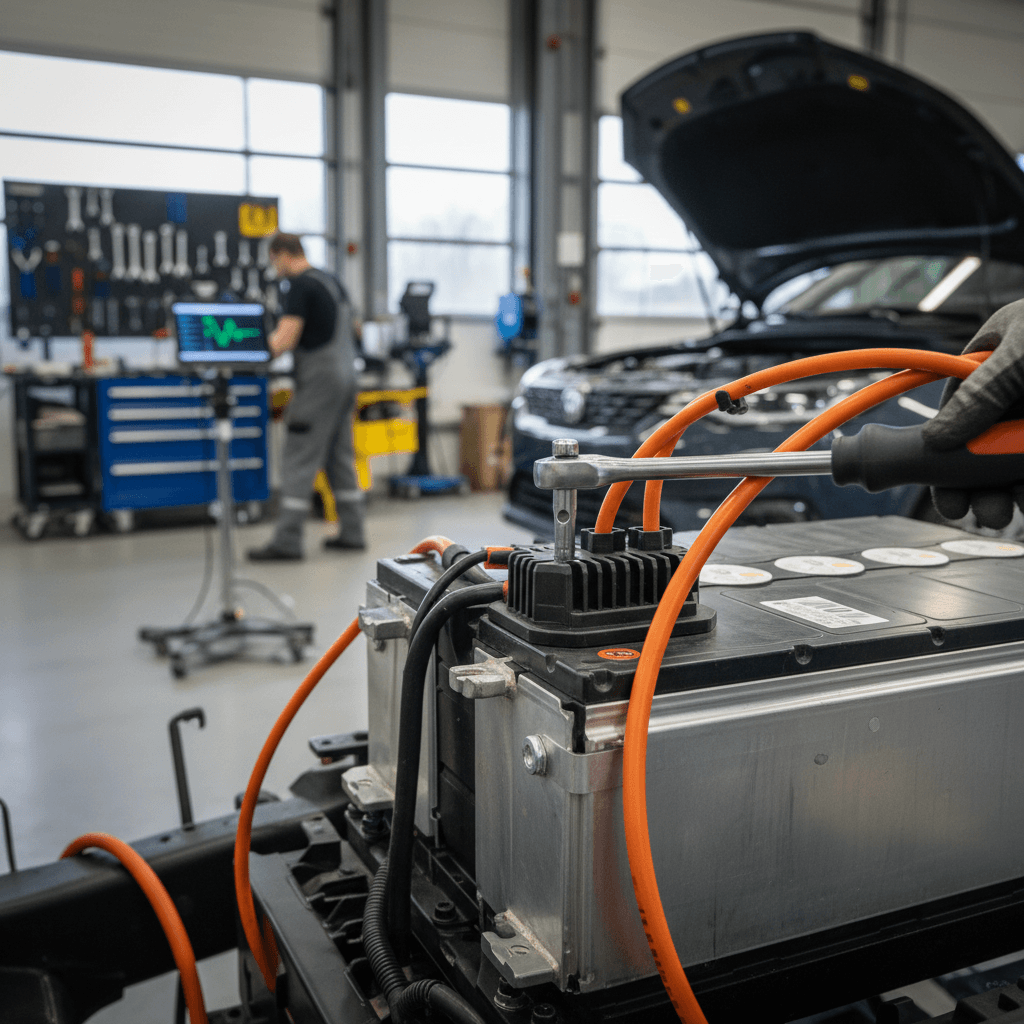
Safety first: working on high‑voltage EV systems
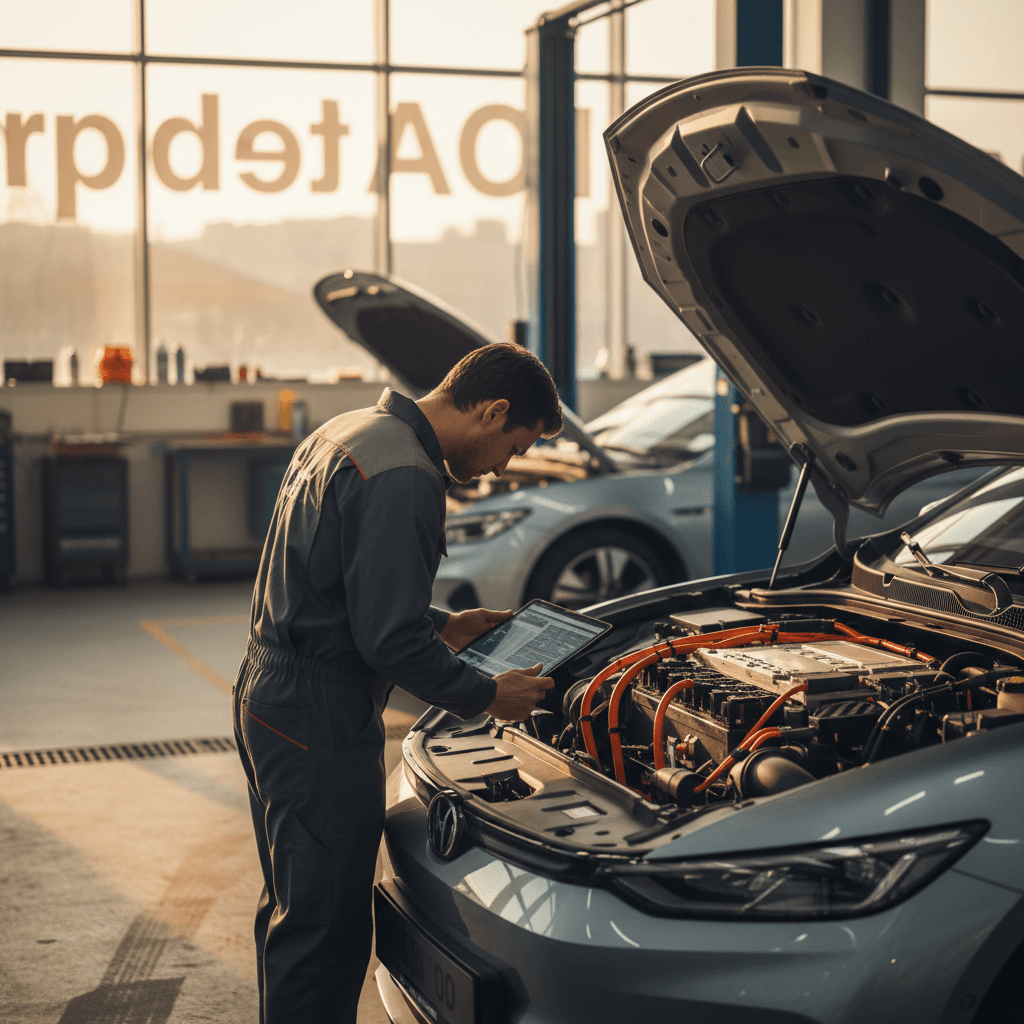
High‑voltage systems, everything tied to the orange cables in your EV, are no place for guesswork. Voltages can exceed 400 volts, and even brief contact can be lethal. Any shop advertising electrical auto repair for EVs should have clear, written safety procedures and visible equipment to back them up.
- Insulated high‑voltage gloves and tools rated for the voltages in your vehicle
- Lock‑out/tag‑out procedures to disable the high‑voltage system before work begins
- Barriers or marked safety zones around vehicles with exposed high‑voltage components
- Fire‑safe battery storage or isolation area, especially after collision damage
- Technicians trained in EV‑specific safety and emergency response
Red flags: walk away if you see these
When to visit a dealer vs independent shop vs mobile tech
Go to the dealer when…
- Your EV is still under factory warranty.
- You have a recall or service campaign notice.
- The issue involves major battery, motor, or safety systems.
- A software update or reprogramming is required.
Choose an independent EV shop when…
- Your EV is out of warranty and needs electrical diagnosis.
- You want lower labor rates and more personal service.
- You’re dealing with chronic issues the dealer hasn’t solved.
- You own a used EV and want a thorough inspection.
Call a mobile tech when…
- Your EV won’t start due to 12V or minor electrical faults.
- You need on‑site diagnostics before towing.
- You’re stuck at home or work with a simple issue.
- You want convenience for basic maintenance.
Think in total cost, not just hourly rate
How Recharged fits into your repair and ownership plan
If you’re driving, or considering, a used EV, your repair experience starts long before something breaks. That’s where Recharged comes in. Every EV we sell includes a Recharged Score Report with verified battery health and transparent pricing, so you’re not guessing about the most expensive electrical component on the car before you buy.
Because Recharged focuses solely on electric vehicles, our team spends every day looking at battery data, charging behavior, and real‑world repair outcomes. That means our specialists can help you understand which electrical auto repair shop near you is the right fit for your situation, especially if you’re buying remotely and using our nationwide delivery.
- Expert EV‑specialist support to help you interpret repair estimates or pre‑purchase inspections
- Battery health diagnostics through the Recharged Score, so you know what you’re getting into
- Financing options that account for total cost of ownership, not just monthly payment
- Trade‑in and consignment options if your current EV’s repair bills are starting to stack up
Turn scary repairs into smart decisions
Ready to find your next EV?
Browse VehiclesFAQ: electrical auto repair shop near me
Your questions about EV electrical repair, answered
Key takeaways before you book that appointment
- Searching “electrical auto repair shop near me” is only the first step, filter results for shops that explicitly service EVs.
- Prioritize shops that can prove EV‑specific training, certifications, and recent experience with your brand.
- Use a simple phone script to ask about EV volume, high‑voltage capabilities, diagnostic tools, and warranties.
- Match the problem to the right provider: dealer for warranty and software, independent EV shop for out‑of‑warranty work, mobile tech for basic electrical issues and convenience.
- Remember that battery health drives long‑term repair risk. That’s why Recharged puts verified battery diagnostics at the center of every used‑EV purchase.
If you treat finding an electrical auto repair shop near you the way you’d treat choosing a doctor, checking credentials, experience, and bedside manner, you’ll be ahead of most drivers. The EV world is still catching up, but there are excellent shops out there. Do a bit of homework now, and when that warning light does pop up, you’ll know exactly who to call and what to ask.