When you compare electric vs gas cars in 2025, the answer isn’t as simple as “EVs are always cheaper” or “gas is always easier.” Upfront prices, charging access, electricity and gas rates, and how long you keep a car all matter. This guide breaks down real‑world costs, emissions, and ownership trade‑offs so you can decide which powertrain actually fits your life, and whether a used EV might be your smartest move.
Why this comparison looks different in 2025
Electric vs Gas in 2025: Big Picture
Electric vs Gas at a Glance
In plain language, most EVs are cheaper to run (fuel + maintenance) but more expensive to buy. Several independent cost‑of‑ownership studies in 2024–2025 find that roughly 40–45% of current EV models are already cheaper to own over five years than their gas equivalents, while the rest still cost more overall because of higher purchase prices and depreciation. That’s the tension you’re navigating as a shopper.
Total cost matters more than sticker price
Upfront Price & Incentives: Why EVs Still Cost More
EV purchase prices
- New EVs still average several thousand dollars more than comparable gas models in many segments.
- Battery packs are cheaper than a few years ago, but they’re still the single most expensive component in an EV.
- High‑trim EV crossovers and trucks can stretch well into luxury pricing territory.
Gas vehicle prices
- Gas cars benefit from decades‑old supply chains and fully amortized engine tech, keeping prices lower.
- In mainstream segments (compact sedans, small SUVs), you can still find new gas models in the mid‑$20,000s.
- On the used market, cheap gas cars remain plentiful under $20,000.
Incentives can narrow that gap. New EVs may qualify for up to a few thousand dollars in federal or state credits depending on where and what you buy, though eligibility has tightened around battery sourcing and income caps. Some states and utilities also offer rebates on home charging equipment. Gas cars typically don’t benefit from these programs.
Used EVs: where pricing gets interesting
Fuel vs Charging Costs: Where EVs Usually Win

Fuel vs Charging Cost Comparison
Typical U.S. driver, ~15,000 miles per year
Gasoline costs
- Average U.S. gas prices in 2025 hover around the low‑$3 per gallon range, but vary by region.
- A 30 mpg gas car at $3.15/gal burns about 500 gallons a year, roughly $1,575 in fuel.
- Lower mpg SUVs and trucks can easily push annual fuel costs above $2,000.
Electricity costs
- Average residential electricity is in the mid‑teens cents per kWh nationally.
- An efficient EV using ~0.30 kWh/mile for 15,000 miles consumes ~4,500 kWh a year.
- At ~$0.16–0.17/kWh, that’s around $720–$765, often a savings near $1,000–$1,600 per year vs gas, especially for less efficient gas vehicles.
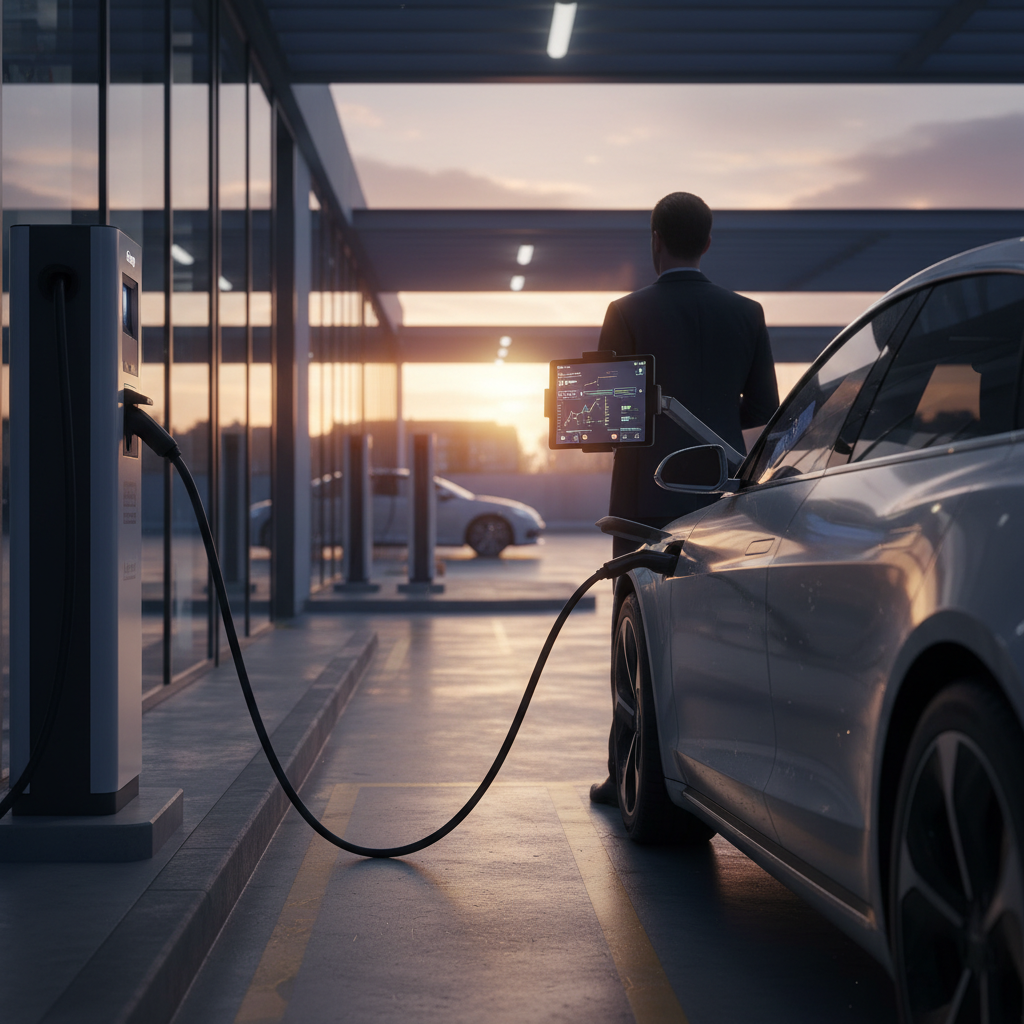
Where you charge matters. Home charging on a time‑of‑use rate is the cheapest option. Public DC fast charging can be two to three times more expensive per kWh, and in some corridors it can approach gas‑like costs per mile. If you rely heavily on fast charging, your electric vs gas savings shrink, though they rarely disappear entirely unless prices are extreme.
Watch demand charges and idle fees
Maintenance: Fewer Moving Parts, Different Risks
EVs win the electric vs gas battle decisively on routine maintenance. No oil changes, spark plugs, timing belts, exhaust systems, or transmission fluid. Most EV service items boil down to cabin air filters, tire rotations, brake fluid every few years, and software updates. That simplicity shows up clearly over a five‑year span.
Typical 5‑Year Maintenance Profile
Illustrative example for a mainstream compact SUV, 75,000 miles over 5 years.
| Item | Electric Vehicle | Gas Vehicle |
|---|---|---|
| Oil changes | Not required | 8–10 services |
| Engine air filter | Not applicable | 1–2 replacements |
| Spark plugs / ignition | Not applicable | 1 service on many models |
| Brake pads/rotors | Less wear (regeneration) | Moderate wear; often 1 pad replacement |
| Transmission service | Single‑speed unit, rarely serviced | May require fluid change |
| Cooling system | Battery/drive unit coolant every 8–10 years | Engine coolant service typically within 5–7 years |
| Total routine maintenance cost (5 years, est.) | Lower by ~30–40% | Higher due to engine and transmission service |
Actual costs vary by brand and driving style, but the pattern, lower routine maintenance for EVs, is consistent across most studies.
Good news on long‑term wear
The flip side: out‑of‑warranty repairs
Resale Value: EV Depreciation vs Gas
If electric vs gas were only about operating costs, EVs would win easily. Depreciation complicates the picture. Several 2023–2025 analyses show EVs, especially some high‑volume models, losing value faster than equivalent gas cars. That’s driven by rapid improvements in new EV tech, shifting incentives, and a still‑maturing used‑EV market.
How Depreciation Plays Out
Why many EVs are bargains on the used market but tough as new purchases
Faster early‑year drops
Battery confidence is key
Gas holds value more evenly
For you as a buyer, this cuts both ways. If you buy a new EV and sell in 3–4 years, depreciation can overwhelm your operating‑cost savings. If you buy a used EV after that initial drop, you can often get a relatively new, low‑mileage, high‑tech car for less than a new gas equivalent, especially if you have transparent battery‑health data.
Emissions: Electric vs Gas Over a Full Life Cycle
A fair electric vs gas comparison has to consider more than tailpipes. EVs have higher manufacturing emissions because battery production is energy‑intensive. Gas cars start out cleaner to build but spend their lives burning fuel. When you look at the full life cycle, manufacturing, driving, and end‑of‑life, modern studies consistently find EVs ahead in most regions of the U.S., even on today’s grid mix.
- In coal‑heavy grids, the advantage shrinks but usually doesn’t disappear; in cleaner grids with more wind and solar, EVs look dramatically better.
- Over a typical 8–12‑year ownership period, avoided tailpipe emissions dominate the equation for EVs, even accounting for battery production and replacements.
- Driving more miles per year actually improves the climate case for EVs, because the higher manufacturing emissions are spread over more electric miles.
Local air quality matters too
Driving Experience: Range, Refueling, and Daily Use
How Electric vs Gas Feel to Live With
Beyond the spreadsheet, your day‑to‑day experience in each type of car
Performance
Range & refueling
Daily convenience
Think in patterns, not maximums
Used Electric vs Used Gas Cars: Special Considerations
Comparing electric vs gas in the used market is different from comparing brand‑new vehicles. Many of the EV downsides (high purchase price, steep early depreciation) have already played out by the time a car is 3–6 years old. At that point, the big questions are battery health, charging fit for your lifestyle, and how transparent the deal is.
Key Questions When Comparing a Used EV vs Gas Car
1. What’s the battery’s actual health?
Don’t rely on guesses. Ask for data on current usable capacity vs original, recent range at a known state of charge, and any battery‑related warranty or recall work. Recharged’s Score report surfaces this in plain language for every EV we list.
2. How and where will you charge?
If you can install or already have Level 2 home charging, a used EV becomes far more compelling. If you can only use public charging and your region is sparse on infrastructure, a gas car may still be more practical today.
3. What’s the remaining warranty coverage?
Many EVs carry 8–10‑year battery and drive‑unit warranties, typically covering 100,000 miles or more. A 4‑year‑old EV with plenty of warranty left can be a lower‑risk bet than an out‑of‑warranty gas car with complex engine and transmission components.
4. How do total monthly costs compare?
Look beyond price. Include expected fuel or electricity, insurance, and any financing. Recharged helps you see a clear, apples‑to‑apples monthly picture, including optional financing and trade‑in.
5. Does the car fit your trips?
Map your typical drives and the rare long ones. A 230‑mile used EV might be perfect if you mostly commute and occasionally rent for long road trips, but frustrating if you routinely drive 300‑plus miles into rural areas.
Where Recharged fits into this decision
Ready to find your next EV?
Browse VehiclesWhich Is Better for You? Quick Scenarios
Electric vs Gas: Recommended Paths by Use Case
Urban or Suburban Commuter With Home Parking
Daily driving mostly under 60–80 miles.
Can install or already has a Level 2 home charger.
Occasional road trips, comfortable planning charging stops.
Prioritizes low running costs and clean air in the neighborhood.
<strong>Leaning:</strong> Used EV is often the sweet spot, lower price plus EV running‑cost savings.
Rural Driver or Frequent Long‑Distance Traveler
Regularly drives 200+ miles into areas with sparse fast charging.
No reliable option for home charging (street parking, shared lots).
Needs quick, predictable refueling with minimal planning.
Local winter climate may reduce EV range significantly on key trips.
<strong>Leaning:</strong> Efficient gas or hybrid vehicle may still be more practical for now.
Budget‑Focused First‑Time Buyer
Total monthly payment and predictability matter most.
Open to older vehicles if they’re reliable.
May not have access to a garage or driveway.
Comfortable learning some EV basics with help.
<strong>Leaning:</strong> Either a well‑vetted used EV with strong battery health or a simple, proven gas car, compare total monthly cost, not just purchase price.
Two‑Car Household
One vehicle can handle road trips; the other mostly stays local.
Has suburban or rural home with driveway or garage.
Interested in cutting fuel spending and emissions.
Wants to “test‑drive” EV ownership without giving up gas entirely.
<strong>Leaning:</strong> Make the commuter car electric, keep one gas or hybrid for long hauls. This combo captures many EV benefits with fewer trade‑offs.
Electric vs Gas FAQs
Frequently Asked Questions About Electric vs Gas Cars
Bottom Line: Electric vs Gas in 2025
The honest answer in the electric vs gas debate is that neither powertrain is universally “better”, but each is clearly better for certain drivers, budgets, and timelines. EVs shine when you can charge at home, drive enough miles to capitalize on lower running costs, and plan to keep the car long enough for those savings to outweigh higher purchase price and depreciation. Gas and hybrids still excel for long‑distance, rural, or infrastructure‑poor use cases where refueling convenience is king.
If you’re EV‑curious but wary of first‑owner depreciation or battery uncertainty, a used EV with verified battery health is often the most compelling compromise. That’s precisely where Recharged can help, combining transparent battery diagnostics, fair market pricing, financing options, and EV‑savvy support so you can make a grounded decision rather than a leap of faith. Whether you end up electric, gas, or somewhere in between, the goal is the same: a car that fits your life, your budget, and your values for years to come.