If you’ve ever typed “electric vehicle repair shop near me” into a search bar and then wondered who actually knows how to fix your EV, you’re not alone. EVs need less routine maintenance than gas cars, but when something does go wrong, you suddenly care a lot about who’s touching high‑voltage wiring, battery packs, and complex software.
EV repair is still catching up
Why EV Repair Feels Different From Gas-Car Repair
With a traditional car, any decent mechanic can handle brakes, oil changes, and most drivability issues. Electric vehicles flip that logic. You’ll still need tires, suspension, and alignment work from almost any shop, but critical systems, like the high‑voltage battery, inverter, and drive unit, require special training, tools, and safety procedures.
How EVs Change the Repair Conversation
Less routine maintenance, more emphasis on software and high‑voltage systems.
Fewer Fluids
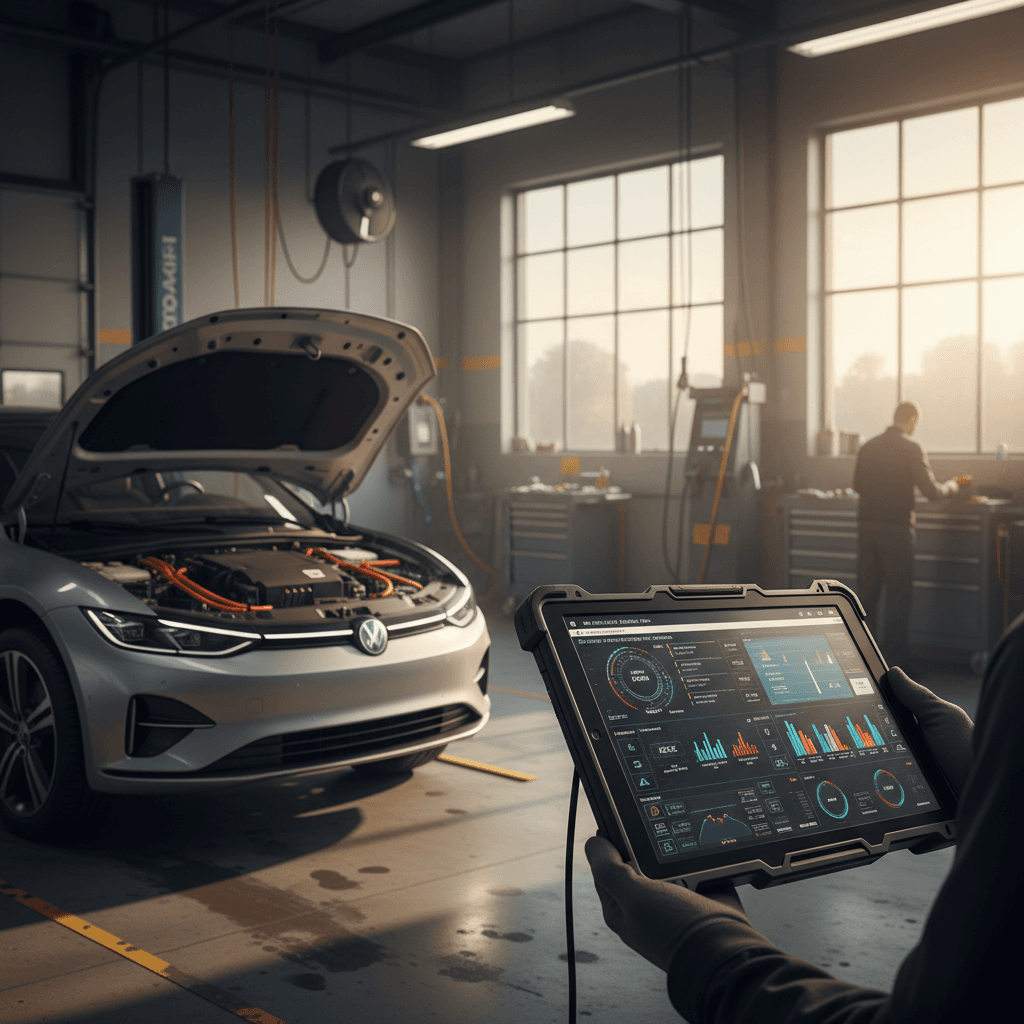
More Software
High‑Voltage Risk
Because of this, the right electric vehicle repair shop near you isn’t just the closest one, it’s the one that knows your specific EV platform and has invested in training and tooling to work on it safely.
Why It’s Getting Easier to Find EV Repair Near You
Types of Electric Vehicle Repair Shops Near You
When you search for an EV repair shop near me, you’re usually seeing a mix of dealership service centers, national chains, and independents. Each has trade‑offs in cost, capability, and convenience.
Where to Take Your EV: Pros and Cons by Provider Type
Use this table as a quick reference when you’re deciding who should see your car first.
| Provider type | Best for | Pros | Cons |
|---|---|---|---|
| Brand dealership | Recalls, warranty, complex software issues | Direct access to factory tools, bulletins, and parts; strongest coverage for brand‑specific problems. | Higher labor rates, upsell pressure, limited appointments, often not ideal for older or out‑of‑warranty EVs. |
| Independent EV‑certified shop | Out‑of‑warranty repairs, value‑oriented owners | Lower rates, flexible, often strong local reputation. Many are rapidly building EV expertise. | Capability can vary widely; some still learning EV platforms or lack brand‑specific software access. |
| National chains / tire shops | Tires, alignments, brakes, basic inspections | Easy to schedule, good for consumables and suspension work; growing EV support at larger locations. | Usually won’t touch high‑voltage, battery pack work, or advanced diagnostics. |
| Body shops with EV training | Collision repairs, battery safety inspections | Know how to assess battery and high‑voltage components after a crash, not just sheet metal. | May not handle driveline or electronics diagnostics beyond collision‑related damage. |
You don’t have to stick with the dealership forever, but for some repairs they’ll still be your best option.
Don’t assume “we work on EVs” means “we do everything”
How to Search for an Electric Vehicle Repair Shop Near Me
To find a solid electric vehicle repair shop near you, combine local search tools with a few old‑school phone calls. You’re not just looking for a green “open” sign, you’re looking for proof that they’ve done your kind of repair before.
Step‑by‑Step: Finding a Trustworthy EV Repair Shop Near You
1. Start with map and review apps
Search phrases like “EV repair shop,” “hybrid and electric specialist,” or your model name plus “service.” Pay attention to photos, do you actually see EVs in the bays?
2. Filter by brand familiarity
If you drive a Tesla, Rivian, Hyundai, Kia, Ford, or VW, look for reviews or website language that mention those brands specifically, not just generic “EV friendly.”
3. Check the shop’s website for EV language
Look for sections that call out EV or hybrid expertise, list compatible brands, or highlight high‑voltage training and tools. If their site still screams carburetors, keep looking.
4. Call and ask about your exact issue
Describe your symptom: “My Bolt shows a high‑voltage system error,” or “My Model 3 needs a drive unit bearing.” Ask, “Is that something you’ve repaired before on this model?”
5. Ask what they won’t do
A confident shop will say, “We don’t open battery packs yet,” or “We’ll do diagnostics, but pack replacements still go to the dealer.” Clear boundaries are a good sign.
6. Compare availability and transparency
Ask for a rough diagnostic fee, earliest appointment date, and whether they share digital inspections with photos. The more transparent they are upfront, the better.
Must‑Have Credentials for an EV Repair Shop
You don’t need to become an engineer to vet a shop, but you should know the basic badges of competence. A good EV mechanic near you will be able to talk about safety, certifications, and tools in plain language.
What to Look For on the Wall (or Website)
These signals tell you a shop takes EV safety and training seriously.
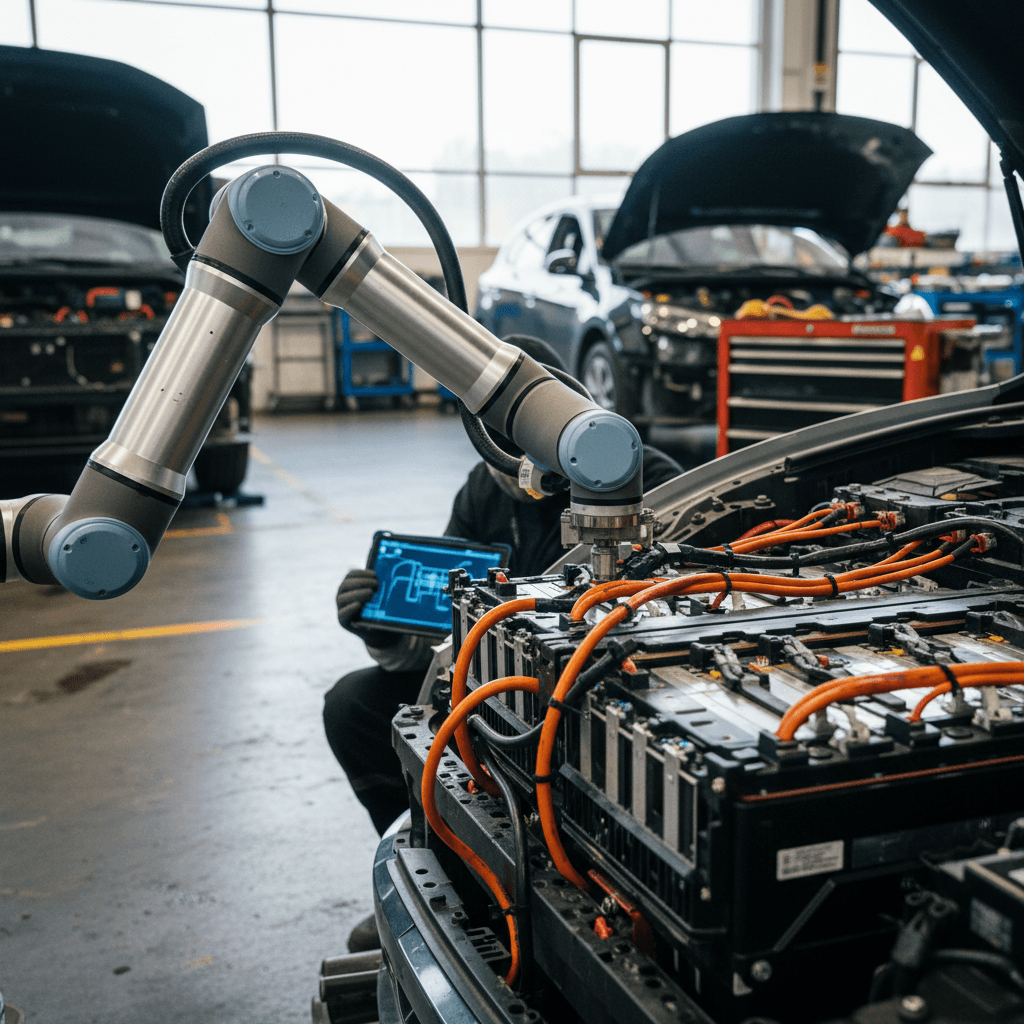
High‑voltage safety training
ASE & OEM certifications
EV‑specific tools & PPE
Ask this one question
Common EV Repairs and What They Typically Cost
EVs often go longer between shop visits, but when they do need work it can be unfamiliar territory. Here’s what you can expect from the most common repairs and services an EV repair shop near you might quote.
Typical EV Service and Repair Ranges (Out‑of‑Warranty)
Actual pricing varies by brand, region, and shop type, these are directional ranges to help frame your expectations.
| Repair / service | Where it’s usually done | Typical range (USD) | Notes |
|---|---|---|---|
| Tires & alignment | Independent / chains | $600–$1,400 | EVs are heavier and often wear tires faster. Always choose EV‑rated tires and get a 4‑wheel alignment. |
| Brake service (pads/rotors) | Independent / chains | $300–$900 | Regenerative braking reduces wear, but corrosion can be an issue in wet/salty climates. |
| HVAC & heat pump issues | Dealer or advanced indie | $400–$2,000 | Heat pumps and coolant loops are critical for both cabin comfort and battery thermal management. |
| On‑board charger (OBC) faults | Dealer or EV specialist | $800–$2,500 | When Level 2 charging stops working but DC fast charge still works, the OBC is a common suspect. |
| 12‑V battery replacement | Independent / chains | $150–$400 | Small but essential. Many “no start” issues on EVs trace back to a weak 12‑V battery. |
| Drive unit / motor noise | Dealer or EV specialist | $2,000–$6,000+ | Sometimes repairable with bearings; in other cases the unit is replaced as an assembly. |
| High‑voltage pack diagnostics | Dealer or EV specialist | $200–$600 (diagnosis) | Deep diagnostics are usually a few hours of labor plus scan time, worth doing before any big decision. |
| High‑voltage pack replacement | Dealer, warranty, or specialty rebuilder | $8,000–$20,000+ | Most packs last many years, but severe degradation or damage can be expensive out of warranty. In some cases, module‑level repair or a used pack is an option. |
Ask for a written estimate and keep records; they’re invaluable if you later decide to sell or trade your EV.
Never let an untrained shop open your battery pack
Questions to Ask Before You Book an Appointment
Once you’ve narrowed your list to two or three promising EV repair shops near you, a five‑minute phone call can usually reveal which one deserves your business.
- “How many EVs do you typically see in a week or month?” Look for an answer that sounds routine, not rare.
- “Have you serviced this specific model and year before?” A yes, with an example, is better than a vague “We work on everything.”
- “What diagnostic fee do you charge, and what do I get for it?” Ideally you receive scan results, notes, and a prioritised list of issues.
- “Do you provide digital inspections with photos or video?” This makes it easier to understand recommendations and keep records.
- “Which EV repairs do you not perform?” Honest limits signal a shop that knows where its expertise begins and ends.
- “What’s your warranty on parts and labor?” Many independents match or exceed dealership guarantees.
Good shops welcome questions
When to Repair Your EV vs. Replace It
At some point, every EV owner faces a hard question: is it worth putting more money into repairs, or is it time to move into a different vehicle? The answer depends on battery health, repair costs, and your long‑term plans.
When Repairing Makes Sense
- Battery health is still solid. Range hasn’t fallen dramatically, and diagnostics don’t show major cell issues.
- The repair is under ~20–30% of your EV’s market value. For example, a $2,000 drive‑unit bearing repair on a $15,000 car is usually reasonable.
- You like the car otherwise. If it still fits your lifestyle and you know its history, a repair can be cheaper than resetting the clock with a new purchase.
- You can verify the fix. The shop can explain the root cause and how their repair addresses it, not just clear a code.
When It’s Time to Consider Replacing
- Battery degradation is severe. Real‑world range is far below original specs and limits how you actually use the car.
- Repairs exceed ~40–50% of the car’s value. An out‑of‑warranty pack replacement on a low‑value EV can easily cross this threshold.
- Multiple big repairs are stacking up. If the car needs tires, suspension, and high‑voltage work all at once, it may be smarter to reset into a healthier vehicle.
- You can’t get clear diagnostics. If even specialists can’t confidently identify the problem, gambling on expensive parts gets risky fast.
Think in total cost of ownership, not just one bill
How Recharged Helps With Battery Health and Repair Decisions
If you’re staring at a big repair estimate and wondering whether to keep or replace your EV, the missing piece is often objective battery data and fair pricing information. That’s exactly where Recharged comes in.
What Recharged Brings to the Table
Data, transparency, and options when repair bills start to climb.
Recharged Score battery diagnostics
Instant offers & trade‑ins
Curated used EV inventory
Ready to find your next EV?
Browse VehiclesYou can even talk through your situation with an EV specialist, comparing your current repair estimate against the market value of your car and similar used EVs on the platform. Instead of guessing, you get a data‑driven view of whether to keep fixing or move on.
Use repair quotes as leverage
Electric Vehicle Repair Shop FAQ
Electric Vehicle Repair Shop: Frequently Asked Questions
Key Takeaways Before You Book Your Next EV Repair
- Don’t just search “electric vehicle repair shop near me” and click the first result, verify EV training, tools, and experience on your specific model.
- Use at least one phone call to confirm what the shop will and won’t do on high‑voltage systems, and get clarity on diagnostic fees and warranties.
- Treat battery health as the central factor in any big repair decision; it’s the anchor for your EV’s value and usefulness.
- For expensive out‑of‑warranty repairs, compare costs against your EV’s market value and consider alternatives like selling or trading into a healthier used EV.
- Leverage platforms like Recharged to see transparent used EV pricing, verified battery health via the Recharged Score, and easy trade‑in or instant‑offer options if you decide it’s time to move on.
Finding the right electric vehicle repair shop near you is about more than proximity. It’s about pairing a trained, well‑equipped team with realistic expectations for your EV’s long‑term value. Ask better questions, insist on transparency, and don’t be afraid to walk away from vague answers. Whether you ultimately repair your current EV or replace it with a used one backed by a Recharged Score Report, the goal is the same: more electric miles, less guesswork, and a clearer view of the road ahead.