You type “electric vehicle repair near me” into your phone and quickly realize something: plenty of shops say they work on cars, but very few clearly advertise electric vehicle expertise. At the same time, EVs are rolling into repair bays more than ever, and the global EV maintenance market is already in the tens of billions of dollars each year. The gap between the number of EVs on the road and the number of shops ready to fix them is exactly why choosing the right repair option matters so much, especially if you own or are shopping for a used EV.
What this guide covers
Why “electric vehicle repair near me” feels confusing right now
If you feel like you’re early to the party, you’re not wrong. Most U.S. shops still see a relatively small number of EVs each year; many report that EVs make up under 10% of their total car count, and roughly a quarter of shops don’t service EVs at all. At the same time, industry surveys in 2025 show more than half of general repair shops are now seeing more EVs and hybrids in their bays and nearly 40% are actively marketing EV expertise. The market is pivoting, but it’s not fully there yet.
EV repair is small today, but growing fast
Higher repair costs are real
How EV repair is different from gas-car repair
1. Fewer moving parts, more electronics
EVs eliminate many traditional wear items: no engine oil, spark plugs, timing belts, or exhaust system. Instead, you have:
- One or more electric motors
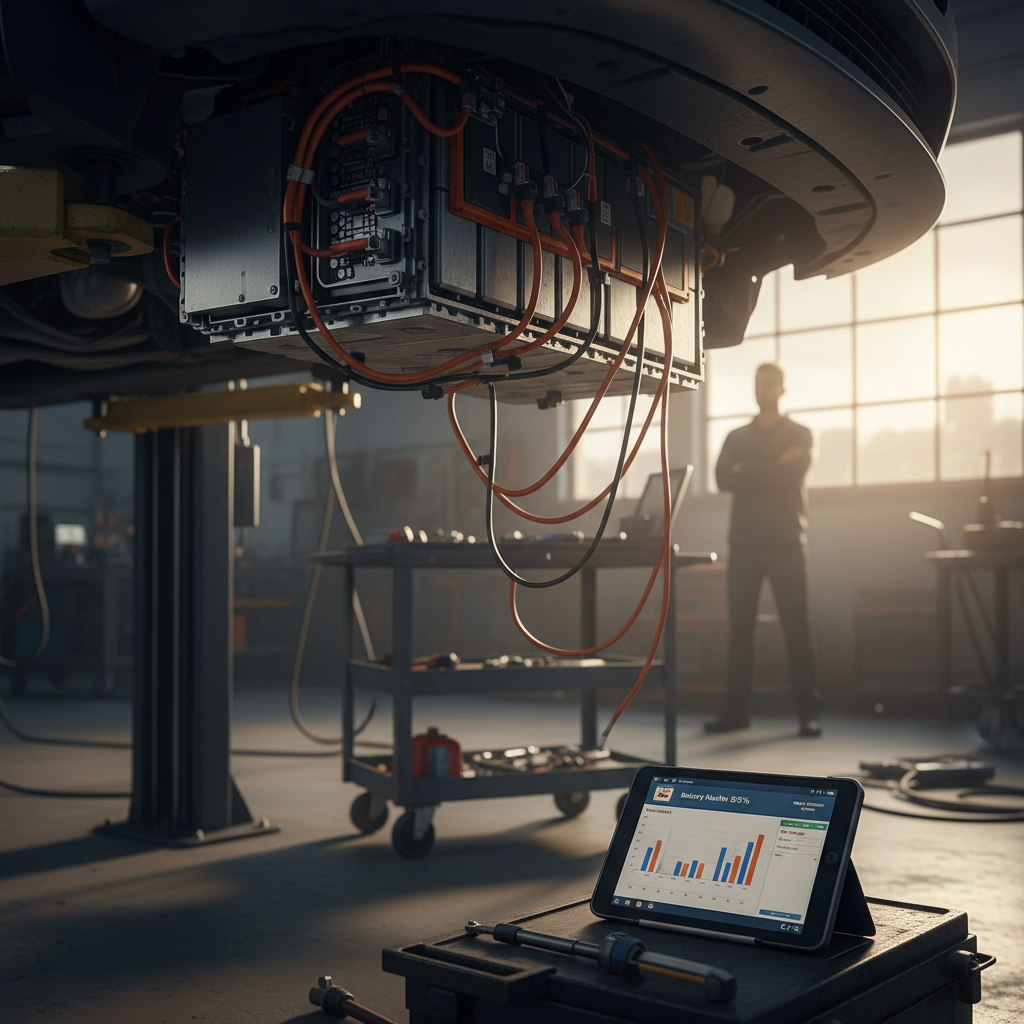
- A large high‑voltage battery pack
- Power electronics (inverters, DC‑DC converters)
- Extensive software and control modules
This shifts repair work away from mechanical failures toward diagnostics and electronics.
2. High-voltage safety requirements
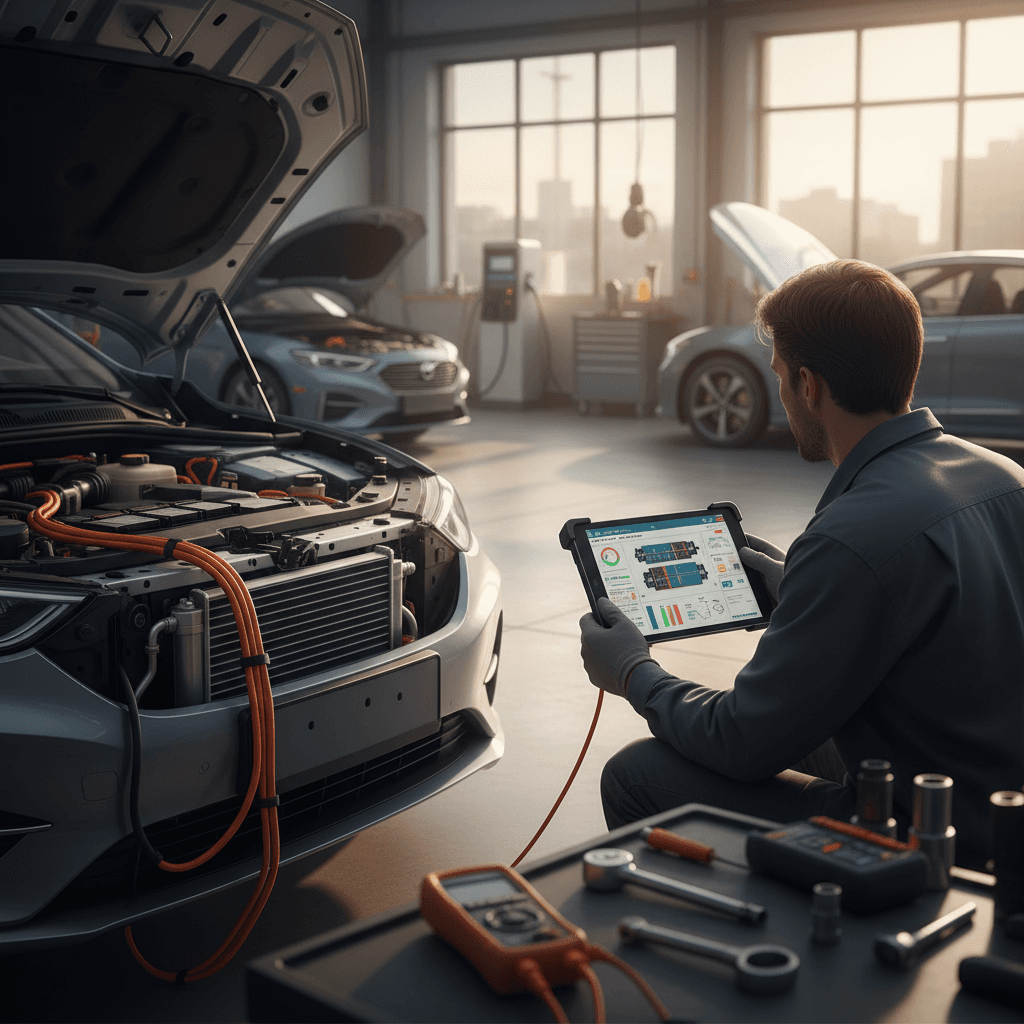
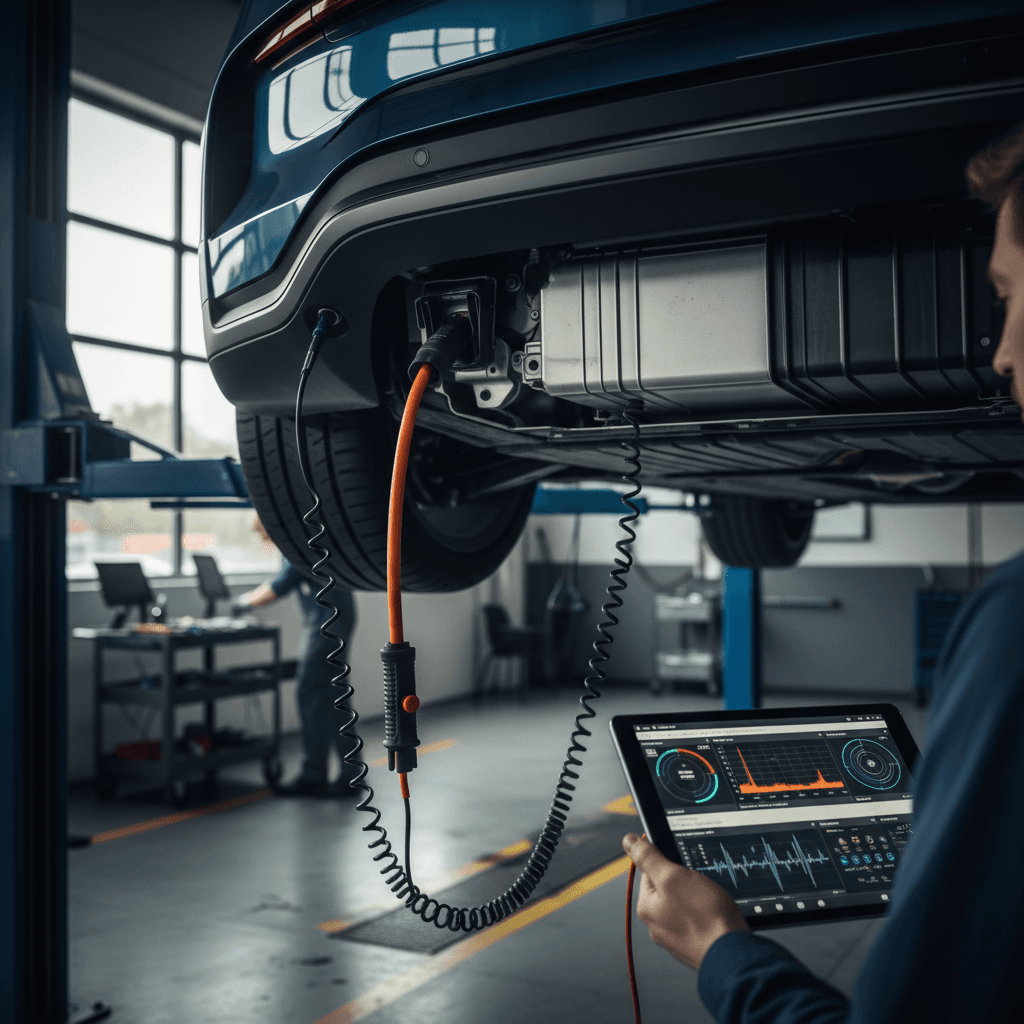
Most EVs run 350–800 volts. That’s not something a generalist can casually learn on YouTube. Proper EV repair requires:
- High‑voltage safety training and PPE
- Insulated tools and procedures for powering down the pack
- Manufacturer‑approved scan tools and software access
Shops that invest in this training and tooling are the ones you want to work with.
- Regenerative braking changes how brakes and tires wear, so shops need to understand EV‑specific service intervals.
- Thermal management (cooling systems for the battery and motor) is critical; small leaks or pump failures can lead to expensive damage if ignored.
- Software updates can fix or create issues, so your “mechanic” increasingly needs to think like a technician and a network engineer.
Look for EV-specific language
Common EV repair and maintenance jobs
Despite the headlines, most electric vehicles don’t spend their lives in high‑voltage surgery. When you search for EV repair near me, there’s a good chance you actually need very familiar work, just performed by someone who understands EV quirks.
What local shops are fixing on EVs today
From simple tire wear to complex battery diagnostics
Tires & alignment
Industry data shows tire service is the top EV repair today. Extra weight and instant torque wear tires faster, and many EVs need specific, low‑rolling‑resistance tires.
Ask shops if they know your EV’s recommended tires and alignment specs.
Brakes & suspension
EVs use regenerative braking, so pads can last longer, but weight and acceleration still stress suspension components.
A good EV shop understands how regen changes inspection intervals.
Battery & software checks
Think of this as the EV equivalent of checking engine compression and fuel trim.
- State‑of‑health (SOH) battery checks
- High‑voltage isolation tests
- Software updates and fault‑code diagnostics
- HVAC and heat pump repairs (crucial for range and comfort)
- Charging‑port and onboard charger issues (car won’t charge or charges slowly)
- 12‑volt battery failures (still common and can disable the car)
- Body and structural repairs after collisions, often in OEM‑certified shops
Don’t let just anyone touch the battery
Who can actually work on your EV today
1. Dealer service departments
Pros:
- Direct access to factory tools and parts
- Most experience with your specific model early on
- Best option for warranty and recall work
Cons:
- Often more expensive hourly rates
- Longer wait times in busy markets
- May push replacement over repair
2. Independent EV-focused shops
Pros:
- Technicians who intentionally trained on EVs
- More flexible on repairing vs replacing components
- Often better communication and transparency
Cons:
- Still limited in many areas
- May not handle high‑voltage warranty work
3. Mobile and specialty services
Pros:
- Come to your home or office
- Great for diagnostics, tires, 12‑volt issues
- Can be cheaper than full‑service shops
Cons:
- Limited tooling and lift access
- Won’t handle heavy structural or battery work
Good news for owners of used EVs
How to find trustworthy electric vehicle repair near you
Step-by-step: finding the right EV repair shop
1. Start with EV-specific directories and your OEM
Search your automaker’s website for certified EV service locations, then cross‑check with general review sites and mapping apps. If you drive a Tesla, look at both Tesla Service Centers and approved body shops in your region.
2. Use search terms beyond just “near me”
Include details like <strong>“high voltage battery diagnostics”</strong>, <strong>“[your model] EV specialist”</strong>, or <strong>“EV certified technician”</strong>. This surfaces shops that have invested in EV tooling and training rather than those riding the keyword wave.
3. Scan their site for proof, not buzzwords
On the shop’s website, look for photos of EVs in the bay, mention of specific models, training credentials, and high‑voltage safety language. A single “we work on hybrids and EVs” line isn’t enough.
4. Check reviews with an EV lens
Filter reviews to find comments from EV owners. You’re looking for mentions of clear communication around battery health, software issues, or charging problems, not just “great oil change coupons.”
5. Call and ask pointed questions
A five‑minute phone call can tell you more than a dozen reviews. Ask how many EVs they see each week, whether techs are EV‑certified, and what scan tools they use (we’ll cover specific questions next).
6. Start with a small job first
If you’re unsure, start with a tire rotation, brake inspection, or minor concern. Use that visit to assess communication, transparency, and whether they clearly explain EV‑specific concerns.
Key questions to ask any EV repair shop
Once you’ve narrowed your list, a short conversation can differentiate a true EV‑ready shop from one that’s still figuring it out on your time and dime.
Questions that separate EV pros from pretenders
Use this script when you call or visit an EV repair shop.
| Question | What you want to hear | Red flag answers |
|---|---|---|
| How many EVs do you service per week? | Specific numbers and models, even if modest, plus steady growth. | “We’ve seen a couple,” with no details. |
| Do your technicians have EV or high-voltage certification? | Mentions of OEM EV training, high‑voltage courses, or recognized programs. | “We’re experienced, we don’t need formal certification.” |
| What scan tools do you use for my model? | Named tools or OEM software access. | “Our generic scanner works on everything.” |
| Can you perform battery state-of-health tests? | Yes, with a clear explanation of their process and limitations. | “We can read the dashboard, same thing.” |
| How do you safely power down the high-voltage system? | A step‑by‑step explanation referencing OEM procedures and PPE. | Vague “we disconnect the battery” answers. |
You don’t have to be an engineer, these questions simply test whether a shop has done the homework required to safely work on your EV.
Don’t be afraid to take notes
What electric vehicle repairs really cost
The biggest surprise for many new owners isn’t day‑to‑day maintenance, EVs often cost less to maintain over their lifetime, it’s the price of unplanned repairs, especially involving batteries, body structure, and advanced driver‑assistance systems (ADAS).
Typical lower-cost EV jobs
- Tire rotation, inspection, and balance: Similar pricing to gas cars, often $40–$120.
- Cabin air filter, wipers, 12‑volt battery: Routine wear‑and‑tear items, usually under a few hundred dollars.
- Basic diagnostics: Reading fault codes and initial EV system checks may run an hour of labor.
The key is choosing a shop that interprets EV codes correctly, guessing and parts‑swapping gets expensive fast.
Higher-cost or high-risk repairs
- High‑voltage battery repair or replacement: Often the single biggest exposure. Full pack replacements can reach well into five figures on some models.
- Structural collision repairs: Some EVs integrate battery protection into large castings or bonded structures. Even moderate hits can be complex.
- Charging and power electronics: Onboard chargers and inverters aren’t cheap modules; misdiagnosis can mean replacing good parts.
This is where a trained EV technician and solid diagnostics pay for themselves.
Insurance and total losses
Used EVs, repair risk, and how to protect yourself
The used EV market has exploded as prices dropped and early leases ended, and that’s good news if you’re value‑focused. But repair and battery health risk is not evenly distributed. Two cars with identical miles can have very different battery conditions and long‑term costs.
Three ways to stay ahead of repair surprises on a used EV
Especially important if you’re buying out of warranty
1. Get independent battery health data
A true state‑of‑health battery test is the used EV equivalent of a compression test on a gas engine.
At Recharged, every vehicle includes a Recharged Score Report with verified battery health so you understand remaining capacity, not just what the dash gauge says.
2. Model-specific repair research
Before buying, search for known issues and repair campaigns for your specific model and year.
Look for patterns around battery packs, onboard chargers, and infotainment modules, then factor that into your budget.
3. Line up a shop before you buy
It’s much easier to buy a used EV confidently when you already know who can service it.
Call local EV‑capable shops and ask whether they’re comfortable inspecting and maintaining the exact model you’re considering.
How Recharged helps de‑risk used EV repair
Ready to find your next EV?
Browse VehiclesDealer vs independent vs mobile: where to go when
Go to the dealer when…
- Your EV is under factory warranty or subject to a recall.
- You need a full battery pack replacement or major high‑voltage component under coverage.
- A complex software or ADAS issue clearly ties to OEM updates.
Dealers have the deepest integration with factory tools and technical bulletins.
Choose an independent EV shop when…
- Warranty is expired and you want repair options beyond simply replacing modules.
- You care about long‑term relationship and transparency.
- You’re dealing with repeated issues that haven’t been solved elsewhere.
The best independents can often save you money by diagnosing precisely instead of defaulting to expensive assemblies.
Call a mobile service when…
- You need convenient diagnostics or simple repairs at home or work.
- The car is safe to drive but throwing warning lights.
- You’re dealing with tires, 12‑volt battery, or minor hardware issues.
Mobile providers are a great first step if you’re not sure how serious the problem is.
Electric vehicle repair near me: FAQ
Frequently asked questions about EV repair near you
The bottom line on finding EV repair near you
Searching for “electric vehicle repair near me” in 2025 is very different from searching for a brake job on a gas car. The shops that can truly handle your EV have invested in high‑voltage training, specialized tools, and software access, and they’re still a minority in many markets. Your job isn’t to become a technician, it’s to recognize which shops have done the work to deserve your EV and your dollars.
Start by understanding how EV repair differs, then use the questions and checklists in this guide to vet local providers. If you already own an EV, line up a trusted shop before something urgent happens. And if you’re shopping for a used EV, pair a trustworthy repair option with verified battery health and transparent pricing, exactly what you get when you buy through Recharged with a Recharged Score Report, expert EV support, and financing options that help keep your total cost of ownership in check.