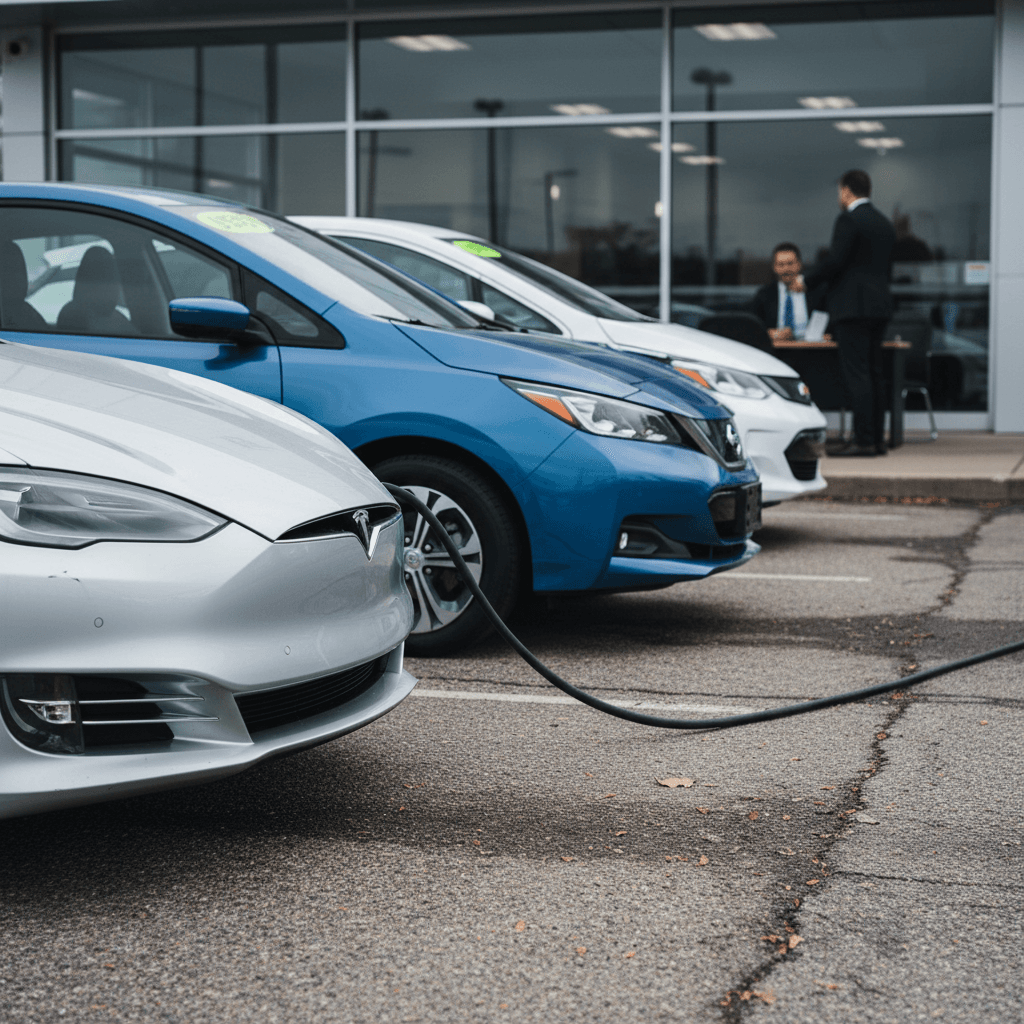
Walk onto a typical electric vehicle dealership lot in 2025 and you’ll notice two things right away: a lot more EVs than even a few years ago, and a lot more confusion about how to value them. Prices, incentives, battery health, charging standards, it’s a very different game than buying a gas car. This guide breaks down how EV dealerships work, what’s changing, and how to shop smarter, especially in the fast‑growing used EV market.
Why this matters now
Why electric vehicle dealerships feel different
EVs upend decades of dealership muscle memory. Sales teams are used to talking about oil changes, timing belts, and transmission flushes, not kilowatt‑hours, charge curves, and battery warranties. At the same time, the economics of new EVs have been volatile: aggressive incentives, shifting tax credits, and fast‑falling prices have made it harder for traditional dealers to price and stock EVs confidently.
Snapshot of the EV dealership market in 2025
The risk behind the deals
Types of electric vehicle dealerships today
When you google “electric vehicle dealership,” you’re really seeing several very different business models that all happen to sell EVs. Knowing which one you’re dealing with helps you set expectations around pricing transparency, expertise, and support.
Four main ways to buy an EV from a dealer
Each has strengths and trade‑offs, especially for first‑time EV buyers.
Traditional franchise dealer
Who they are: Brand‑specific dealers (Ford, Hyundai, VW, etc.) operating under state franchise laws.
- Sell new and used EVs alongside gas cars.
- Access to OEM incentives, certified pre‑owned programs.
- EV expertise varies widely by location and salesperson.
Independent used EV dealer
Who they are: Standalone used‑car dealers that have leaned into EV inventory.
- Mix of brands and model years.
- Pricing can be competitive, but battery info is often thin.
- Warranty and reconditioning quality vary a lot.
Online-first EV retailer
Who they are: Digital‑first used EV platforms.
- Shop and complete paperwork entirely online.
- Nationwide inventory, home delivery in many states.
- Experience depends on how transparent they are about battery health.
EV‑specialist marketplace (like Recharged)
Who they are: EV‑only marketplaces that combine online shopping with specialist support.
- Focus exclusively on EVs and plug‑ins.
- Standardized battery health diagnostics and pricing tools.
- Trade‑in, financing, and nationwide delivery built around EV ownership.
How to narrow your options
How EV pricing and incentives work at dealerships
In a world of volatile EV prices and shifting federal incentives, it’s easy to assume the dealer has all the power. In reality, EV pricing is more transparent than many shoppers realize, if you know which levers matter: depreciation, incentives, and battery condition.
1. Depreciation hits EVs harder, at first
EVs tend to depreciate faster in the first few years than comparable gas cars, partly because technology and incentives move so quickly. That’s why a three‑year‑old EV with relatively low miles can be priced at half its original sticker. For buyers, this can be a huge value, if the battery is healthy.
2. Incentives and policy changes drive timing
Federal and state incentives have been moving targets. Some programs let dealers pass a tax credit through as an upfront discount on new or used EVs under specific price caps. Others are being phased out. Before you visit an EV dealer, check current federal and state programs and ask the dealer exactly which incentives are already baked into the price.
Don’t rely on yesterday’s incentives
Buying a used electric vehicle from a dealership
The used EV market is where dealerships are suddenly playing offense. As more leases end and early adopters trade up, used EV volume is surging, and prices have come down to the point where a used EV often undercuts a comparable gas car on total cost of ownership. But buying used is also where battery uncertainty and patchy dealer expertise can do the most damage if you’re not prepared.
Used EV: dealership vs private sale at a glance
How a typical used EV purchase compares depending on where you buy.
| Factor | Franchise / EV specialist dealer | Independent used dealer | Private party |
|---|---|---|---|
| Pricing transparency | Often list price plus doc fees; some publish battery reports and market comparisons. | Sticker may be attractive but details can be thin. | Negotiable but little structure; you do all the homework. |
| Battery health info | Best‑in‑class dealers provide state‑of‑health diagnostics and fast‑charge data. | Usually limited to "runs great" and an odometer reading. | You might see a screenshot from an app, but rarely a full report. |
| Return / exchange | Common to see 7–30‑day return or exchange windows. | Short return windows if any; check the fine print. | Almost never; once you pay, it’s your car. |
| Financing & protection plans | Integrated EV‑aware financing and optional warranties or service plans. | Financing through third parties; EV coverage can be vague. | You arrange financing and service on your own. |
Dealers can offer structure and protections, but you still need real battery data.
Where Recharged fits
Ready to find your next EV?
Browse VehiclesBattery health: the new “vehicle history report”
For gas cars, a vehicle history report and a quick test drive tell most of the story. For electric vehicles, the battery pack is the story, it’s the single most expensive component in the car and the biggest driver of real‑world range and resale value. That’s why any serious electric vehicle dealership should treat battery health like a first‑class data point, not an afterthought.
Four battery questions every EV dealer should answer
If they can’t, treat that as a red flag.
1. What’s the current state of health (SoH)?
SoH is typically expressed as a percentage of the original battery capacity. A healthy pack might show 90–95% after several years, depending on usage and chemistry.
2. How has the car been charged?
Frequent DC fast charging and sustained high‑temperature use can accelerate degradation. Good dealers will at least talk about the vehicle’s previous use and charging patterns.
3. What’s covered under warranty?
Most mainstream EVs carry 8–10‑year battery warranties with mileage limits. A dealership should be able to explain what’s left on the clock and how warranty claims work.
4. Do you provide a battery health report?
Look for a standardized report using professional diagnostics, not just a range estimate on the dash. Recharged’s Score Report, for example, packages SoH, fast‑charge behavior, and market pricing in one place.
“In the EV era, selling a used car without credible battery data is like selling a house without a home inspection report.”
Ask to see the report before you fall in love
Financing, trade-ins, and selling your EV
On the surface, financing an EV at a dealership looks just like financing any other car: down payment, APR, term, monthly payment. Under the hood, though, EVs change the math because fuel and maintenance costs are lower, and incentives sometimes flow through the dealer rather than your tax return.
Financing an EV
- Ownership vs lease: Leasing can be attractive when technology and incentives are shifting quickly, but buying a well‑priced used EV can lock in low running costs for years.
- Payment vs total cost: A slightly higher payment on an efficient EV can still beat a cheaper gas car once you factor in fuel and maintenance.
- Special EV programs: Some lenders and marketplaces offer EV‑specific financing or pre‑qualification flows that incorporate expected running costs.
Trade‑ins and selling your EV
- Trade‑in at EV‑savvy dealers: Dealers who understand battery health are more likely to value your EV fairly instead of low‑balling out of fear.
- Instant‑offer platforms: Some EV marketplaces, including Recharged, can give you an online offer or consign your car, often beating generic wholesale bids.
- Timing the market: Policy shifts and lease return waves can swing EV values quickly. If you’re on the fence about selling, keep an eye on both incentives and supply trends.
How Recharged can help
EV dealership vs online EV marketplace
For most shoppers, the real decision isn’t “dealer or nothing,” it’s whether to buy from a local electric vehicle dealership, an online‑first retailer, or an EV‑specialist marketplace. Each comes with its own mix of convenience, transparency, and expertise.
Which EV buying path fits you best?
Match your priorities, price, convenience, or hand‑holding, to the right channel.
Local EV‑friendly dealer
Best if: You want to test‑drive multiple models in one visit and build a local service relationship.
Watch for: Limited EV inventory, sales staff who pivot back to gas cars, and vague answers on battery health.
Online used‑car retailer
Best if: You care most about convenience and a quick transaction.
Watch for: Generic inspection reports that don’t say much about the battery, and return policies that look reassuring but hide restocking fees.
EV‑specialist marketplace
Best if: You want EV‑specific guidance, transparent battery diagnostics, and nationwide selection without losing support.
Watch for: Clear explanations of battery health reports, charging compatibility, and financing options designed for EVs.
Checklist: questions to ask any EV dealer
Use this list during your next EV test drive
1. How do you test and report battery health?
Ask what tools they use, whether you’ll get a written report, and how they factor battery condition into pricing. If you hear only “we ran it through our shop,” push for specifics.
2. What warranty remains, and what can I extend?
Have them break down battery, drivetrain, and bumper‑to‑bumper coverage by years and miles. Clarify whether any extended coverage actually addresses EV‑specific components.
3. How does this EV compare to a similar gas car on total cost?
A good salesperson should be able to talk through real‑world energy costs, maintenance, and expected depreciation, not just the monthly payment.
4. What charging options will I have at home and nearby?
Ask for guidance on Level 2 home charging, recommended amperage, and nearby DC fast‑charging networks that work with your car’s connector.
5. Can I see the full out‑the‑door price before I decide?
Request a written breakdown including dealer fees, taxes, and any add‑ons. This protects you from last‑minute surprises in the finance office.
6. What’s your return or exchange policy for EVs?
Because range and charging can be such a change from gas, it’s worth prioritizing dealers that offer a no‑hassle return or exchange window so you can live with the car for a few days.
If you feel rushed, pause
FAQ: electric vehicle dealerships
Frequently asked questions about EV dealerships
Bottom line: how to shop smarter for your next EV
Electric vehicle dealerships are still catching up to the technology they’re selling. Some are genuinely ahead of the curve, building processes, pricing tools, and service departments around EV reality. Others are treating EVs like slightly quirky gas cars and hoping you won’t notice the gaps. Your job is to tell which is which before you sign anything.
Focus on three pillars: transparent battery health data, clear, incentive‑aware pricing, and support that extends beyond the sale, from home charging guidance to fair trade‑in options. Whether you buy from a local electric vehicle dealership or an EV‑specialist marketplace like Recharged, those fundamentals will help you find an EV that fits your life today and still makes sense years down the road.