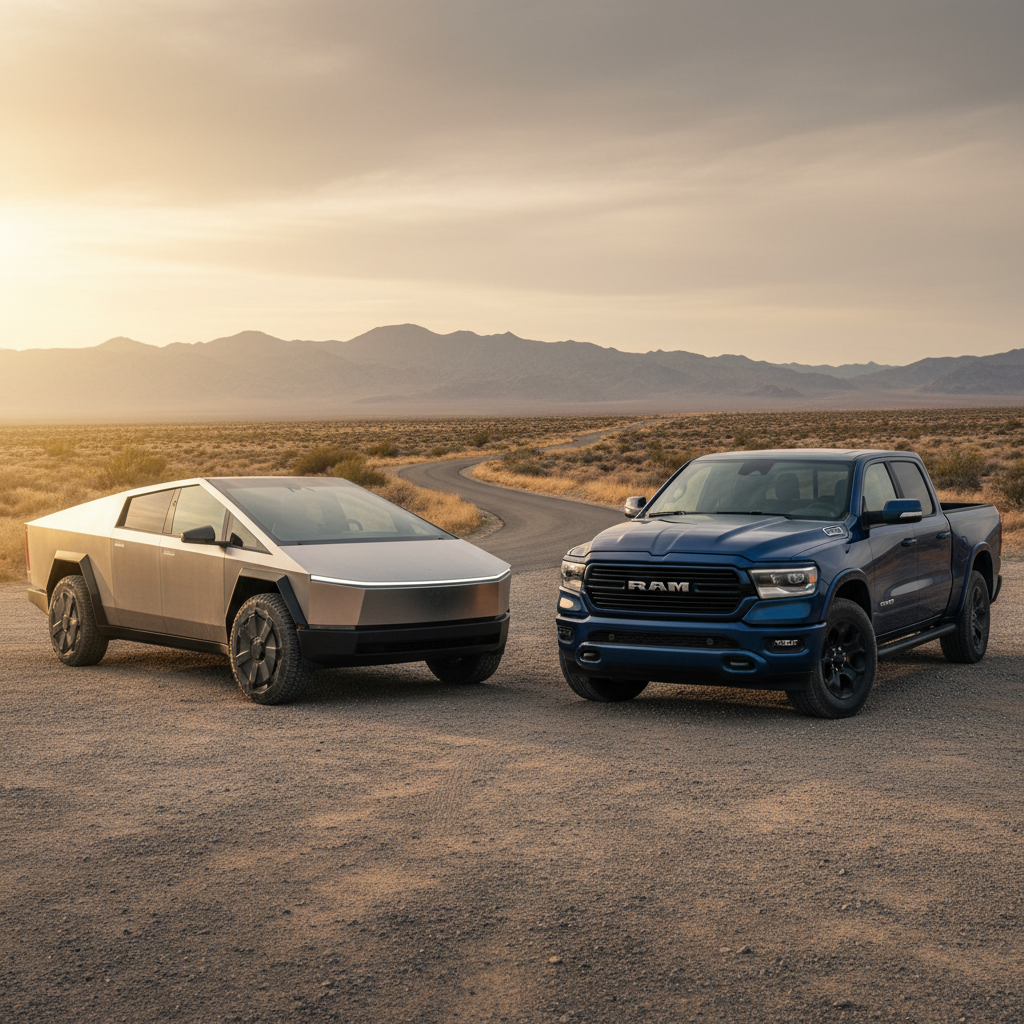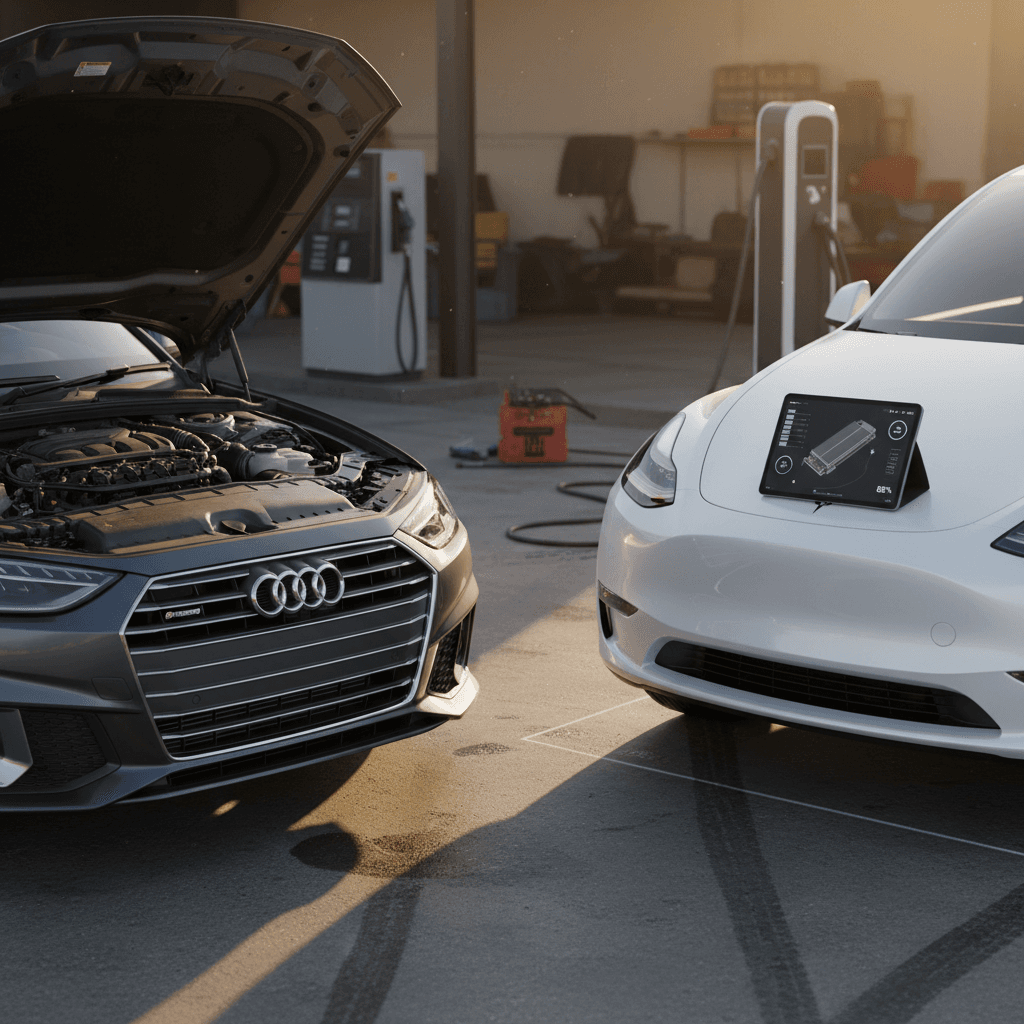
If you’re shopping for your next car in 2025, you’re probably weighing electric cars vs gas cars. Headlines swing between “EVs are the future” and “EV demand is stalling,” which doesn’t actually help you decide what to park in your driveway. This guide cuts through the noise with a practical, numbers-first look at costs, charging, emissions, and what changes when you shop used instead of new.
Quick take
Electric vs gas cars in 2025 at a glance
Where EVs stand relative to gas cars
Zooming out, EVs are still a minority of the U.S. fleet, but the shift is real. Global EV sales are growing faster than the overall car market, while gas-only sales are flat or shrinking. At the same time, EV growth in the U.S. has slowed in 2024–2025 as early adopters have mostly bought in and mainstream buyers demand clearer value, better charging, and more affordable models.
How we’re comparing electric cars vs gas cars
You’ll see a lot of sweeping claims online, “EVs always save money” or “EVs are worse for the environment once you count the battery.” Reality is more nuanced. To keep this practical, we’ll look at EVs vs gas cars across six dimensions:
- Purchase price, incentives, and financing
- Fuel vs electricity costs
- Maintenance, repairs, and reliability
- Emissions and climate impact
- Range, charging, and road trips
- Resale value, depreciation, and used-car math
New vs used matters a lot
Purchase price, incentives, and financing
Upfront price
On average, new EVs still cost more than comparable gas cars. Industry data from 2024–2025 puts the typical new EV transaction price in the mid-$50,000s, vs high-$40,000s for gas cars. The gap is shrinking as batteries get cheaper and more mainstream models arrive, but it hasn’t disappeared.
In the real world, that means if you’re cross-shopping, say, a compact gas SUV and its electric sibling, the EV often carries a several-thousand-dollar premium before incentives.
Incentives and financing
The U.S. federal Clean Vehicle Tax Credit still offers up to $7,500 for new EVs and up to $4,000 for used EVs, but only certain models and buyers qualify, and policy is in flux. Many states add rebates, tax exemptions, or HOV-lane perks.
At the same time, higher EV sticker prices mean higher loan amounts, which can translate into larger monthly payments or longer terms. Some lenders now offer EV-specific financing, and platforms like Recharged can help you see payment options side-by-side on used EVs, including pre-qualification with no impact to your credit.
Watch the fine print on incentives
Fuel vs electricity costs
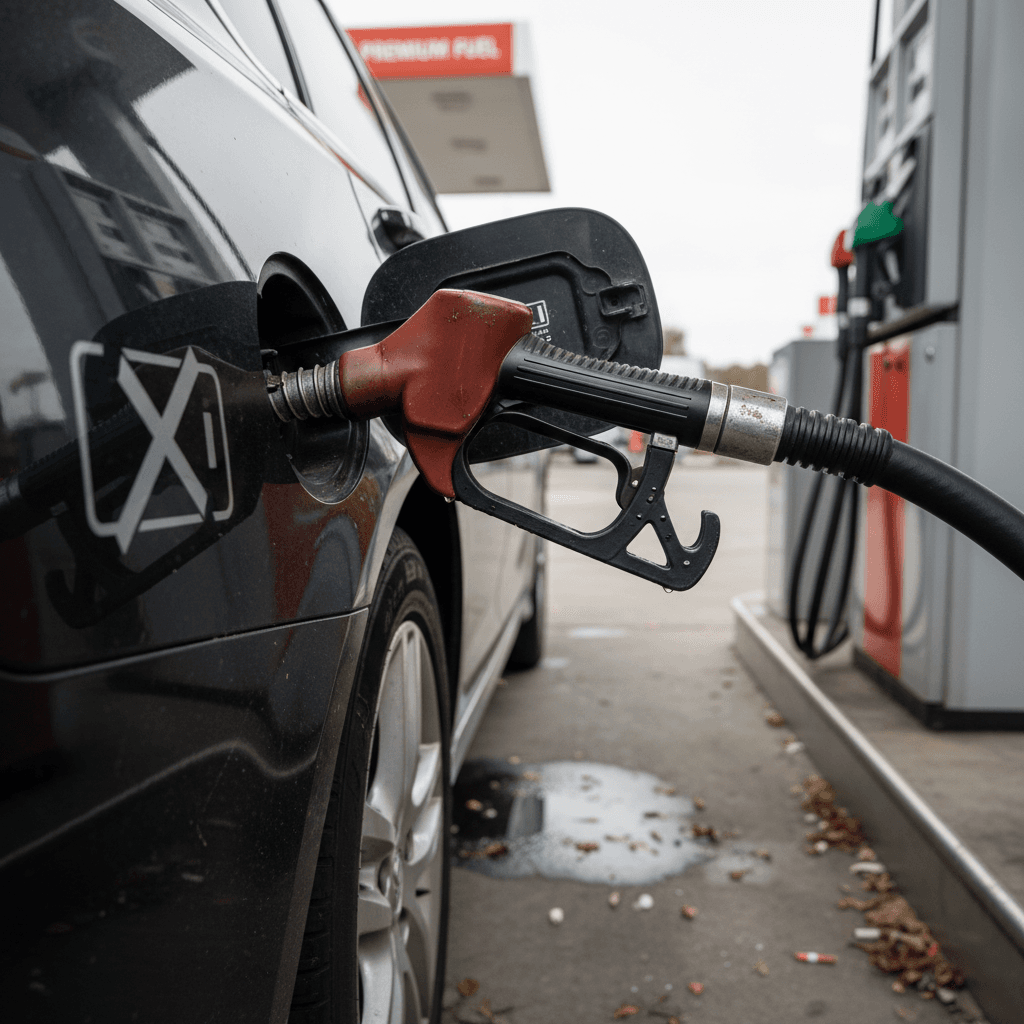
Fuel is where EVs shine most consistently. Even with volatile electricity rates, it’s usually cheaper to drive on electrons than gasoline, particularly if you can charge at home.
Typical fuel vs electricity costs (rough comparison)
Illustrative example assuming 12,000 miles per year. Your exact numbers will depend on local gas and electricity prices, driving style, and vehicle efficiency.
| Scenario | Assumptions | Annual Energy Cost | Cost per Mile |
|---|---|---|---|
| Gas car (30 mpg) | $3.75/gal gasoline | $1,500 | $0.125 |
| Efficient hybrid (50 mpg) | $3.75/gal gasoline | $900 | $0.075 |
| EV with home charging | $0.16/kWh, 3.0 mi/kWh | $640 | $0.053 |
| EV using mostly fast charging | $0.40/kWh equivalent, 2.8 mi/kWh | $1,714 | $0.143 |
EVs almost always win on per-mile energy cost, especially with home charging.
Home charging is the real unlock
Maintenance, repairs, and reliability
EVs remove entire systems, no engine, no exhaust, no oil changes, fewer moving parts in the driveline. That shows up in maintenance data: most EVs have meaningfully lower routine service costs than their gas counterparts, though repairs can be a different story.
How EV and gas maintenance really compare
Less routine service for EVs, but pay attention to tires and out-of-warranty repairs.
Routine service
EVs don’t need oil changes, spark plugs, timing belts, or emissions checks. Routine maintenance often boils down to cabin filters, brake fluid, and inspections.
Brakes & tires
Regenerative braking helps pads last longer, but EVs are heavy and torquey. Tire wear can be higher than on an equivalent gas car, especially on performance EVs.
Repairs & body work
Out-of-warranty repairs can be expensive for both EVs and modern gas cars. For EVs, collision damage that touches the battery can drive up repair costs or even total a vehicle.
Good news on long-term reliability
When you’re buying used, the big question is battery health. That’s where tools like the Recharged Score Report matter: they don’t just show you cosmetic reconditioning, but how the battery is actually performing relative to when the car was new.
Emissions and climate impact
There’s no serious debate about tailpipe emissions: EVs have none, gas cars do. The real question is lifecycle impact: mining and building batteries vs drilling, refining, and burning fuel, plus whatever’s powering the grid.
Tailpipe vs smokestack
A gasoline car emits CO₂, NOx, and particulates every mile it drives. An electric car emits nothing at the tailpipe, because it doesn’t have one. Its emissions are upstream, at power plants and in manufacturing.
In most U.S. regions, the grid mix is now clean enough that a typical EV produces significantly less CO₂ per mile than a comparable gas car, even after you account for power-plant emissions. That advantage grows over time as the grid adds more renewables.
Battery manufacturing and lifecycle
Building a large battery pack is energy-intensive, so an EV starts life with a bigger “carbon backpack” than a gas car. Over tens of thousands of miles, lower operating emissions more than pay that back in most markets.
If you care about climate impact, an EV is generally the better choice, especially if you can charge in a region with cleaner electricity and keep the car long enough to spread manufacturing emissions over many miles.
Don’t ignore how you use the car
Range, charging, and road trips
Range and charging are where the EV vs gas discussion tends to get emotional. Gasoline wins on speed and ubiquity; EVs win on waking up every morning with a “full tank” if you can plug in at home.
Range and refueling: EVs vs gas cars
High-level comparison of how EVs and gas cars fit different driving patterns.
| Use Case | Electric Car Experience | Gas Car Experience |
|---|---|---|
| Daily commuting (under 60 miles) | Charge at home a few nights a week; essentially no trips to a station. | Quick fill-ups every week or two; no need for home charger. |
| Urban errands | Plenty of range; regen braking is great for stop‑and‑go traffic. | Fine, but lots of short trips can be hard on engines and exhaust systems. |
| Long road trips | Need to plan around fast chargers; 20–40 minute stops every 150–250 miles depending on car and network. | 5–10 minute gas stops almost anywhere, minimal planning needed. |
| Apartment living | Depends heavily on workplace or public charging; may be inconvenient today in some areas. | Simple, as long as you have access to a nearby gas station. |
For daily driving, EVs are usually more convenient. For spontaneous, long-distance travel, gas still holds the edge, though that gap is narrowing on major corridors.
Cold weather and older EVs
Resale value and depreciation
Here’s the uncomfortable truth: many EVs have depreciated faster than comparable gas cars so far. That’s partly technology risk (buyers worry about older batteries), partly rapid improvements in new models, and partly policy changes around incentives that whipsaw demand.
- Luxury EVs often fare better, because comparable gas luxury cars also depreciate quickly.
- Mainstream EVs that were heavily discounted new can look “overpriced” used, pushing resale values down.
- Battery warranties (often 8 years/100,000+ miles) help, but they don’t magically guarantee strong resale values.
Why depreciation can be your friend as a used EV buyer
Driving experience: performance, noise, and comfort
How it feels to drive: EV vs gas
Even if you’re focused on dollars and emissions, you’ll live with the driving experience every day.
Instant torque
Even modest EVs feel quick around town. Instant torque, one‑pedal driving, and smooth acceleration make them easy to live with in traffic.
Quiet cabin
No engine noise means EVs are generally quieter, which many people love. Some miss the feedback of an engine note, especially in sporty driving.
Consistency vs character
Gas cars offer more variation in sound and shifting feel; some drivers enjoy that “mechanical” character. EVs trade that for smooth, appliance‑like consistency.
Most people don’t buy an EV because they love charging, they buy it because it’s quick, quiet, and cheap to run. Charging is a trade‑off they manage for those benefits.
Why the EV vs gas equation changes on the used market
Most debates about electric cars vs gas cars assume you’re buying new and then owning for exactly five years. That’s not how real people buy cars, and it’s especially not how they buy their first EV.
How used EVs flip the script
- Lower entry price: Steep initial depreciation means you can often find used EVs priced similarly to (or below) comparable used gas cars.
- Battery risk is visible: By year 3–5, you can get a clear picture of real‑world battery health and range, rather than guessing.
- Incentives still help: Used EV tax credits (where available) and lower financing amounts can make monthly payments very competitive.
Where Recharged fits in
Recharged exists because the traditional used‑car playbook doesn’t work well for EVs. A conventional inspection can’t tell you how a battery has aged, whether fast charging has been abusive, or how the car was charged.
Every EV on Recharged comes with a Recharged Score Report that includes verified battery health diagnostics, fair‑market pricing analysis, and EV‑specialist support. That’s the kind of context you need to decide whether a used EV really beats a used gas car for your particular use case.
How to decide: EV vs gas car, step by step
A simple framework for choosing electric vs gas
1. Map your daily driving
Write down how many miles you actually drive on a typical day, how often you take long trips, and where you park. EVs fit best when most days are well below their usable range and you have reliable access to charging at home or work.
2. Check your charging reality
If you have a driveway or garage, adding Level 2 home charging is a big plus for EV ownership. If you live in an apartment or rely on street parking, look honestly at workplace or nearby public charging before committing.
3. Compare total monthly cost, not just sticker price
Include payment, insurance, fuel/electricity, and realistic maintenance. A slightly higher EV payment can be offset by lower fuel and service bills, especially on a used EV with a healthy battery.
4. Think about climate and road trips
If you live in a very cold region or do frequent 500‑mile days, build in extra range headroom and research fast‑charging networks along your routes. If your driving is mostly local, range anxiety probably matters less than you think.
5. Decide how long you’ll keep the car
The longer you keep an EV, the more its lower running costs can offset higher upfront prices. If you swap cars every two years, you’re more exposed to uncertain resale values, especially on new EVs.
6. Consider starting with a used EV
If you’re EV‑curious but cautious, a well‑vetted used EV is often the lowest‑risk way in. This is exactly where a platform like <strong>Recharged</strong> helps: by surfacing cars with strong batteries and fair pricing, not just shiny photos.
FAQ: electric cars vs gas cars
Frequently asked questions about electric vs gas cars
Bottom line: should your next car be electric or gas?
There’s no one‑size‑fits‑all answer to electric cars vs gas cars, but there is a right answer for you. If you have stable home charging, drive a predictable amount each day, and plan to keep your car for a while, an EV (especially a well‑priced used one with a healthy battery) is increasingly hard to argue against on cost, convenience, and emissions. If you lack reliable charging, live in an area with sparse infrastructure, or rely on spontaneous long‑distance trips, a gas car or hybrid may still fit your life better in 2025.
Wherever you land, focus on total monthly cost, real charging options, and honest use‑case fit, not just headlines or social‑media hot takes. And if you’re curious about what a used EV could look like in your budget, exploring listings on Recharged, with transparent battery health and expert EV support baked in, is one of the safest ways to test the waters without buying into the hype.