If you’ve been watching the growth of electric cars in the US, you’ve probably noticed two things at once: EVs are now mainstream, yet the headlines are noisy, tax credits changing, automakers adjusting plans, and lots of conflicting opinions. This guide cuts through that noise so you can understand where the US EV market really stands in late 2025 and whether an electric or used electric car fits your life and budget.
The short version
State of electric cars in the US in 2025
Snapshot: electric cars in the US
The US EV market has moved from early adoption into a messy middle stage. EVs are widely available in most segments, from compact crossovers to full-size pickup trucks, and brands like Tesla, Ford, GM, Hyundai–Kia, BMW, Mercedes-Benz, Rivian and others all compete in the space. Tesla still commands the single largest share of US EV sales, but its dominance has eased as traditional automakers roll out compelling alternatives.
Growth has also become more regional. California and a handful of coastal states account for a disproportionately large share of EV registrations, while adoption in parts of the Midwest and South remains modest. For a shopper, that means used EV selection and charging convenience can vary dramatically depending on your ZIP code.
How this affects you
Pros and cons of electric cars in the US
Key advantages and trade-offs
Owning an EV in the US comes with real upsides, and a few practical caveats.
Pros of electric cars
- Lower running costs: Electricity is typically cheaper per mile than gasoline, and EVs have fewer moving parts to maintain.
- Quiet, smooth power: Instant torque and near-silent operation make daily driving calmer yet quicker.
- Home "refueling": Many owners leave home every day with a full battery and rarely visit a public charger.
- Access to carpool lanes and perks: Some states still offer HOV lane access, reduced tolls, or parking benefits for EVs.
Cons and challenges
- Higher upfront prices: Even as prices fall, many EVs still cost more than comparable gas models.
- Charging access gaps: Apartment dwellers and rural drivers can still find charging inconvenient.
- Road-trip planning: You need to think about charger locations and speeds on long drives.
- Policy uncertainty: Federal and state incentives have shifted in 2025, which complicates cost calculations.
Mind the regional gap
EV charging in the US: how convenient is it?
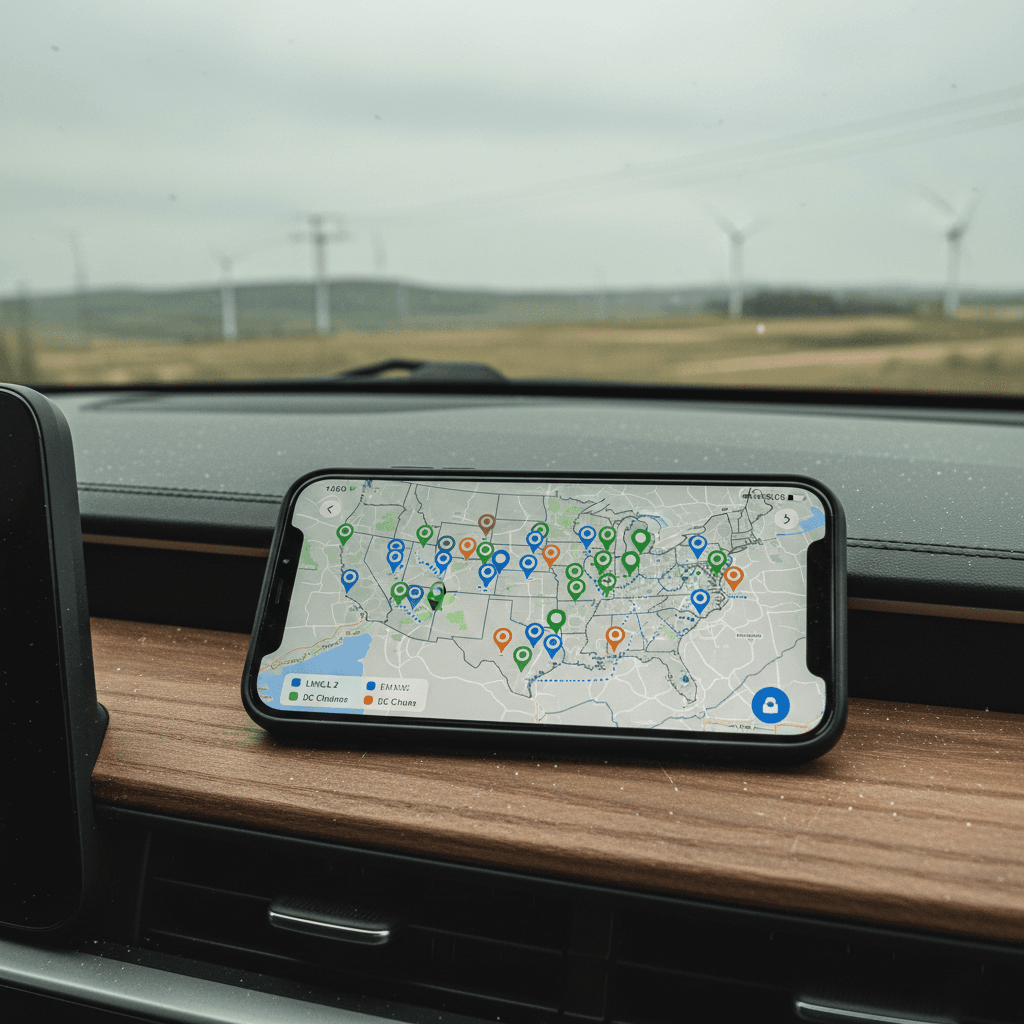
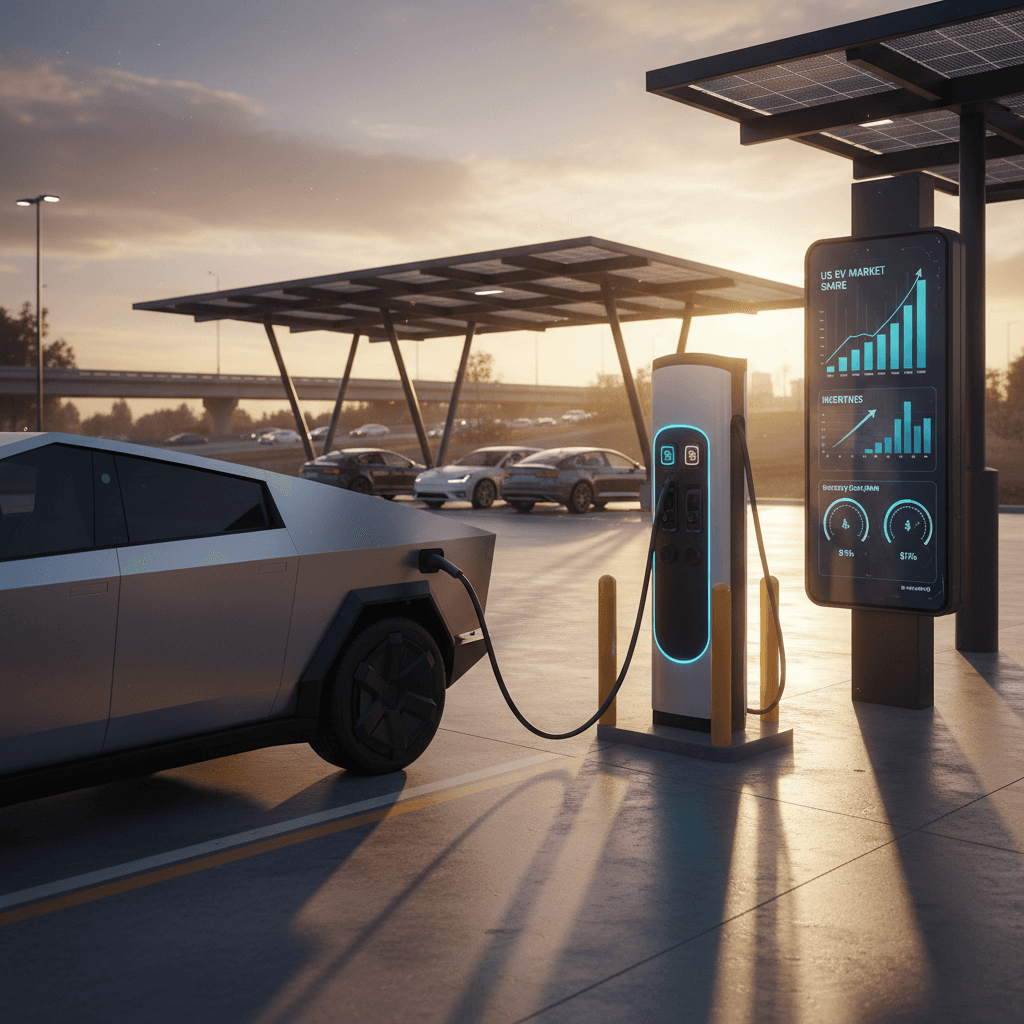
Charging is often the deciding factor for shoppers comparing electric cars in the US with familiar gas models. The reality today is a mix of rapid progress and persistent friction points.
- There are now well over 200,000 public and workplace charging ports in the US, including tens of thousands of DC fast chargers along major travel corridors.
- The number of public charging stations has more than doubled since 2020, and substantial private and public investment is slated to add hundreds of thousands more Level 2 and DC fast chargers by 2030.
- Urban and suburban drivers have significantly better access: most city residents live within about a mile of a charger, while rural drivers may be many miles away from the nearest fast charge site.
- Tesla’s Supercharger network remains the gold standard for reliability and coverage, and more non-Tesla EVs can now use it through adapters or native NACS ports on newer models.
Home charging (Level 1 & 2)
If you can plug in at home, EV ownership gets dramatically easier. A standard 120V outlet (Level 1) can work for low-mileage drivers, but most owners install a 240V Level 2 charger to add 20–40 miles of range per hour. That’s enough to refill the battery overnight even after a long commute.
Home charging is where the biggest cost savings happen, especially if your utility offers off-peak rates.
Public & fast charging
Public Level 2 chargers are common at workplaces, parking garages, and shopping centers. DC fast chargers, often 50–350 kW, live on highways and major arterial roads. They can add 100–200 miles of range in roughly 20–40 minutes on compatible EVs.
The experience has improved but is not yet as seamless as a gas stop. Network reliability, payment systems, and crowded sites remain issues in some regions.
Practical step
What electric cars really cost in the US
Sticker price gets the headlines, but the smarter way to compare electric cars in the US with gas models is total cost of ownership, purchase price, fuel, maintenance, and resale value over several years. Here’s how the pieces usually break down.
EV vs. gas car: typical cost differences
Illustrative comparison over the first 5 years for a compact SUV class vehicle bought new. Actual numbers vary by model, location, electricity rates, and gasoline prices.
| Cost category | Typical EV outcome | Typical gas car outcome | What it means for you |
|---|---|---|---|
| Purchase price | Usually higher upfront; discounts and dealer incentives can narrow the gap, especially on 1–3 year-old used EVs. | Lower upfront cost, especially with incentive-heavy legacy models. | Expect to pay more on day one for a new EV, but used EV pricing is becoming very competitive. |
| Fuel/energy | Lower cost per mile, especially if you charge at home on off-peak rates. | Higher cost per mile, tied to gasoline prices and your MPG. | High-mileage drivers save the most with an EV; low-mileage drivers see a smaller difference. |
| Maintenance | Fewer wear items: no oil changes, simpler drivetrains, regenerative braking saves brake pads. | More routine service: oil, transmission fluid, exhaust, belts, more moving parts. | Your time and money at the service lane generally drop with an EV. |
| Depreciation | Early EVs depreciated quickly; newer mainstream models are stabilizing as the market matures. | Depreciation patterns are well understood and vary by brand and segment. | Buying a used EV can be a value opportunity if the battery is healthy. |
| Incentives & fees | Federal credits on new EVs have changed in 2025; some states offer rebates or reduced registration fees, others add EV surcharges. | Occasional incentives on efficient gas cars; increasingly, higher registration fees or congestion charges in some cities. | Local policy matters. Always check state and utility programs before you sign. |
Why many US households find that higher EV sticker prices can be offset over time by lower running costs.
Used EVs: where the math often shines
Incentives and policy: what changed in 2025?
For years, the US federal government helped close the price gap between electric and gas vehicles with a tax credit of up to $7,500 on qualifying new EVs and a separate credit on used EVs. By mid-2025, that landscape shifted.
- The long-running federal tax credit for new EV purchases has been phased out as part of broader tax legislation signed in 2025. That means buyers planning a purchase from late 2025 forward can no longer rely on a federal credit to reduce the purchase price.
- Some automakers and captive finance arms have responded by offering their own incentives, such as equivalent rebates on leases or dealer cash on remaining EV inventory, to keep monthly payments competitive.
- State and local programs still matter a lot. A few states offer point-of-sale rebates, HOV lane access, reduced registration fees, or utility-backed home charger rebates, while other states have added special annual fees for EVs in lieu of fuel taxes.
Plan for policy swings
This is one reason the used EV market has become so important in the US: it offers lower upfront costs without relying on future tax policy. That’s where Recharged focuses, helping you buy a pre-owned EV with transparent pricing and verified battery health.
Buying a used electric car in the US
The biggest opportunity in today’s EV landscape may not be shiny new models, but well-chosen used electric cars. As leases from the past 3–5 years end and early adopters trade up, more EVs are hitting the US used market at attractive prices.
Essential checklist for buying a used electric car in the US
1. Start with your real-life range needs
Estimate your typical weekday miles, plus your longest regular round-trip. Many US drivers average under 40 miles a day, which means even an EV with 180–220 miles of real-world range can be more than enough.
2. Focus on battery health, not just mileage
Two used EVs with the same odometer reading can have very different battery conditions. Look for an independent battery health report, not just the dash display, and favor vehicles with verifiable history.
3. Check charging compatibility
Confirm what fast-charging standard the car uses (CCS, NACS/Tesla, CHAdeMO on older models) and which networks you can access easily. In 2025, NACS and CCS are the primary standards to consider.
4. Inspect tires, brakes, and underbody
EVs are heavier and have strong torque, which can wear tires faster. Make sure the tires are in good shape and check for uneven wear that might indicate alignment issues. A lift inspection is worthwhile in rust-prone regions.
5. Review software and warranty coverage
Ask which software version the car is on and whether over-the-air updates still apply. Then check remaining factory warranties, especially battery and drivetrain coverage, which can extend to 8–10 years on many models.
6. Compare financing and total monthly cost
Don’t fixate on price alone. Compare interest rates, expected fuel and maintenance savings, and insurance quotes. A used EV with a slightly higher payment may still be cheaper to own once energy and service costs are factored in.
How Recharged helps
Ready to find your next EV?
Browse VehiclesBattery health: the make-or-break factor
For used electric cars in the US, battery health is the single most important technical variable. It influences real-world range, charging speed, and long-term value more than almost any other factor.
What affects EV battery health?
- Age and mileage: Batteries naturally lose a bit of capacity each year; heavy mileage accelerates this, but modern packs are more robust than early EVs.
- Charging habits: Constant use of maximum-rate DC fast charging and frequent 100% charges can stress the battery more than slower Level 2 charging and moderate charge levels.
- Climate: Very hot climates are harder on batteries, especially if the car is parked outside and lacks an advanced thermal management system.
How to evaluate battery health
- Use a diagnostic report: Third-party tools and professional tests can estimate remaining usable capacity far more accurately than a simple range guess on the dash.
- Compare to original specs: Look at the battery’s original kWh rating and EPA range, then compare with current measured capacity and owner-reported range.
- Check for warranty claims: If the vehicle had a previous battery replacement under warranty, find out when and why, it might be a positive, not a red flag.
Don’t skip the battery report
Who are electric cars right for?
Which US drivers benefit most from going electric?
Ideal EV candidates
You drive a predictable daily route under 60–80 miles and can charge at home or at work.
You live in or near a metro area with solid public charging coverage and multiple DC fast-charging options on the routes you care about.
You value smooth, quiet performance as much as straight-line speed or towing capacity.
You plan to keep the car at least 4–6 years, allowing time for lower running costs to offset any price premium.
Good, but situational, fits
You live in an apartment but your building, employer, or nearby garages offer reliable Level 2 charging.
You frequently road-trip on well-covered corridors but are willing to plan stops around fast chargers.
You’re open to a plug-in hybrid (PHEV) as a bridge, electric for short trips, gas for long ones.
Think carefully before going fully electric
You live in a rural area with sparse public charging and no realistic path to home charging.
You regularly tow heavy loads or drive off-road in areas far from fast chargers.
You often drive in extreme cold without access to a garage or block heater, and your routes leave little margin for reduced winter range.
Try before you commit
Frequently asked questions about electric cars in the US
FAQ: electric cars in the United States
Bottom line on electric cars in the US
The story of electric cars in the US in 2025 is not a simple up-or-down verdict. EVs are no longer a niche experiment, they’re a real, practical option for millions of American households, but your experience will depend heavily on where you live, how you drive, and how carefully you shop.
If you can charge at home, drive a reasonably predictable daily route, and choose a model with solid range and charging support, an EV can cut your running costs, simplify maintenance, and make every commute quieter and smoother. If you’re in a charging desert or regularly work far off the grid, a plug-in hybrid or efficient gas model may be the better bridge for now.
Where electric cars really shine today is in the maturing used market. Well-chosen 2–5 year-old EVs combine attractive pricing with modern range and tech, provided the battery checks out. That’s exactly where a transparent marketplace like Recharged can tilt the odds in your favor, pairing verified battery health and fair-market pricing with EV-specialist support from your first question to the moment the car arrives in your driveway.