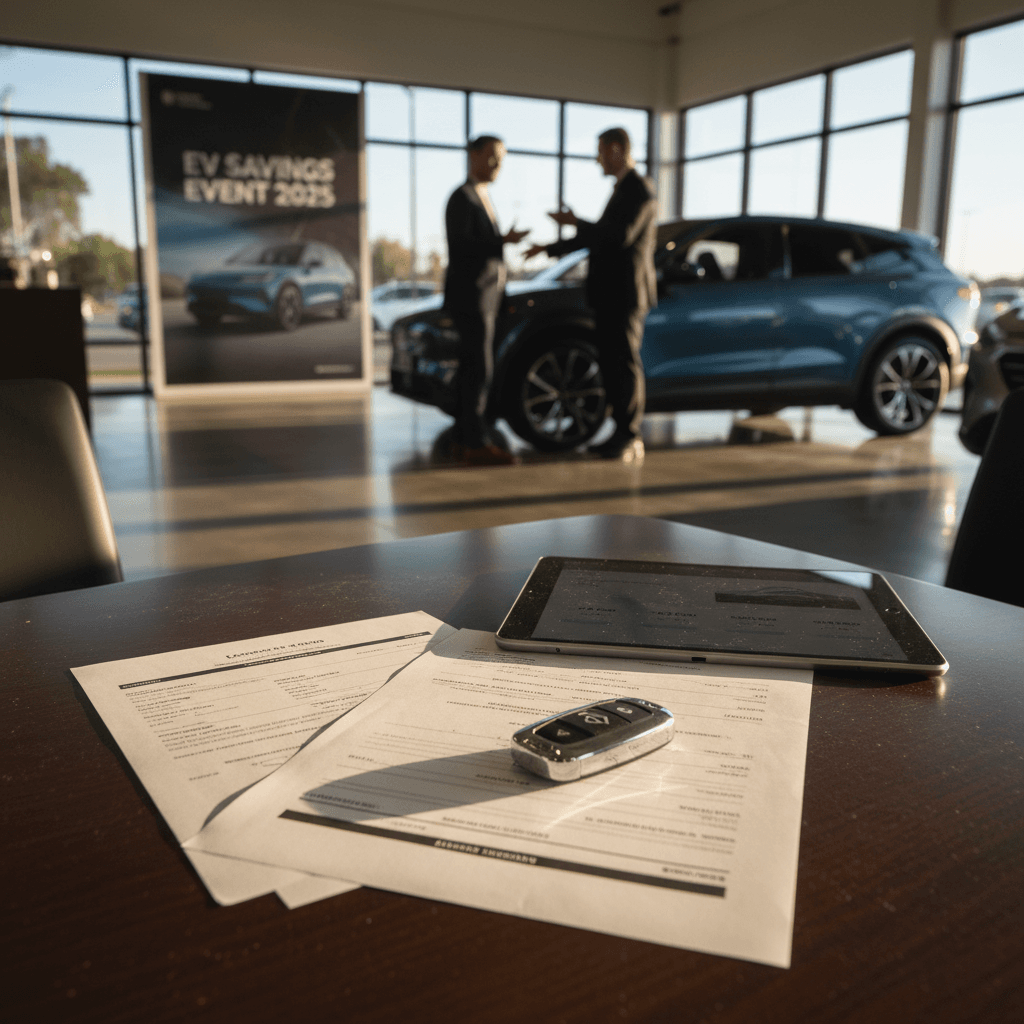
If you’re hunting for electric car deals in late 2025, the headlines can feel confusing. EV sales have cooled from their peak, federal tax credits have changed, and automakers are throwing around big discounts one month and pulling them back the next. The good news: if you understand how the market is shifting, and how used EVs fit in, you can still get a genuinely great deal, especially on a pre-owned electric car.
Context: Incentives Are Changing Fast
Why 2025 Is Actually a Good Year for EV Deals
2025 is a transitional year. Incentives are being rewritten, and automakers are adjusting from “grow at all costs” to “move the metal that’s already built.” That transition creates pressure to discount, particularly on models where inventory has piled up or where demand didn’t meet forecasts.
The Electric-Car Deals Landscape in 2025
At the same time, a wave of 2021–2023 EV leases is returning to the market, plus early adopters are trading out of their first electric cars into newer models with more range. That creates a deep bench of used EVs, many of them with plenty of battery life left but significantly lower prices than comparable new models.
Upshot for You
Types of Electric Car Deals You’ll See in 2025
When you search for electric car deals, you’re really looking at a few different buckets of savings. Understanding the structure of each one helps you compare offers apples-to-apples instead of getting dazzled by a low monthly payment with strings attached.
The Main Types of EV Deals
Know what you’re looking at before you sign
1. Cash Rebates & Price Cuts
What it is: Automaker or dealer discounts off MSRP or advertised price.
- Shows up as “customer cash,” “bonus cash,” or sale pricing.
- Works whether you pay cash, finance, or sometimes even lease.
- Easy to compare across brands.
2. Lease Specials
What it is: Subsidized leases with low monthly payments or low due-at-signing costs.
- Automaker often inflates residual value to lower the payment.
- Tax benefits on the lender side can be passed through as discounts.
- Great if you want lower commitment and always-new tech.
3. APR & Financing Deals
What it is: Low or 0% interest rates and sometimes deferred payments.
- Reduces interest cost instead of sticker price.
- More valuable on longer loans (60–72 months).
- Can beat a low advertised price with a high interest rate.
4. Dealer-Specific Discounts
Some dealers will discount slow-moving EVs below national offers, especially if they’re sitting on too much inventory or older model years. These deals seldom show up in national advertising, so you only see them when you browse local listings or ask directly.
Think of these as one-off opportunities where negotiation and timing can put meaningful money back in your pocket.
5. Used EV Bargains
Instead of formal incentives, the “deal” with used electric cars is usually in the depreciation curve. Many EVs lose value faster than comparable gas cars in the first few years, largely because technology is improving quickly.
If you buy a 2–5 year old EV with verified battery health, you’re letting the first owner eat the steepest part of that curve.
Compare the Whole Offer, Not Just One Number
Example New EV Deals on the Market Right Now
To make this less abstract, here are the kinds of advertised electric car deals shoppers in the U.S. are seeing in November 2025. Specific offers vary by region and credit profile, but the patterns are instructive.
Sample Advertised New Electric Car Deals – November 2025
Representative offers from major brands. Always check fine print and local availability.
| Model | Type of deal | Representative offer | Key fine print |
|---|---|---|---|
| 2025 Hyundai Ioniq 5 | Lease or cash incentive | Around $3,999 down and $239/month for 24 months on SE trim; separate $7,500 cash incentive on some 2025s | Short 24‑month term; mileage limits; best offers often for existing Hyundai or competitive lessees. |
| 2025 Kia Niro EV | Lease special | Roughly $3,999 down and ~$149–209/month for 24 months | Low payment but you’re locked into a short lease and must stay within mileage limits. |
| 2025 Subaru Solterra | Lease & 0% APR | Example: $279 down and $279/month for 36 months, or 0% APR for 72 months | Lease incentives often targeted; 0% APR usually for well‑qualified buyers only. |
| 2025 Kia EV6 | 0% APR + cash | 0% APR financing plus about $2,500 cash back on select trims | APR offer may exclude base trims; limited-time promotion windows. |
| 2025 Ford Mustang Mach‑E | Lease deal | Representative offers around $4,499 down and ~$219/month for 24 months | Best deals often tied to specific stock numbers and expire monthly. |
| 2025 Ford F‑150 Lightning | 0% APR or free charger | 0% APR plus ~$2,000 cash back, or a free home charging station and installation on certain trims | Check whether the charger offer or the cash back works out better for your situation. |
These examples show how brands are mixing lease, APR, and cash incentives to move EV inventory.
These Offers Move Quickly
Why Used Electric Car Deals Are So Compelling
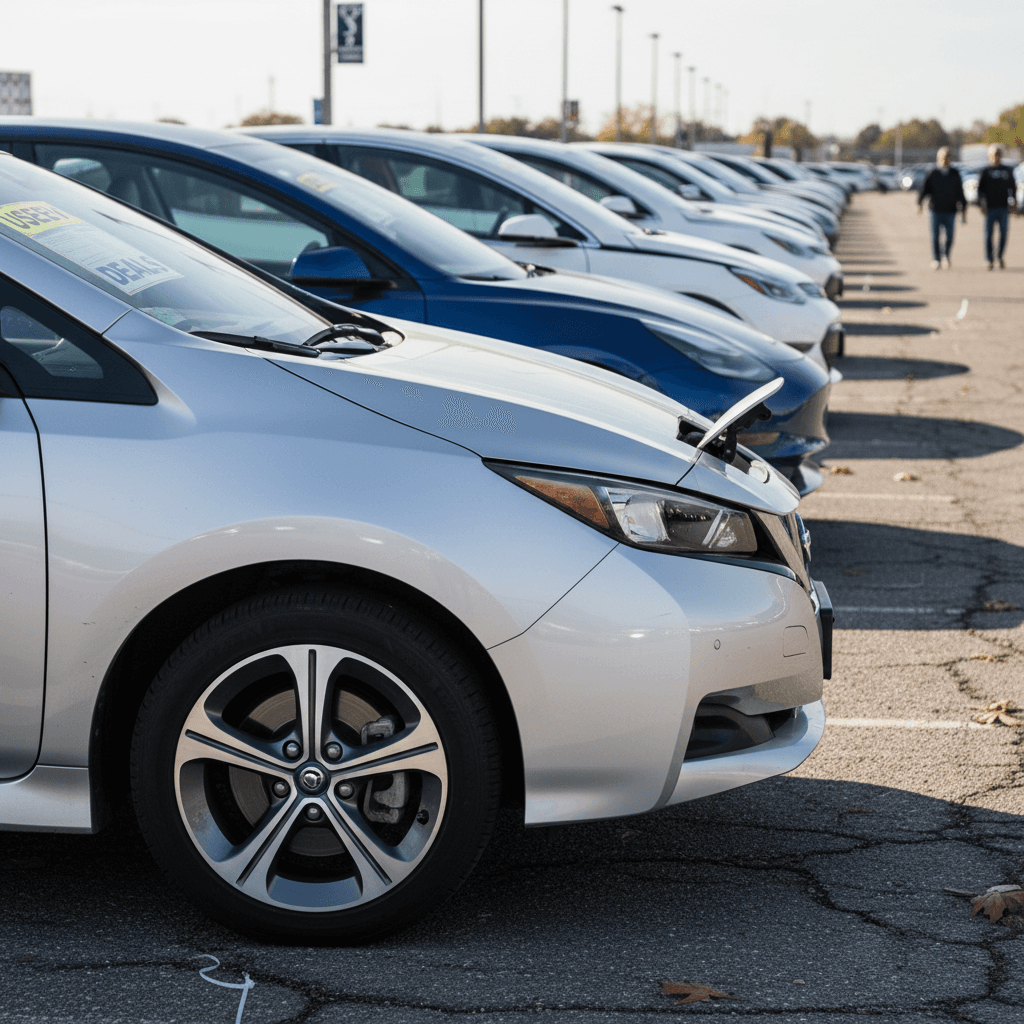
If you care about value rather than being first on the block with the newest model, the used EV market in 2025 is where things get interesting. Several forces are converging:
- A large batch of 2021–2023 EV leases is ending, releasing well-maintained vehicles with known histories into the market.
- Some first-time EV buyers are trading into newer models with more range, faster charging, or different body styles.
- Automakers themselves are cutting new-EV MSRPs to keep volume flowing after federal tax credits ended for vehicles acquired after September 30, 2025. That puts indirect pressure on used prices as well.
- Public concern about battery longevity keeps some shoppers on the sidelines, which means the buyers who do their homework can find undervalued vehicles.
The result: it’s common to see a 2–4 year old EV selling for a fraction of its original MSRP, even when it still delivers most of its original range. That gap is the core of a strong used-electric-car deal, if you can verify what you’re actually getting.
Battery Health Is the Make-or-Break Variable
How to Evaluate a Used EV Deal
When you’re comparing used electric car deals, you’re not just weighing price and mileage. You’re also trying to understand battery condition, charging history, and how the car fits your daily use. Here’s a structured way to compare your options.
Used Electric Car Deal Checklist
1. Verify real-world battery health
Ask for a <strong>data-backed battery health report</strong>, not just “it seems fine.” At Recharged, every car includes a Recharged Score Report that measures pack health, expected usable range, and degradation versus similar vehicles.
2. Look at total cost of ownership, not just price
Factor in electricity costs, maintenance, insurance, and any needed home charging upgrades. A slightly higher purchase price on an efficient EV can beat a cheap-but-thirsty one over time.
3. Confirm charging compatibility
Make sure the car supports the charging infrastructure you’ll actually use: home Level 2, workplace charging, and your preferred public networks. Check whether you’ll need adapters for NACS (Tesla-style) connectors.
4. Check software and feature support
Some capabilities, like DC fast-charging rates, battery preconditioning, or driver assist features, can change with software updates. Confirm the vehicle is current and that the OEM still supports it.
5. Review the warranty situation
Most EVs carry separate battery warranties, often 8 years and 100,000+ miles from new. Confirm how much of that coverage remains and whether it’s transferable to you.
6. Compare against new-car deals
Before you commit, cross-check the used pricing against any aggressive new-EV deals on similar models. A strong used deal should still undercut the all-in cost of those offers, or give you better value for your budget.
In a market where incentives are getting rewritten on the fly, the most durable deal in electric cars is still a fairly priced used EV with a healthy battery and transparent history.
Stacking Savings: Incentives, Financing and More
The era of simply pointing to a $7,500 federal credit on a new EV is over, for now. But there are still several levers you can pull to turn a decent electric car deal into a great one, particularly on the used side.
Ways to Improve Your EV Deal in 2025
Think beyond the sticker price
Shop financing strategically
Don’t assume the dealer’s loan is best. Compare:
- Your bank or credit union’s EV rates.
- Pre-qualification offers that won’t ding your credit.
- Any captive-lender promotions (0% APR, rate buydowns).
Recharged can connect you with competitive EV-friendly financing online.
Use your trade-in wisely
A strong trade-in offer effectively discounts your EV, but only if it reflects true market value.
- Get instant offers from multiple buyers.
- Compare to dealer trade numbers.
- Be willing to sell your old car separately if the delta is large.
Leverage charging perks
Some deals bundle extras:
- Free or discounted home charger + installation.
- Free public fast-charging for a period of time.
- Discounted charging memberships.
Those benefits have real dollar value over 2–3 years.
Stack, Don’t Just Swap
Lease vs. Buy: Which Electric Car Deal Fits You?
Because EV technology is moving fast, the lease-versus-buy decision matters more here than it does with a typical gas sedan. Each route has advantages, but they’re different kinds of deals.
When a Lease Deal Makes Sense
- You value flexibility. Leasing lets you move into newer tech every 2–3 years without worrying about resale value.
- You want lower payments. Subsidized leases can offer extremely low monthly costs, especially when the lender can still claim business tax incentives.
- You’re range‑sensitive. If you’re not sure how much range you need long term, leasing gives you a trial period.
Just be honest about your mileage. EV over‑miles charges can be steep if you dramatically underestimate your driving.
When Buying (Especially Used) Wins
- You drive a lot. High‑mileage drivers often blow past lease limits; owning avoids mileage penalties.
- You’re value‑focused. A well-priced used EV with a healthy battery can deliver years of low operating costs with no payment after the loan ends.
- You plan to keep the car. If you tend to hold vehicles 7–10 years, leasing and repeatedly starting over is usually more expensive.
This is where Recharged’s used EV inventory and Recharged Score battery reports can give you confidence that you’re buying a car you’ll want to keep.
Common Pitfalls to Avoid With Electric Car Deals
The EV space is full of genuinely attractive deals, and a few booby traps. Here are some of the most common mistakes shoppers make when chasing electric car deals and how to dodge them.
- Judging an EV deal by the monthly payment alone, without looking at term length, due-at-signing, and total cost.
- Ignoring battery health and warranty coverage on used EVs because the price looks too good to pass up.
- Overestimating how much range you really need and paying extra for capacity you’ll rarely use.
- Assuming incentives are the same everywhere, state and local programs vary widely, and many have sunset dates or limited funding.
- Focusing on exotic flagship models with big discounts when a more mainstream EV would fit your life and budget better.
Dealership Fees Can Sneakily Erase Your Discount
How Recharged Helps You Find a Good Used EV Deal
Recharged exists to make used EV ownership simpler and more transparent, exactly what you need in a market where “deals” are getting more complicated. When you shop through Recharged, every vehicle comes with a Recharged Score Report that goes far deeper than a typical used-car listing.
What Makes a Used EV Deal at Recharged Different
More than just a price tag
Independent battery health diagnostics
We use specialized EV diagnostics to measure battery capacity and health, not just the dashboard estimate. Your Recharged Score highlights expected usable range and how the pack compares with similar vehicles.
Fair market pricing
Every listing is benchmarked against national and regional EV pricing data. That helps ensure you’re getting a fair electric car deal, not a number picked to support a promotional headline.
End‑to‑end support & delivery
From trade‑in or consignment to financing and nationwide delivery, Recharged handles the logistics. You can complete the whole purchase digitally or visit our Experience Center in Richmond, VA if you prefer an in‑person look.
Ready to find your next EV?
Browse VehiclesOn top of that, Recharged helps you structure the deal: whether that’s pairing the right term length with your driving habits, figuring out a smart down payment, or deciding if trading in your current car or selling it outright puts you in a stronger position.
Finance With Confidence
Electric Car Deals FAQ
Frequently Asked Questions About Electric Car Deals
Bottom Line: Getting a Strong EV Deal in 2025
Electric car deals in 2025 are less about chasing a single giant tax credit and more about intelligently stacking realistic advantages: a fair price, a healthy battery, supportive financing, and perks that match how you actually drive. New EV offers can be compelling, but they’re volatile and often tied up in complex fine print. Used EVs, by contrast, offer durable value, especially when you have transparent data on battery health and pricing.
If you’re serious about finding a good electric car deal, treat information as your leverage. Compare new and used offers side by side, look past the monthly payment to total cost, and insist on seeing how the battery is really doing. Recharged was built around that kind of transparency: verified battery diagnostics, fair market pricing, expert EV support, and digital-first convenience. That combination doesn’t just help you find a deal, it helps you feel confident that it’s actually a good one for the long run.