If you’ve heard that electric car tires wear faster, you’re not imagining things. Heavier batteries, instant torque, and specialized rubber all change how an EV goes through a set of tires, and how much you spend to keep the car rolling. The good news: once you understand what’s different, you can manage tire wear instead of being surprised by it.
The short version
Why electric car tires wear differently
Three big mechanical realities make electric car tires wear differently than those on a gas car: weight, torque, and braking. Think of them as the three horsemen of tread apocalypse, dramatic, yes, but manageable.
The three forces that punish EV tires
Weight, torque, and braking all show up in your tread wear patterns.
1. Extra weight
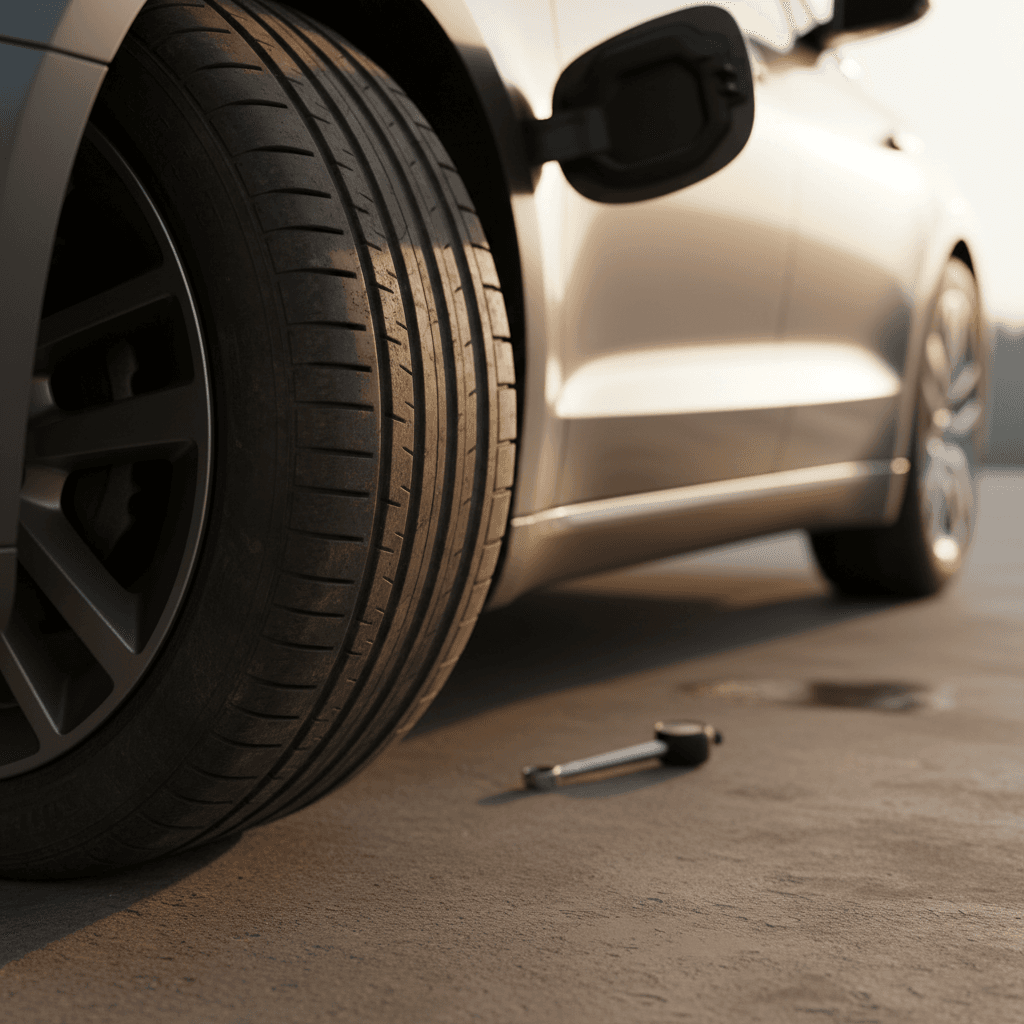
EV battery packs are heavy, often adding several hundred pounds versus a similar gas car. That weight sits largely between the axles, pressing the tires harder into the pavement every mile.
More weight = more friction in every stop, start, and corner.
2. Instant torque
Electric motors deliver near-instant maximum torque. When you punch the accelerator, the tires feel that shock immediately.
It’s addictive performance, but that snap off the line scrubs rubber off the tread blocks.
3. Regenerative braking
Regen uses the motor to slow the car and recharge the battery. Instead of your brakes taking the hit, your front tires often do, carrying more load every time you lift off.
This can create front-tire wear that looks more aggressive than you’re used to.
Expect different wear patterns
How much faster do EV tires wear?
EV tire wear in the real world
If a gas crossover on touring tires regularly sees 40,000 miles from a set, a similar-size EV might chew through the same style of tire at 30,000 miles. High‑performance EVs on soft compounds can burn through their original equipment rubber even faster. So when you read that “EV tires wear out quickly,” that usually means faster than the gas car you owned before, not that you’ll be buying tires every year.
What many new EV owners expect
Most people walk into EV ownership assuming their tires will last 40,000–50,000 miles like their last set did. That expectation often comes from warranty numbers printed on a tire’s marketing brochure, not real-world use.
What actually happens
In the real world, owners of heavier, torquier EVs often discover their first set of tires needs replacement sooner, sometimes around the 25,000–30,000 mile mark. Once you adjust your expectations and habits, the second set usually lasts longer.
What makes an “EV tire” different?
You’ll see more and more tires advertised as “EV ready” or “EV specific.” That’s not just marketing. EV‑oriented tires are re‑engineered to survive weight and torque without killing your range.
EV tires vs. regular tires: key differences
Not every EV needs an EV‑only tire, but these design tweaks are why the EV‑label exists in the first place.
| Feature | Typical gas-car tire | EV-focused tire |
|---|---|---|
| Load capacity | Sized for lighter vehicles | Higher load index to handle battery mass |
| Sidewalls | Standard reinforcement | Reinforced to control flex on heavy cars |
| Rubber compound | Balanced for mileage and grip | Formulated to handle torque and higher loads, often with extra noise‑damping |
| Rolling resistance | Varies by category | Explicitly tuned low to protect EV range |
| Noise | Engine masks a lot of roar | Extra quietening so tire noise doesn’t dominate in a silent cabin |
If you switch away from EV‑focused tires, know what trade-offs you’re making.
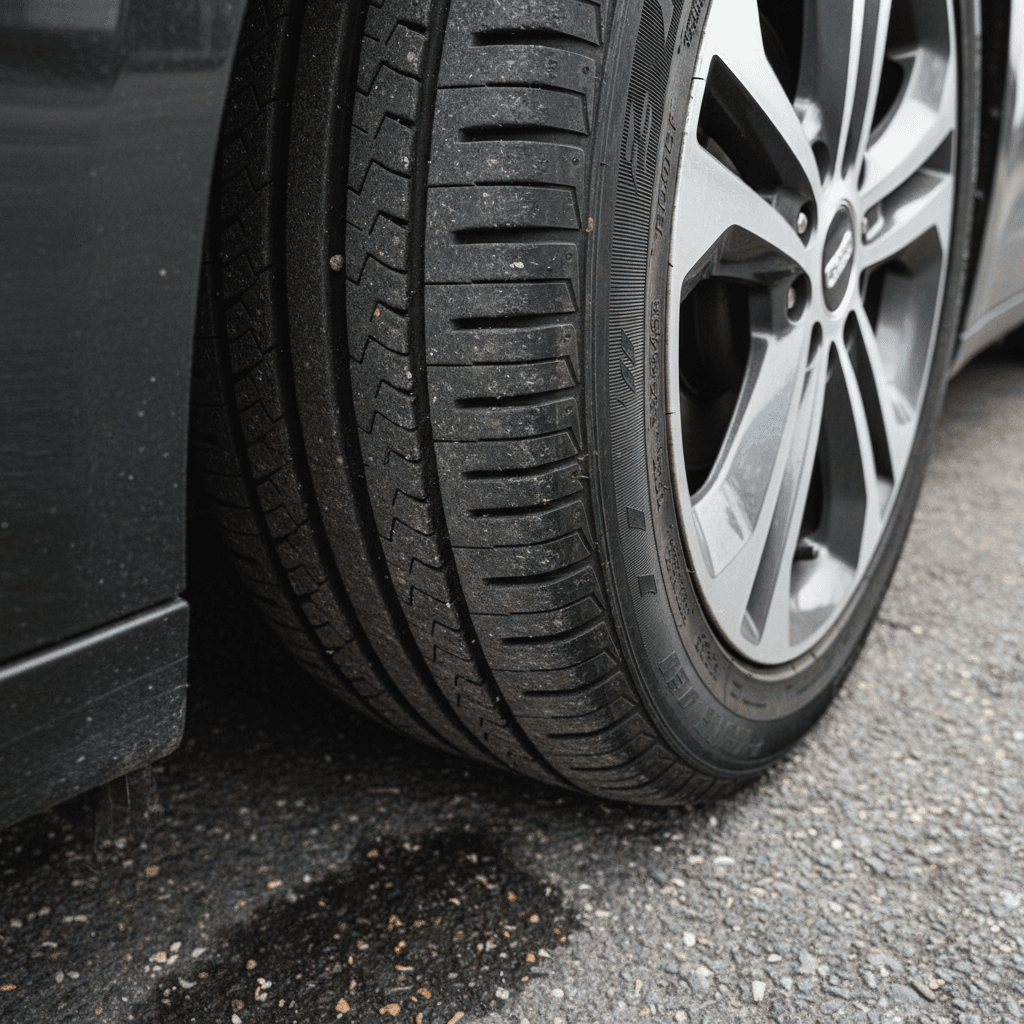
How to read your tire sidewall
Driving habits that chew through EV tires
The car isn’t the only culprit. Driver behavior is the multiplier. The same EV, on the same tires, can live two very different lives depending on how you treat the accelerator and steering wheel.
Habits that make electric car tires wear faster
If this sounds like your commute, your tires are working overtime.
Hard launches
Using all that instant torque at every light feels great, but it’s basically a burnout in slow motion. The softer the compound, the faster you erase it.
Aggressive cornering
EVs have low centers of gravity and love to grip. Push them in corners and you load the outside shoulders of the tires heavily, especially on heavy crossovers and SUVs.
Stop‑and‑go urban traffic
Frequent acceleration and regen-heavy braking in city driving means more energy flowing through the tread blocks instead of long, easy highway miles.
High sustained speeds
At interstate speeds, heat builds in the tread. Combine that with a heavy vehicle and underinflation, and wear accelerates.
Under‑ or over‑inflation
Running even a few PSI low on a heavy EV enlarges the contact patch and scrubs shoulders. Too high, and you wear the center of the tread.
Skipping alignments & rotations
Alignment that’s slightly “off” may have been tolerable on your old sedan. On a heavy EV, it can carve thousands of miles off a set of tires.
Don’t ignore early wear
9 ways to make your EV tires last longer
You can’t change physics, but you can negotiate with it. A few intentional habits can stretch your tire budget and keep the car feeling sharp.
Practical steps to slow EV tire wear
1. Check pressure monthly (not yearly)
Because EVs are heavier, being even 3–4 PSI low matters. Use the placard in your door jamb, not the max pressure printed on the tire. Check pressures cold, ideally once a month or before long road trips.
2. Rotate more often than you used to
If your gas car got a rotation every 7,500–10,000 miles, think 5,000–7,500 for your EV, especially if it’s front‑motor or rear‑motor only. That keeps one axle from doing all the hard work.
3. Ask for an EV‑aware alignment
Tell your shop or dealer it’s an EV and you’re chasing even tire wear. A proper alignment and suspension inspection can pay for itself in extra tread life.
4. Tame the launch habit
Save the full‑throttle demos for special occasions. Smooth takeoffs dramatically cut how fast your front or rear drive tires disappear, and you’ll gain a bit of range too.
5. Use drive modes strategically
If your car offers an “Eco” or “Comfort” mode, it usually softens throttle response. That makes it easier to drive smoothly and keeps your tires from being your emotional support chewing gum.
6. Adjust regen where it makes sense
Max regen is great for range, but if you notice the front tires wearing quickly and your car allows it, try a slightly lower regen setting for everyday commuting and see if wear patterns improve.
7. Buy tires with appropriate load and treadwear ratings
When shopping replacements, look at the load index and UTQG treadwear numbers. A higher load index and higher treadwear rating generally mean a longer‑lasting, EV‑suitable tire.
8. Choose the right category, not just the right size
Ultra‑high‑performance summer tires will vanish on a powerful EV that lives on rough city streets. If you’re not chasing lap times, a high‑quality all‑season touring tire may give you double the life.
9. Inspect tread visually every few weeks
Run your hand across the tread blocks and look for feathering, cupping, or strong inside/outside wear. Catching a problem early is the cheapest fix you can buy.
EV tire wear and buying a used electric car
Tires are one of the most revealing clues about how an EV has been driven and maintained. When you’re shopping used, paying attention to tread isn’t just about whether you’ll owe $1,200 for new rubber, it’s a window into the previous owner’s habits.
What tire wear can tell you
- Even wear, plenty of tread: Likely a conscientious owner who rotated on schedule.
- Heavily worn on one axle: Possible aggressive driving, alignment issues, or skipped rotations.
- Inside-edge wear: Often a sign of too much negative camber or a suspension/alignment issue.
- Mismatched brands or ages: Could indicate past damage or budget-conscious maintenance.
How Recharged helps you read the clues
Every EV sold through Recharged comes with a detailed Recharged Score Report, including verified battery health plus inspections that cover tires, brakes, and suspension. That means you’re not guessing whether the previous owner treated the car like a long‑term appliance or a rental at a track day.
If the tires are nearing the end of their life, our specialists will walk you through realistic replacement costs so you can budget with eyes open.
Use tire wear as a negotiation tool
What EV tires cost and how to budget
Sticker shock is another reason people feel like electric car tires wear “too fast.” Big wheels, high load ratings, and EV‑specific designs all add zeros to the invoice.
Typical EV tire replacement costs (U.S.)
Ballpark ranges for a full set of four tires, mounted and balanced. Your actual numbers will vary by size, brand, and region.
| EV type | Typical wheel size | Approx. cost range (4 tires) | Notes |
|---|---|---|---|
| Compact hatchback | 16"–17" | $600–$900 | Smaller sizes, more mainstream tire options. |
| Midsize sedan / small crossover | 18"–19" | $800–$1,300 | Where many popular EVs (Model 3, Ioniq 5, etc.) live. |
| Performance sedan / SUV | 20"–22" | $1,200–$1,800+ | Low‑profile, high‑load tires with performance compounds. |
Plan ahead: EV tires are a maintenance line item, not a surprise.
Smooth driving pays real money
Tire wear, particles, and the environment
There’s a growing, important conversation about tire particles, tiny bits of rubber and chemicals that come off every tire and end up in the air, water, and soil. Because EVs are often heavier and sometimes wear tires faster, critics argue that they simply trade tailpipe emissions for tire dust.
- Heavier vehicles of any kind, electric or gas, produce more tire particulate than lighter ones.
- EV‑specific tires are being engineered for better wear resistance, which can reduce particle output per mile even on heavier vehicles.
- Smoother driving and proper inflation reduce both energy consumption and tread loss, which is good for your wallet and for the environment.
EVs still cut total emissions
Electric car tire wear: FAQ
Common questions about EV tire wear
Bottom line: Electric car tires wear, but you’re in control
Electric car tires do tend to wear faster than those on similar gas cars, but that’s not a mysterious new problem. It’s classic tire physics, scaled up by battery weight and motor torque. Once you adjust your expectations, and your habits, you can turn tire wear from an unwelcome surprise into a line item you’ve already planned for.
If you’re already an EV owner, think of your tires as part of the propulsion system, not disposable afterthoughts. Treat them that way and they’ll reward you with safety, range, and comfort for thousands of extra miles. And if you’re shopping for a used EV, working with a transparent marketplace like Recharged, where battery health, tire condition, and pricing are all out in the open, makes it much easier to enjoy the instant torque without dreading the next tire bill.