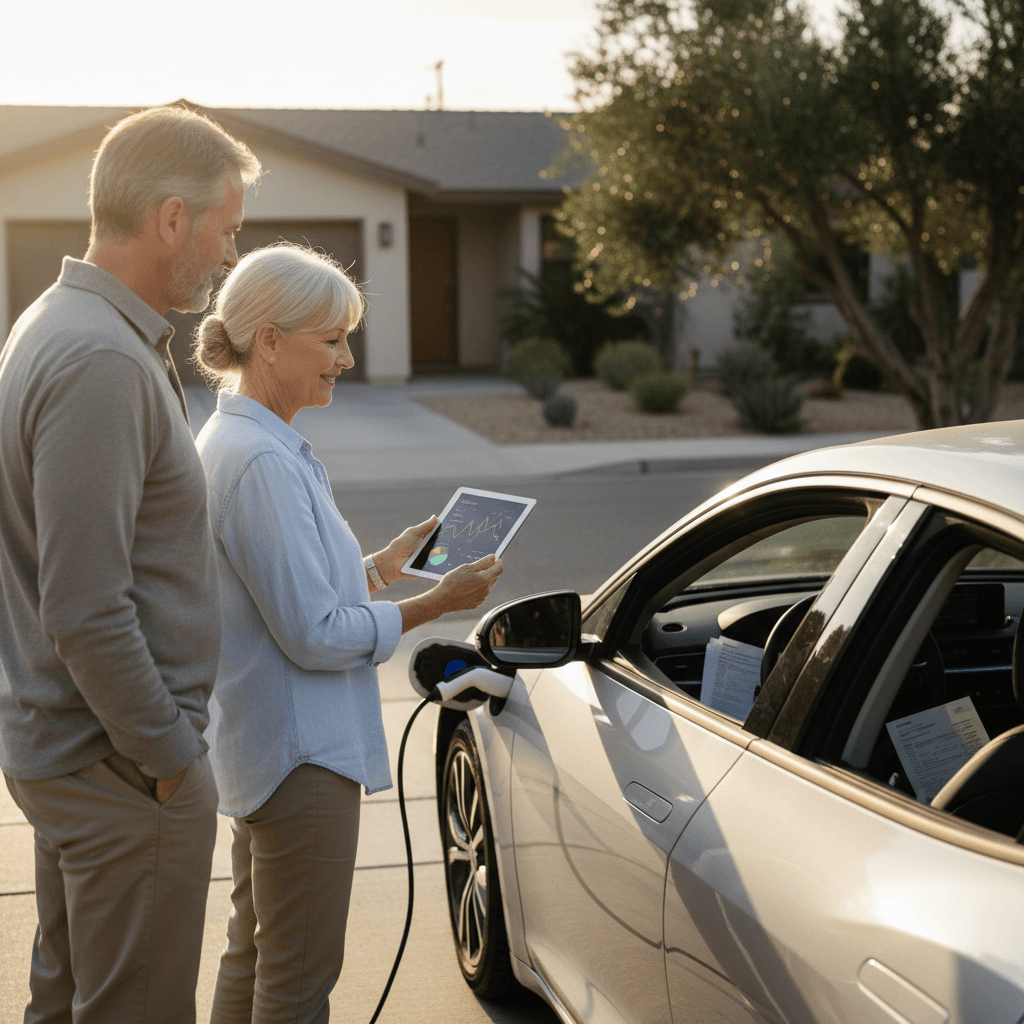
If you’re a senior thinking about an electric car, you’ve probably heard two things: they’re cheaper to run, and they’re more expensive to insure. Both can be true. Electric car insurance for seniors has its own set of rules, but once you understand how age, mileage, and model choice play together, you can keep your premiums in check without cutting the coverage that protects your savings.
Good news for older EV drivers
Why EV insurance feels confusing for seniors
If you’ve had the same insurance company and the same gas sedan for years, shopping for an electric car can feel like learning a new language. You’ll hear that EVs cost more to insure, that batteries are expensive, and that some models are “uninsurable” at a decent price. On top of that, once you cross 70, your age starts creeping back into your premium, even if you’ve never had a claim.
- New technology: Insurers are still learning what it really costs to repair EVs, so they price in extra uncertainty.
- Battery cost: The battery pack can be 30–50% of the car’s value, which affects how insurers think about total losses.
- Repair networks: Not every body shop is comfortable working on EVs, which can mean longer, pricier repairs.
- Age pricing: After about 70–75, some insurers quietly nudge rates up, even for careful, low‑mileage drivers.
Don’t assume your old policy will translate
How electric car insurance actually works
Insuring an electric car isn’t a whole new type of policy, it uses the same basic coverages you already know. What changes is how the insurer prices the risk and what it costs to put the car back the way it was after a claim.
Key coverages on an electric car policy
Same pieces as a gas car, priced a little differently
Liability
Collision
Comprehensive
Where EVs differ
Do electric cars cost more to insure than gas cars?
In most of the U.S. in 2025–2026, yes: electric cars still cost more to insure on average than gasoline cars. Industry studies peg the gap anywhere from about 10–25% higher premiums, and some analyses have found even larger differences for certain models and states. A big driver is repair cost: EVs are packed with sensors, specialized body structures, and large battery packs that can turn what would be a moderate repair on a gas car into a very expensive one on an EV.
How EV insurance compares today
The headline, though, hides something important for seniors: your personal risk profile matters more than the car’s fuel type. If you’re driving a modestly priced used EV, log 5,000–7,000 miles a year, and have decades of clean driving behind you, you’re not the average driver in those statistics.
How age affects electric car insurance for seniors
Auto insurance pricing follows a curve. Teenage and 20‑something drivers pay the most. Rates usually fall through your 30s, 40s, and 50s. For many drivers they’re lowest in the late 50s to early 60s, right when retirement planning picks up, then start to creep up again in the 70s and especially after 80.
Ages 60–69: Your sweet spot
Many seniors in their 60s enjoy some of the best pricing of their lives. You’ve got experience, often excellent credit, and you may be driving fewer miles post‑retirement. Switching to an EV in this window can soften the insurance cost difference versus a gas car.
Insurers also like predictability. If you’ve been with the same company for years without claims, ask about loyalty and accident‑free discounts when you quote your EV.
Ages 70–80+: Where rates can climb
After about 70–75, some carriers start adding age‑related risk factors back into the price. By 80, national averages show premiums 20–30% higher than they were at 70, even without new tickets or accidents.
That doesn’t mean you can’t get a fair rate on an electric car, it means you need to lean harder on low mileage, safe‑driver, and vehicle‑choice discounts, and be willing to re‑shop your policy every year or two.
State rules matter
Which EVs are cheapest for seniors to insure?
Insurers like vehicles that are easy to repair, not too powerful, and popular enough that they have good data on how they perform in the real world. That means the easiest EVs to insure for seniors are usually smaller, mainstream models with strong safety ratings and moderate price tags, especially in the used market.
Senior-friendly EV traits that can lower insurance
Think in terms of features, not just brand names, then shop for used EVs that match this profile.
| EV trait | Why insurers like it | What it can mean for seniors |
|---|---|---|
| Modest purchase price | Cheaper to repair or replace than a luxury EV. | Lower comprehensive and collision costs, especially on used models. |
| Top safety ratings | Fewer and less severe injury claims over time. | Better pricing on liability and medical coverages. |
| Mainstream brand & parts availability | More shops can repair them; parts are easier to source. | Shorter repair times and lower repair bills on average. |
| Moderate performance | Less chance of high‑speed crashes and big liability claims. | Helps offset age‑related pricing increases. |
| Good theft protection | Built‑in tracking and immobilizers reduce theft losses. | Potentially lower comprehensive premiums. |
Always get a real quote on a specific VIN before you buy. These are general tendencies, not guarantees.
Used EVs often hit the sweet spot
12 ways seniors can lower EV insurance costs
You can’t change your age, and you probably don’t want to change where you live. But you still have more control over your EV insurance bill than it may seem. Here are a dozen levers older drivers can pull, one by one.
Practical savings moves for older EV drivers
1. Choose the right EV model
Before you fall in love with a particular car, ask your agent to quote two or three different EVs you’re considering, ideally including a mainstream hatchback or crossover. A sportier or luxury EV can cost hundreds more per year to insure than a modest model.
2. Consider a gently used EV
Used EVs often carry lower collision and comprehensive premiums because their replacement cost has dropped. With a platform like Recharged, you also get a Recharged Score Report with verified battery health, so you’re not gambling on an expensive component.
3. Take full advantage of low mileage
Many seniors drive under 7,500 miles per year. Make sure your insurer has your actual annual mileage and ask whether they offer a low‑mileage or pleasure‑use discount, especially powerful if you’re no longer commuting daily.
4. Ask about telematics or usage-based programs
If you’re comfortable with a smartphone app or plug‑in device, a pay‑how‑you‑drive program can reward your smooth braking, daylight driving, and limited nighttime trips, areas where many seniors excel.
5. Raise deductibles, carefully
If you can afford to pay more out of pocket after a claim, a higher comprehensive and collision deductible can trim EV premiums. Just make sure the amount is comfortable within your retirement emergency fund.
6. Keep strong liability limits
It’s tempting to cut liability coverage to save money, but your future medical and legal bills can dwarf the short‑term savings. As a rule of thumb, retirees with assets should consider at least 100/300/50 liability limits, and often higher.
7. Stack every available discount
Ask specifically about senior, defensive‑driving course, multi‑vehicle, multi‑policy, accident‑free, and loyalty discounts. Many companies won’t volunteer these unless you ask directly.
8. Compare quotes every 1–2 years
Insurers are still adjusting to real‑world EV repair data. A company that was expensive for EVs last year may have become more competitive, and vice versa. Don’t be shy about moving your business if another carrier treats your EV more favorably.
9. Mind where and how you park
Garaging your EV at home, in a locked building, or in secure parking can lower comprehensive premiums. If you’ve recently downsized into a condo or 55+ community, update your garaging address.
10. Consider dropping collision on older EVs
Once your EV’s value drops to the point where collision coverage would barely pay more than the deductible, it may make sense to reduce or drop that coverage, especially on a second car that doesn’t see many miles.
11. Review add-ons you don’t use
Roadside assistance, rental reimbursement, and other extras can be useful but optional. If you rarely rent a car or your EV comes with its own roadside program, trimming these can shave a bit off the bill.
12. Keep your record spotless
One at‑fault crash or speeding ticket can erase years of safe‑driver discounts. Leave extra following distance, build in more travel time, and let the faster traffic go. Your insurance bill will thank you.
Yes, an EV can still save you money overall
Choosing coverage levels that fit your retirement budget
You’ve spent decades building your nest egg. The goal now is to protect it without over‑insuring every corner of your life. With electric car insurance for seniors, the art is in trimming where it’s safe while keeping strong protection where it matters most.
Where not to skimp
- Liability coverage: Medical care and lawsuits are expensive. Consider higher limits or even an umbrella policy if you have substantial assets.
- Uninsured/underinsured motorist: Protects you if another driver hits you and doesn’t carry enough coverage, a real risk, especially in states with low minimums.
- Medical payments or PIP: Helpful if Medicare or your supplemental plan leaves gaps around deductibles, co‑pays, or short‑term rehab.
Where you may have flexibility
- Collision and comprehensive deductibles: Higher deductibles can make sense if you have savings and rarely drive at night or in heavy traffic.
- Rental reimbursement: If you have a second car or can comfortably go a few days without driving, you may not need a high rental allowance.
- Full coverage on very low‑value vehicles: On an older, low‑value second EV, liability‑only coverage might be sufficient.
Check how your health coverage interacts
Used EVs, insurance, and how Recharged can help
If you’re like many seniors, you’re not chasing the latest high‑performance EV. You want something comfortable, safe, and affordable that will quietly get you to family, doctors, and favorite spots around town. That’s where a well‑chosen used EV can shine, and where the details matter for insurance.
Why buying a used EV through Recharged can help with insurance
Information and support that make you a stronger insurance shopper
Recharged Score battery and health report
Fair, transparent pricing
EV‑savvy support from start to finish
Ready to find your next EV?
Browse VehiclesBy pairing the right used EV with the right insurance strategy, you keep more of your monthly budget free for the reasons you wanted to retire in the first place, travel, grandkids, or simply a quieter life with fewer gas‑station stops.
Checklist: before you get an EV insurance quote
Quick prep list for better electric car quotes
Confirm your annual mileage
Look at maintenance records, trip logs, or odometer readings over a full year. Many seniors underestimate how low their mileage really is, and that number directly feeds your quote.
Gather your driving history
Know the dates of any tickets or accidents from the last 3–5 years. A clean record puts you in the best pricing tier; if something is about to fall off, it may pay to wait a month or two before switching cars.
List all safety features on the EV
Include automatic emergency braking, blind‑spot monitoring, lane‑keeping assist, and parking sensors. These features can qualify you for vehicle‑safety discounts.
Decide on comfortable deductibles
Talk with your spouse or financial planner about how much you’d be comfortable paying out of pocket after a claim. Bring that number to the quote conversation.
Check your credit and payment history
In most states, insurers use credit‑based insurance scores. Paying bills on time and keeping balances low can indirectly help your auto rates.
Ask about senior and telematics discounts
Before you hang up or finish an online quote, specifically ask which discounts you’re getting as an older, low‑mileage driver, and whether a telematics program could help you save more.
Electric car insurance for seniors: FAQ
Frequently asked questions about EV insurance for seniors
Bottom line for senior EV drivers
Electric car insurance for seniors doesn’t have to be a deal‑breaker. Yes, today’s EVs often cost more to insure than gas cars, and rates can edge up as you move through your 70s and beyond. But you’re not powerless. By choosing the right used EV, leveraging your low mileage and clean record, and being deliberate about coverage levels, you can keep premiums in step with your retirement plans.
If you’re ready to explore a used EV that fits both your lifestyle and your budget, including insurance, Recharged can help. Every vehicle we list comes with a transparent Recharged Score Report, EV‑savvy support, and flexible options for trade‑in, financing, and nationwide delivery. That way, when you call your insurer, you’re not just another shopper, you’re an informed senior driver making a smart move into electric driving.