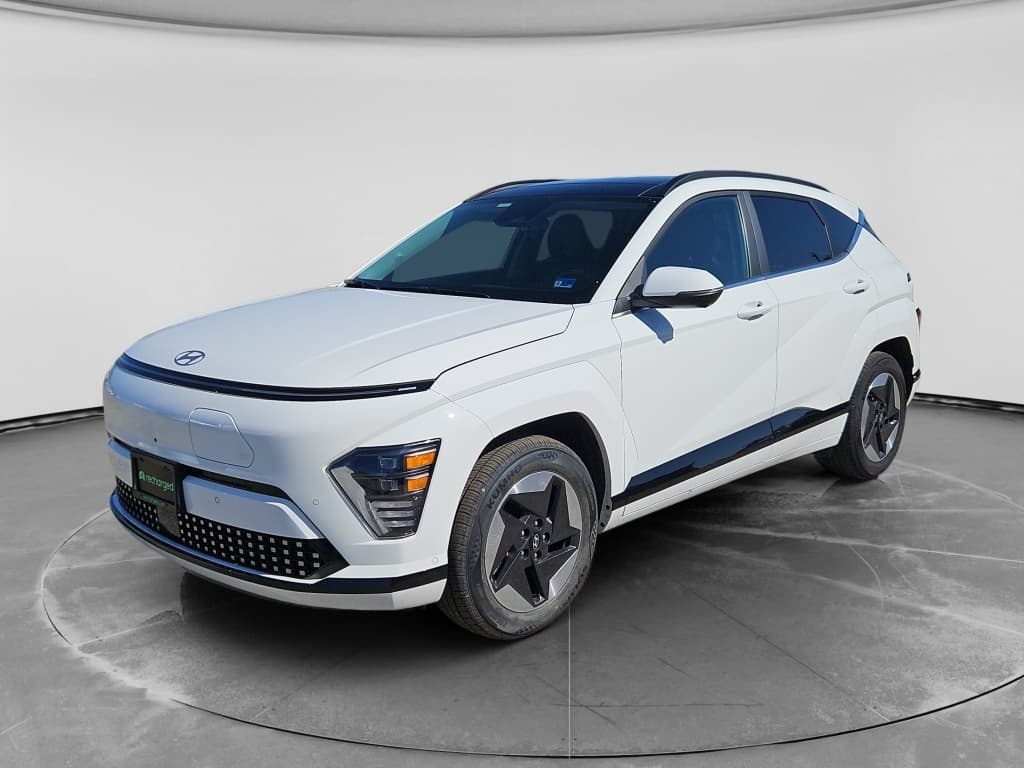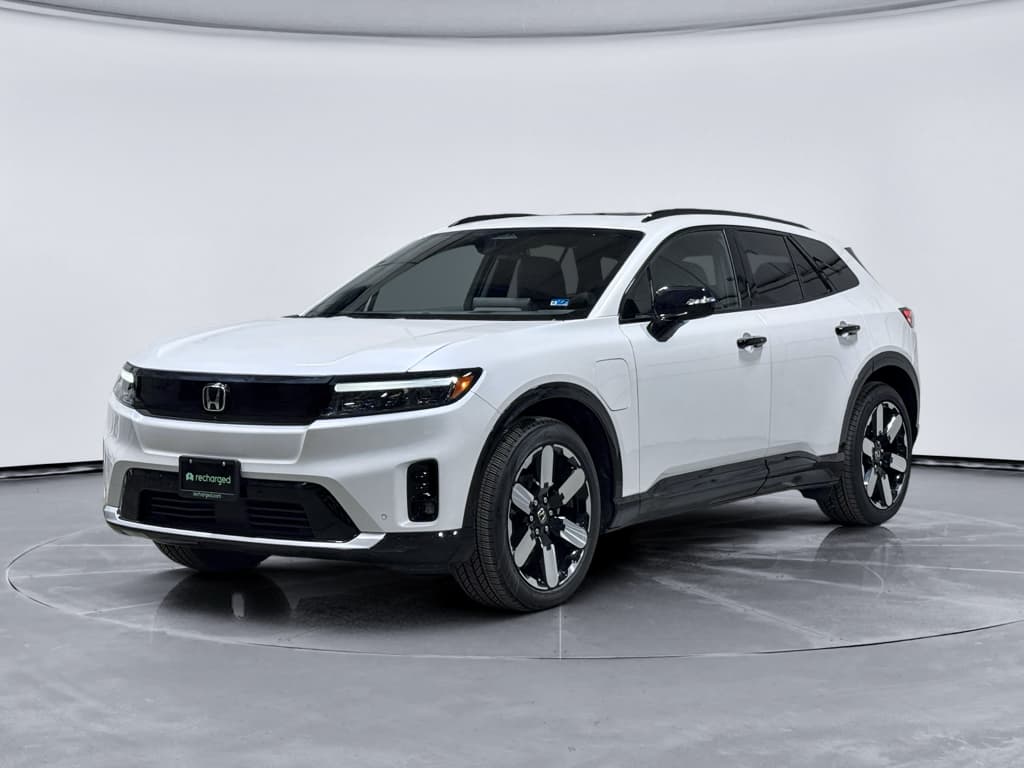
At the dealership, electric cars look expensive. On the spreadsheet, they can look brilliant. An honest electric car cost comparison in 2025 isn’t about the sticker price; it’s about what the thing takes out of your wallet over five or ten years, fuel, maintenance, depreciation, insurance, and that mysterious line item, battery health.
The big picture in 2025
Why electric car cost comparison matters in 2025
The old EV sales pitch was simple: pay more now, save later. In 2025, the story is more nuanced. Gasoline is cheaper than it was at the height of 2022, electricity prices have crept up, and EV sticker prices are under pressure from incentives and competition. That means your personal EV vs gas cost comparison can go either way depending on how much you drive, how you charge, and whether you buy new or used.
- You’re deciding between a new gas crossover and its electric twin.
- You’re wondering if a used EV is a smarter buy than a similarly priced used hybrid or gas car.
- You’re trying to understand whether home charging will actually save money over your local gas station.
- You’re worried about the cost of replacing an EV battery down the line.
Start with your mileage
The cost building blocks: what really matters
Total cost of ownership is less glamorous than a 0–60 time, but it’s what separates a smart buy from a slow‑motion money leak. For a clean electric car cost comparison, focus on these building blocks over a set period, usually five years:
Six levers that move your EV vs gas cost
Every one of these can swing your 5‑year total by thousands of dollars.
Purchase price & financing
Down payment, loan term, interest rate, and whether you’re buying new or used. EVs often cost more up front, but used EV pricing has dropped sharply in the last 2–3 years.
Fuel & electricity
Gas price per gallon vs ¢/kWh, how efficient the car is, and what share of your charging is at home vs public fast charging.
Maintenance & repairs
EVs skip oil changes, exhaust work, and many moving parts. But tires, brakes, and suspension still wear, and out‑of‑warranty electronics can sting.
Depreciation
How quickly the vehicle’s value falls. EVs historically depreciated faster, but battery warranties and improving tech are narrowing that gap.
Insurance & taxes
Insurance can run higher for EVs because of repair costs. Some states offset this with EV incentives; others add extra registration fees.
Battery health & warranty
Battery degradation affects range and resale value. Most EVs have 8‑year battery warranties, critical protection for used buyers.
Don’t compare apples to unicorns
5‑year cost example: electric vs gas crossover
Let’s put real numbers to the hype. Assume you’re shopping a mainstream compact crossover, one gas, one electric, same brand, similar equipment. You drive 12,000 miles a year, a common U.S. average, and you keep the car five years.
Key assumptions for our 5‑year cost comparison
Illustrative 5‑year cost comparison: gas vs electric crossover
Rounded example numbers for a typical $35k gas crossover vs $42k electric equivalent, financed over 5 years.
| Cost category (5 years) | Gas crossover | Electric crossover |
|---|---|---|
| Purchase & financing | $38,000 | $45,000 |
| Fuel / electricity | $6,200 | $3,400 |
| Maintenance & repairs | $3,000 | $1,800 |
| Insurance | $7,000 | $7,500 |
| Registration, taxes, fees | $3,500 | $3,800 |
| Estimated resale value | –$17,000 | –$18,500 |
| Approximate 5‑yr total | $40,700 | $42,000 |
Your exact figures will vary by model, state, and driving pattern, but the structure of the comparison stays the same.
In this example, it’s almost a tie
Fuel and electricity: cost per mile
Fuel is where electric cars usually win the loudest. Gas engines waste energy as heat; electric motors are miserly little overachievers. The way to cut through the noise is simple: work out your cost per mile.
Gas car fuel cost per mile
Using our 30 mpg crossover and $3.10 per gallon:
- Fuel cost per mile = $3.10 ÷ 30 ≈ 10.3¢
- At 12,000 miles/year, that’s about $1,240 per year.
If gas jumps back to $4.00, you’re at roughly 13.3¢ per mile.
Electric car energy cost per mile
Using 3 mi/kWh and 17¢ per kWh home charging:
- Energy cost per mile = $0.17 ÷ 3 ≈ 5.7¢
- At 12,000 miles/year, that’s about $680 per year.
Public DC fast charging often runs 30–45¢/kWh, roughly 10–15¢ per mile, so heavy fast‑charging can erase the savings.
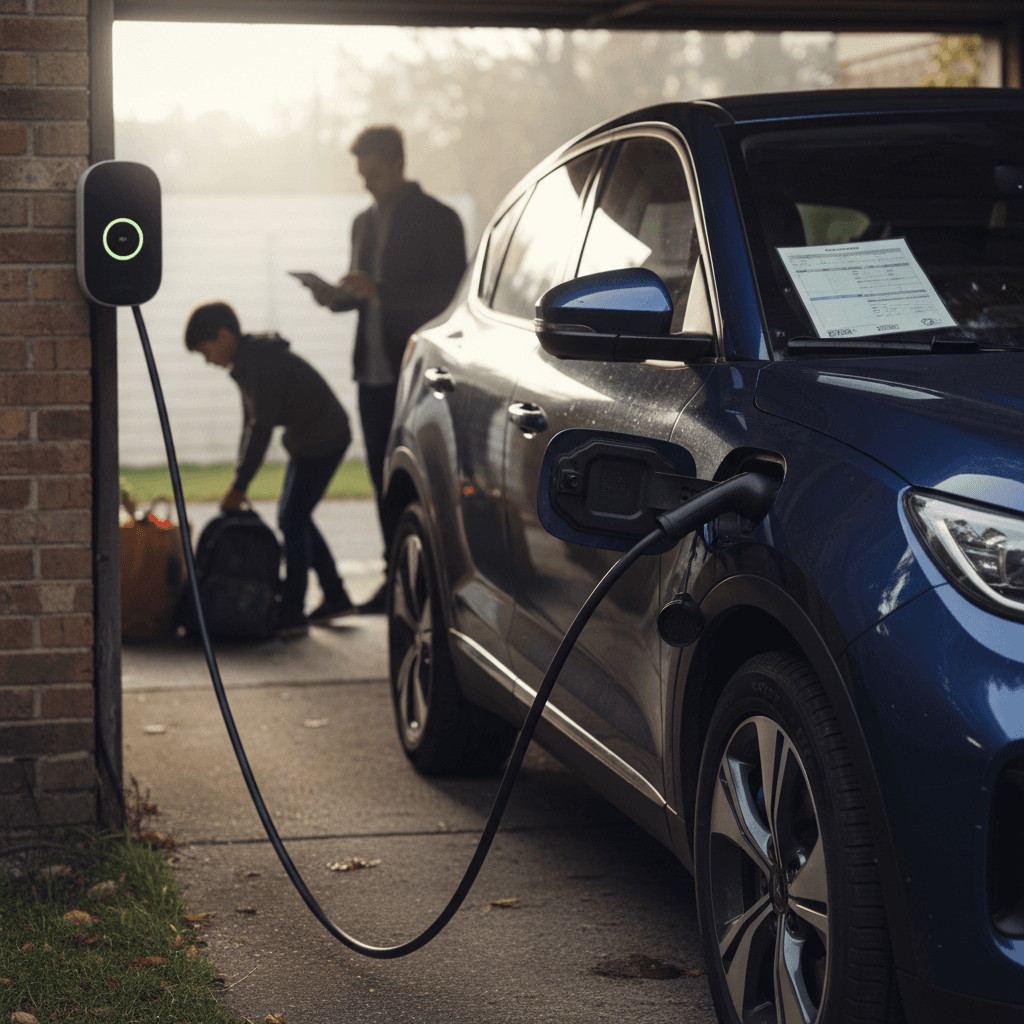
Home charging is the secret weapon
Maintenance, repairs, and battery health
EV fans love to brag about “no oil changes,” and they’re right, sort of. Electric cars cut entire chapters out of the maintenance schedule, but they don’t exempt you from the laws of physics or the price of tires.
Where EVs save, and where they don’t
Think of maintenance in three buckets: routine, wear items, and big surprises.
Routine service
Gas: Oil changes, filters, spark plugs, emissions checks, transmission service.
EV: Cabin filters, brake fluid, coolant checks. Fewer visits, lower average bill.
Wear items
Both EVs and gas cars burn through tires, brakes, and suspension bits. Heavier EVs can actually eat tires quicker if you drive enthusiastically.
Big-ticket risks
For gas cars: engines, transmissions, turbos.
For EVs: high‑voltage components and, in rare cases, battery modules. This is where warranties matter.
Battery warranties are your safety net
Over five years, it’s reasonable to expect an EV to cost $1,000–$1,500 less in maintenance than a comparable gas car, assuming no catastrophic failures. The wild card is battery health: a tired pack can hurt resale value and range, even if it’s still technically under warranty.
How Recharged handles battery risk
Insurance, taxes, and fees
Insurance actuaries have no sentimental attachment to your choice of propulsion. They care about repair costs, crash data, theft rates, and what it takes to replace that headlight with the radar sensor inside.
Insurance for EVs
- Often slightly higher premiums than similar gas models because of pricey bodywork and electronics.
- Luxury EVs and performance models amplify this gap.
- Shopping quotes matters more than the drivetrain label.
Taxes and fees
- Some states still offer tax credits or rebates for new or even used EVs.
- Others charge extra EV registration fees to make up for lost gas tax revenue.
- Local incentives (reduced tolls, HOV access) can be worth real money if you use them daily.
Don’t forget the EV fee line item
New vs used EV: where the real value is
If new‑car pricing is where EVs sometimes look indulgent, the used EV market is where they start to look like found money. Early adopters paid the tech premium; you don’t have to.
Illustrative 5‑year cost: used gas vs used EV
Two $25k used crossovers, both three years old: one gas, one electric. You keep them from year 3 to year 8 of life.
| Cost category (5 years) | Used gas crossover | Used electric crossover |
|---|---|---|
| Purchase & financing | $27,000 | $27,000 |
| Fuel / electricity | $6,200 | $3,400 |
| Maintenance & repairs | $3,500 | $2,500 |
| Insurance | $6,500 | $6,800 |
| Registration, taxes, fees | $2,500 | $2,800 |
| Estimated resale value | –$11,000 | –$12,000 |
| Approximate 5‑yr total | $34,700 | $30,500 |
This is where depreciation already taken by the first owner becomes your best friend.
Here the EV pulls ahead, clearly
When an electric car actually saves you money
The question isn’t whether electric cars are cheaper or more expensive. The question is: for whom? The answer depends on a few brutally practical realities of your life, not your feelings about tailpipes.
Signs an EV will beat a gas car on cost
1. You drive a lot
If you’re regularly clocking 12,000–15,000+ miles per year, fuel savings stack up quickly, especially in a crossover or SUV where gas mileage is mediocre.
2. You can charge cheaply at home
A reasonably priced overnight electricity rate is the backbone of every favorable electric car cost comparison. Off‑peak time‑of‑use plans make it even better.
3. You’re open to buying used
Let the first owner eat the sharpest depreciation. A 2–4‑year‑old EV with a healthy battery and years left on the warranty is often a sweet spot.
4. You plan to keep the car
The longer you keep an EV beyond the loan term, the more years you enjoy low running costs without payments, this can dwarf any early‑years cost disadvantage.
5. You live in a region with incentives
State or utility rebates for EVs or home chargers, reduced registration fees, or cheap off‑peak electricity all tilt the math toward electric.
6. You don’t rely on DC fast charging
If more than half your charging will be at high‑priced fast chargers, pencil that in honestly. EVs can still work, but the pure cost edge narrows.
When a gas car might still be cheaper
How Recharged helps you run the numbers
On paper, EV shopping can turn into a spreadsheet Olympics. That’s why Recharged exists: to make used electric vehicle ownership simple, transparent, and grounded in real costs, not wishful thinking.
What Recharged adds to your cost comparison
Tools, data, and support that make the EV vs gas decision less of a leap of faith.
Recharged Score battery health
Every EV on Recharged includes a detailed battery health report. You see how the pack has aged, estimated remaining capacity, and how that impacts real‑world range, and resale value.
Fair, data‑driven pricing
Recharged benchmarks each car against fair market values, factoring in battery health, mileage, and options. That helps you avoid overpaying and improves your long‑term cost picture.
Trade‑in & financing support
From instant offers and consignments to EV‑savvy financing, Recharged helps you structure the deal, down payment, term, rate, so your monthly and 5‑year costs make sense.
Nationwide delivery
See a used EV that fits your budget but it’s in another state? Recharged can deliver nationwide, so you’re not limited to whatever happens to be on your nearest lot.
EV‑specialist guidance
Recharged’s team lives and breathes EVs. They’ll walk you through charging, incentives, and cost scenarios so you know what you’re signing up for before you click “buy.”
Fully digital experience
Browse, compare, finance, and handle paperwork online, or visit the Recharged Experience Center in Richmond, VA if you want to sit in the driver’s seat first.
Ready to find your next EV?
Browse VehiclesElectric car cost comparison FAQ
Frequently asked questions about EV vs gas costs
Bottom line: should your next car be electric?
In the cold arithmetic of 2025, EVs are no longer the automatic “cheap to run, expensive to buy” caricature, and gas cars aren’t the obvious budget kings they once were. For some drivers, high mileage, home charging, willingness to buy used, an electric car is the clear financial favorite. For others, low mileage, no home charger, high local electricity rates, a simple gas car or hybrid still wins the spreadsheet war.
The smart move isn’t to fall in love with a drivetrain; it’s to fall in love with your total cost of ownership. Run the numbers honestly, compare real vehicles side by side, and don’t skip the fine print around battery health and warranties. If that math points you toward a used EV, Recharged is built to make the next part easy: transparent reports, fair pricing, EV‑savvy financing, and a team that actually understands the tech. That way, whichever side of the electric car cost comparison you land on, you’ll know you got the better end of the deal.